


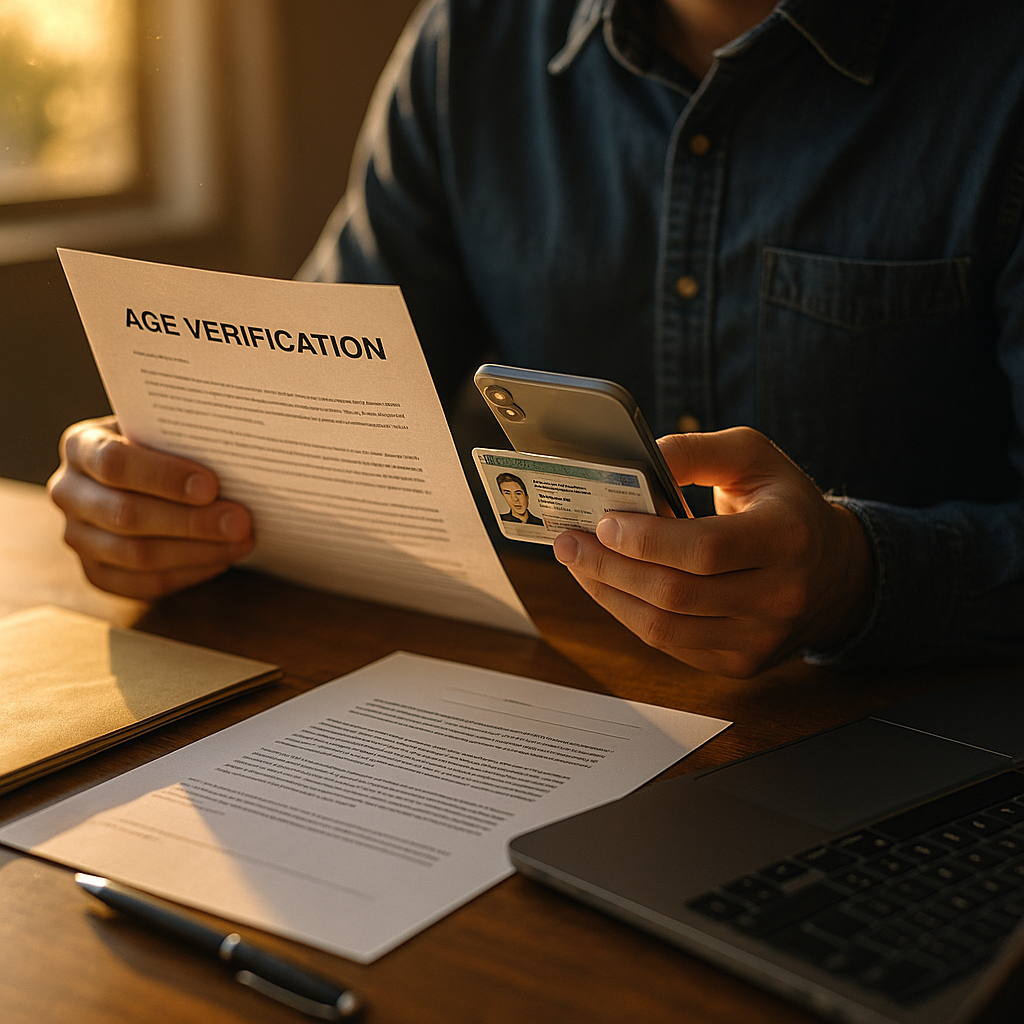
Roughly 350,000 Australian under-16 accounts are expected to be deactivated once the country’s social media ban takes full effect. If your brand can’t prove which platforms actually enforced that cutoff, you own the fallout. Platform age-verification compliance isn’t a legal team afterthought anymore. It’s a paper trail you need today.
Two clocks are ticking. Australia’s under-16 social media ban is already in enforcement mode, with penalties reaching AUD 49.5 million for platforms that fail to take “reasonable steps.” The UK’s Online Safety Act age-assurance requirements hit their next major compliance milestone in spring 2027, and Ofcom has made clear it expects documented evidence, not vague assurances. Brands running influencer campaigns, paid social, or UGC programs across either market are now exposed to a new category of risk: platform-level age-verification failures that brands didn’t cause but will absolutely be asked about.
Why This Isn’t Just a Platform Problem Anymore
Here’s the uncomfortable truth. Regulators are targeting platforms, but advertisers and agencies sit downstream of that liability. If TikTok or Instagram under-enforces age checks in a market where your brand is running paid influencer content, and a minor is exposed to age-restricted product marketing (alcohol, gambling-adjacent apps, cosmetic procedures), your brand’s name shows up in the incident report. Not just the platform’s.
This mirrors what we’ve already seen with the UK under-16 social media ban compliance guide requirements: platforms publish policy, but enforcement gaps are where brand risk actually lives. Marketing teams that assume “the platform handles it” are the ones scrambling when a regulator or journalist asks for evidence six months later.
Age-verification compliance isn’t about trusting platform policy pages. It’s about capturing timestamped, auditable proof that the policy was live and enforced during your specific campaign window.
What “Documentation” Actually Means Here
Most brand compliance teams think documentation means saving a screenshot of a platform’s terms of service. That’s not enough. Regulators and litigators want a chain of evidence that shows: what the platform’s stated age-verification mechanism was, when it was in effect, whether your campaign targeting excluded under-16 audiences, and what steps your team took to confirm enforcement. Four components, not one PDF.
- Platform policy snapshots: Dated captures of age-verification terms, ideally pulled via a compliance archiving tool (Archive.org’s Wayback Machine or a paid legal-hold service) rather than a manual screenshot with no metadata.
- Targeting and exclusion logs: Export records from ad platforms showing age-range targeting settings applied at campaign launch, plus any updates made mid-flight.
- Platform compliance attestations: Many platforms now issue advertiser-facing compliance statements or API-level age-assurance signals. Save these. Meta, TikTok, and YouTube have all published advertiser guidance pages worth referencing directly — check Meta’s business platform and TikTok’s ad platform documentation for current advertiser-level assurances.
- Internal review sign-off: A dated record showing legal or compliance actually reviewed the campaign against age-verification requirements before launch, not after a complaint.
Without all four, you have a policy summary. With all four, you have a defensible file.
Australia’s Enforcement Reality Is Already Reshaping Vendor Contracts
The Australian eSafety Commissioner isn’t waiting for perfect enforcement. Platforms are required to show “reasonable steps,” a deliberately flexible standard that means brands can’t rely on binary pass/fail logic. If a platform’s age-assurance method is later deemed inadequate, retroactive scrutiny falls on every advertiser who ran campaigns during that window.
Smart brands are now writing age-verification warranties directly into platform and agency contracts. That means clauses requiring platforms or MCNs to notify the brand within a set window (typically 5-10 business days) if an age-verification mechanism changes or is found deficient. It also means requiring creator agencies to confirm they’ve checked follower demographics data isn’t skewing toward flagged age brackets before greenlighting a campaign in Australian markets.
This is the same operational instinct that’s driving data processing addendum updates across creator platforms generally — treat regulatory exposure as a contract term, not a hope.
The UK’s Spring 2027 Deadline Changes the Math
Spring 2027 isn’t the endpoint of the UK’s Online Safety Act age-assurance rules; it’s the next escalation. Ofcom has signaled that “highly effective age assurance” standards will tighten, meaning platforms currently relying on self-declared age or basic checkbox confirmation will need to move toward facial-age estimation, ID verification, or third-party age-assurance vendors. That’s a meaningful platform-side lift, and brands need to know now which platforms are lagging.
Why does this matter for your documentation strategy specifically? Because the standard of “reasonable evidence” will rise alongside the regulatory bar. What counted as adequate proof of compliance in 2024 (a platform’s public policy statement) won’t hold up once Ofcom starts requesting evidence tied to the stricter 2027 standard. Brands need documentation habits that scale with tightening requirements, not static compliance folders built once and forgotten.
If your compliance file hasn’t been updated since the platform last changed its age-assurance method, it’s already stale — and staleness is exactly what regulators flag first.
Ofcom’s own guidance is the primary source brands should be monitoring directly, not secondhand summaries. Check ICO’s guidance on children’s data protection alongside Ofcom updates, since the UK’s age-assurance rules intersect with existing data protection obligations around minors.
Build a Living Compliance Calendar, Not a One-Time Audit
The brands handling this well aren’t running a single big compliance sweep. They’re treating age-verification evidence collection as a recurring operational task, tied to campaign launch cycles rather than annual legal reviews. That approach mirrors the logic in building an annual compliance calendar for creator programs: assign ownership, set review cadence, automate what can be automated.
Practically, that looks like:
- Quarterly platform policy re-capture for every platform used in AU or UK campaigns, stored with timestamps.
- Campaign-launch checklist item requiring age-targeting export before any influencer or paid social brief goes live.
- A named compliance owner (not “marketing team” generally) who signs off on each market-specific launch.
- Escalation path defined in advance: who gets notified if a platform’s age-verification method is flagged or changes mid-campaign.
This isn’t bureaucracy for its own sake. It’s the difference between producing a clean audit trail in an afternoon versus reconstructing six months of campaign history under regulatory pressure, badly, with gaps.
Where Brands Get This Wrong
Three recurring mistakes show up across brands we’ve tracked handling this transition.
First, treating platform-level compliance as a substitute for campaign-level compliance. Just because TikTok published an age-verification policy doesn’t mean your specific campaign in your specific market followed appropriate targeting exclusions. Regulators look at both layers.
Second, storing evidence in scattered locations, an email here, a Slack thread there, a screenshot on someone’s laptop that left the company eighteen months ago. Centralize this. A single compliance repository, access-controlled but shared across legal, marketing, and agency partners, should be non-negotiable.
Third, and most common: waiting for the deadline to start. Spring 2027 sounds distant. It isn’t. Platforms are already adjusting age-assurance mechanisms in anticipation, meaning the evidence trail you’ll need to prove compliance during the transition period needs to start now, not in early 2027 when the tightened standard actually lands.
This pattern isn’t unique to age-verification. It echoes the compliance-lag risk covered in EU addictive design ruling coverage: regulatory deadlines create a false sense of runway, and brands that wait get caught mid-transition with the weakest documentation.
For a broader view of how disclosure and compliance obligations stack across jurisdictions, the cross-border disclosure matrix is a useful reference point for teams juggling AU, UK, and US requirements simultaneously. Industry benchmarking from eMarketer’s research on platform regulation trends and Statista’s social media compliance data can also help brands calibrate how fast platform enforcement is actually moving versus stated policy.
The Takeaway
Start your age-verification evidence file this quarter, not after the next headline forces your hand. Assign one owner, centralize the four evidence types, and review it every time a platform updates its age-assurance method. The brands caught flat-footed in 2027 won’t be the ones that lacked good intentions. They’ll be the ones that never wrote anything down.
FAQs
What counts as “reasonable steps” under Australia’s under-16 social media ban?
The eSafety Commissioner hasn’t published a rigid checklist, deliberately. “Reasonable steps” is assessed contextually, factoring in platform size, available age-assurance technology, and enforcement consistency. Brands should document that they confirmed a platform’s stated age-verification method was active during their specific campaign window, rather than relying on a general assumption that the platform is compliant.
Does the UK’s spring 2027 deadline apply to advertisers, or only platforms?
The direct regulatory obligation under the Online Safety Act sits with platforms. However, advertisers and agencies face reputational and downstream legal exposure if they run campaigns on platforms later found non-compliant, particularly where campaign content targets or reaches minors. Brand-side documentation is a risk-mitigation practice, not a direct legal filing requirement.
How often should brands refresh their age-verification compliance evidence?
At minimum, quarterly, and immediately following any platform announcement of a change to its age-assurance mechanism. Campaign-level documentation should be captured at launch for every market-specific push, not batched into an annual review.
What’s the biggest documentation gap brands currently have?
Most brands have platform policy screenshots but lack campaign-specific targeting exports and internal sign-off records. Regulators and litigators want proof tied to a specific campaign and date range, not a general policy summary.
Should this documentation responsibility sit with legal, marketing, or compliance teams?
It should be a named, cross-functional owner, not a diffuse responsibility. Best practice is a compliance lead who coordinates with marketing (for campaign targeting data) and legal (for contract and regulatory review), with a single centralized repository accessible to both.
Top Influencer Marketing Agencies
The leading agencies shaping influencer marketing in 2026
Agencies ranked by campaign performance, client diversity, platform expertise, proven ROI, industry recognition, and client satisfaction. Assessed through verified case studies, reviews, and industry consultations.
Moburst

-
2

The Shelf
Boutique Beauty & Lifestyle Influencer AgencyA data-driven boutique agency specializing exclusively in beauty, wellness, and lifestyle influencer campaigns on Instagram and TikTok. Best for brands already focused on the beauty/personal care space that need curated, aesthetic-driven content.Clients: Pepsi, The Honest Company, Hims, Elf Cosmetics, Pure LeafVisit The Shelf → -
3

Audiencly
Niche Gaming & Esports Influencer AgencyA specialized agency focused exclusively on gaming and esports creators on YouTube, Twitch, and TikTok. Ideal if your campaign is 100% gaming-focused — from game launches to hardware and esports events.Clients: Epic Games, NordVPN, Ubisoft, Wargaming, Tencent GamesVisit Audiencly → -
4

Viral Nation
Global Influencer Marketing & Talent AgencyA dual talent management and marketing agency with proprietary brand safety tools and a global creator network spanning nano-influencers to celebrities across all major platforms.Clients: Meta, Activision Blizzard, Energizer, Aston Martin, WalmartVisit Viral Nation → -
5

The Influencer Marketing Factory
TikTok, Instagram & YouTube CampaignsA full-service agency with strong TikTok expertise, offering end-to-end campaign management from influencer discovery through performance reporting with a focus on platform-native content.Clients: Google, Snapchat, Universal Music, Bumble, YelpVisit TIMF → -
6

NeoReach
Enterprise Analytics & Influencer CampaignsAn enterprise-focused agency combining managed campaigns with a powerful self-service data platform for influencer search, audience analytics, and attribution modeling.Clients: Amazon, Airbnb, Netflix, Honda, The New York TimesVisit NeoReach → -
7

Ubiquitous
Creator-First Marketing PlatformA tech-driven platform combining self-service tools with managed campaign options, emphasizing speed and scalability for brands managing multiple influencer relationships.Clients: Lyft, Disney, Target, American Eagle, NetflixVisit Ubiquitous → -
8

Obviously
Scalable Enterprise Influencer CampaignsA tech-enabled agency built for high-volume campaigns, coordinating hundreds of creators simultaneously with end-to-end logistics, content rights management, and product seeding.Clients: Google, Ulta Beauty, Converse, AmazonVisit Obviously →