


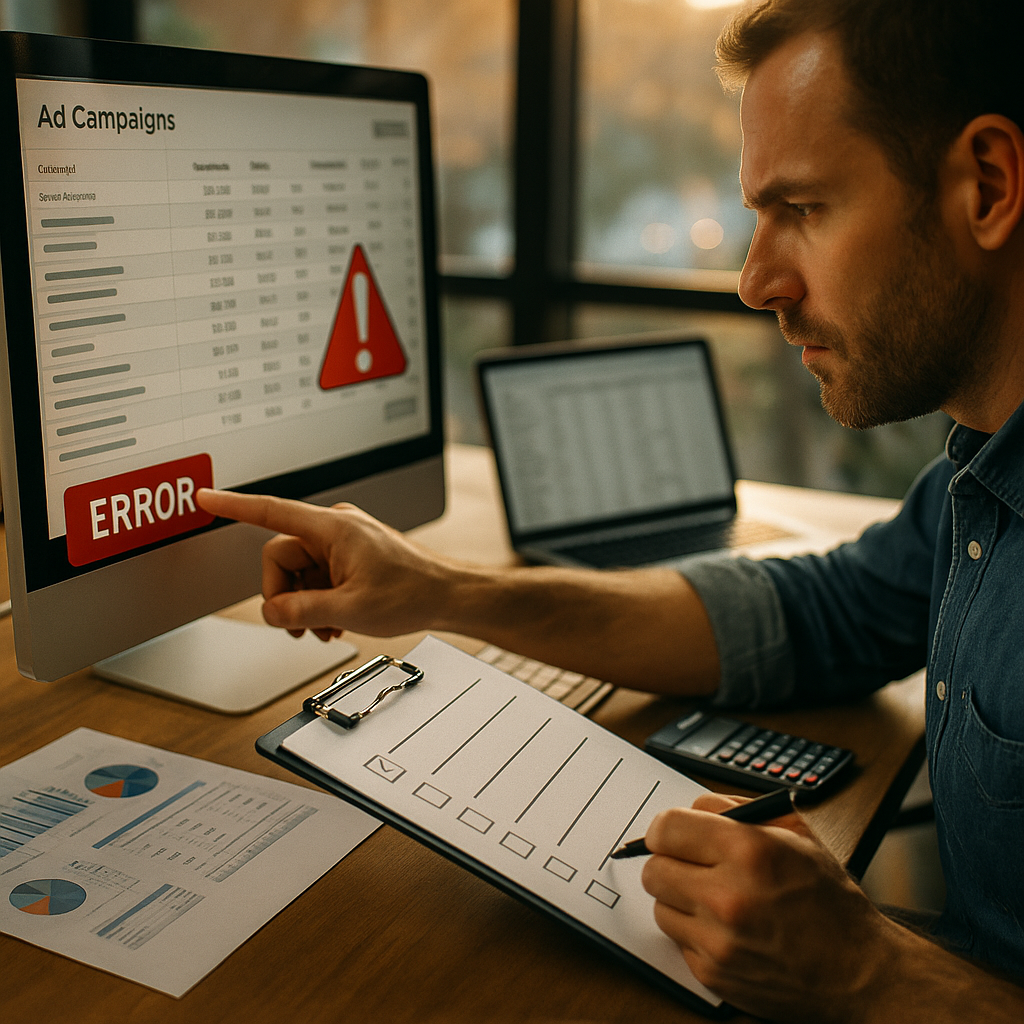
One misconfigured bidding agent burned through a $180,000 creator campaign budget in eleven hours before anyone noticed. No malware, no hack — just an autonomous system doing exactly what it was told, at a speed no human could catch in time. The agentic ad buying error audit isn’t a compliance exercise anymore. It’s the thing standing between your Q3 budget and a very uncomfortable board conversation.
Agentic bidding tools are creeping into creator campaign management fast. They optimize spend across TikTok Spark Ads, Instagram Partnership Ads, and YouTube Shorts placements in real time, reallocating budget between creators based on performance signals that update every few minutes. That’s the pitch, anyway. The reality is messier: these systems make thousands of micro-decisions per hour, and most brands have no formal checkpoint stopping a bad decision from compounding into a five-figure mistake before a human even opens Slack.
Why Autonomous Bidding Broke the Old Approval Model
Traditional media buying had built-in friction. A planner set budgets, a manager approved them, and changes went through a review cycle measured in days. That friction was annoying, but it was also a safety net. Agentic tools removed the friction entirely, and most marketing teams didn’t replace it with anything.
The result: bidding agents that can shift 40% of a campaign’s daily budget toward a single creator based on three hours of engagement data, with zero human sign-off. Sometimes that’s brilliant optimization. Sometimes it’s the algorithm chasing bot-inflated views on a creator whose audience just got hit by a follower-farming scheme. The tool can’t always tell the difference. Humans usually can, but only if they’re looking at the right moment.
Speed is the entire value proposition of agentic bidding — and also the entire risk. The same feature that makes it useful is the feature that makes errors expensive.
This isn’t hypothetical anxiety. eMarketer has tracked accelerating adoption of AI-driven media buying tools across performance marketing teams, and the trend line for creator-specific bidding automation is following the same curve, just a year or two behind paid social. Influencers Time has covered similar failure patterns in AI bidding agent failures, and the pattern is consistent: the tools work fine most of the time, and the exceptions are what wreck budgets.
What an Error Audit Actually Looks At
An agentic ad buying error audit isn’t a single review. It’s a recurring checklist applied at three points: before launch, during live spend, and after campaign close. Think of it less like an annual audit and more like a pre-flight checklist a pilot runs every single time, regardless of how many times they’ve flown the route before.
- Budget pacing logic — does the agent’s spend curve match the approved plan, or is it front-loading spend in ways that weren’t authorized?
- Creator attribution accuracy — is the system crediting performance to the right creator, or is it conflating cross-posted content and double-counting conversions?
- Bid ceiling enforcement — are hard caps actually hard, or can the agent exceed them under specific triggering conditions?
- Fraud signal response — how does the system react when engagement patterns look synthetic? Does it pause spend or keep optimizing toward the fake signal?
- Platform API drift — has a recent API update from TikTok, Meta, or YouTube changed how data flows into the bidding model without anyone retraining or re-validating it?
That last one trips up more teams than you’d expect. Platforms update ad APIs constantly, and an agentic tool trained on last quarter’s data structure can misread new fields entirely. It won’t throw an error. It’ll just make confidently wrong decisions.
Building the Human Checkpoint System
Here’s the part most teams get wrong: they either require human approval for everything (killing the speed advantage entirely) or approval for nothing (defeating the point of oversight). The right model is tiered, based on dollar thresholds and decision type, not blanket rules.
Start with three tiers of intervention:
- Auto-approve under threshold. Bid adjustments under a set dollar amount, say $500 per creator per day, execute without review. Low stakes, high frequency, not worth a human’s time.
- Flag-and-notify. Mid-range decisions, roughly $500 to $5,000 in reallocated spend, execute immediately but trigger an alert to a designated reviewer within the hour. The human can reverse it retroactively if something looks off.
- Hold-for-approval. Anything above the upper threshold, or any decision involving a new creator not previously vetted, pauses until a human signs off. No exceptions, no override without documented reasoning.
This tiered structure mirrors what Influencers Time detailed in the AI agent governance checklist covering spend caps and kill switches — the principle transfers directly to creator bidding tools, just with creator-specific triggers layered on top, like sudden follower spikes or engagement rate anomalies that don’t match historical baselines.
Who Owns the Checkpoint?
Ambiguity kills checkpoint systems faster than anything else. If three people think someone else is watching the dashboard, nobody’s watching the dashboard. Assign a named owner for each campaign’s live monitoring, not a team, not a “whoever’s available” rotation. Backup coverage matters too — bidding agents don’t take weekends off, and neither should your escalation plan.
Most mid-size agencies we’ve spoken with assign this to a media operations lead rather than the creator relations team, since the errors that matter most are financial and platform-level, not creative judgment calls. That said, creator relations should still be looped into the flag-and-notify tier, because they’re often the first to know when a creator’s audience quality has shifted.
The Pre-Launch Checklist Nobody Skips (But Should Do Better)
Most teams already have some version of a pre-launch review. The problem is it’s usually focused on creative approval and legal sign-off, not on the bidding logic itself. Before any autonomous tool touches live budget, confirm:
- Spend caps are configured at the platform level, not just the tool’s dashboard level (dashboards can lag or misreport)
- The agent’s decision logs are exportable and reviewable in real time, not just in a weekly summary report
- There’s a documented kill switch that any team member on the checkpoint rotation can trigger without needing vendor support
- Creator-level performance baselines exist before the campaign starts, so anomalies are measurable against something real
That kill switch point deserves emphasis. If pausing an autonomous bidding tool requires a support ticket to the vendor, you don’t have a kill switch. You have a suggestion box. Test it before launch, not during a live incident.
If your “kill switch” takes longer than five minutes to activate, it’s not a kill switch — it’s a delayed loss.
Vendor Contracts Are Part of the Audit Too
This gets overlooked constantly. Ad tech vendors update their underlying models regularly, sometimes without much fanfare. If your bidding tool’s core model gets swapped or deprecated mid-contract, its decision patterns can shift without your team getting a heads-up. Influencers Time covered this risk in depth in the contract clause brands skip — and it applies directly here. Your vendor agreement should require advance notice of model changes and a re-validation window before any updated model touches live budget again.
Post-Campaign Review: Where Most Teams Quietly Stop Trying
Pre-launch checks feel productive. Live monitoring feels urgent. Post-campaign audits feel like homework — which is exactly why they get skipped, and exactly why the same errors repeat across campaigns.
A proper post-mortem compares the agent’s actual spend decisions against what a human planner would have approved, decision by decision, for a sample of the highest-value calls. This isn’t about second-guessing every choice. It’s about pattern detection. Did the tool consistently over-allocate to creators with high early engagement but weak conversion? That’s a tunable bias worth fixing before the next campaign, not an isolated fluke. Influencers Time’s framework on override thresholds for AI media buying offers a useful structure for scoring these deviations systematically rather than anecdotally.
Document every override, every flagged decision, and every threshold breach in a shared log. Six months from now, when you’re negotiating renewal terms with the vendor or presenting budget efficiency numbers to finance, that log is your evidence. Without it, you’re arguing from memory against a vendor with a dashboard full of favorable metrics.
The Trust Gap Is Real, and It’s Not Going Away Soon
Marketers are adopting AI tools faster than they’re building confidence in them. That gap between adoption and trust isn’t a temporary phase — it’s the current state of the industry, and probably will be for a while. Research on rising AI adoption without matching trust backs this up: teams are turning tools on faster than they’re building the guardrails to trust them fully. That’s not necessarily reckless. It’s rational, provided the guardrails get built in parallel, not as an afterthought once something breaks.
The same tension shows up in creative approval workflows, where AI-generated ad content has published without proper sign-off in ways that created real brand safety exposure — a risk Influencers Time examined in its brand safety audit on unapproved AI creative. Bidding and creative are different risk surfaces, but the underlying lesson is identical: autonomy without checkpoints eventually produces a headline nobody wants attached to their brand.
For teams benchmarking their compliance posture more broadly, the FTC’s guidance on advertising practices and platform-specific policies from Meta’s business tools and TikTok’s advertising platform are worth reviewing alongside internal audits — regulatory expectations around automated ad decisions are tightening, not loosening.
Build the checkpoint system this quarter, not after your first six-figure bidding error. Start with tiered approval thresholds, a tested kill switch, and a named human owner for every live campaign — the tools aren’t going to slow down for you.
FAQs
What is an agentic ad buying error audit?
It’s a structured review process — applied before, during, and after a campaign — that checks whether an autonomous bidding tool’s decisions match approved budget plans, spend caps, and creator performance baselines, catching errors before they compound into significant losses.
How much budget should trigger a human checkpoint?
There’s no universal number, but most teams set auto-approval under roughly $500 per decision, flag-and-notify between $500 and $5,000, and mandatory hold-for-approval above that, adjusted based on total campaign size and risk tolerance.
Can autonomous bidding tools detect creator fraud on their own?
Some can flag obvious anomalies like sudden follower spikes, but most bidding agents optimize toward engagement signals without verifying their authenticity, which is why fraud-response checkpoints need a human review layer rather than full automation.
Who should own live monitoring of an agentic bidding tool?
A named individual, typically on the media operations team, with documented backup coverage. Diffuse ownership across a team without a clear lead is one of the most common reasons checkpoint systems fail during live campaigns.
What happens if a vendor changes the underlying AI model mid-contract?
Decision patterns can shift unexpectedly, sometimes without notice. Contracts should require advance disclosure of model changes and a re-validation period before the updated model is trusted with live budget again.
Visible FAQ (HTML)
Top Influencer Marketing Agencies
The leading agencies shaping influencer marketing in 2026
Agencies ranked by campaign performance, client diversity, platform expertise, proven ROI, industry recognition, and client satisfaction. Assessed through verified case studies, reviews, and industry consultations.
Moburst

-
2

The Shelf
Boutique Beauty & Lifestyle Influencer AgencyA data-driven boutique agency specializing exclusively in beauty, wellness, and lifestyle influencer campaigns on Instagram and TikTok. Best for brands already focused on the beauty/personal care space that need curated, aesthetic-driven content.Clients: Pepsi, The Honest Company, Hims, Elf Cosmetics, Pure LeafVisit The Shelf → -
3

Audiencly
Niche Gaming & Esports Influencer AgencyA specialized agency focused exclusively on gaming and esports creators on YouTube, Twitch, and TikTok. Ideal if your campaign is 100% gaming-focused — from game launches to hardware and esports events.Clients: Epic Games, NordVPN, Ubisoft, Wargaming, Tencent GamesVisit Audiencly → -
4

Viral Nation
Global Influencer Marketing & Talent AgencyA dual talent management and marketing agency with proprietary brand safety tools and a global creator network spanning nano-influencers to celebrities across all major platforms.Clients: Meta, Activision Blizzard, Energizer, Aston Martin, WalmartVisit Viral Nation → -
5

The Influencer Marketing Factory
TikTok, Instagram & YouTube CampaignsA full-service agency with strong TikTok expertise, offering end-to-end campaign management from influencer discovery through performance reporting with a focus on platform-native content.Clients: Google, Snapchat, Universal Music, Bumble, YelpVisit TIMF → -
6

NeoReach
Enterprise Analytics & Influencer CampaignsAn enterprise-focused agency combining managed campaigns with a powerful self-service data platform for influencer search, audience analytics, and attribution modeling.Clients: Amazon, Airbnb, Netflix, Honda, The New York TimesVisit NeoReach → -
7

Ubiquitous
Creator-First Marketing PlatformA tech-driven platform combining self-service tools with managed campaign options, emphasizing speed and scalability for brands managing multiple influencer relationships.Clients: Lyft, Disney, Target, American Eagle, NetflixVisit Ubiquitous → -
8

Obviously
Scalable Enterprise Influencer CampaignsA tech-enabled agency built for high-volume campaigns, coordinating hundreds of creators simultaneously with end-to-end logistics, content rights management, and product seeding.Clients: Google, Ulta Beauty, Converse, AmazonVisit Obviously →