


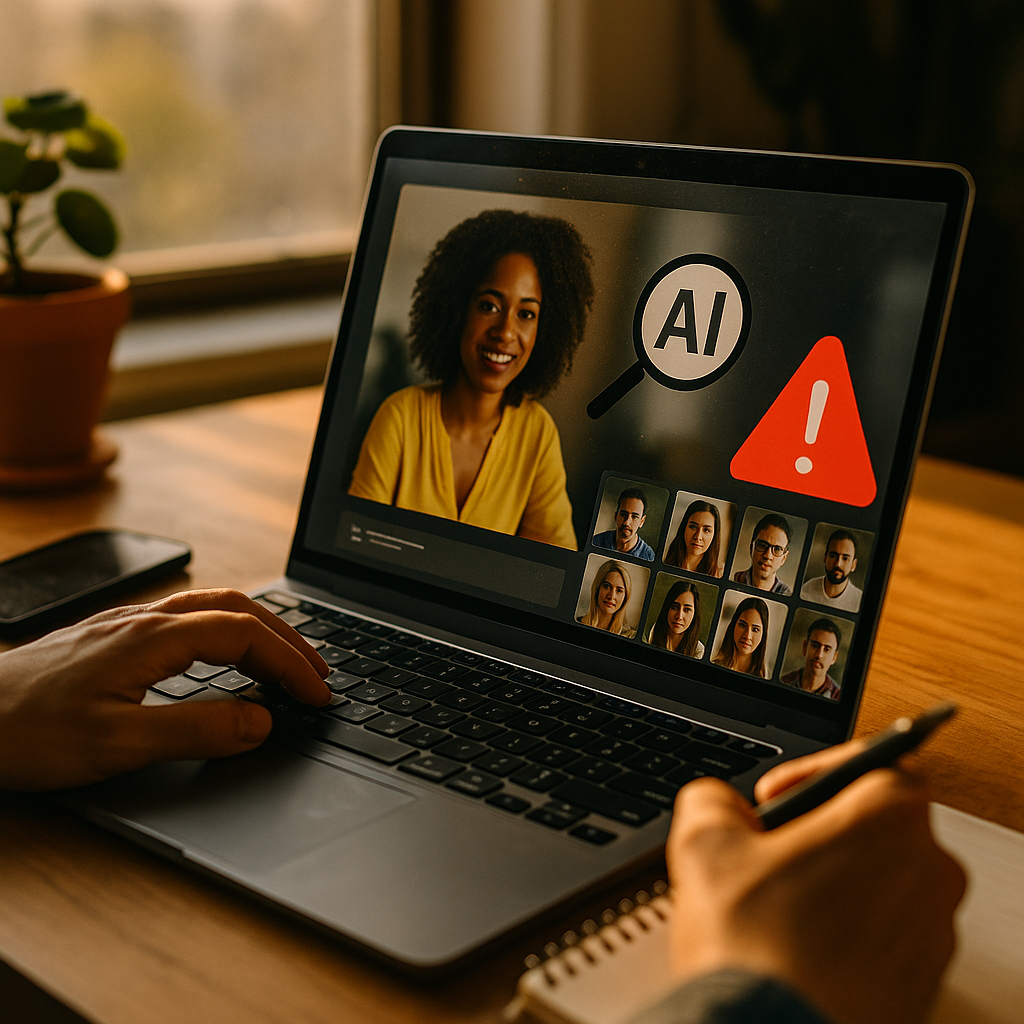
One Algorithm, Millions of Creators, and No One Watching
AI-powered creator discovery can now surface and score millions of influencer profiles in the time it takes a human analyst to review a hundred. That speed is genuinely transformative. It’s also where brands are quietly making expensive mistakes.
The promise is clear: platforms like Traackr, Grin, Upfluence, and Creator.co have spent the last several years layering machine learning onto massive creator databases, enabling marketers to filter by audience psychographics, engagement authenticity scores, brand affinity signals, and platform-specific performance benchmarks. What used to take a talent team three weeks now takes a junior strategist three hours. For enterprise brands running always-on influencer programs across dozens of markets, that compression is not a luxury. It’s operational table stakes.
But efficiency without governance is risk in disguise. And the brands scaling fastest on AI-powered creator discovery are also the ones most exposed to the failure modes that automation introduces.
What Brands Actually Gain From AI-Powered Creator Discovery
Let’s be specific about the upside, because it’s real and measurable.
Scale without proportional headcount. A mid-sized CPG brand running seasonal influencer campaigns across five U.S. retail regions would historically require a dedicated talent sourcing function just to maintain a qualified creator roster. AI discovery collapses that overhead. Brands can identify, pre-qualify, and even initiate outreach to thousands of creators simultaneously, filtering by niche relevance, audience overlap, follower authenticity, and historical sponsorship performance.
Audience intelligence, not just creator metrics. The more sophisticated platforms have moved well past follower counts and engagement rates. Tools like Traackr and Modash now surface audience demographic breakdowns, brand affinity clusters, and lookalike modeling that lets brand teams find creators whose audiences already index toward purchase intent in the target category. That’s a meaningful shift from “this creator seems relevant” to “this creator’s audience behaves like our buyers.”
Competitive benchmarking at volume. AI discovery tools can also map competitor creator relationships, showing which influencers are currently or recently contracted to rival brands. For category managers and CMOs managing brand differentiation, that’s valuable competitive intelligence that no human research team could produce at the same speed or depth.
Brands using AI-assisted creator discovery report up to 60% reductions in talent sourcing time, according to platform benchmarks from Grin and Upfluence. The question is what gets sacrificed in the hours saved.
On the attribution side, AI discovery increasingly feeds into creator attribution and lead scoring pipelines, making it easier to connect talent selection to downstream conversion data rather than treating discovery as a separate, offline process.
The Risks That Don’t Show Up in the Dashboard
Here’s where experienced practitioners diverge from the vendor pitch decks.
Brand safety gaps in automated outreach. When AI systems initiate creator outreach at scale (and some platforms now offer semi-autonomous outreach sequencing), brand teams lose granular visibility into who is actually being contacted. A creator who scores well on engagement authenticity and audience demographics might also hold public positions, brand associations, or content history that creates reputational risk. Automated scoring doesn’t consistently catch nuance. A wellness brand discovered this when an AI-selected creator turned out to have a documented history of promoting unregulated supplements. The engagement scores were excellent. The brand safety review hadn’t happened.
Homogenization of creator rosters. AI recommendation systems optimize toward what has performed before. That’s useful for efficiency and terrible for discovering emerging voices or culturally distinct creators who don’t yet have the data history to score well. Over time, brands using pure AI discovery tend to converge on the same high-performing creator pool, which drives up negotiation rates and reduces audience novelty. The algorithm rewards the known at the expense of the new.
Compliance exposure from speed. Faster outreach means faster contracting. And faster contracting without proper legal review creates FTC disclosure compliance gaps, particularly for brands operating across international markets where FTC guidelines and ICO data regulations differ significantly. If your AI-powered outreach system is contacting EU-based creators at volume, you need data processing agreements in place. Many brands are not moving that piece at the same speed as their discovery workflow.
Fake follower blind spots. Despite significant investment in audience authenticity scoring, no platform has fully solved bot detection. Industry data consistently shows that follower fraud remains a multi-billion dollar problem. AI tools can flag suspicious engagement patterns, but sophisticated fraud operations have adapted to evade these signals. At millions-of-influencer scale, even a 2% false positive rate on authenticity scoring translates to a substantial volume of fraudulent creators passing initial qualification.
The AI fluency gap in creator programs compounds all of these risks. When marketing teams don’t fully understand how the discovery algorithms work, they can’t identify where the system’s judgment should defer to human review.
Human Judgment Still Has a Job
The frame of “automation versus human judgment” is a false binary, but it persists because platforms have a commercial incentive to position AI as a replacement rather than an accelerant.
Experienced practitioners are building hybrid workflows. AI handles the top-of-funnel volume: ingesting creator databases, scoring on objective criteria, filtering out obvious disqualifiers, and ranking candidates by weighted fit scores. Human reviewers then apply judgment at the qualification threshold: reviewing content tone, evaluating recent public activity, assessing cultural fit, and making final partnership decisions.
This isn’t inefficiency. It’s risk management. And it keeps the brand’s decision-making fingerprints on the final roster, which matters for accountability when something goes wrong.
Some brands are also building AI governance into their influencer program documentation. Before AI discovery results feed into outreach, they pass through a defined checklist: manual content review of the last 90 days of posts, a conflict-of-interest screen against current brand partners, and a legal-compliance flag for market-specific requirements. That layer adds maybe 15 minutes per creator. At the shortlist stage, that’s entirely manageable.
The brands winning at scale aren’t the ones who’ve handed discovery entirely to algorithms. They’re the ones who’ve defined precisely which decisions the algorithm makes and which ones it flags for human review.
Operational Architecture That Actually Holds
For program managers building or overhauling their discovery stack, a few structural recommendations grounded in what’s working across enterprise programs.
- Segment your discovery workflow by risk tier. Nano and micro-creator programs running at volume can tolerate higher AI autonomy. Major brand ambassadors, paid media amplification partners, and anyone representing the brand in regulated categories (finance, health, supplements) need human sign-off, regardless of how well they score.
- Audit your platform’s authenticity scoring methodology. Ask your discovery vendor to explain specifically how they detect follower fraud and what their false negative rate is. If they can’t answer that with data, weight their authenticity scores accordingly.
- Map AI-discovered creators to your attribution stack before signing. Discovery that doesn’t connect to campaign attribution is just a more expensive spreadsheet. Make sure selected creators can be tracked through your measurement infrastructure before you commit budget.
- Build creator content performance data back into discovery criteria. The best discovery systems learn from campaign outcomes. If your AI tool isn’t feeding post-campaign performance back into its ranking models, you’re running a static filter on a dynamic market.
- Define the outreach automation threshold explicitly. Decide in advance at what stage automated outreach can be initiated, and document it. “The AI sent an email” is not a defense when a brand safety incident surfaces three months into a partnership.
On the content side, once creators are onboarded, AI content pipelines can help brands maintain production velocity without inflating agency costs, provided the brand has a clear brief architecture in place. That brief quality, not just the creator quality, determines whether AI-accelerated programs deliver ROI or just volume.
For brands also thinking about how creator content feeds into generative search results and AI-driven discovery, the structural link between talent selection and content optimization is tightening. Creator content for AI search is increasingly a discovery-side consideration, not just a distribution one.
Compliance infrastructure also deserves a dedicated mention. Platforms like Sprout Social and HubSpot are integrating creator relationship management into broader CRM and compliance workflows, which helps brands maintain audit trails for FTC disclosure compliance even when outreach is partially automated. Use those integrations. Your legal team will eventually ask for the documentation.
The Governance Layer Nobody Wants to Build but Everyone Eventually Needs
Enterprise influencer programs running AI-powered discovery at scale need a governance layer with the same seriousness as any other automated marketing system. That means documented decision rights (who can approve AI-discovered creators at each tier), a defined appeals process when human reviewers override AI recommendations, and periodic audits of whether the algorithm’s outputs are actually aligning with brand strategy rather than just optimizing engagement scores in isolation.
The brands that have built this infrastructure are the ones running sustainable programs. The brands that skipped it are the ones managing the occasional incident with a rushed public statement and a partner suspension.
AI-powered creator discovery is not optional for brands operating at meaningful scale. But the operational rigor required to deploy it responsibly is exactly as demanding as the technology it’s meant to accelerate. Build the governance before you scale the automation.
Frequently Asked Questions
What is AI-powered creator discovery and how does it work?
AI-powered creator discovery uses machine learning algorithms to scan and score large databases of social media creators against brand-defined criteria. These systems analyze engagement rates, audience demographics, follower authenticity, content themes, brand affinity signals, and historical sponsorship performance to rank creators by relevance and fit. Platforms like Traackr, Grin, Modash, and Upfluence are among the most widely used in enterprise influencer programs.
What are the biggest risks of automating creator discovery and outreach?
The primary risks include brand safety gaps when automated outreach contacts creators without full content history review, compliance exposure from fast-moving contracting processes that skip FTC or ICO requirements, follower fraud that passes authenticity scoring, and roster homogenization when algorithms consistently favor already-proven creators over emerging talent.
Can AI tools reliably detect fake followers and engagement fraud?
AI tools have improved significantly in detecting obvious fraud patterns, but sophisticated follower fraud operations have adapted to evade standard detection signals. No platform has fully solved this problem. Brand teams should ask vendors for specific false negative rates and treat authenticity scores as one input among several rather than a definitive qualification signal.
Should brands fully automate creator outreach at scale?
Full automation of outreach is high-risk. Best practice is a hybrid approach where AI handles top-of-funnel scoring and ranking, while human reviewers apply judgment at the qualification stage before any outreach is initiated for significant partnerships. For nano and micro-creator programs at volume, higher AI autonomy may be operationally acceptable with proper safeguards.
How does AI-powered creator discovery connect to campaign attribution?
Leading programs are integrating discovery outputs directly into attribution pipelines so that creator selection decisions can be evaluated against downstream conversion and revenue data. This creates a feedback loop where post-campaign performance informs future discovery criteria, improving the quality of AI recommendations over time rather than relying on static filters.
What governance structures should brands build around AI creator discovery?
Brands should document decision rights for each creator tier, define which decisions require human approval versus AI autonomy, build in manual content review checkpoints before outreach, maintain audit trails for compliance purposes, and conduct periodic audits of whether AI outputs are aligning with overall brand strategy and not just optimizing for narrow engagement metrics.
Top Influencer Marketing Agencies
The leading agencies shaping influencer marketing in 2026
Agencies ranked by campaign performance, client diversity, platform expertise, proven ROI, industry recognition, and client satisfaction. Assessed through verified case studies, reviews, and industry consultations.
Moburst

-
2

The Shelf
Boutique Beauty & Lifestyle Influencer AgencyA data-driven boutique agency specializing exclusively in beauty, wellness, and lifestyle influencer campaigns on Instagram and TikTok. Best for brands already focused on the beauty/personal care space that need curated, aesthetic-driven content.Clients: Pepsi, The Honest Company, Hims, Elf Cosmetics, Pure LeafVisit The Shelf → -
3

Audiencly
Niche Gaming & Esports Influencer AgencyA specialized agency focused exclusively on gaming and esports creators on YouTube, Twitch, and TikTok. Ideal if your campaign is 100% gaming-focused — from game launches to hardware and esports events.Clients: Epic Games, NordVPN, Ubisoft, Wargaming, Tencent GamesVisit Audiencly → -
4

Viral Nation
Global Influencer Marketing & Talent AgencyA dual talent management and marketing agency with proprietary brand safety tools and a global creator network spanning nano-influencers to celebrities across all major platforms.Clients: Meta, Activision Blizzard, Energizer, Aston Martin, WalmartVisit Viral Nation → -
5

The Influencer Marketing Factory
TikTok, Instagram & YouTube CampaignsA full-service agency with strong TikTok expertise, offering end-to-end campaign management from influencer discovery through performance reporting with a focus on platform-native content.Clients: Google, Snapchat, Universal Music, Bumble, YelpVisit TIMF → -
6

NeoReach
Enterprise Analytics & Influencer CampaignsAn enterprise-focused agency combining managed campaigns with a powerful self-service data platform for influencer search, audience analytics, and attribution modeling.Clients: Amazon, Airbnb, Netflix, Honda, The New York TimesVisit NeoReach → -
7

Ubiquitous
Creator-First Marketing PlatformA tech-driven platform combining self-service tools with managed campaign options, emphasizing speed and scalability for brands managing multiple influencer relationships.Clients: Lyft, Disney, Target, American Eagle, NetflixVisit Ubiquitous → -
8

Obviously
Scalable Enterprise Influencer CampaignsA tech-enabled agency built for high-volume campaigns, coordinating hundreds of creators simultaneously with end-to-end logistics, content rights management, and product seeding.Clients: Google, Ulta Beauty, Converse, AmazonVisit Obviously →