


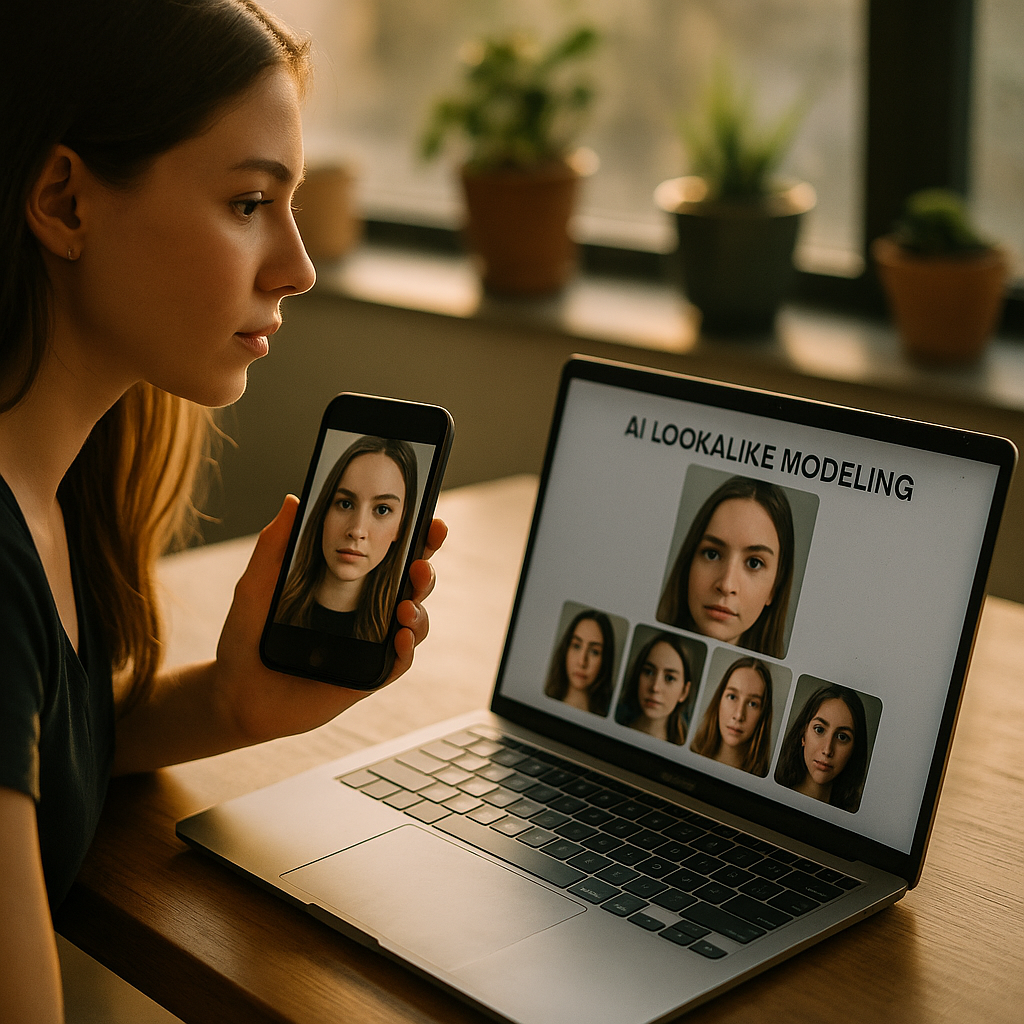
One agency ran the numbers: sourcing 200 qualified nano creators manually took a media buyer roughly 40 hours. An AI-driven creator lookalike modeling system did it in under six. That is not a hypothetical, it is the new baseline for brands trying to scale nano influencer programs without tripling headcount. If your team is still building creator shortlists in spreadsheets, you are already behind.
What Is Creator Lookalike Modeling, Really?
Borrow the logic from paid media audience targeting, then apply it to creator sourcing. That is the entire premise. You feed a model your best-performing creators (the “seed set”) and it identifies others who share the traits that made them work: audience demographics, content cadence, engagement patterns, even tone of voice and visual style. The output is a ranked list of prospects who look statistically similar to your top performers, minus the manual scroll-and-guess process that has defined creator discovery for the better part of a decade.
This is not the same as basic keyword or hashtag search. Lookalike models weigh dozens of signals simultaneously: comment sentiment, follower growth velocity, brand safety history, audience overlap with existing partners, and content format mix. Platforms like CreatorIQ, Grin, and Aspire have been layering these capabilities into their discovery modules, while newer entrants are building lookalike engines as their core product rather than a bolt-on feature.
The Nano Creator Math That Makes This Urgent
Nano creators (typically 1,000 to 10,000 followers) deliver engagement rates that mid-tier and macro creators simply cannot match at similar spend levels. But the economics only work if sourcing costs stay low. Pay a strategist $75 an hour to vet nano accounts one by one, and you erase the cost advantage nano partnerships are supposed to provide.
The nano tier only makes financial sense if discovery is nearly free. Once you’re paying human hours to find $200 creators, the math stops working.
Scale is the other half of the equation. A brand running a true nano-first strategy needs hundreds, sometimes thousands, of active partners to hit meaningful reach. Nobody’s ops team can vet that volume manually and still hit a quarterly launch calendar. This is where lookalike modeling stops being a nice-to-have and becomes the operational backbone of the entire program.
How the Models Actually Work (Without the Vendor Jargon)
Strip away the marketing language and most creator lookalike systems run on a fairly standard pipeline. First, embeddings: the platform converts each creator’s profile, content history, and audience data into a vector representation, essentially a numerical fingerprint. Second, similarity scoring: new or unranked creators get compared against your seed set using cosine similarity or a comparable distance metric. Third, filtering layers apply your hard constraints (geography, follower floor, brand safety flags, past controversy) to trim the candidate pool before it ever reaches a human reviewer.
The best systems also incorporate audience-level data, not just creator-level metadata. Two creators can post similar content and still reach wildly different audiences in terms of purchase intent, income bracket, or platform behavior. Modeling that ignores audience composition will hand you creators who look right on paper and underperform in practice. This is the same identity resolution challenge marketers face across the stack, and it’s worth reading how identity resolution drives measurable lift in adjacent channels, because the underlying data quality problem is identical.
According to eMarketer, brands are steadily increasing the share of influencer budget allocated to micro and nano tiers, a shift that only accelerates the need for automated sourcing infrastructure.
Where Lookalike Modeling Breaks, and How to Fix It
Garbage seed sets produce garbage recommendations. This is the number one failure mode, and it’s almost always a people problem, not a technology problem. If your seed creators were chosen based on a single viral moment rather than sustained performance, the model will happily go find you 500 more one-hit wonders.
- Seed set contamination: Mixing high-performing creators from different campaign objectives (awareness vs. conversion) muddies the similarity signal. Segment your seeds by campaign goal before training.
- Follower fraud propagation: If your seed creators have inflated audiences, the model will actively hunt for more inflated audiences, because that’s the pattern it learned. Audit seeds for bot ratios before you build anything.
- Platform bias: Models trained primarily on Instagram data underperform badly when applied to TikTok or YouTube Shorts creators, where engagement mechanics differ.
- Stale training data: Creator audiences shift fast. A model trained on data from two quarters ago may be recommending creators whose audience has already moved on.
None of this means the technology doesn’t work. It means lookalike modeling needs the same governance discipline you’d apply to any other data-driven demand-gen system. The teams getting this right treat enrichment and deduplication as must-haves, not optional hygiene, before any model touches the data.
Building the Workflow: From Seed Creators to Scaled Rosters
Here’s a workflow that’s actually held up across multiple brand deployments, rather than the sanitized version vendors put in their sales decks.
- Curate a clean seed set of 15 to 30 creators who’ve delivered strong performance against a specific KPI, not just vibes. Tag them by objective, platform, and content format.
- Run the model with conservative similarity thresholds first. A tighter threshold produces fewer, higher-confidence matches. Widen it gradually as you validate results.
- Human review the top 20 percent before outreach. This is non-negotiable. Automated discovery should compress the funnel, not eliminate judgment entirely.
- Run small-batch test campaigns with 10 to 15 newly sourced creators before committing full budget. Treat this like a media test, not a final buy.
- Feed results back into the model. Every campaign becomes new training data. This is the step most teams skip, and it’s the one that compounds your advantage over time.
Where this gets interesting is the intersection with content operations. Once you’ve scaled nano partnerships into the hundreds, brief creation and content review become the new bottleneck. That’s a separate but related problem, and it’s worth looking at how AI agents are handling campaign briefs at scale, since the discovery and execution layers increasingly need to talk to each other.
Compliance Doesn’t Get Easier Just Because You Have More Partners
Scaling from 20 creator relationships to 400 does not scale your legal and compliance capacity proportionally, and this is where a lot of nano-first programs get sloppy. FTC disclosure requirements apply identically whether you’re paying a creator $50,000 or a $150 product exchange. The FTC’s endorsement guidance makes no distinction based on partner tier or payment size.
Automated sourcing needs automated compliance tracking to match. That means disclosure verification built into the workflow, not a manual spot-check applied to a handful of partners while the other 380 go unreviewed. Brands operating in the UK also need to keep the ICO’s guidance on data protection in view, particularly around how creator and audience data gets stored and processed within lookalike systems.
Compliance risk scales with partner count whether or not your legal team’s bandwidth does. Build disclosure checks into the sourcing pipeline itself, not as a downstream afterthought.
This is also where a unified view of your creator data pays off. Platforms that fragment creator records across multiple tools make audit trails nearly impossible to reconstruct when a regulator or a brand safety review comes calling. If you haven’t already, it’s worth reviewing why unified data platforms have become a boardroom priority, because the same governance argument applies directly to creator and influencer data.
What This Means for Budget Allocation
Lookalike modeling doesn’t just change how you find creators, it changes how you should think about testing budget. Because sourcing cost drops sharply, you can afford to run more parallel micro-tests across creator segments rather than betting a full quarter’s budget on one curated roster. Treat 10 to 15 percent of nano influencer spend as ongoing experimentation, feeding results directly back into your model rather than filing them away in a post-campaign report nobody rereads.
Brands running mature programs are also starting to connect creator lookalike data with broader customer data infrastructure, matching creator audience profiles against actual purchaser data rather than platform-reported demographics alone. That’s a heavier lift, but it’s the direction the category is heading, and tools built around clean room data matching are increasingly relevant to influencer teams, not just paid media buyers.
Frequently Asked Questions
What is AI-driven creator lookalike modeling?
It’s a discovery method that uses machine learning to identify new creators who share statistical similarities, audience composition, content style, engagement patterns, with a brand’s best-performing existing partners, allowing teams to scale sourcing beyond manual vetting.
How many seed creators do I need to start?
Most practitioners recommend 15 to 30 well-performing creators segmented by campaign objective. Fewer than that and the model lacks enough pattern data to make reliable recommendations.
Does lookalike modeling work for nano creators specifically?
Yes, and arguably it matters more for nano tiers than for macro or celebrity creators, because the sourcing cost per partner needs to stay extremely low for nano economics to work at scale.
Can lookalike modeling replace human vetting entirely?
No. Automated modeling should compress the candidate pool and surface high-probability matches, but human review of brand safety, tone fit, and audience quality remains necessary before outreach.
What’s the biggest risk with this approach?
Contaminated or fraudulent seed data. If your initial seed creators have inflated audiences or were chosen for the wrong reasons, the model will systematically recommend more of the same problem.
Does scaling creator partnerships increase compliance risk?
Yes, proportionally. FTC disclosure rules apply regardless of partner size or payment structure, so compliance tracking needs to scale alongside your creator roster, not lag behind it.
Start small, validate hard, and let the model earn your trust one clean test campaign at a time. The brands winning with nano creators right now aren’t the ones with the fanciest algorithm, they’re the ones feeding it disciplined data and reviewing the output like professionals instead of treating it as a magic list.
Frequently Asked Questions
What is AI-driven creator lookalike modeling?
It’s a discovery method that uses machine learning to identify new creators who share statistical similarities, audience composition, content style, engagement patterns, with a brand’s best-performing existing partners, allowing teams to scale sourcing beyond manual vetting.
How many seed creators do I need to start?
Most practitioners recommend 15 to 30 well-performing creators segmented by campaign objective. Fewer than that and the model lacks enough pattern data to make reliable recommendations.
Does lookalike modeling work for nano creators specifically?
Yes, and arguably it matters more for nano tiers than for macro or celebrity creators, because the sourcing cost per partner needs to stay extremely low for nano economics to work at scale.
Can lookalike modeling replace human vetting entirely?
No. Automated modeling should compress the candidate pool and surface high-probability matches, but human review of brand safety, tone fit, and audience quality remains necessary before outreach.
What’s the biggest risk with this approach?
Contaminated or fraudulent seed data. If your initial seed creators have inflated audiences or were chosen for the wrong reasons, the model will systematically recommend more of the same problem.
Does scaling creator partnerships increase compliance risk?
Yes, proportionally. FTC disclosure rules apply regardless of partner size or payment structure, so compliance tracking needs to scale alongside your creator roster, not lag behind it.
Top Influencer Marketing Agencies
The leading agencies shaping influencer marketing in 2026
Agencies ranked by campaign performance, client diversity, platform expertise, proven ROI, industry recognition, and client satisfaction. Assessed through verified case studies, reviews, and industry consultations.
Moburst

-
2

The Shelf
Boutique Beauty & Lifestyle Influencer AgencyA data-driven boutique agency specializing exclusively in beauty, wellness, and lifestyle influencer campaigns on Instagram and TikTok. Best for brands already focused on the beauty/personal care space that need curated, aesthetic-driven content.Clients: Pepsi, The Honest Company, Hims, Elf Cosmetics, Pure LeafVisit The Shelf → -
3

Audiencly
Niche Gaming & Esports Influencer AgencyA specialized agency focused exclusively on gaming and esports creators on YouTube, Twitch, and TikTok. Ideal if your campaign is 100% gaming-focused — from game launches to hardware and esports events.Clients: Epic Games, NordVPN, Ubisoft, Wargaming, Tencent GamesVisit Audiencly → -
4

Viral Nation
Global Influencer Marketing & Talent AgencyA dual talent management and marketing agency with proprietary brand safety tools and a global creator network spanning nano-influencers to celebrities across all major platforms.Clients: Meta, Activision Blizzard, Energizer, Aston Martin, WalmartVisit Viral Nation → -
5

The Influencer Marketing Factory
TikTok, Instagram & YouTube CampaignsA full-service agency with strong TikTok expertise, offering end-to-end campaign management from influencer discovery through performance reporting with a focus on platform-native content.Clients: Google, Snapchat, Universal Music, Bumble, YelpVisit TIMF → -
6

NeoReach
Enterprise Analytics & Influencer CampaignsAn enterprise-focused agency combining managed campaigns with a powerful self-service data platform for influencer search, audience analytics, and attribution modeling.Clients: Amazon, Airbnb, Netflix, Honda, The New York TimesVisit NeoReach → -
7

Ubiquitous
Creator-First Marketing PlatformA tech-driven platform combining self-service tools with managed campaign options, emphasizing speed and scalability for brands managing multiple influencer relationships.Clients: Lyft, Disney, Target, American Eagle, NetflixVisit Ubiquitous → -
8

Obviously
Scalable Enterprise Influencer CampaignsA tech-enabled agency built for high-volume campaigns, coordinating hundreds of creators simultaneously with end-to-end logistics, content rights management, and product seeding.Clients: Google, Ulta Beauty, Converse, AmazonVisit Obviously →