


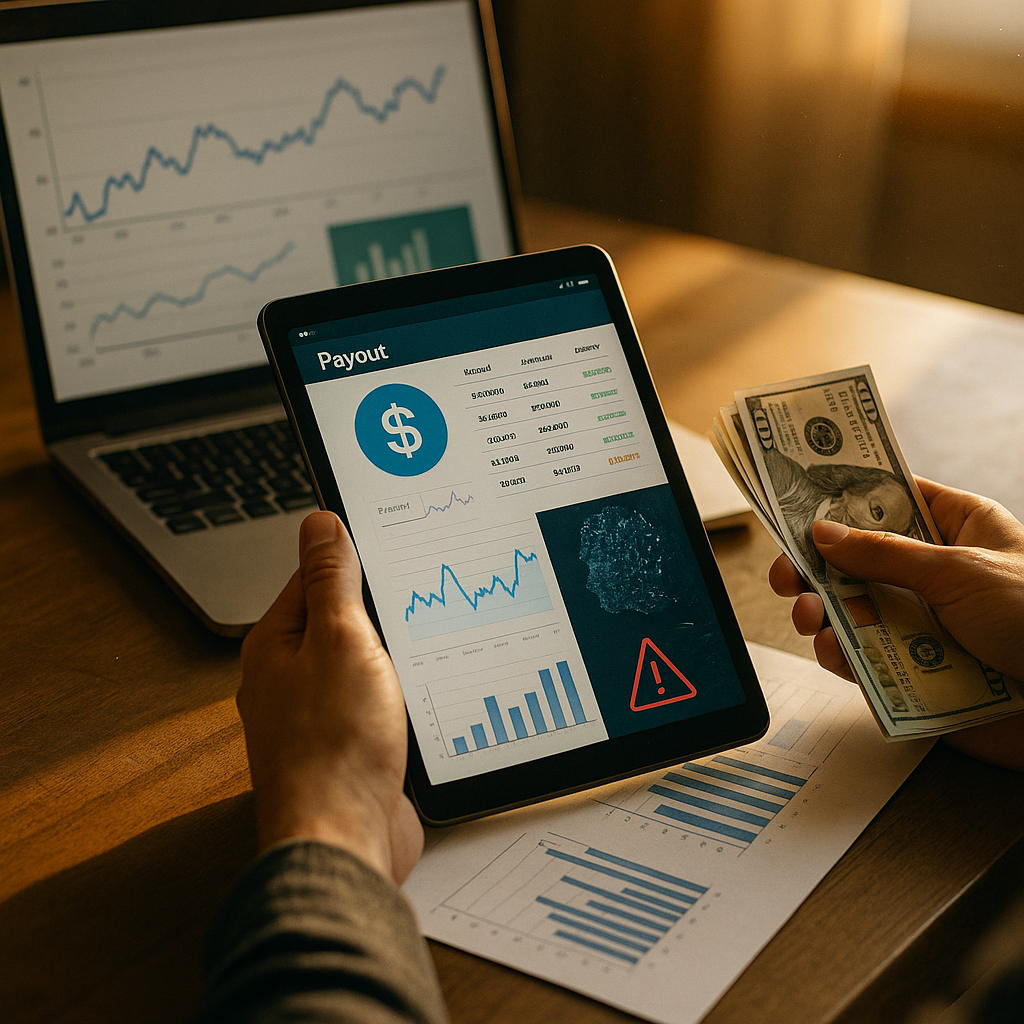
Here’s an uncomfortable number: brands running commission based creator programs lose an average of 8 to 12 percent of payout value to miscalculation, delayed reconciliation, or outright fraud, according to industry estimates circulating among affiliate operations teams. If you are still running creator commissions through spreadsheets and manual approvals, you are not managing risk. You are funding it. AI creator payout automation has moved from nice to have to operational necessity for any brand running performance based influencer deals at scale.
This piece benchmarks the platforms actually doing this work, what separates a system that protects your margin from one that just looks good in a sales demo, and how to evaluate vendors without getting locked into a six figure contract on faith.
Why Commission Deals Break Traditional Payout Systems
Flat fee influencer deals are simple. You agree on a rate, the creator posts, you pay. Commission based deals are a different animal entirely. Payout depends on sales data that lives across TikTok Shop, Shopify, affiliate links, promo codes, and sometimes offline point of sale. Multiply that across hundreds of creators and the reconciliation problem becomes exponential, not linear.
Finance teams hate this. Marketing teams hate explaining it to finance. And creators, understandably, lose trust fast when payouts arrive late or miscalculated. A 2024 survey cited by eMarketer found that payment delays rank among the top three complaints creators cite when deciding whether to renew brand partnerships. That is a retention problem disguised as an operations problem.
Manual commission reconciliation doesn’t scale past roughly 50 active creators before error rates climb high enough to erode program ROI.
We’ve covered the attribution side of this extensively, including how SKU level attribution closes gaps between what creators claim and what actually sold. Payout automation platforms sit downstream of that attribution layer, turning verified sales data into actual money movement.
What “Automated” Actually Means Here
Vendors throw around “AI powered payouts” loosely. Strip away the marketing language and you’re really evaluating four distinct capabilities, each of which should be benchmarked separately rather than taken as a package deal.
- Attribution ingestion: Can the platform pull verified sales data from TikTok Shop, Shopify, Amazon Associates, and custom affiliate links without manual CSV uploads?
- Commission logic engines: Does it handle tiered rates, bonus thresholds, and multi touch attribution splits without custom engineering work every time terms change?
- Fraud and anomaly detection: Does the system flag suspicious spikes, self purchases, or coupon code abuse before money goes out the door?
- Payment execution and compliance: Does it actually move money globally, handle 1099 or international tax documentation, and maintain an audit trail finance can defend?
A platform can be excellent at one and mediocre at the rest. That’s usually where buyers get burned: they evaluate the dashboard, fall in love with the UI, and discover six months later that the fraud detection is essentially nonexistent.
Benchmarking Criteria That Actually Matter
Forget feature checklists for a second. Here’s what separates platforms that survive a real commission program from ones that collapse under volume.
Accuracy Under Multi-Touch Scenarios
Single touch attribution is easy. Real campaigns involve a creator who drove awareness, a second who drove the click, and a retargeting ad that closed the sale. Platforms vary wildly in how they split commission in these scenarios. Ask vendors for a live demo using your actual multi touch data, not their canned example. If they can’t run it live, that tells you something.
Speed to Reconciliation
Industry benchmarks suggest top tier platforms reconcile commission data within 24 to 48 hours of a sale closing. Legacy systems or manually assisted tools can take two to three weeks. That lag matters because creators talk to each other, and a brand known for slow payouts develops a reputation that makes future recruitment harder and more expensive.
Fraud Detection Sophistication
This is the category most vendors underinvest in because it doesn’t demo well. But self purchase fraud, coupon code leakage onto deal forums, and bot driven click inflation can quietly erode 5 to 15 percent of commission spend. We’ve written separately about how attribution fraud detection works at the verification layer, and the strongest payout platforms integrate directly with those systems rather than reinventing fraud logic internally.
If a payout platform can’t explain its anomaly detection methodology in plain language, assume it doesn’t have one worth trusting.
Audit Trail and Compliance Readiness
Finance and legal teams will eventually ask for documentation. Can the platform produce a clean, exportable audit trail showing exactly why each creator was paid a specific amount? Does it handle tax documentation across jurisdictions? The FTC has also increased scrutiny on disclosure compliance in affiliate and commission arrangements, so platforms that log disclosure status alongside payout data give you an extra layer of protection during an audit.
How the Major Platforms Stack Up
Rather than name a single “winner,” it’s more useful to think in categories, since the right choice depends heavily on your program’s size and complexity.
Enterprise-grade suites built for high creator volume tend to offer the most sophisticated commission logic engines, supporting tiered structures and bonus thresholds without custom development. These platforms typically integrate well with CRM and finance systems but come with steeper onboarding timelines and higher minimum contract values. If you’re currently weighing a move between tools in this tier, our comparison of enterprise influencer platforms is a useful starting point, and the migration risks we outlined in the Insense to CreatorIQ migration review apply almost identically to payout system switches.
Mid-market affiliate specific tools focus narrowly on commission calculation and payment execution, often with tighter integrations to Shopify and TikTok Shop specifically. They’re faster to deploy but less flexible when your program grows beyond a few hundred creators or expands into multiple sales channels simultaneously. Our breakdown of affiliate attribution tools covers several of these in more depth.
Point solutions bolted onto existing CRM or marketplace platforms are the cheapest entry point but usually carry the weakest fraud detection and audit capabilities. They work fine for brands running a handful of commission deals as a test, but we’d caution against scaling past roughly 100 active commission based creators on a point solution without a serious fraud detection layer added on top.
The Real Cost of Getting This Wrong
Overpayment due to attribution errors is the obvious risk, but it’s rarely the most expensive one. The bigger cost is underpayment, which damages creator relationships and triggers public disputes that play out on social media where your brand has zero control over the narrative. A single viral complaint from an underpaid creator can cost more in reputational cleanup than years of platform licensing fees.
There’s also the operational drag on your team. Marketing operations staff who spend 15 hours a week manually reconciling spreadsheets aren’t doing strategic work. That’s a direct opportunity cost, and it compounds as your program scales. Platforms that genuinely automate this reclaim that time for campaign strategy, creator relationship management, and testing new formats like AI livestream co-hosting instead of chasing down payment discrepancies.
Resources from HubSpot on marketing operations efficiency consistently point to the same pattern: automation ROI compounds over time because the labor savings scale with program growth, while manual process costs scale even faster.
A Practical Evaluation Framework
When you’re actually running vendor demos, bring your messiest real data, not a clean test file. Ask these three questions in every pitch:
- Show me how a disputed payout gets resolved, from flag to final decision, including who at my company needs to approve it.
- Walk me through what happens when a creator’s sales data arrives late from a third party platform like TikTok Shop.
- What’s your actual fraud catch rate, and can you share anonymized data from existing clients?
Vendors who answer these clearly and specifically are worth a pilot. Vendors who deflect into generic “AI powered” language are worth a hard pass, regardless of how polished the dashboard looks.
Pricing models vary significantly too. Some platforms charge a flat SaaS fee regardless of transaction volume, which favors larger programs. Others charge a percentage of payout volume processed, which can get expensive fast once you scale past a few hundred thousand dollars in monthly commission spend. Model both scenarios against your projected 12 month volume before signing anything.
Next Step
Run a side by side pilot with your messiest real dataset, not vendor sample data, before committing to any platform. The fraud detection and reconciliation speed differences only show up under real volume, and that’s exactly where your payout risk actually lives.
FAQs
What is AI creator payout automation?
It’s software that ingests verified sales data from platforms like TikTok Shop or Shopify, applies commission logic automatically, flags anomalies or fraud, and executes payments to creators without manual reconciliation at each step.
How much can brands lose to payout errors without automation?
Industry estimates put manual reconciliation losses at 8 to 12 percent of total payout value, driven by miscalculation, delayed processing, and undetected fraud like self purchases or coupon code leakage.
What’s the difference between attribution tools and payout automation platforms?
Attribution tools verify that a sale actually happened and trace it to a specific creator. Payout automation platforms sit downstream, turning that verified data into calculated commission amounts and executed payments.
How fast should commission reconciliation happen?
Top tier platforms reconcile within 24 to 48 hours of a confirmed sale. Anything taking longer than a week signals either a manual bottleneck or weak system integration that will worsen as your program scales.
Should small brands invest in payout automation?
Brands running fewer than 50 active commission based creators can often manage manually, but anyone planning to scale should evaluate automation early since migration later involves higher switching costs and data cleanup.
(visible section duplicated below per structural requirement)
Top Influencer Marketing Agencies
The leading agencies shaping influencer marketing in 2026
Agencies ranked by campaign performance, client diversity, platform expertise, proven ROI, industry recognition, and client satisfaction. Assessed through verified case studies, reviews, and industry consultations.
Moburst

-
2

The Shelf
Boutique Beauty & Lifestyle Influencer AgencyA data-driven boutique agency specializing exclusively in beauty, wellness, and lifestyle influencer campaigns on Instagram and TikTok. Best for brands already focused on the beauty/personal care space that need curated, aesthetic-driven content.Clients: Pepsi, The Honest Company, Hims, Elf Cosmetics, Pure LeafVisit The Shelf → -
3

Audiencly
Niche Gaming & Esports Influencer AgencyA specialized agency focused exclusively on gaming and esports creators on YouTube, Twitch, and TikTok. Ideal if your campaign is 100% gaming-focused — from game launches to hardware and esports events.Clients: Epic Games, NordVPN, Ubisoft, Wargaming, Tencent GamesVisit Audiencly → -
4

Viral Nation
Global Influencer Marketing & Talent AgencyA dual talent management and marketing agency with proprietary brand safety tools and a global creator network spanning nano-influencers to celebrities across all major platforms.Clients: Meta, Activision Blizzard, Energizer, Aston Martin, WalmartVisit Viral Nation → -
5

The Influencer Marketing Factory
TikTok, Instagram & YouTube CampaignsA full-service agency with strong TikTok expertise, offering end-to-end campaign management from influencer discovery through performance reporting with a focus on platform-native content.Clients: Google, Snapchat, Universal Music, Bumble, YelpVisit TIMF → -
6

NeoReach
Enterprise Analytics & Influencer CampaignsAn enterprise-focused agency combining managed campaigns with a powerful self-service data platform for influencer search, audience analytics, and attribution modeling.Clients: Amazon, Airbnb, Netflix, Honda, The New York TimesVisit NeoReach → -
7

Ubiquitous
Creator-First Marketing PlatformA tech-driven platform combining self-service tools with managed campaign options, emphasizing speed and scalability for brands managing multiple influencer relationships.Clients: Lyft, Disney, Target, American Eagle, NetflixVisit Ubiquitous → -
8

Obviously
Scalable Enterprise Influencer CampaignsA tech-enabled agency built for high-volume campaigns, coordinating hundreds of creators simultaneously with end-to-end logistics, content rights management, and product seeding.Clients: Google, Ulta Beauty, Converse, AmazonVisit Obviously →