


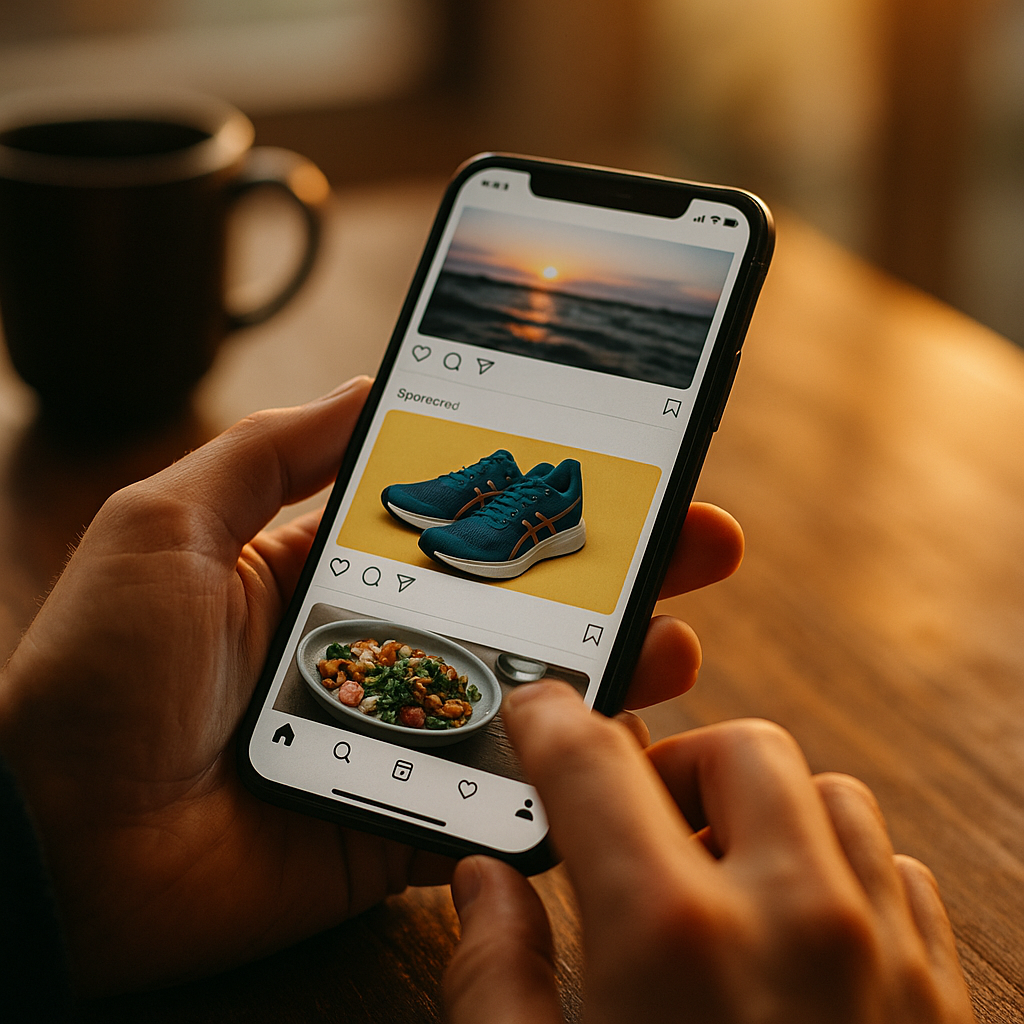
Your Sponsored Post Just Got Buried — and the Algorithm Won’t Apologize
Here’s a number that should make every brand strategist uncomfortable: according to Statista’s latest data, over 70% of content consumed on TikTok, Instagram, and YouTube now comes from accounts users don’t follow. The AI-curated social feed has effectively replaced the chronological timeline, and the implications for sponsored content visibility are massive. If your creator partnerships still assume that a creator’s follower count equals guaranteed reach, you’re operating on a broken premise.
The shift isn’t coming. It happened. And most brand teams haven’t caught up.
What “AI-Curated” Actually Means for Your Branded Content
Let’s get specific about what these platforms are doing, because “algorithm” has become a lazy catch-all.
TikTok’s recommendation engine evaluates hundreds of signals per piece of content — watch time, rewatch rate, shares, comment sentiment, even the speed at which someone scrolls past. Instagram’s Explore and Reels tabs now prioritize content from non-followed accounts based on similar behavioral clustering. YouTube Shorts uses a separate recommendation model from long-form, one that’s aggressively tuned for retention within the first three seconds.
The common thread: none of these systems care who posted the content. They care whether the content performs for a specific user cluster.
Follower count is now a vanity metric for distribution. The AI-curated social feed rewards content performance signals — not creator audience size — when deciding what gets surfaced and to whom.
For sponsored content, this creates a paradox. Brand guidelines, legal disclaimers, and scripted talking points can reduce the very engagement signals that feed algorithms optimize for. A beautifully produced #ad that feels like an ad gets deprioritized. A raw, story-driven integration that hooks in the first second gets amplified — even to non-followers.
Why the Creator Brief Is Now an Algorithm Brief
Most creator briefs still read like ad copy instructions. Include these three talking points. Show the product within the first 15 seconds. Use this hashtag. Mention the promo code twice.
That approach worked when feeds were chronological and followers saw everything. It’s actively harmful in an AI-curated environment.
Consider what TikTok’s advertising platform now recommends to advertisers: lead with a hook, not a brand mention. Prioritize native aesthetics. Let creators use their own storytelling cadence. These aren’t creative preferences — they’re algorithmic survival tactics.
Brands that have internalized this are already seeing results. The shift toward rewriting creator briefs for AI-driven distribution is one of the most consequential operational changes a brand can make right now. Instead of prescribing every frame, the brief should define outcomes (awareness, click-through, consideration) and then give creators latitude to produce content the algorithm will actually reward.
This doesn’t mean abandoning brand safety. It means redefining where control sits. Lock down the message. Liberate the format.
The Micro-Creator Advantage in Algorithmic Feeds
Something counterintuitive is happening. Smaller creators — those with 10K to 100K followers — are disproportionately benefiting from AI-curated distribution.
Why? Two reasons.
First, their content tends to feel more native. Less polished, more authentic, harder for the algorithm to flag as commercial. Second, their engagement rates within niche interest clusters are higher, which sends exactly the signals these recommendation engines prioritize.
The data backs this up. Brands deploying micro-creator strategies are seeing significantly higher revenue per impression compared to macro-influencer campaigns. When the algorithm decides who sees content based on engagement quality rather than follower graphs, the playing field tilts toward creators who genuinely connect with tight audiences.
This has direct budget implications. If you’re allocating 60% of your influencer spend to three macro creators and 40% to twenty micro-creators, the AI-curated feed might make the case for inverting that ratio. The high-volume creator campaign model — more creators, smaller individual investments, broader algorithmic surface area — is quickly becoming the dominant playbook for brands optimizing for visibility in recommendation feeds.
Attribution Gets Harder Before It Gets Better
Here’s the operational headache nobody talks about enough: when an algorithm surfaces your sponsored content to users who don’t follow the creator, your existing attribution models break.
Traditional influencer attribution assumes a relatively predictable audience. Creator A has 500K followers in the 25-34 female demographic. You run a sponsored post. You measure engagement and conversions within that known audience. Clean enough.
But when the AI-curated social feed pushes that same post to 2 million people — most of whom have no prior relationship with the creator — you lose the “who saw this and why” signal that attribution depends on. Was the conversion driven by the creator’s credibility, or by the algorithm serving it to someone already in-market? The answer matters for how you value that creator partnership going forward.
AI-curated distribution breaks the assumption that a creator’s audience equals the campaign’s audience. Brands need attribution models that account for algorithmic reach, not just follower-based impressions.
Solutions are emerging but imperfect. Platform-native analytics are improving — Meta’s business tools now provide more granular reach breakdowns between follower and non-follower impressions. Third-party tools from CreatorIQ and Traackr are building models that weight algorithmic amplification differently from organic follower reach. If you’re struggling with this gap, the frameworks around fixing the creator attribution gap are worth exploring as a starting point.
The brands that figure out attribution in an AI-curated world will have a genuine competitive advantage. Everyone else will be guessing.
Platform-Specific Realities You Can’t Ignore
TikTok remains the most algorithmically aggressive. Sponsored content with the paid partnership label can still go viral, but internal data from multiple agencies suggests a 15-25% reach penalty compared to unlabeled organic content. The workaround isn’t to skip disclosure — that’s an FTC compliance nightmare — but to create content so natively engaging that the algorithm overcomes the penalty. TikTok’s Spark Ads, which boost organic creator posts as paid units, offer a hybrid path that sidesteps some of this friction.
Instagram is playing catch-up but moving fast. The platform’s shift toward recommending Reels from non-followed accounts now accounts for roughly 40% of Reels impressions, according to Meta’s own disclosures. For brands, this means Instagram is no longer a “follower loyalty” platform — it’s becoming a discovery engine. Carousel posts and Stories still skew heavily toward existing followers, so your format choice directly impacts who sees the content.
YouTube operates two distinct algorithms. Long-form recommendations favor watch history and subscriber behavior. Shorts recommendations behave more like TikTok — content-first, relationship-second. If your creator partnerships span both formats, you’re essentially running two different distribution strategies on the same platform.
What to Do Monday Morning
Here’s a practical framework for adapting your sponsored content strategy to AI-curated feeds:
- Audit your briefs. Pull your last five creator briefs. Count the prescriptive format requirements. If more than 30% of the brief is format-specific, you’re likely suppressing algorithmic performance. Rewrite toward outcome-based briefs.
- Segment by distribution model. Categorize every platform and format you use as “follower-first” (Stories, Community posts) or “algorithm-first” (Reels, Shorts, TikTok feed). Allocate creator selection and content strategy differently for each.
- Shift spend toward volume. Test a campaign where you replace one $50K macro-creator post with ten $5K micro-creator posts. Measure total algorithmic reach, not just follower-based impressions.
- Upgrade attribution. Demand follower vs. non-follower reach splits from every platform report. If your analytics partner can’t provide this, that’s a red flag. Explore how AI is reshaping the creator funnel to build a more accurate measurement approach.
- Test algorithmic resilience. Before scaling a creator partnership, run a small organic test post (non-sponsored) to see how the algorithm treats that creator’s content. If their organic Reels barely escape their follower base, a sponsored post won’t magically break through.
The AI-curated social feed isn’t a trend — it’s the permanent infrastructure of content distribution. The brands that treat the algorithm as a stakeholder in their creative process, not an obstacle to overcome, will win disproportionate visibility. Start by giving creators room to make content the algorithm actually wants to show.
FAQs
How does the AI-curated social feed affect sponsored content visibility?
AI-curated feeds prioritize content based on engagement signals like watch time, shares, and comment sentiment rather than follower relationships. This means sponsored content that feels overly scripted or commercial can be deprioritized, while native-feeling branded content can reach far beyond a creator’s follower base through algorithmic recommendation.
Does the paid partnership label reduce reach on TikTok and Instagram?
Agency data suggests that sponsored content with paid partnership labels can experience a 15-25% reach penalty on TikTok compared to unlabeled organic posts. However, brands should never skip disclosure — FTC compliance is non-negotiable. Instead, focus on creating content engaging enough to overcome any algorithmic friction.
Why do micro-creators perform better in algorithm-driven feeds?
Micro-creators tend to produce content that looks and feels native to the platform, which generates stronger engagement signals. Their audiences, while smaller, are often more tightly clustered around specific interests, resulting in higher engagement rates that recommendation algorithms reward with broader distribution.
How should brands change creator briefs for AI-curated feeds?
Brands should shift from prescriptive format-based briefs to outcome-based briefs. Define the campaign objective — awareness, clicks, or consideration — and give creators latitude over storytelling format, pacing, and hooks. This allows creators to produce content that aligns with how recommendation algorithms evaluate and surface content.
What attribution challenges do AI-curated feeds create for influencer marketing?
When algorithms push sponsored content to users who don’t follow the creator, traditional attribution models that assume a known audience break down. Brands need to track follower vs. non-follower reach splits and build models that distinguish between conversions driven by creator credibility and those driven by algorithmic targeting of in-market users.
Top Influencer Marketing Agencies
The leading agencies shaping influencer marketing in 2026
Agencies ranked by campaign performance, client diversity, platform expertise, proven ROI, industry recognition, and client satisfaction. Assessed through verified case studies, reviews, and industry consultations.
Moburst

-
2

The Shelf
Boutique Beauty & Lifestyle Influencer AgencyA data-driven boutique agency specializing exclusively in beauty, wellness, and lifestyle influencer campaigns on Instagram and TikTok. Best for brands already focused on the beauty/personal care space that need curated, aesthetic-driven content.Clients: Pepsi, The Honest Company, Hims, Elf Cosmetics, Pure LeafVisit The Shelf → -
3

Audiencly
Niche Gaming & Esports Influencer AgencyA specialized agency focused exclusively on gaming and esports creators on YouTube, Twitch, and TikTok. Ideal if your campaign is 100% gaming-focused — from game launches to hardware and esports events.Clients: Epic Games, NordVPN, Ubisoft, Wargaming, Tencent GamesVisit Audiencly → -
4

Viral Nation
Global Influencer Marketing & Talent AgencyA dual talent management and marketing agency with proprietary brand safety tools and a global creator network spanning nano-influencers to celebrities across all major platforms.Clients: Meta, Activision Blizzard, Energizer, Aston Martin, WalmartVisit Viral Nation → -
5

The Influencer Marketing Factory
TikTok, Instagram & YouTube CampaignsA full-service agency with strong TikTok expertise, offering end-to-end campaign management from influencer discovery through performance reporting with a focus on platform-native content.Clients: Google, Snapchat, Universal Music, Bumble, YelpVisit TIMF → -
6

NeoReach
Enterprise Analytics & Influencer CampaignsAn enterprise-focused agency combining managed campaigns with a powerful self-service data platform for influencer search, audience analytics, and attribution modeling.Clients: Amazon, Airbnb, Netflix, Honda, The New York TimesVisit NeoReach → -
7

Ubiquitous
Creator-First Marketing PlatformA tech-driven platform combining self-service tools with managed campaign options, emphasizing speed and scalability for brands managing multiple influencer relationships.Clients: Lyft, Disney, Target, American Eagle, NetflixVisit Ubiquitous → -
8

Obviously
Scalable Enterprise Influencer CampaignsA tech-enabled agency built for high-volume campaigns, coordinating hundreds of creators simultaneously with end-to-end logistics, content rights management, and product seeding.Clients: Google, Ulta Beauty, Converse, AmazonVisit Obviously →