


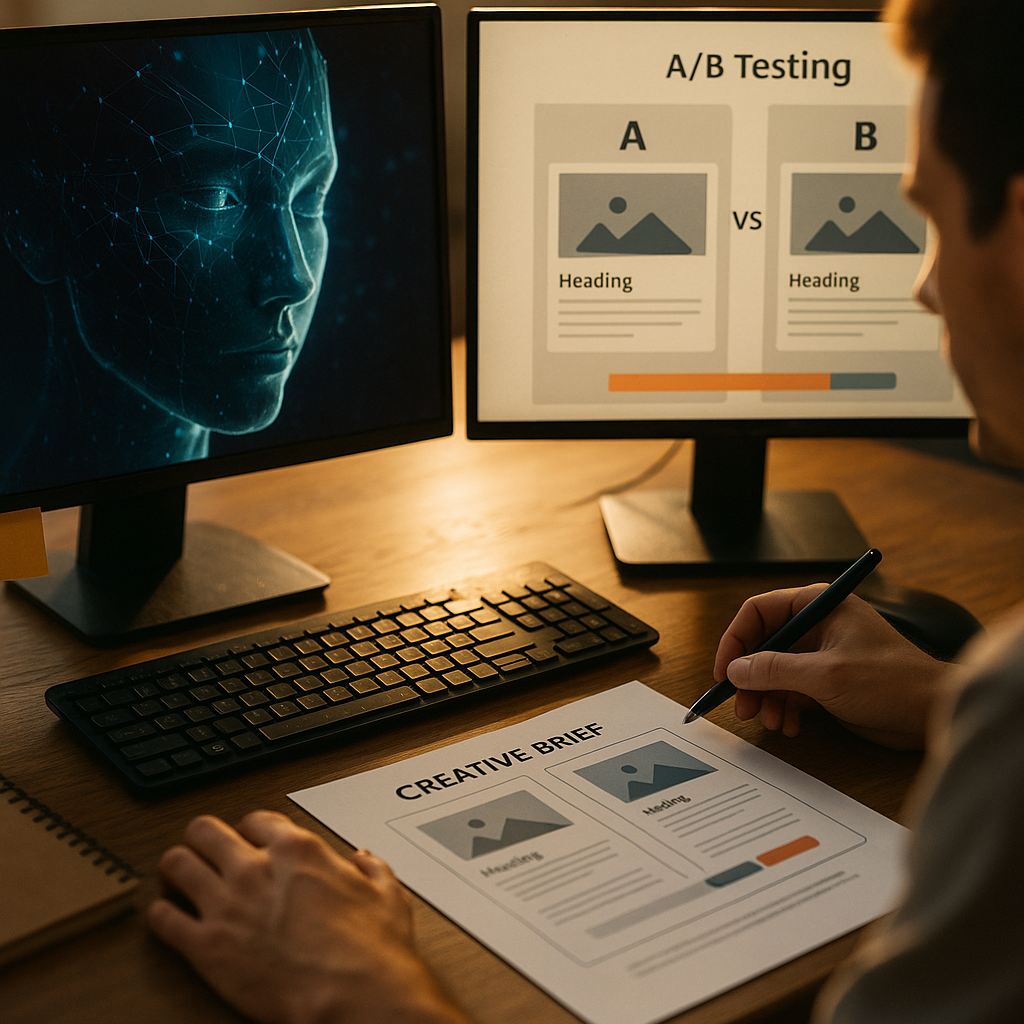
Using AI to A/B test different creative briefs is revolutionizing the way marketers optimize campaigns and discover the most effective messaging. With smarter tools and deeper analytics, brands can now identify key performance drivers faster than ever. If you want to maximize ROI and streamline creative decision-making, this is your guide to leveraging AI-powered experimentation for creative briefs.
Why AI-Powered A/B Testing is Transforming Creative Brief Development
AI-driven A/B testing is a game changer in creative marketing. Traditional A/B testing methods often required extensive manual setup and lengthy data collection. Now, artificial intelligence accelerates the process, analyzing vast sets of creative variations and performance data almost in real time. This capability enables brands to quickly iterate on creative briefs, pinpoint what truly resonates with audiences, and reduce wasted ad spend.
Critical to this transformation is the secondary keyword: AI-powered creative optimization. By integrating machine learning algorithms with test structures, marketers can:
- Generate more creative brief variants without increasing workload
- Cluster and segment user responses for sharper insights
- Automate the identification of high-performing content elements
- Adapt creative strategies dynamically based on live feedback
This automated, data-driven approach grants creative teams more confidence and clarity, letting them focus on innovation while AI handles measurement and pattern recognition.
Setting Up A/B Tests with AI for Creative Briefs
To utilize AI-driven split testing effectively, the setup process is crucial. Begin by defining a clear objective for your creative brief—whether it’s brand awareness, conversions, or lead generation. Next, use AI tools to generate and refine multiple versions of your brief. These platforms, like Google’s Performance Max or Meta’s Advantage+, allow for automatic creative permutations and structured deployment.
Key steps include:
- Identify test variables: Headlines, value propositions, imagery, tone, and CTAs.
- Input creative options: Feed AI with diverse, well-thought-out creative brief elements.
- Define success metrics: Click-through rates, engagement, conversions, and sentiment analysis are popular choices for 2025.
- Deploy and monitor: Let AI platforms manage delivery to randomized segments for unbiased results.
Consistent, high-quality data input is vital. The more relevant and distinct each creative brief variant is, the more actionable the resulting insights will be.
Leveraging AI to Analyze Results and Pinpoint Performance Drivers
After running A/B tests, AI-based creative analytics tools step in to make sense of the complex data. These systems don’t just report which version performed best—they interpret why, surfacing key performance drivers that may have been previously overlooked.
How does this work?
- Natural Language Processing (NLP): AI deciphers user responses and engagement patterns, revealing emotional triggers and language preferences.
- Attribution modeling: AI traces conversions or engagement spikes back to specific creative elements, such as headlines or visuals.
- Heat mapping and eye tracking: Advanced tools show exactly where users focus within creative assets.
- Automated reporting and recommendations: Actionable insights for future briefs are generated without manual analysis, letting marketers iterate rapidly.
This approach doesn’t just validate or reject creative hypotheses. It delivers granular feedback on what aspects—be it a phrase, an image, or a tone—most directly influence audience response.
Scaling Creative Brief Optimization Through AI Automation
Perhaps the most strategic benefit of scalable creative optimization with AI is the ability to continuously improve outcomes across campaigns, market segments, and channels. In 2025, AI tools can test hundreds of creative versions in parallel, far beyond human capacity, and surface actionable learnings at scale.
Here’s what this looks like for a typical marketing team:
- Ongoing experimentation: AI can automatically launch new A/B/n tests based on past findings, adapting to shifting trends and market feedback.
- Personalization engines: AI segments audiences using behavioral data, dynamically deploying the best-performing brief for each cluster.
- Omnichannel orchestration: AI ensures creative briefs are tested and optimized not just in one channel but across social, search, email, and even emerging platforms like conversational AI assistants.
This leads to a “learning flywheel”—a self-perpetuating system where each campaign enhances the AI’s recommendations for the next, increasing both efficiency and effectiveness over time.
Best Practices for Ethical and Impactful AI A/B Testing in 2025
While ethical AI A/B testing can drive dramatic improvements in marketing results, it’s imperative to follow best practices in data privacy, transparency, and creative integrity:
- Ensure Data Privacy: Always comply with global privacy regulations (such as GDPR and CCPA) and clearly inform users about data usage associated with creative tests.
- Maintain Human Oversight: While AI can generate and optimize, human review is essential to ensure messaging remains on-brand and culturally sensitive.
- Avoid Algorithmic Bias: Regularly audit AI-driven outcomes to detect any bias in audience segmentation or creative recommendations.
- Document Learnings: Store and regularly revisit insights from each AI-powered test to guide broader team knowledge and best practices.
Prioritizing ethical standards ensures your brand builds trust while benefiting from AI’s efficiency and insight.
Integrating AI-Driven Insights with Creative Strategy
The real power of AI-based marketing strategy lies in synthesizing performance data with human creativity. AI can reveal what’s working and why, but it’s up to marketers and creators to interpret the nuances and translate findings into highly persuasive, emotional storytelling.
To operationalize AI insights within your creative workflow:
- Collaborate across teams: Share AI findings with copywriters, designers, and strategists to inspire new ideas.
- Iterate briefs efficiently: Use AI-generated recommendations as starting points for fresh creative development.
- Embrace experimentation culture: Promote rapid, data-informed prototyping to foster innovation without fear of “failure.”
AI-supported creative optimization is most effective in organizations where data and imagination work hand in hand.
Conclusion
In 2025, using AI to A/B test different creative briefs is not just smart—it’s essential for data-driven marketing. By harnessing AI’s analytic and automation power, marketers can pinpoint key performance drivers, generate higher-impact creative, and accelerate campaign success. Make AI experimentation a core part of your creative process to consistently outpace the competition and maximize ROI.
FAQs
-
How does AI improve creative A/B testing compared to traditional methods?
AI enables rapid testing of multiple variables, providing faster, deeper insights and automating data analysis, which leads to quicker and more accurate optimization of creative briefs.
-
What tools are recommended for AI-driven creative brief testing in 2025?
Popular tools include Google’s Performance Max, Meta’s Advantage+, and specialized AI creative platforms that focus on campaign testing and optimization across channels.
-
Can AI-generated recommendations replace creative teams?
No, AI provides data and suggestions but creative strategy, brand voice, and emotional resonance remain the domain of skilled marketers and creators.
-
What are the most important metrics to track when A/B testing creative briefs using AI?
Common metrics include CTR (Click-Through Rate), conversion rate, engagement, time on page, and qualitative sentiment analysis, all of which AI can process and interpret efficiently.
-
How can bias in AI-powered creative testing be minimized?
Regularly audit test outcomes, use diverse data sets, and ensure human oversight to identify and correct any potential algorithmic or dataset biases during the creative testing process.
Top Influencer Marketing Agencies
The leading agencies shaping influencer marketing in 2026
Agencies ranked by campaign performance, client diversity, platform expertise, proven ROI, industry recognition, and client satisfaction. Assessed through verified case studies, reviews, and industry consultations.
Moburst

-
2

The Shelf
Boutique Beauty & Lifestyle Influencer AgencyA data-driven boutique agency specializing exclusively in beauty, wellness, and lifestyle influencer campaigns on Instagram and TikTok. Best for brands already focused on the beauty/personal care space that need curated, aesthetic-driven content.Clients: Pepsi, The Honest Company, Hims, Elf Cosmetics, Pure LeafVisit The Shelf → -
3

Audiencly
Niche Gaming & Esports Influencer AgencyA specialized agency focused exclusively on gaming and esports creators on YouTube, Twitch, and TikTok. Ideal if your campaign is 100% gaming-focused — from game launches to hardware and esports events.Clients: Epic Games, NordVPN, Ubisoft, Wargaming, Tencent GamesVisit Audiencly → -
4

Viral Nation
Global Influencer Marketing & Talent AgencyA dual talent management and marketing agency with proprietary brand safety tools and a global creator network spanning nano-influencers to celebrities across all major platforms.Clients: Meta, Activision Blizzard, Energizer, Aston Martin, WalmartVisit Viral Nation → -
5

The Influencer Marketing Factory
TikTok, Instagram & YouTube CampaignsA full-service agency with strong TikTok expertise, offering end-to-end campaign management from influencer discovery through performance reporting with a focus on platform-native content.Clients: Google, Snapchat, Universal Music, Bumble, YelpVisit TIMF → -
6

NeoReach
Enterprise Analytics & Influencer CampaignsAn enterprise-focused agency combining managed campaigns with a powerful self-service data platform for influencer search, audience analytics, and attribution modeling.Clients: Amazon, Airbnb, Netflix, Honda, The New York TimesVisit NeoReach → -
7

Ubiquitous
Creator-First Marketing PlatformA tech-driven platform combining self-service tools with managed campaign options, emphasizing speed and scalability for brands managing multiple influencer relationships.Clients: Lyft, Disney, Target, American Eagle, NetflixVisit Ubiquitous → -
8

Obviously
Scalable Enterprise Influencer CampaignsA tech-enabled agency built for high-volume campaigns, coordinating hundreds of creators simultaneously with end-to-end logistics, content rights management, and product seeding.Clients: Google, Ulta Beauty, Converse, AmazonVisit Obviously →