


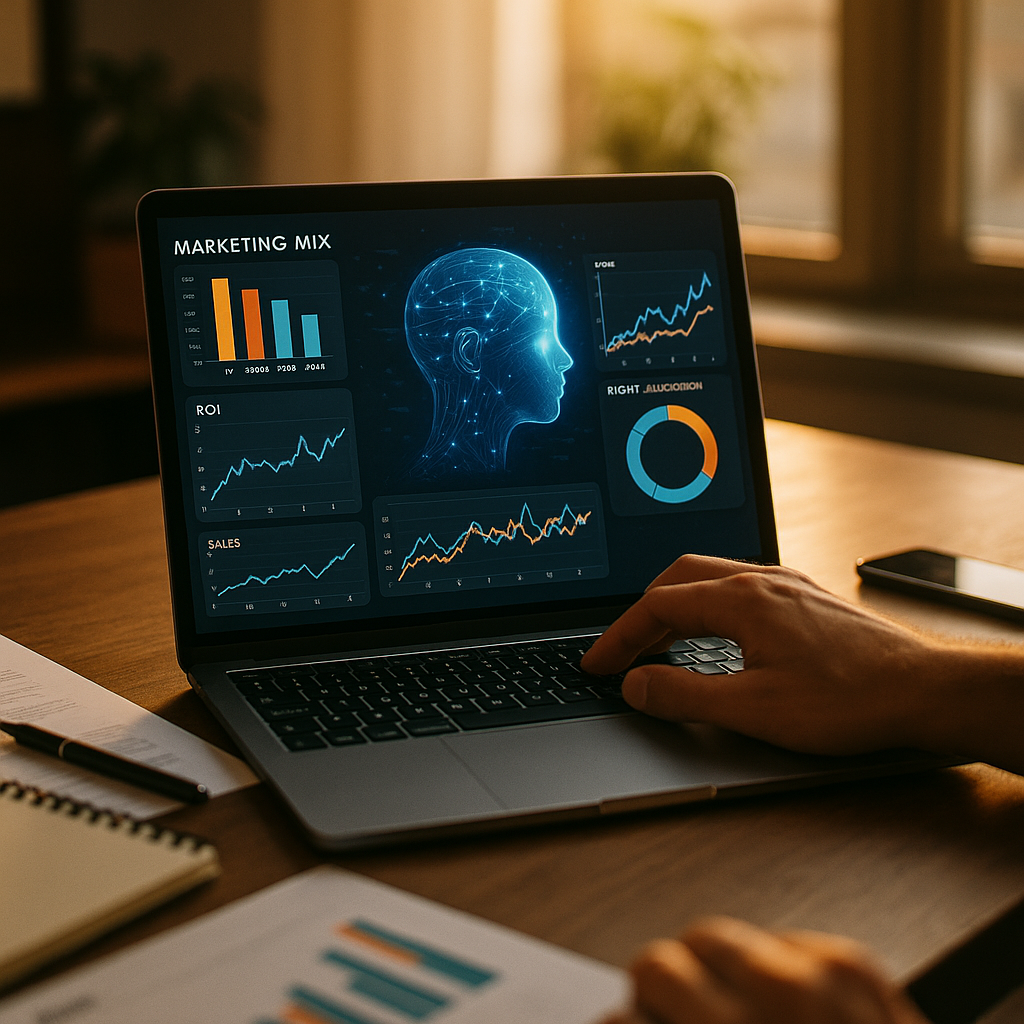
Using AI to analyze and optimize your marketing mix modeling empowers brands to make smarter, data-driven decisions that directly impact ROI. As marketing data sources grow in complexity in 2025, businesses must leverage artificial intelligence to uncover actionable insights. Discover how AI is revolutionizing marketing mix modeling—and how you can outpace competitors with the latest innovations.
How AI Is Transforming Marketing Mix Modeling Analysis
Marketing mix modeling (MMM) analyzes the effectiveness of various marketing channels and tactics in driving sales and conversions. Traditionally, MMM relied on statistical techniques and historical data. However, AI-powered marketing mix modeling brings a step-change in accuracy and agility.
AI models process vast data sets from multiple sources, such as online and offline advertising, promotions, and economic factors. Machine learning algorithms identify patterns and relationships that humans may miss, providing a clearer picture of what’s actually driving results. By continuously learning from new data, AI-enabled MMM offers dynamic adjustments that keep up with rapidly changing consumer behaviors and market environments—crucial in 2025’s competitive landscape.
Key Benefits:
- Improved granularity: Assess the effectiveness of micro-segments or even individual creative assets.
- Real-time insights: Adapt campaigns more quickly, avoiding wasted spend.
- Advanced attribution: Move beyond last-click to understand cross-channel influence.
Using Machine Learning to Optimize Marketing Channel Allocation
Modern AI-driven MMM excels at optimizing channel allocation—the process of distributing budget among paid, owned, and earned media. Machine learning algorithms evaluate historical performance data, external signals (such as seasonality and competitor activity), and business constraints.
Through predictive modeling, AI can simulate potential scenarios and forecast the impact of shifting budget allocations across channels, enabling marketers to identify the ideal media mix. In 2025, brands leveraging AI for channel optimization can make weekly or even daily adjustments, ensuring every dollar maximizes ROI. These recommendations are continuously tested and updated as new campaign data arrives, creating a cycle of perpetual improvement—far exceeding the pace of traditional MMM, which typically updates quarterly or less.
By automatically flagging underperforming tactics and reallocating resources, AI helps marketers avoid costly mistakes and capitalize on high-potential channels before competitors catch up.
Enhancing Data Quality and Reliability With AI Solutions
Effective marketing mix modeling is only as good as the underlying data. AI tools now excel at cleansing, normalizing, and integrating disparate data sources—including point-of-sale transactions, web analytics, CRM systems, and third-party signals.
Natural language processing and computer vision are increasingly being used to analyze unstructured data, like social comments or video content, adding valuable context to the marketing mix. By automatically detecting and correcting anomalies or missing values, AI improves the reliability and trustworthiness of MMM outputs, supporting more confident decision-making.
Furthermore, AI solutions flag potential biases or outliers in data collection, ensuring models reflect true consumer behavior rather than anomalies. This enhanced data hygiene is a prerequisite for accurate, actionable marketing insights in today’s fragmented media environment.
AI-Powered Marketing Mix Modeling for Incrementality Measurement
One of the key challenges in MMM has been accurately measuring the incremental value of each marketing activity—determining what would have happened without a specific campaign or channel. AI excels at simulating counterfactual scenarios and isolating true incremental lift.
By leveraging causal inference models, deep learning, and synthetic controls, AI can separate the impact of overlapping campaigns, external events (like holidays), and other confounding factors on sales performance. This allows companies to invest confidently in strategies proven to drive incremental outcomes, rather than simply correlational wins.
With advanced AI-powered MMM, brands unlock new granularity: from identifying high-performing regional or demographic segments to pinpointing which creative elements deliver lift. This enables hyper-targeted optimization and precise resource allocation—for a measurable impact on revenue.
Integrating AI-Driven Insights Into Your Marketing Strategy
To fully realize the value of AI-enhanced marketing mix modeling, it’s essential to operationalize its recommendations within your broader marketing organization. Start with clear business objectives—such as boosting top-line growth, improving marketing efficiency, or increasing market share.
Take these practical steps to activate AI-driven MMM insights:
- Embed AI analysis in your planning cycle: Use insights for quarterly and ongoing planning, budget allocation, and rapid course-corrections as conditions change.
- Educate teams: Train marketers, analysts, and executives on interpreting and applying MMM insights.
- Iterate quickly: Run controlled experiments to validate AI-led recommendations, and refine both strategies and models based on real-world outcomes.
- Foster collaboration: Align creative, media, and analytics teams around a unified measurement and optimization framework.
In 2025, top marketers integrate AI-model outputs with other measurement tools, like multi-touch attribution and consumer surveys, for a holistic view.
The Future: Augmented Decision-Making in Marketing Mix Modeling
The future of marketing mix modeling lies in true AI-human collaboration. As AI continues to evolve, marketers are moving from analyzing what happened, to recommending what should happen next, to automating many tactical decisions altogether.
Platforms now offer scenario planning interfaces, where teams use AI-generated simulations to model potential business outcomes under dozens of strategic options. This enables better forecasting, risk management, and alignment between marketing, finance, and executive leadership.
With the rise of responsible AI in marketing, transparency and explainability are top priorities. Leading AI platforms for MMM offer “glass box” reporting, illustrating how and why decisions are made—building trust, earning organizational buy-in, and enabling marketers to confidently take action.
Looking ahead, as AI integrates with other emerging technologies like privacy-preserving computation and real-time consumer feedback, the impact of marketing mix modeling will continue to expand and evolve.
In summary, using AI to analyze and optimize your marketing mix modeling unlocks greater agility, accuracy, and impact across campaigns. Brands that invest in these technologies in 2025 set themselves apart—maximizing ROI in a dynamic, data-driven world.
FAQs: Using AI for Marketing Mix Modeling
- What is marketing mix modeling?
Marketing mix modeling (MMM) is a data-driven analysis that quantifies the effectiveness of different marketing channels and tactics in driving desired outcomes, such as sales or leads. - How does AI improve marketing mix modeling?
AI enhances MMM by processing larger and more complex data sets, identifying deeper patterns, generating real-time optimization opportunities, and providing more precise, granular recommendations. - Can AI-powered MMM work with both online and offline data?
Yes, advanced AI solutions integrate online and offline data sources for a holistic view across digital, TV, print, in-store, and emerging touchpoints. - What are the main challenges of implementing AI in MMM?
Common challenges include ensuring high-quality data, managing model transparency, securing executive buy-in, and training teams to operationalize insights. - How quickly can AI update marketing mix recommendations?
Unlike traditional MMM, which often refreshes quarterly, AI-driven models can provide updated recommendations as frequently as weekly or daily, allowing for real-time optimization. - Is AI-based MMM right for all types of businesses?
While most industries benefit from AI-powered MMM, it’s particularly valuable for brands with diverse or complex marketing activities and robust data infrastructure.
Top Influencer Marketing Agencies
The leading agencies shaping influencer marketing in 2026
Agencies ranked by campaign performance, client diversity, platform expertise, proven ROI, industry recognition, and client satisfaction. Assessed through verified case studies, reviews, and industry consultations.
Moburst

-
2

The Shelf
Boutique Beauty & Lifestyle Influencer AgencyA data-driven boutique agency specializing exclusively in beauty, wellness, and lifestyle influencer campaigns on Instagram and TikTok. Best for brands already focused on the beauty/personal care space that need curated, aesthetic-driven content.Clients: Pepsi, The Honest Company, Hims, Elf Cosmetics, Pure LeafVisit The Shelf → -
3

Audiencly
Niche Gaming & Esports Influencer AgencyA specialized agency focused exclusively on gaming and esports creators on YouTube, Twitch, and TikTok. Ideal if your campaign is 100% gaming-focused — from game launches to hardware and esports events.Clients: Epic Games, NordVPN, Ubisoft, Wargaming, Tencent GamesVisit Audiencly → -
4

Viral Nation
Global Influencer Marketing & Talent AgencyA dual talent management and marketing agency with proprietary brand safety tools and a global creator network spanning nano-influencers to celebrities across all major platforms.Clients: Meta, Activision Blizzard, Energizer, Aston Martin, WalmartVisit Viral Nation → -
5

The Influencer Marketing Factory
TikTok, Instagram & YouTube CampaignsA full-service agency with strong TikTok expertise, offering end-to-end campaign management from influencer discovery through performance reporting with a focus on platform-native content.Clients: Google, Snapchat, Universal Music, Bumble, YelpVisit TIMF → -
6

NeoReach
Enterprise Analytics & Influencer CampaignsAn enterprise-focused agency combining managed campaigns with a powerful self-service data platform for influencer search, audience analytics, and attribution modeling.Clients: Amazon, Airbnb, Netflix, Honda, The New York TimesVisit NeoReach → -
7

Ubiquitous
Creator-First Marketing PlatformA tech-driven platform combining self-service tools with managed campaign options, emphasizing speed and scalability for brands managing multiple influencer relationships.Clients: Lyft, Disney, Target, American Eagle, NetflixVisit Ubiquitous → -
8

Obviously
Scalable Enterprise Influencer CampaignsA tech-enabled agency built for high-volume campaigns, coordinating hundreds of creators simultaneously with end-to-end logistics, content rights management, and product seeding.Clients: Google, Ulta Beauty, Converse, AmazonVisit Obviously →