


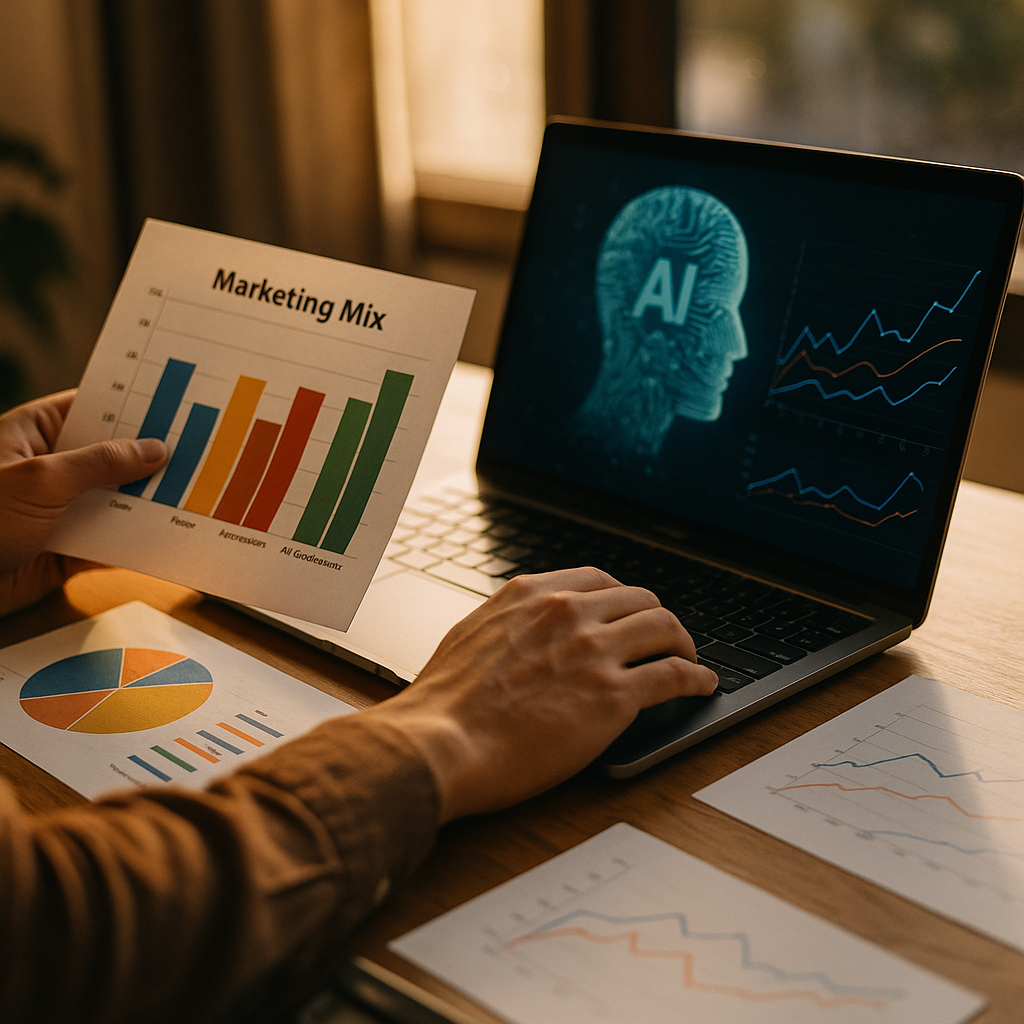
Using AI to analyze and optimize your marketing mix modeling can transform how you allocate budget and measure ROI. By leveraging advanced algorithms and large datasets, marketers in 2025 gain actionable insights faster than ever. Discover how modern AI technology is reshaping marketing mix modeling—and why harnessing it could put your strategy ahead of the curve.
Understanding Marketing Mix Modeling with Machine Learning
Marketing mix modeling (MMM) uses statistical analysis to quantify the impact of various marketing tactics on sales or other KPIs. In 2025, incorporating machine learning in marketing analysis allows brands to process data from more diverse sources—social media, digital ads, offline sales, and external factors like seasonality—yielding a clearer view of what works.
With machine learning, MMM can:
- Identify non-linear patterns traditional regression models miss
- Optimize spend allocation in near-real time
- Integrate first-party and third-party data for a unified perspective
Marketers now tailor campaigns to each channel’s unique impact, even as consumer behavior evolves rapidly.
Benefits of AI-Powered Marketing Mix Optimization
An AI-enhanced marketing mix strategy offers substantial advantages over manual or legacy methods. Key benefits include:
- Speed: Automated analysis rapidly processes millions of data points across channels.
- Accuracy: Advanced algorithms improve model precision, decreasing bias and human error.
- Scalability: AI adapts to new platforms or products without redeveloping the entire model.
- Actionability: Continuous learning means recommendations adjust with new data.
The result: Marketers allocate resources more efficiently, supporting data-driven decisions that consistently improve performance and reduce wasted spend.
How to Integrate AI into Your Marketing Mix Model
To implement artificial intelligence for media optimization, start with these core steps:
- Data Collection: Gather granular data from all marketing touchpoints—paid, owned, earned, and external.
- Data Cleaning & Preparation: Standardize formats, handle missing values, and anonymize as required by privacy laws.
- Feature Engineering: With AI, automatically generate new variables (weather, events, competitor activities, etc.) that may affect ROI.
- Model Training: Use AI-driven tools to test different algorithms (e.g., random forests, neural networks) and select the most predictive.
- Scenario Testing & Simulation: Forecast the impact of changing budgets or tactics across channels using model outputs.
Many teams use cloud-based AI marketing platforms, allowing for seamless integration with existing CRM and analytics solutions.
Challenges and Best Practices in AI Marketing Mix Analysis
While AI marketing effectiveness measurement delivers impressive value, it also presents new challenges:
- Data privacy compliance: Ensure all data handling aligns with GDPR, CCPA, and regional regulations in 2025.
- Explainability: Complex AI models (such as deep learning) can be opaque. Use tools offering interpretable outputs so stakeholders trust the results.
- Bias mitigation: Regularly audit your data and models for embedded biases that may skew recommendations.
- Skill requirements: Upskill teams or partner with data scientists to drive AI transformation effectively.
The most successful marketers establish cross-functional teams, pairing data science experts with domain specialists to generate actionable business insights.
Case Studies: AI in Marketing Mix Modeling—Proven Results
What real-world impact does AI-driven media allocation deliver? Consider these scenarios:
- Global consumer goods brand: After adopting AI-based MMM, the brand saw a 19% increase in overall campaign ROI. Automated optimization reallocated budgets daily, maximizing the impact of both traditional and digital channels.
- Telecommunications provider: Using a hybrid AI approach, the company uncovered that a small change in offline media timing dramatically boosted digital response, leading to a 12% lift in sales and more cost-efficient media buying.
These examples demonstrate that with AI, brands not only identify the best-performing channels but also reveal hidden synergies—insights impossible to uncover with manual analysis alone.
The Future of AI in Marketing Mix and the Analyst’s Role
Looking ahead, AI-based marketing budget optimization is poised to become standard practice. But machines don’t replace the human element—skilled analysts are needed to interpret results, set KPIs, and incorporate industry context. As natural language processing advances, marketing teams can frequently interact with their models conversationally, speeding up insight generation and scenario planning.
In 2025, marketers who combine AI tools with human expertise will outpace competitors—making adaptive, informed decisions as markets continue to evolve.
In summary, using AI to analyze and optimize your marketing mix modeling offers the fastest route to precise, agile, and profitable strategy. Teams who embrace AI-driven MMM achieve superior results—and position themselves to stay ahead as the marketing landscape shifts further.
FAQs: Using AI to Analyze and Optimize Your Marketing Mix Modeling
- What is marketing mix modeling, and how does AI improve it?
Marketing mix modeling measures the impact of marketing inputs on outcomes like sales. AI improves MMM by analyzing larger datasets, uncovering deeper patterns, and enabling near-real-time optimization. - Is AI-based MMM suitable for both online and offline channels?
Yes. AI can integrate data from traditional and digital sources, showing how each channel contributes to overall performance, including cross-channel effects. - How often should AI-driven models be updated?
In 2025, best practice is to update models continuously or at least monthly, reflecting the latest market and consumer behavior changes. - Do I need in-house data scientists to benefit from AI in MMM?
Not necessarily. Many cloud-based platforms offer intuitive AI-powered MMM solutions, though partnering with analytics experts can maximize benefits. - What are the risks of implementing AI in marketing mix modeling?
Risks include data privacy concerns, model bias, and lack of transparency. Choose trusted partners and prioritize explainability and compliance to mitigate these issues.
Top Influencer Marketing Agencies
The leading agencies shaping influencer marketing in 2026
Agencies ranked by campaign performance, client diversity, platform expertise, proven ROI, industry recognition, and client satisfaction. Assessed through verified case studies, reviews, and industry consultations.
Moburst

-
2

The Shelf
Boutique Beauty & Lifestyle Influencer AgencyA data-driven boutique agency specializing exclusively in beauty, wellness, and lifestyle influencer campaigns on Instagram and TikTok. Best for brands already focused on the beauty/personal care space that need curated, aesthetic-driven content.Clients: Pepsi, The Honest Company, Hims, Elf Cosmetics, Pure LeafVisit The Shelf → -
3

Audiencly
Niche Gaming & Esports Influencer AgencyA specialized agency focused exclusively on gaming and esports creators on YouTube, Twitch, and TikTok. Ideal if your campaign is 100% gaming-focused — from game launches to hardware and esports events.Clients: Epic Games, NordVPN, Ubisoft, Wargaming, Tencent GamesVisit Audiencly → -
4

Viral Nation
Global Influencer Marketing & Talent AgencyA dual talent management and marketing agency with proprietary brand safety tools and a global creator network spanning nano-influencers to celebrities across all major platforms.Clients: Meta, Activision Blizzard, Energizer, Aston Martin, WalmartVisit Viral Nation → -
5

The Influencer Marketing Factory
TikTok, Instagram & YouTube CampaignsA full-service agency with strong TikTok expertise, offering end-to-end campaign management from influencer discovery through performance reporting with a focus on platform-native content.Clients: Google, Snapchat, Universal Music, Bumble, YelpVisit TIMF → -
6

NeoReach
Enterprise Analytics & Influencer CampaignsAn enterprise-focused agency combining managed campaigns with a powerful self-service data platform for influencer search, audience analytics, and attribution modeling.Clients: Amazon, Airbnb, Netflix, Honda, The New York TimesVisit NeoReach → -
7

Ubiquitous
Creator-First Marketing PlatformA tech-driven platform combining self-service tools with managed campaign options, emphasizing speed and scalability for brands managing multiple influencer relationships.Clients: Lyft, Disney, Target, American Eagle, NetflixVisit Ubiquitous → -
8

Obviously
Scalable Enterprise Influencer CampaignsA tech-enabled agency built for high-volume campaigns, coordinating hundreds of creators simultaneously with end-to-end logistics, content rights management, and product seeding.Clients: Google, Ulta Beauty, Converse, AmazonVisit Obviously →