


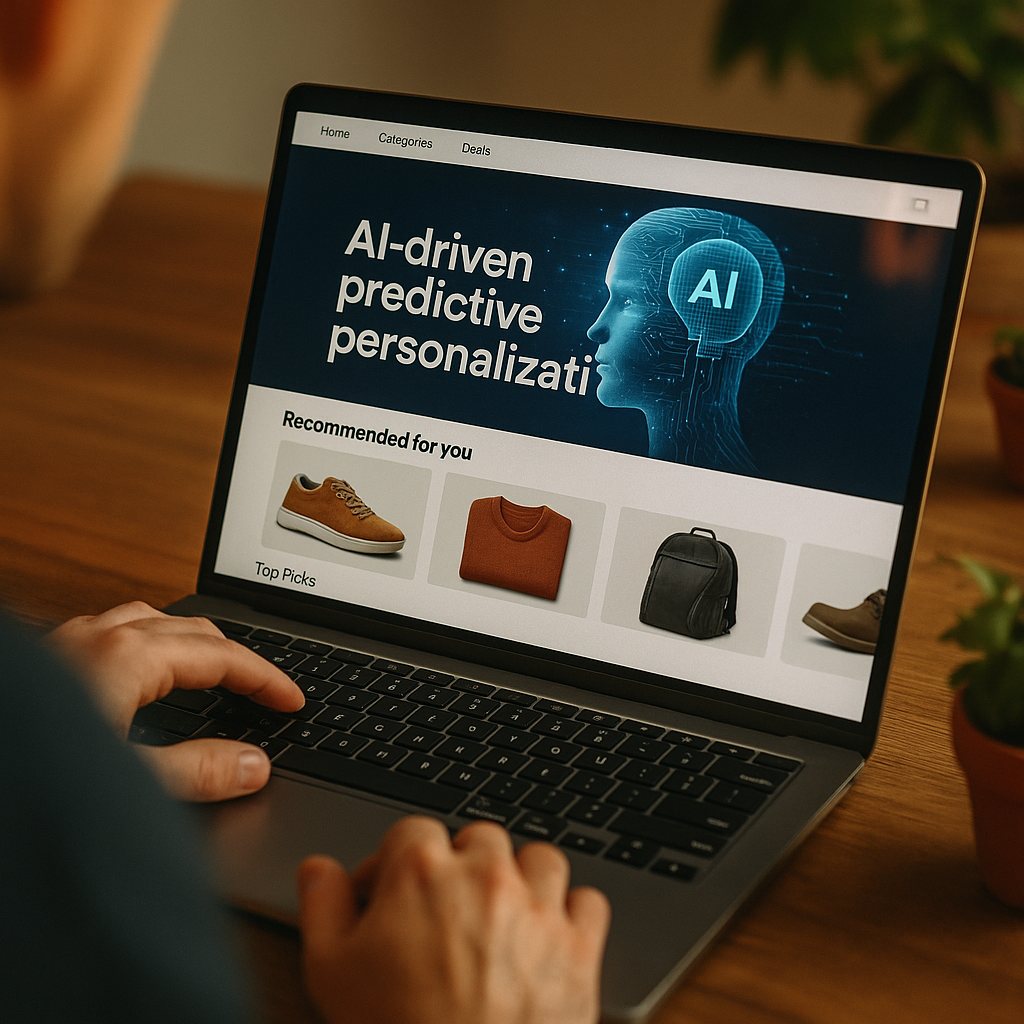
Using AI for predictive personalization of your website’s homepage can transform user experience and conversion rates. As algorithms grow more advanced in 2025, dynamic homepages not only impress visitors—they anticipate their needs. Ready to learn how AI-driven predictive personalization can give your homepage a competitive edge?
Understanding Predictive Personalization and Its AI Foundations
Predictive personalization harnesses artificial intelligence to tailor website experiences for individual users, even on their first visit. By analyzing behavioral data, intent signals, and historical trends, AI can accurately forecast what content, offers, or products resonate best with each visitor. This approach moves beyond basic segmentation, creating highly individualized experiences that outperform generic content strategies.
Modern AI models, powered by machine learning and deep learning, continuously analyze user data in real time. They ingest sources such as browsing history, search queries, referral channels, and onsite actions—combining these signals to predict what each visitor wants to see. This level of automation means your homepage is never static, but a living interface tailored for peak engagement at every visit.
Boosting Engagement With Real-Time Website Personalization
Personalized homepages are proven to drive higher engagement. In 2025, leading websites utilize AI to create real-time, data-driven recommendations. For example:
- Returning visitors see products related to their past browse or purchase history.
- First-time visitors are greeted with categories or offers trending among similar users or demographics.
- Location-based adjustments display relevant events, shipping information, or localized content.
This dynamic adjustment doesn’t just look impressive; it meaningfully increases click-through rates, lowers bounce rates, and deepens user trust. According to Statista, websites with AI-powered personalization report up to 40% higher engagement compared to static sites as recently as Q2 2025. This measurable boost ties directly back to how well your AI anticipates and adapts to visitor needs in real time.
Implementing AI for Homepage Personalization: Best Practices for Marketers
Rolling out AI-driven predictive personalization on your homepage demands more than technical prowess. Marketers must:
- Define Your Goals: Are you aiming to increase newsletter sign-ups, product discovery, or direct conversions? Clear KPIs guide your personalization logic and AI training data.
- Select the Right AI Tools: Choose solutions that integrate seamlessly with your CMS and analytics stack. Popular options in 2025 include Salesforce Einstein, Adobe Sensei, and open-source platforms like TensorFlow-based engines.
- Collect and Leverage Quality Data: AI requires rich, privacy-compliant data. Use first-party cookies, CRM data, purchase histories, and behavioral analytics—always in accordance with evolving privacy laws.
- Test and Refine Continuously: Use A/B and multivariate testing to assess which personalized elements perform best. Feed successful results back into your AI models for constant optimization.
- Prioritize Transparency: Let users know how their data is used for personalization, and provide easy opt-outs. This builds trust and aligns with Google’s EEAT (Experience, Expertise, Authoritativeness, Trustworthiness) guidelines.
By following these steps, you ensure AI delivers not just novelty, but sustained business value through meaningful user experiences.
The Role of Behavioral Data in Predictive Homepage Optimization
Behavioral data is the engine behind predictive homepage personalization. Unlike basic demographic info, behavioral signals offer deep insight into intent and preferences. AI-powered systems in 2025 track:
- Past interactions (pageviews, searches, product clicks)
- Session length and scroll depth
- Cart additions and removals
- Sources of traffic and engagement patterns over time
With machine learning, these signals are processed in real time to deliver dynamic homepage layouts. For example, a user who lingered on a category page previously might now be greeted by top sellers from that category. Advanced AI also detects sudden shifts in interests, adapting homepage content accordingly. Ultimately, leveraging behavioral data ensures personalization feels seamless and relevant—not forced or intrusive.
Balancing Privacy and Personalization in 2025
Now more than ever, users demand control over their data. Predictive personalization must strike a careful balance between relevance and privacy. In 2025, brands have adopted best practices to reassure users, such as:
- Explicit consent protocols for data collection and usage
- Contextual messaging explaining how personalization works
- Granular privacy settings allowing users to tailor their experiences
- Pseudonymization and data minimization techniques to protect anonymity
Adhering to Google’s EEAT standards, trustworthy websites showcase clear privacy policies and immediate feedback on personalization changes. This transparency not only complies with new privacy regulations but also builds genuine user loyalty—a key differentiator in today’s competitive digital landscape.
Measuring the Impact of AI-Based Homepage Optimization
To justify investment in AI-driven personalization, measuring ROI is crucial. Key performance indicators (KPIs) marketers track in 2025 include:
- Engagement rates: Increases in session duration, click-through, and scroll depth
- Conversion metrics: Growth in sign-ups, purchases, or requested demos
- User satisfaction: Direct feedback, NPS (Net Promoter Score), and reduced bounce rates
- Revenue growth: Per visit and overall sales uplift linked to personalized experiences
Pairing advanced analytics tools with AI platforms lets businesses draw clear connections between personalization efforts and business outcomes. By regularly iterating based on insights, brands create a virtuous cycle of improvement—delivering both short- and long-term benefits from homepage personalization.
In summary, using AI for predictive personalization of your website’s homepage delivers tailored user journeys, boosts engagement, and can drive significant business growth. Invest in the right tools, follow best practices, and measure continuously to achieve an outstanding digital experience that stands out in 2025.
FAQs: Predictive Personalization of Your Website’s Homepage
-
What is predictive personalization in a website context?
Predictive personalization uses AI to tailor homepage content for each visitor, based on patterns in their behavior, preferences, and similar user profiles. -
How does AI collect the data needed for homepage personalization?
AI collects data through cookies, analytics, onsite behavior (such as clicks and pageviews), and integrations with CRMs or ecommerce platforms—always with user consent in compliance with privacy laws. -
Will predictive personalization slow down my website?
No. Modern AI tools are optimized for speed. Most personalization occurs on the server side or via efficient browser scripts, ensuring homepage load times remain fast. -
How do I respect user privacy while personalizing homepages?
Clearly inform users about data collection, provide opt-outs, follow privacy regulations, and adopt data minimization practices. This builds trust and complies with global standards. -
Can small businesses benefit from AI-powered predictive personalization?
Yes. Many affordable, user-friendly AI tools are available in 2025, allowing even small brands to implement effective website personalization with minimal technical expertise.
Top Influencer Marketing Agencies
The leading agencies shaping influencer marketing in 2026
Agencies ranked by campaign performance, client diversity, platform expertise, proven ROI, industry recognition, and client satisfaction. Assessed through verified case studies, reviews, and industry consultations.
Moburst

-
2

The Shelf
Boutique Beauty & Lifestyle Influencer AgencyA data-driven boutique agency specializing exclusively in beauty, wellness, and lifestyle influencer campaigns on Instagram and TikTok. Best for brands already focused on the beauty/personal care space that need curated, aesthetic-driven content.Clients: Pepsi, The Honest Company, Hims, Elf Cosmetics, Pure LeafVisit The Shelf → -
3

Audiencly
Niche Gaming & Esports Influencer AgencyA specialized agency focused exclusively on gaming and esports creators on YouTube, Twitch, and TikTok. Ideal if your campaign is 100% gaming-focused — from game launches to hardware and esports events.Clients: Epic Games, NordVPN, Ubisoft, Wargaming, Tencent GamesVisit Audiencly → -
4

Viral Nation
Global Influencer Marketing & Talent AgencyA dual talent management and marketing agency with proprietary brand safety tools and a global creator network spanning nano-influencers to celebrities across all major platforms.Clients: Meta, Activision Blizzard, Energizer, Aston Martin, WalmartVisit Viral Nation → -
5

The Influencer Marketing Factory
TikTok, Instagram & YouTube CampaignsA full-service agency with strong TikTok expertise, offering end-to-end campaign management from influencer discovery through performance reporting with a focus on platform-native content.Clients: Google, Snapchat, Universal Music, Bumble, YelpVisit TIMF → -
6

NeoReach
Enterprise Analytics & Influencer CampaignsAn enterprise-focused agency combining managed campaigns with a powerful self-service data platform for influencer search, audience analytics, and attribution modeling.Clients: Amazon, Airbnb, Netflix, Honda, The New York TimesVisit NeoReach → -
7

Ubiquitous
Creator-First Marketing PlatformA tech-driven platform combining self-service tools with managed campaign options, emphasizing speed and scalability for brands managing multiple influencer relationships.Clients: Lyft, Disney, Target, American Eagle, NetflixVisit Ubiquitous → -
8

Obviously
Scalable Enterprise Influencer CampaignsA tech-enabled agency built for high-volume campaigns, coordinating hundreds of creators simultaneously with end-to-end logistics, content rights management, and product seeding.Clients: Google, Ulta Beauty, Converse, AmazonVisit Obviously →