


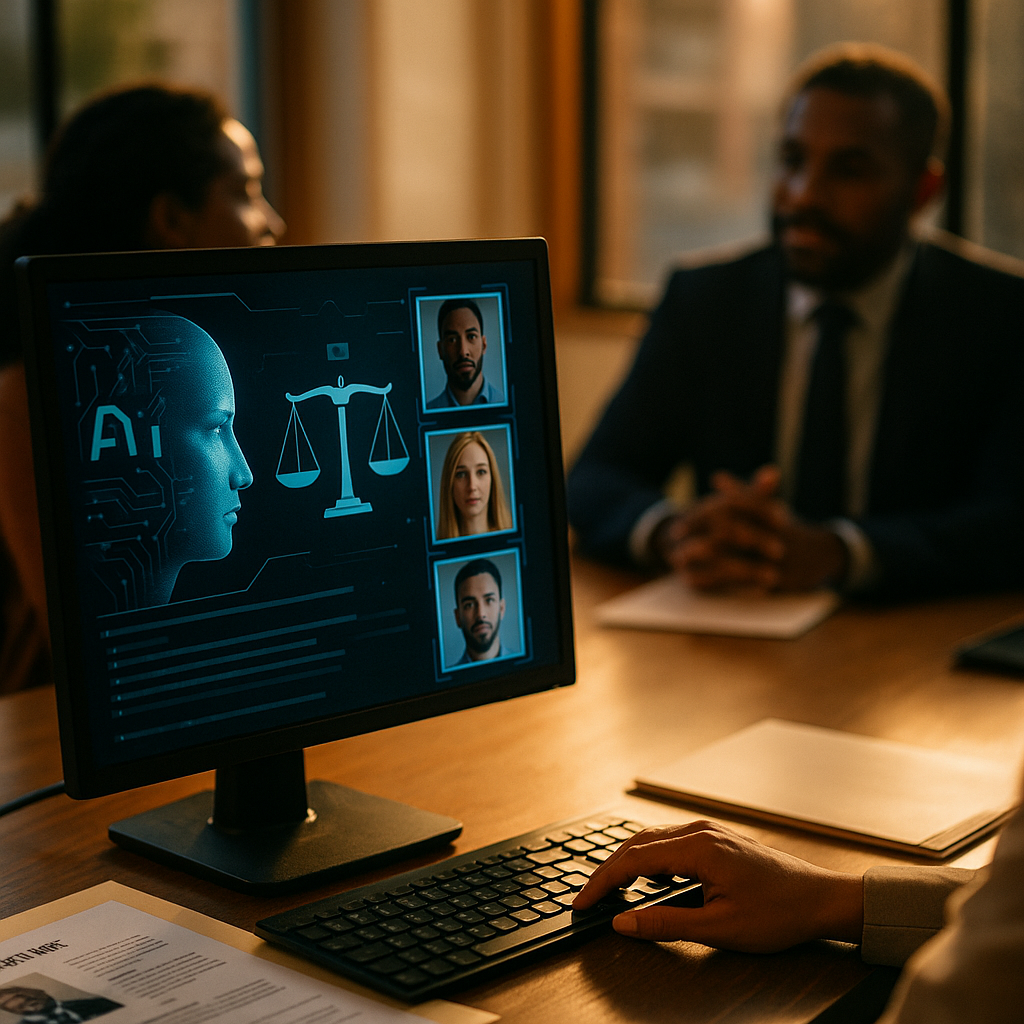
Using AI to identify and mitigate bias in your hiring and promotion processes is transforming the way organizations achieve fair and equitable talent management. Forward-thinking companies are leveraging advanced technology to uncover hidden prejudices and foster inclusivity. But how exactly does AI enable smarter, fairer HR decisions? Discover actionable strategies and best practices to future-proof your workplace.
Understanding Bias in Talent Acquisition
Bias in hiring and promotion often manifests unconsciously, shaping outcomes based on gender, ethnicity, age, or other personal characteristics rather than merit. These biases can creep into every stage of the talent acquisition process—from job description wording to candidate screening and interviewer evaluations. According to a 2024 LinkedIn Workplace Insights survey, 74% of HR professionals say bias is a persistent challenge, impacting diversity, retention, and overall business performance.
As the stakes grow higher in a competitive talent market, organizations can no longer rely solely on intuition or traditional methods. Identifying and mitigating bias at its source is not just a moral imperative—it’s critical for business sustainability and organizational growth. This sets the stage for AI-driven solutions designed to reveal and address entrenched prejudices.
The Role of AI in Reducing Hiring Bias
AI-powered HR tools are revolutionizing hiring by analyzing data patterns, flagging inconsistencies, and standardizing candidate assessments. When properly trained and tested, these systems can detect subtle forms of bias that might elude human evaluators. They examine large datasets to surface trends, such as a tendency to favor certain universities or unwittingly penalize career gaps associated with family leave.
- Blind Screening: AI can anonymize resumes by automatically removing names, photos, and demographic details, encouraging an evidence-based review of qualifications.
- Structured Interviews: Machine learning models recommend consistent, structured interview questions, minimizing the influence of subjective impressions.
- Predictive Analytics: Advanced algorithms forecast candidate success based on objective criteria, helping teams prioritize merit over heuristics.
It’s important to note that AI is only as unbiased as the data and parameters it is given. Regular audits, human oversight, and continuous recalibration are essential to prevent introduction or amplification of bias within algorithms.
Promoting Diversity and Inclusion Through Algorithmic Fairness
AI offers unprecedented opportunities to promote diversity and inclusion in hiring and promotion processes. By applying fairness-aware algorithms, organizations can ensure candidates are evaluated solely on competencies and potential—not on protected characteristics. For instance, algorithms can highlight diverse talent pools or flag homogeneous shortlists for further review.
- Diversity Reporting: Real-time dashboards powered by AI track representation across every stage of hiring and promotion, making gaps and progress visible to decision-makers.
- Bias Auditing: Automated audits can identify if certain groups are underrepresented at specific process steps, prompting timely interventions.
- Inclusive Talent Sourcing: AI tools analyze job postings for biased language and suggest alternatives to attract marginalized groups.
Implementing these practices not only drives compliance with equal opportunity laws but also cultivates a richer workplace culture and improves decision-making through cognitive diversity. Early adopters report improved employee engagement and retention rates—direct outcomes of meaningful inclusion enabled by data-driven governance.
Best Practices for Implementing AI in Promotions
Promotion decisions often involve subjective factors that can contain hidden biases. AI brings transparency and consistency by systematically analyzing employee performance data, feedback, and skills assessments. This objectivity helps level the playing field, particularly for underrepresented employees who may not fit traditional promotion molds.
- Multi-source Feedback Analysis: AI aggregates and normalizes feedback from managers, peers, and direct reports, accounting for language bias and outlier opinions.
- Performance Trajectories: Algorithms model employees’ progression, highlighting individuals who consistently outperform expectations or demonstrate high potential for leadership roles.
- Equal Opportunity Alerts: Real-time notifications flag instances where promotion patterns begin to depart from equitable standards.
To maximize impact, organizations must combine algorithmic insights with human empathy and context. Leaders should be trained to interpret AI outputs critically and engage in bias training to supplement technological tools.
Challenges and Limitations of AI in Talent Management
While AI introduces powerful mechanisms to identify and mitigate bias in hiring and promotion, it is not a panacea. One of the most significant risks is algorithmic bias—where the AI inadvertently embeds and scales existing prejudices found in historical data. For example, if past hiring favored a particular demographic, the AI may do the same unless rebalanced.
Another challenge is data privacy. Storing and analyzing sensitive demographic data must be done in compliance with GDPR and other global regulations. Transparency around how AI algorithms work and what data they use is essential for employee trust. Finally, over-reliance on automation could risk oversimplifying complex human qualities that influence job fit and organizational culture.
Organizations should therefore embrace AI as a decision-support tool, not a replacement for human judgment. Regular reviews, feedback loops, and diverse teams overseeing AI deployment remain indispensable.
Future Trends in AI for Fair Workforce Advancement
Looking ahead to the remainder of 2025 and beyond, AI in hiring and promotion will continue evolving. Emerging trends include explainable AI (XAI), which provides transparent reasoning behind algorithmic decisions, and the integration of AI with immersive technologies like virtual reality for bias-proof skills assessments.
- Continuous Learning: AI models will increasingly update in real-time to reflect new data and changing definitions of workplace competency and inclusion.
- Personalized Development: AI-driven career pathing tools can recommend targeted training to underrepresented employees, leveling promotion opportunities.
- Human-Centric AI: The focus will shift to hybrid systems that blend AI analytics with social intelligence, ensuring both fairness and empathy in HR decisions.
Organizations that proactively harness these innovations—committed to ethical oversight and ongoing refinement—will set new benchmarks in equitable talent advancement and organizational resilience.
FAQs About Using AI to Identify and Mitigate Bias in Hiring and Promotion
-
How does AI detect hidden biases in hiring?
AI analyzes patterns in recruitment data such as resume reviews, interview feedback, and offer stages. By comparing outcomes across demographic groups or language use, AI flags disparities for further investigation. Frequent audits help ensure algorithms continually identify emerging biases.
-
Can AI guarantee a bias-free hiring process?
No system is entirely free from bias, but AI significantly reduces subjective errors by standardizing evaluation criteria. The best results come from combining AI-powered insights with human oversight and regular algorithmic audits.
-
What is algorithmic bias, and how can it be prevented?
Algorithmic bias occurs when AI adopts historical prejudices reflected in data. This can be mitigated by diversifying input data, setting fairness goals, and conducting ongoing testing using representative populations. Transparent practices and diverse oversight teams are also crucial.
-
How does AI help with promotions and career progression?
AI analyzes multi-source performance data to recommend promotion candidates objectively, free from halo effects or favoritism. It monitors career advancement patterns and raises alerts when disparities emerge, making the process more equitable.
-
What are the legal or ethical concerns when using AI in HR?
HR leaders must comply with privacy regulations and ensure transparency about how AI systems make decisions. Ethical use of AI requires regular bias audits, clear communication with candidates and employees, and a commitment to continuous improvement.
AI is transforming how organizations identify and mitigate bias in hiring and promotion processes. By combining advanced algorithms with human oversight and transparent practices, companies can make talent decisions that are fair, inclusive, and business-driven. Embrace AI thoughtfully to create a more equitable, future-ready workplace.
Top Influencer Marketing Agencies
The leading agencies shaping influencer marketing in 2026
Agencies ranked by campaign performance, client diversity, platform expertise, proven ROI, industry recognition, and client satisfaction. Assessed through verified case studies, reviews, and industry consultations.
Moburst

-
2

The Shelf
Boutique Beauty & Lifestyle Influencer AgencyA data-driven boutique agency specializing exclusively in beauty, wellness, and lifestyle influencer campaigns on Instagram and TikTok. Best for brands already focused on the beauty/personal care space that need curated, aesthetic-driven content.Clients: Pepsi, The Honest Company, Hims, Elf Cosmetics, Pure LeafVisit The Shelf → -
3

Audiencly
Niche Gaming & Esports Influencer AgencyA specialized agency focused exclusively on gaming and esports creators on YouTube, Twitch, and TikTok. Ideal if your campaign is 100% gaming-focused — from game launches to hardware and esports events.Clients: Epic Games, NordVPN, Ubisoft, Wargaming, Tencent GamesVisit Audiencly → -
4

Viral Nation
Global Influencer Marketing & Talent AgencyA dual talent management and marketing agency with proprietary brand safety tools and a global creator network spanning nano-influencers to celebrities across all major platforms.Clients: Meta, Activision Blizzard, Energizer, Aston Martin, WalmartVisit Viral Nation → -
5

The Influencer Marketing Factory
TikTok, Instagram & YouTube CampaignsA full-service agency with strong TikTok expertise, offering end-to-end campaign management from influencer discovery through performance reporting with a focus on platform-native content.Clients: Google, Snapchat, Universal Music, Bumble, YelpVisit TIMF → -
6

NeoReach
Enterprise Analytics & Influencer CampaignsAn enterprise-focused agency combining managed campaigns with a powerful self-service data platform for influencer search, audience analytics, and attribution modeling.Clients: Amazon, Airbnb, Netflix, Honda, The New York TimesVisit NeoReach → -
7

Ubiquitous
Creator-First Marketing PlatformA tech-driven platform combining self-service tools with managed campaign options, emphasizing speed and scalability for brands managing multiple influencer relationships.Clients: Lyft, Disney, Target, American Eagle, NetflixVisit Ubiquitous → -
8

Obviously
Scalable Enterprise Influencer CampaignsA tech-enabled agency built for high-volume campaigns, coordinating hundreds of creators simultaneously with end-to-end logistics, content rights management, and product seeding.Clients: Google, Ulta Beauty, Converse, AmazonVisit Obviously →