


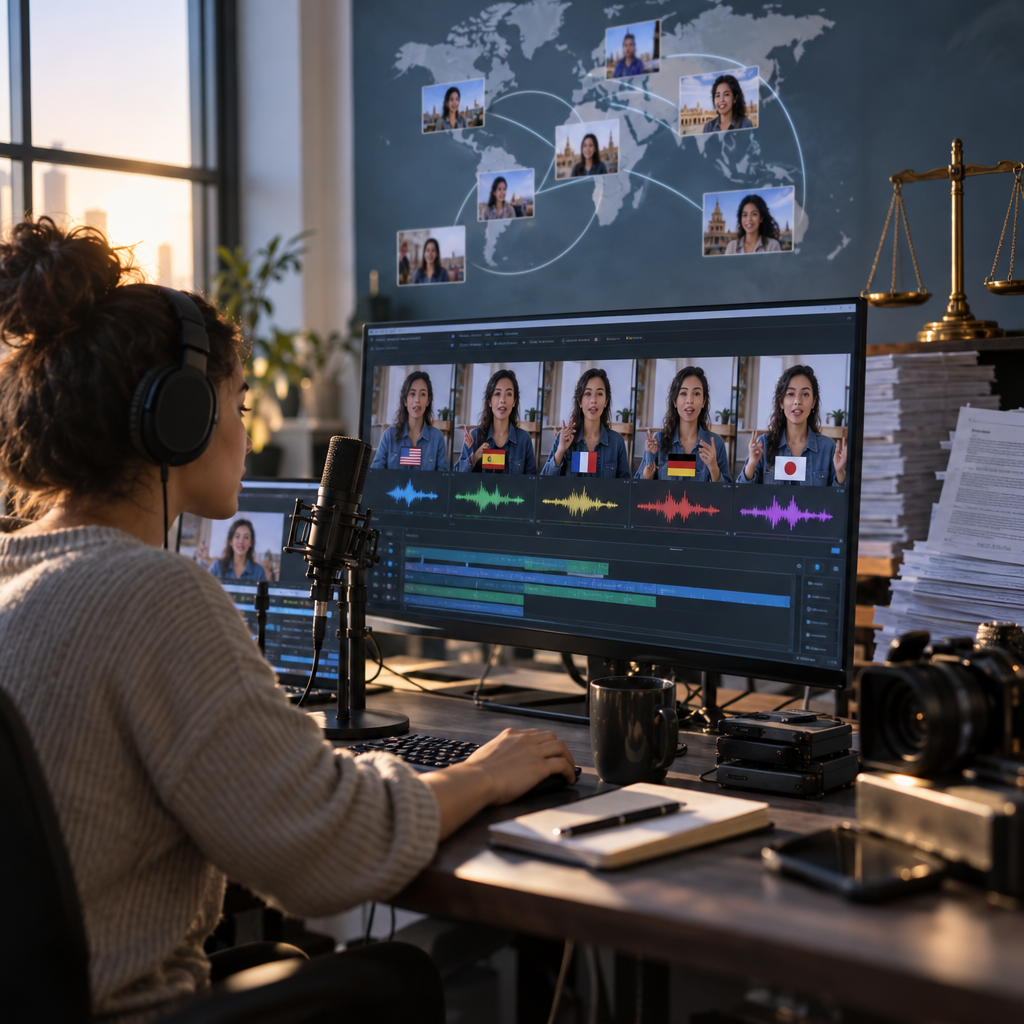
One UGC video. Fourteen languages. Zero reshoots. That is the pitch behind AI localization tools for creator content, and it is forcing a hard question into budget meetings: why are brands still paying for net-new regional shoots when dubbing and lip-sync AI can stretch a single creator asset across every market they serve?
The creator economy built its reputation on authenticity tied to a specific face, voice, and local vibe. Global campaign reuse used to mean reshooting with local talent in every market, which was slow, expensive, and often inconsistent in quality. AI dubbing changes that math. But it also opens a new set of risks that brand and legal teams have not fully priced in yet.
Why This Is Happening Now
Three things converged. First, generative voice and lip-sync models got good enough that the uncanny valley mostly closed for short-form content. Second, creator contracts matured enough that usage rights language can (in theory) cover derivative dubbed versions. Third, global ad spend pressure means CMOs are asking procurement teams to justify every regional production line item.
Tools like HeyGen, ElevenLabs, and Papercup have moved from novelty demos to production pipelines inside agencies and in-house creative teams. Meta and TikTok have both nudged toward native video translation features inside their ad managers, and Meta’s business tools increasingly assume advertisers will localize at scale rather than shoot locally. The infrastructure is catching up to the ambition.
A single creator video that once served one market can now, in theory, serve twenty, with voice and lip movement adapted for each. The constraint has shifted from production capacity to rights clearance and quality control.
What AI Dubbing Actually Does Differently
Traditional dubbing swapped audio over a static mouth. It looked wrong and everyone knew it. Current-generation localization tools do three things at once: they translate and adapt the script (not just literal translation but tone and idiom), they generate a voice that approximates the creator’s original cadence, and they resync lip movement in the video to match the new language’s phonetics. The result is a dubbed video that passes a casual scroll-by test on a feed, which is honestly the only bar that matters for most short-form placements.
That last point matters more than it sounds. Nobody is scrutinizing lip-sync accuracy frame by frame on a 15-second TikTok ad. They are deciding in half a second whether to keep scrolling. AI dubbing clears that bar today in most major languages. It still struggles with tonal languages, heavy regional slang, and anything requiring genuine comedic timing, so brands running humor-driven creator content should budget for human review before launch.
Where the Tech Still Trips
- Languages with different mouth-shape phonetics (Mandarin, Arabic) show more visible artifacts than Romance languages dubbed from English.
- Brand mentions, product names, and compliance disclaimers sometimes get mistranslated or dropped entirely if the model isn’t prompted carefully.
- Creator personality quirks (specific laughs, verbal tics, catchphrases) often flatten out in the synthetic voice.
- Platform-specific caption and on-screen text localization is frequently an afterthought, leaving mismatched subtitles.
None of this is disqualifying. It just means “AI dubbed” is not synonymous with “ready to publish.” QA still needs a human in the loop, the same lesson brands have already learned the hard way with other generative video workflows. If you haven’t built that muscle yet, the AI video QA workflows playbook is a reasonable starting point before you scale dubbing across markets.
The Rights Problem Nobody Wants to Talk About
Here is where things get genuinely messy. Most creator contracts written even eighteen months ago say nothing explicit about AI-generated derivative voice and video. Does “usage rights for paid media in the US and Canada” cover an AI-dubbed Portuguese version running in Brazil? A lot of brand legal teams are discovering the answer is a very uncomfortable “probably not, depending on how the contract is worded.”
This isn’t theoretical. Creators have started pushing back publicly when they discover AI-dubbed versions of their content running in markets they never agreed to, with a voice that is unmistakably meant to sound like them but legally isn’t them. That is a reputational landmine and a potential right-of-publicity claim, not just a contract footnote.
The fix is unglamorous but necessary: rewrite usage clauses to explicitly name AI dubbing, voice cloning, and lip-sync modification as licensed derivative uses, with territory and duration specified the same way you’d specify them for traditional usage. Brands already dealing with licensing ambiguity across their creator libraries should look at how centralized creator metadata cuts licensing risk, because the same tracking infrastructure that prevents accidental overuse of an expired asset is exactly what prevents an AI-dubbed version from running somewhere it was never cleared for.
If your creator contracts predate explicit AI dubbing language, assume every “global reuse” plan is sitting on an unreviewed legal gap until someone checks.
Building the Business Case: Is Dubbing Actually Cheaper?
The honest answer is: sometimes, and the savings are bigger on volume than on any single asset. A full local reshoot with native creator talent in, say, Germany, Japan, and Brazil can easily run five to six figures once you add location, talent fees, and production crew. AI dubbing a single hero asset into those three languages costs a fraction of that, often achievable inside existing creative tooling subscriptions.
But the comparison isn’t quite fair unless you’re honest about what you lose. Local creators bring local credibility, platform-native formatting instincts, and cultural fluency that a dubbed version of an American creator’s video simply cannot replicate. Gen Z audiences in particular are good at smelling “translated ad” versus “made for us” content. Brands reporting the best results tend to use a hybrid model: dub evergreen, high-performing hero content for broad reach and awareness plays, while still commissioning local creator originals for always-on community-building content.
Measuring whether that trade-off is working requires the same rigor brands apply to any creative test. Teams running creative-level CAC testing can slot dubbed assets directly into existing experiment frameworks rather than treating localization as a separate workstream with its own measurement logic. That alone saves weeks of setup time.
What To Actually Measure
- Completion rate and watch-through on dubbed versus locally shot content in the same market.
- Comment sentiment specifically flagging the dub as artificial or “off.”
- Conversion lift per dollar spent, compared against the cost delta of local production.
- Creator pushback or complaint volume tied to unauthorized derivative use.
That last metric gets ignored constantly. It shouldn’t. A spike in creator complaints is an early warning sign that your contract language or disclosure practices are behind your production capability, and that gap tends to get expensive once a creator’s agent or lawyer gets involved.
Disclosure and Platform Rules Are Catching Up
Regulators and platforms are starting to pay attention to synthetic media generally, and dubbed creator content sits uncomfortably close to that conversation even though the underlying message and likeness are “real.” The FTC’s endorsement guidance already requires clear disclosure when content doesn’t reflect a genuine, independent experience, and AI-altered voice arguably strengthens the case for disclosure rather than weakening it. In the UK, the ICO has signaled similar interest in synthetic media transparency tied to personal likeness and data use.
Practical takeaway: label dubbed content as AI-localized where platform policy requires it, and build that labeling into your creative template rather than bolting it on after legal flags it. It is far cheaper to add a disclosure line in the asset template than to retroactively relabel a campaign running in nine markets.
Operationalizing It Without Creating a Compliance Mess
Scaling AI dubbing across a creator program isn’t really a creative problem. It’s an operations and governance problem wearing a creative costume. Brands that have done this well tend to centralize three things: the rights ledger (what’s cleared for AI derivative use and where), the QA checklist (who signs off on each localized asset before it ships), and the version control system (so marketing teams in different regions aren’t quietly running conflicting dubbed cuts).
This is the same discipline that’s already reshaping how brands manage creator contracts more broadly. If your team has looked at how agentic AI centralizes creator contracts and automates asset reuse, the dubbing use case slots in as just another downstream consumer of that same clean rights data. Without that foundation, dubbing tools just accelerate how fast you can make an uncleared asset go global, which is not the kind of speed anyone wants.
Industry data backs the urgency here. eMarketer has tracked steady growth in cross-border influencer spend as brands chase efficiency in mature markets by pushing proven creative into newer ones, and Statista data on global ad localization spend shows the same pattern: more markets, flatter budgets per market, more pressure on tools to do the stretching.
FAQs
What is AI localization for creator content?
It’s the use of AI tools to translate, voice-clone, and lip-sync a creator’s original video into other languages so the same asset can run in multiple markets without reshooting with local talent.
Do creators need to approve AI-dubbed versions of their content?
In almost every case, yes. Unless a contract explicitly grants rights to create AI-generated derivative voice and video, dubbing a creator’s content without separate approval is a legal and reputational risk.
Is AI dubbing cheaper than local creator shoots?
Usually, especially at volume, but it sacrifices local cultural credibility that native creator content provides. Most brands use a hybrid approach rather than replacing local production entirely.
Does dubbed content need an AI disclosure label?
Platform and regulatory expectations are tightening. Best practice is to disclose AI-localized content clearly, in line with FTC endorsement guidance and relevant platform policies.
Which languages work best with current AI dubbing tools?
Romance and Germanic languages dubbed from English tend to produce the cleanest lip-sync results. Tonal languages and those with very different mouth phonetics still show more visible artifacts.
Before you greenlight a global dubbing push, audit your creator contracts for explicit AI derivative rights language and build a disclosure template into your asset pipeline now. The brands that skip this step won’t notice the gap until a creator’s lawyer does.
Top Influencer Marketing Agencies
The leading agencies shaping influencer marketing in 2026
Agencies ranked by campaign performance, client diversity, platform expertise, proven ROI, industry recognition, and client satisfaction. Assessed through verified case studies, reviews, and industry consultations.
Moburst

-
2

The Shelf
Boutique Beauty & Lifestyle Influencer AgencyA data-driven boutique agency specializing exclusively in beauty, wellness, and lifestyle influencer campaigns on Instagram and TikTok. Best for brands already focused on the beauty/personal care space that need curated, aesthetic-driven content.Clients: Pepsi, The Honest Company, Hims, Elf Cosmetics, Pure LeafVisit The Shelf → -
3

Audiencly
Niche Gaming & Esports Influencer AgencyA specialized agency focused exclusively on gaming and esports creators on YouTube, Twitch, and TikTok. Ideal if your campaign is 100% gaming-focused — from game launches to hardware and esports events.Clients: Epic Games, NordVPN, Ubisoft, Wargaming, Tencent GamesVisit Audiencly → -
4

Viral Nation
Global Influencer Marketing & Talent AgencyA dual talent management and marketing agency with proprietary brand safety tools and a global creator network spanning nano-influencers to celebrities across all major platforms.Clients: Meta, Activision Blizzard, Energizer, Aston Martin, WalmartVisit Viral Nation → -
5

The Influencer Marketing Factory
TikTok, Instagram & YouTube CampaignsA full-service agency with strong TikTok expertise, offering end-to-end campaign management from influencer discovery through performance reporting with a focus on platform-native content.Clients: Google, Snapchat, Universal Music, Bumble, YelpVisit TIMF → -
6

NeoReach
Enterprise Analytics & Influencer CampaignsAn enterprise-focused agency combining managed campaigns with a powerful self-service data platform for influencer search, audience analytics, and attribution modeling.Clients: Amazon, Airbnb, Netflix, Honda, The New York TimesVisit NeoReach → -
7

Ubiquitous
Creator-First Marketing PlatformA tech-driven platform combining self-service tools with managed campaign options, emphasizing speed and scalability for brands managing multiple influencer relationships.Clients: Lyft, Disney, Target, American Eagle, NetflixVisit Ubiquitous → -
8

Obviously
Scalable Enterprise Influencer CampaignsA tech-enabled agency built for high-volume campaigns, coordinating hundreds of creators simultaneously with end-to-end logistics, content rights management, and product seeding.Clients: Google, Ulta Beauty, Converse, AmazonVisit Obviously →