


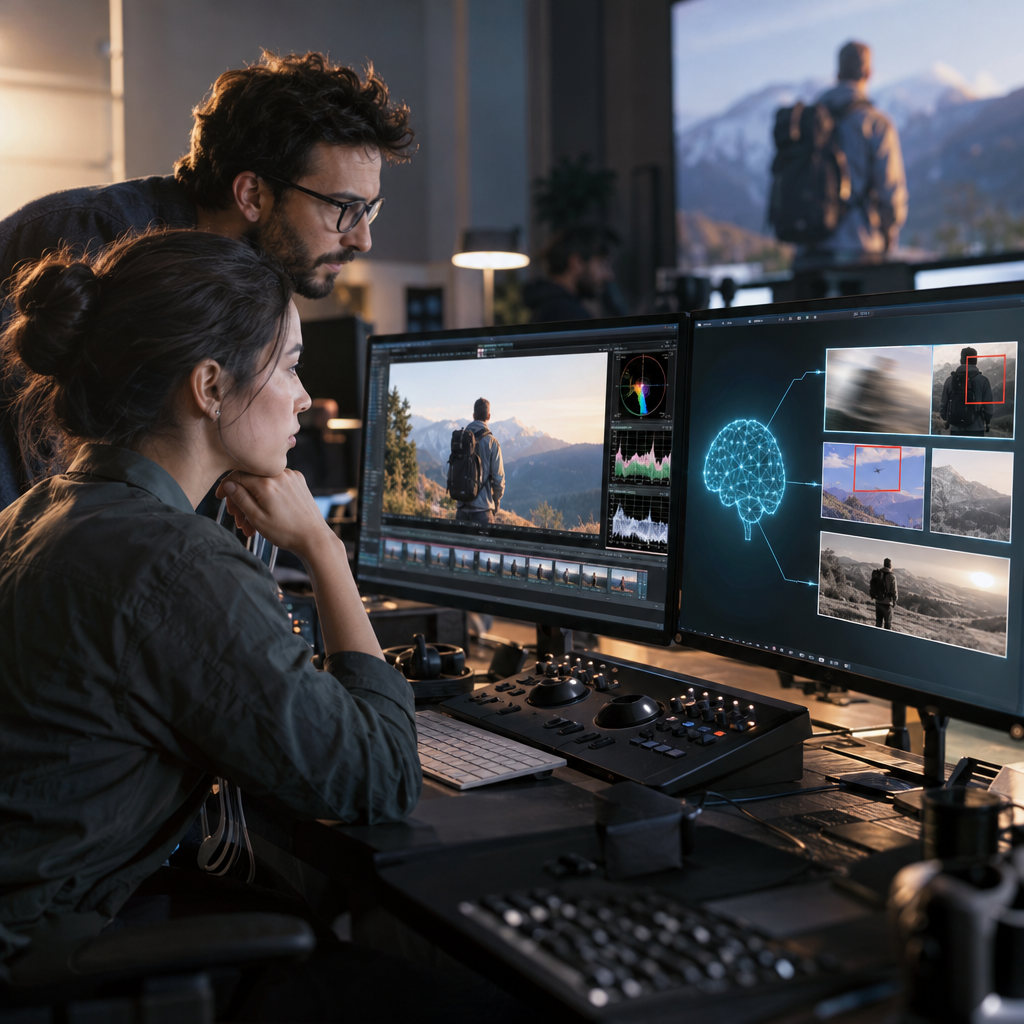
Eighty percent of marketers now use AI tools somewhere in their content pipeline, yet the brands getting burned in public are the ones who skipped the review step. AI video output still needs editing, full stop. The tools generate footage fast, but fast isn’t the same as finished, and treating a generative draft like a finished deliverable is how compliance teams end up fielding angry calls from legal.
This isn’t an argument against AI video. It’s an argument for building a real quality assurance workflow around it, the same way brands built review gates for human-made creator content a decade ago.
Why “Good Enough” AI Output Still Fails in Production
Generative video models have gotten startlingly good at faces, lip sync, and background plates. What they still struggle with: hands, text legibility, product label accuracy, and continuity across longer cuts. Ask any production lead running Sora, Runway, or Veo through a brand pipeline and they’ll tell you the same thing. The first draft looks impressive in a Slack thread and falls apart under frame-by-frame scrutiny.
The gap matters more in regulated or high-stakes categories. A skincare brand generating UGC-style testimonials needs ingredient claims to be accurate down to the percentage. A fintech brand running AI-assisted explainer videos needs disclosures to appear exactly where compliance mandates. Our earlier coverage on AI video testimonial disclosure rules found that generative tools routinely drop or mistime the disclosure text that the FTC requires, because the model wasn’t trained to care about regulatory timing, it was trained to make video that looks plausible.
The core mistake brands make isn’t using AI video. It’s assuming “generated” means “generated correctly,” and shipping the first output without a structured review pass.
That distinction, generated versus generated correctly, is the entire premise of a QA workflow.
What a Real QA Workflow Actually Looks Like
A QA workflow for generative creator content isn’t a vague “someone should check this” policy. It’s a sequence of defined checkpoints, each with an owner, a pass/fail criterion, and a documented outcome. Here’s the structure that’s working for brands running AI video at scale right now.
- Stage one: prompt and brief audit. Before generation even starts, someone confirms the prompt includes brand safe language, accurate product details, and any required legal copy. Garbage prompts produce garbage output faster than ever, so this stage catches errors before they’re expensive to fix.
- Stage two: automated technical check. Resolution, aspect ratio, platform specs, and frame rate get validated against the target channel. TikTok, Instagram Reels, and YouTube Shorts all have different requirements, and generative tools don’t always default to the right export settings.
- Stage three: human visual review. A trained reviewer watches the full clip, not a thumbnail, looking for artifacting, warped text, inconsistent branding, or anything that reads as “obviously AI” in a way that undermines trust.
- Stage four: compliance and claims review. Legal or compliance confirms every spoken or on-screen claim is substantiated and that disclosures meet FTC and platform-specific rules.
- Stage five: final approval and version lock. One named owner signs off, and the approved version gets archived with a timestamp and reviewer name attached, because when something goes wrong later, “who approved this” needs a fast answer.
Five stages sounds heavy for a fifteen-second clip. It isn’t, once it’s templated. Most teams run the full sequence in under an hour per asset once reviewers know what they’re looking for.
The Editing Layer Nobody Budgets For
Here’s the part that catches finance teams off guard: editing AI video output costs money and time, and most initial AI video budgets don’t account for it. Teams price out the generation tool subscription, maybe a stock footage add-on, and call it done. Then they discover that every usable clip needs a human editor cleaning up transitions, fixing audio sync, and color grading to match brand guidelines.
This mirrors what we found covering text-based generative content. Our piece on how AI drafts creator content fast showed that heavy editing isn’t a failure of the tool, it’s the expected cost of using it responsibly. Video is no different, and arguably the editing tax is higher because visual errors are more visible and more embarrassing than a clunky sentence.
Budget for editing as a line item from day one. A rough rule teams are using: for every dollar spent on generation tooling, plan to spend thirty to fifty cents on human editing and review labor. That ratio shifts as models improve, but right now it’s a safer planning assumption than assuming editing is free.
Where Vendor Selection Determines How Much QA You’ll Need
Not all generative video tools produce the same error rates, and vendor choice directly affects how heavy your QA workflow needs to be. Some platforms are better at maintaining brand consistency across a batch of clips. Others are faster but need more cleanup on every single output.
Before signing a contract, run a pilot batch through your full QA workflow and track the failure rate by error type. If forty percent of outputs fail on text legibility, that’s a specific, fixable prompt or settings issue. If forty percent fail on claims accuracy, that’s a bigger red flag about whether the tool belongs in a regulated workflow at all.
We’ve written before about the traps hiding in vendor contracts themselves. The AI video vendor checklist we built covers usage rights and hidden cost structures, and it’s worth running alongside your QA pilot, because a tool that’s cheap per generation but expensive per usable asset isn’t actually cheap.
Seasonal campaigns add another wrinkle. Brands ramping up AI video for a holiday push or product launch often skip the vetting step because of time pressure, which is exactly backwards. Our seasonal AI video toolkit checklist lays out why rushing vendor selection during peak season tends to produce the highest error rates, right when brand visibility is highest and mistakes are most costly.
Compliance Isn’t a Final Checkbox, It’s a Design Constraint
Too many QA workflows treat compliance review as the last stop before publish, a final rubber stamp. That’s backwards. Compliance requirements, disclosure placement, claims substantiation, platform-specific labeling, should shape the prompt and brief before generation starts, not get bolted on after.
Platforms like Meta and TikTok have their own disclosure and branded content rules layered on top of FTC requirements, and those rules change often enough that a static compliance checklist goes stale fast. Check the FTC’s endorsement guidance and each platform’s branded content policy (Meta’s business resources and TikTok’s ad policies are good starting points) before locking a QA template, and revisit that template quarterly.
For brands running creator programs at scale, this compliance-first mindset needs to extend into the platforms managing creator relationships too. Our coverage of creator program automation and compliance vetting makes the case that any automation layer, generative video included, needs compliance checks built into the system architecture, not added as a manual afterthought by an overworked reviewer at 11pm before a launch.
Measuring Whether Your QA Workflow Is Actually Working
A QA process that nobody measures is just theater. Track these numbers monthly:
- First-pass approval rate. What percentage of generated clips clear all five stages without rework? If it’s climbing, your prompts and vendor selection are improving.
- Time to approval. How long does a clip sit in the QA pipeline before publish? Bottlenecks here usually point to unclear ownership at one specific stage.
- Post-publish correction rate. How often does something slip through and need a takedown or edit after it’s live? This is the number that should terrify you most, and the one that justifies QA budget to skeptical finance teams.
- Error type distribution. Are failures clustering around technical specs, visual quality, or claims? That tells you whether to fix the prompt, the tool, or the training for your reviewers.
Data from eMarketer’s research on marketing technology adoption and surveys from HubSpot’s state of marketing reports consistently show that teams with documented review processes report higher confidence in AI output quality than teams using ad hoc checks. Confidence isn’t the same as accuracy, but it’s a reasonable proxy for whether a team actually trusts what it’s publishing, and our own research on how marketers use AI without full trust backs that pattern up directly.
The Human Review Layer Is the Point, Not the Bottleneck
It’s tempting to view human review as friction slowing down an otherwise fast AI pipeline. Flip that framing. The human review layer is what makes the speed usable. Without it, you’re not moving faster, you’re just shipping errors faster and finding out about them when a customer or regulator does.
This parallels what’s happening with AI-assisted clipping tools cutting down short-form production costs. As covered in our analysis of how clipping tools cut costs while human review stays vital, the cost savings are real, but they only hold up if the saved budget gets reinvested into review capacity rather than cut entirely. The same logic applies to full generative video production. Save money on generation, spend some of it on QA, and the net efficiency gain still beats the old fully manual production model.
Build the QA workflow now, while AI video is still obviously imperfect and everyone expects a review step. Waiting until the tools look “good enough” to skip editing is exactly when a preventable mistake goes public.
Frequently Asked Questions
Does AI-generated video need human editing before it’s published?
Yes. Even the most advanced generative video tools produce errors in text legibility, continuity, and compliance details that require human review before any clip is safe to publish on a brand channel.
How much should brands budget for editing AI video output?
A reasonable starting ratio is thirty to fifty cents of editing and review labor for every dollar spent on AI video generation tooling, though this varies by tool quality and content complexity.
What’s the biggest compliance risk with AI-generated creator video?
Missing or mistimed disclosures are the most common issue, since generative models aren’t trained to prioritize FTC or platform-specific disclosure placement the way a trained creator or compliance reviewer would.
How many stages should a video QA workflow have?
Most effective workflows use five checkpoints: prompt audit, technical spec check, human visual review, compliance and claims review, and final sign-off with version archiving.
How do you know if your QA process is actually effective?
Track first-pass approval rate, time to approval, and post-publish correction rate. A rising correction rate after launch is the clearest sign the workflow has gaps.
Frequently Asked Questions
Start with one asset type, build the five-stage QA template around it, and measure the post-publish correction rate for a month before scaling the workflow across your full creator video program.
Top Influencer Marketing Agencies
The leading agencies shaping influencer marketing in 2026
Agencies ranked by campaign performance, client diversity, platform expertise, proven ROI, industry recognition, and client satisfaction. Assessed through verified case studies, reviews, and industry consultations.
Moburst

-
2

The Shelf
Boutique Beauty & Lifestyle Influencer AgencyA data-driven boutique agency specializing exclusively in beauty, wellness, and lifestyle influencer campaigns on Instagram and TikTok. Best for brands already focused on the beauty/personal care space that need curated, aesthetic-driven content.Clients: Pepsi, The Honest Company, Hims, Elf Cosmetics, Pure LeafVisit The Shelf → -
3

Audiencly
Niche Gaming & Esports Influencer AgencyA specialized agency focused exclusively on gaming and esports creators on YouTube, Twitch, and TikTok. Ideal if your campaign is 100% gaming-focused — from game launches to hardware and esports events.Clients: Epic Games, NordVPN, Ubisoft, Wargaming, Tencent GamesVisit Audiencly → -
4

Viral Nation
Global Influencer Marketing & Talent AgencyA dual talent management and marketing agency with proprietary brand safety tools and a global creator network spanning nano-influencers to celebrities across all major platforms.Clients: Meta, Activision Blizzard, Energizer, Aston Martin, WalmartVisit Viral Nation → -
5

The Influencer Marketing Factory
TikTok, Instagram & YouTube CampaignsA full-service agency with strong TikTok expertise, offering end-to-end campaign management from influencer discovery through performance reporting with a focus on platform-native content.Clients: Google, Snapchat, Universal Music, Bumble, YelpVisit TIMF → -
6

NeoReach
Enterprise Analytics & Influencer CampaignsAn enterprise-focused agency combining managed campaigns with a powerful self-service data platform for influencer search, audience analytics, and attribution modeling.Clients: Amazon, Airbnb, Netflix, Honda, The New York TimesVisit NeoReach → -
7

Ubiquitous
Creator-First Marketing PlatformA tech-driven platform combining self-service tools with managed campaign options, emphasizing speed and scalability for brands managing multiple influencer relationships.Clients: Lyft, Disney, Target, American Eagle, NetflixVisit Ubiquitous → -
8

Obviously
Scalable Enterprise Influencer CampaignsA tech-enabled agency built for high-volume campaigns, coordinating hundreds of creators simultaneously with end-to-end logistics, content rights management, and product seeding.Clients: Google, Ulta Beauty, Converse, AmazonVisit Obviously →