


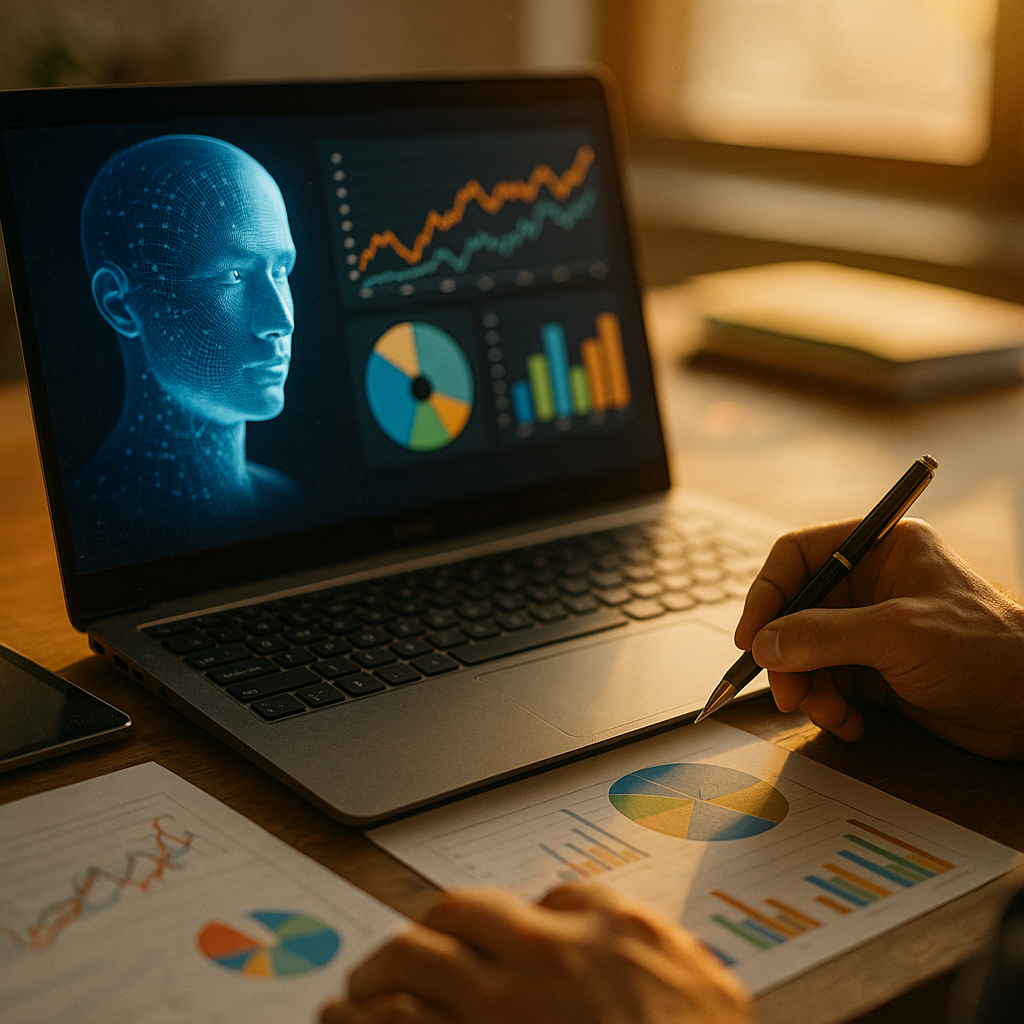
Using AI to analyze and predict the effectiveness of your creative assets is transforming digital marketing strategies in 2025. By leveraging artificial intelligence, brands can optimize ads, refine visuals, and maximize ROI—often before campaigns even go live. Ready to discover how AI-driven insights can supercharge your creative performance and provide a competitive edge? Read on for expert strategies and real-world results.
How AI is Revolutionizing Creative Asset Analysis
Artificial intelligence is at the forefront of creative asset analysis, empowering marketers to shift from intuition-based decisions to data-driven strategies. With advanced machine learning algorithms, AI platforms can evaluate large volumes of assets—images, copy, videos—identifying elements that most engage target audiences. Automated systems analyze patterns across color schemes, fonts, facial expressions, and messaging styles. This results in real-time feedback that helps you fine-tune assets for higher engagement, greater recall, and improved conversions. According to a 2025 Marketing AI Council report, over 78% of leading brands now use AI-powered tools for creative optimization, citing increased campaign performance and accelerated content cycles.
Predictive Analytics: Anticipating Creative Performance
Predictive analytics is one of the most game-changing applications of AI in marketing. By analyzing historical performance data and current market trends, AI models forecast how new creative assets will perform before any significant ad spend. These tools utilize computer vision, natural language processing, and user behavior analytics to assess likely click-through rates, brand lift, and conversion potential. Marketers can deploy A/B tested versions of an asset virtually, allowing them to invest only in top performers. Brands employing predictive analytics have reported campaign ROI lifts between 15-32% over conventional approaches, according to internal case studies from global agencies in early 2025.
Optimizing Creative Assets for Different Audiences
Audience segmentation is critical for creative success. AI excels at tailoring assets to resonate with diverse demographic, psychographic, and behavioral profiles. By merging data from CRM systems, ad networks, and social platforms, AI can pinpoint what visuals, tones, and calls-to-action work best for each audience segment. For example, dynamic creative optimization (DCO) leverages AI to swap out images and messaging in real-time, based on the viewer’s preferences or past interactions. This level of personalization not only boosts engagement but also delivers a cohesive and contextually relevant experience across channels. Marketers in 2025 highlight that using AI-driven personalization leads to a 2.7x increase in customer retention rates.
Implementing AI-Powered Creative Analysis in Your Workflow
Integrating AI tools into your creative process requires careful planning and the right skillset. Begin by identifying business goals—improving CTR, reducing bounce rates, or maximizing conversions. Select AI platforms that specialize in creative asset analysis, ensuring they support your content formats and data sources. Next, train teams to interpret AI insights, fostering a culture centered on experimentation and continuous improvement. Combining human creativity with machine intelligence yields the best results. Additionally, establish clear data governance and privacy practices to ensure compliance and trust. Early adopters in 2025 noted reduced production cycles by up to 40% and measurable performance gains by making AI feedback part of every creative review.
Measuring the ROI of AI-Driven Creative Optimization
To justify investment in AI-driven creative analysis, marketers must track performance meticulously. Key metrics include:
- Engagement Rates: Measure increases in likes, shares, and comments.
- Brand Lift: Assess improvements in brand recall and perception post-campaign.
- Conversion Metrics: Monitor changes in click-through and purchase rates.
- Production Efficiency: Track reductions in content creation time and costs.
AI’s ability to tie creative adjustments directly to business outcomes is unmatched. By continuously gathering feedback and adjusting assets, organizations see sustained efficiency and a clear link between creative innovation and revenue growth. Annual surveys among top digital brands in 2025 confirm that systematic AI use in creative optimization has become a key differentiator in saturated markets.
Future Trends: The Next Evolution for Creative Asset Analytics
Looking ahead, expect AI-powered creative analytics to become even more sophisticated. Emerging models are beginning to interpret complex emotions from videos and real-time customer sentiment from social streams, making creative personalization possible on an unprecedented scale. Generative AI now assists not only in optimization but also in the ideation phase, suggesting fresh layouts and copy based on projected demand. As privacy standards evolve in 2025, ethical AI will be essential, ensuring transparency and fairness in both analysis and prediction.
In summary, using AI to analyze and predict the effectiveness of your creative assets empowers marketers with precision, speed, and confidence. By adopting AI-driven approaches, you can maximize every asset’s potential and outperform the competition—today and in the future.
FAQs: Using AI to Analyze and Predict Creative Effectiveness
- How does AI determine if a creative asset is effective?
AI uses machine learning algorithms to analyze engagement data, visual content, and audience responses. It identifies successful design elements and predicts which assets will perform best in future campaigns. - Can AI help personalize creative content for different target audiences?
Yes, AI can segment audiences and recommend or deploy personalized creative elements in real time, increasing relevance and engagement for each group. - What are the main benefits of using AI in creative asset analysis?
AI offers faster insights, improved accuracy, better audience targeting, and the ability to predict performance before campaigns launch, ultimately optimizing marketing spend. - Is investing in AI-powered creative analytics cost-effective?
Most brands report significant gains in ROI and production efficiency, often offsetting any investment costs within months thanks to improved campaign performance and reduced waste. - What’s the first step to adopting AI in creative analysis?
Start by defining your creative goals and selecting an AI solution that integrates with your current workflow, then train your teams to continually use and learn from AI-generated insights.
Top Influencer Marketing Agencies
The leading agencies shaping influencer marketing in 2026
Agencies ranked by campaign performance, client diversity, platform expertise, proven ROI, industry recognition, and client satisfaction. Assessed through verified case studies, reviews, and industry consultations.
Moburst

-
2

The Shelf
Boutique Beauty & Lifestyle Influencer AgencyA data-driven boutique agency specializing exclusively in beauty, wellness, and lifestyle influencer campaigns on Instagram and TikTok. Best for brands already focused on the beauty/personal care space that need curated, aesthetic-driven content.Clients: Pepsi, The Honest Company, Hims, Elf Cosmetics, Pure LeafVisit The Shelf → -
3

Audiencly
Niche Gaming & Esports Influencer AgencyA specialized agency focused exclusively on gaming and esports creators on YouTube, Twitch, and TikTok. Ideal if your campaign is 100% gaming-focused — from game launches to hardware and esports events.Clients: Epic Games, NordVPN, Ubisoft, Wargaming, Tencent GamesVisit Audiencly → -
4

Viral Nation
Global Influencer Marketing & Talent AgencyA dual talent management and marketing agency with proprietary brand safety tools and a global creator network spanning nano-influencers to celebrities across all major platforms.Clients: Meta, Activision Blizzard, Energizer, Aston Martin, WalmartVisit Viral Nation → -
5

The Influencer Marketing Factory
TikTok, Instagram & YouTube CampaignsA full-service agency with strong TikTok expertise, offering end-to-end campaign management from influencer discovery through performance reporting with a focus on platform-native content.Clients: Google, Snapchat, Universal Music, Bumble, YelpVisit TIMF → -
6

NeoReach
Enterprise Analytics & Influencer CampaignsAn enterprise-focused agency combining managed campaigns with a powerful self-service data platform for influencer search, audience analytics, and attribution modeling.Clients: Amazon, Airbnb, Netflix, Honda, The New York TimesVisit NeoReach → -
7

Ubiquitous
Creator-First Marketing PlatformA tech-driven platform combining self-service tools with managed campaign options, emphasizing speed and scalability for brands managing multiple influencer relationships.Clients: Lyft, Disney, Target, American Eagle, NetflixVisit Ubiquitous → -
8

Obviously
Scalable Enterprise Influencer CampaignsA tech-enabled agency built for high-volume campaigns, coordinating hundreds of creators simultaneously with end-to-end logistics, content rights management, and product seeding.Clients: Google, Ulta Beauty, Converse, AmazonVisit Obviously →