


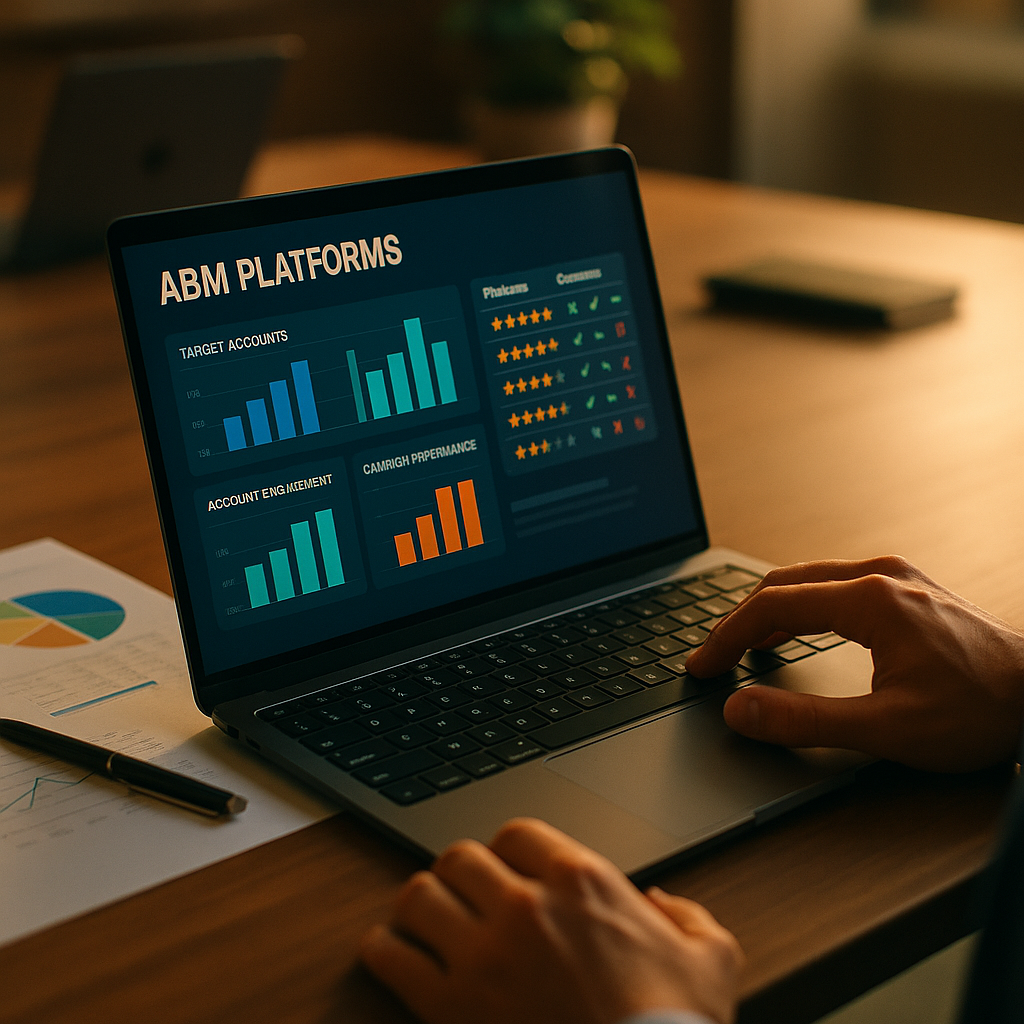
Account-Based Marketing is driving innovative results for B2B marketers, making the selection of the right ABM platform more crucial than ever. A thorough review of ABM platforms and tools for B2B marketers helps teams maximize precision targeting, adapt seamlessly, and accelerate growth. Ready to discover which solutions best empower your ABM strategy in 2025?
Understanding Account-Based Marketing Platforms: Core Features
Modern ABM platforms do more than manage accounts. These advanced tools enable B2B marketers to identify ideal buyers, personalize experiences, and orchestrate multi-channel campaigns at scale. When reviewing ABM platforms in 2025, consider essential capabilities:
- Account selection and prioritization: Robust segmentation powered by AI reveals accounts most likely to convert.
- Data integration: Seamless syncing with CRMs, marketing automation, and sales tools is vital for unified data views.
- Personalization engine: Ability to tailor messaging by account, persona, and buying stage enhances engagement and conversion.
- Omnichannel execution: Modern ABM solutions coordinate campaigns across email, ads, social, web personalization, and direct mail.
- Advanced analytics: Measurement on both account and campaign levels enables marketers to prove ABM ROI and iterate strategies efficiently.
Evaluating these foundational features helps B2B marketers shortlist the best ABM platforms for their needs and goals.
Top ABM Tools for B2B Campaign Orchestration
Effective ABM demands seamless orchestration, from outreach to engagement. In 2025, leading ABM tools have evolved to support the entire buyer journey:
- Demandbase: Widely recognized for its AI-powered account identification and deep integration with sales and marketing stacks. Its Engagement Platform also excels in real-time intent data and personalized web experiences.
- Terminus: Known for orchestrating account journeys across advertising, email, chat, and direct mail, Terminus empowers multifaceted engagement while providing a unified command center.
- 6sense: 6sense leverages predictive analytics to uncover hidden demand, allowing B2B marketers to reach prospects earlier in their journey. Its comprehensive view of account activity supports precise campaign adjustments.
- RollWorks: Designed for scaling ABM from small to enterprise teams, RollWorks integrates with Salesforce and HubSpot, and offers customizable targeting across channels.
- Madison Logic: This tool specializes in ABM for content syndication and paid media, helping marketers surround high-value accounts with relevant thought leadership and offers.
Each of these platforms brings unique strengths based on campaign orchestration, automation, and seamless data flow, making them top ABM tools for 2025.
Choosing the Best ABM Platform for B2B Personalization
B2B buyers expect highly relevant experiences throughout their research and consideration stages. A strong ABM platform empowers marketers to deliver targeted content and messaging at every touchpoint. When selecting a tool for ABM personalization, B2B leaders should look for:
- Dynamic web personalization: Platforms like Demandbase dynamically modify website content for target accounts, boosting engagement substantially.
- Multichannel nurturing: Orchestrate simultaneous personalized campaigns via ads, email, chatbots, and even direct mail.
- Intent-based triggers: Leverage real-time data to trigger appropriate content or outreach whenever a target account signals buying intent.
- Personalized reporting: Measure results and optimize based on engagement at both the account and persona levels.
With buyers’ expectations rising, true personalization defines ABM success. The chosen platform must empower marketers with real-time insights and rapid execution across multiple channels.
Advanced ABM Analytics: Proving ROI and Optimizing Campaigns
Account-based marketing’s value hinges on measurable impact, not just activity volume. ABM analytics platforms in 2025 enable B2B marketers to:
- Attribute pipeline and revenue: Leading ABM tools map account activities directly to sales opportunities and revenue generation.
- Monitor account progression: Dashboards track engagement, buying stage progression, and conversion from target to closed-won.
- Test and optimize strategies: Marketers can A/B test messaging, channels, and content, refining campaigns based on live data.
- Integrate with business intelligence: Top ABM platforms sync with BI tools to connect marketing results with broader organizational KPIs.
Robust attribution and granular analytics foster trust between sales and marketing, providing irrefutable evidence of ABM’s value and informing ongoing investment.
Integrating ABM Platforms with Existing MarTech Stacks
Scalability and efficiency depend on how well an ABM solution meshes with your broader marketing technology ecosystem. As B2B organizations standardize their digital operations in 2025, key integration points include:
- CRM compatibility: The best ABM platforms natively connect to Salesforce, HubSpot, and Microsoft Dynamics, ensuring real-time data flow for sales alignment.
- Marketing automation integration: Seamless links with Marketo, Pardot, and Eloqua elevate nurture campaigns and audience segmentation.
- Data enrichment partners: Partnerships with providers like ZoomInfo or Clearbit help ABM tools enhance account and contact profiles for maximized targeting accuracy.
- Sales acceleration: Live intent data and notification integrations drive timely sales outreach and personalized engagement.
Choosing an ABM platform that supports flexible integrations is essential for eliminating silos, enhancing efficiency, and delivering scalable results in B2B marketing.
Practical Considerations and Emerging ABM Trends in 2025
B2B teams adopting ABM should align their technology with organizational goals and readiness. Considerations include:
- Budget: Solutions vary significantly in cost and scalability; many platforms now offer tiered pricing for growing teams.
- Team expertise: Modern ABM tools offer intuitive interfaces, but realizing full value may require upskilling or dedicated team resources.
- AI and automation adoption: The surge in generative AI within ABM (such as predictive lead scoring and on-the-fly content generation) can unlock new opportunities for increased speed and precision.
- Privacy and compliance: As global privacy regulations evolve, select platforms with robust compliance capabilities and transparent data handling policies.
Emerging trends point toward increased account intelligence, deeper sales-marketing alignment, and a greater focus on real-time intent signals. B2B marketers who adapt will maintain a competitive edge as the ABM landscape continues to evolve.
Conclusion: Choosing Your Ideal ABM Platform in 2025
Today’s ABM platforms and tools for B2B marketers enable smarter targeting, personalization, and measurement. Select solutions that integrate with your stack, match your budget, and empower your team with real-time insights. Comparing leading platforms on scalability, analytics, and integration ensures your organization is positioned to achieve ABM success in 2025 and beyond.
Frequently Asked Questions (FAQs) About ABM Platforms for B2B Marketers
-
What is an ABM platform?
An ABM platform is a specialized marketing technology that enables B2B teams to target, engage, and measure interactions with high-value accounts, rather than individual leads. These tools streamline identification, personalization, outreach, and analytics for account-centric strategies.
-
How do ABM tools differ from traditional marketing automation?
While marketing automation platforms focus on broad lead generation and funnel-based tactics, ABM tools prioritize specific accounts using advanced segmentation, personalized content, and multichannel orchestration. The goal is deeper engagement with fewer, higher-value targets.
-
How do I measure ABM success?
Core ABM metrics include account engagement score, pipeline velocity, influenced opportunities, and revenue attribution. Leading platforms provide granular analytics connecting account activities directly to sales outcomes.
-
What are the biggest challenges with ABM in 2025?
Common challenges include integrating ABM with legacy systems, gaining sales alignment, ensuring data accuracy, and maintaining personalization at scale. Choosing platforms with robust integration and data features addresses many of these pain points.
-
Which ABM platform is best for my business?
The ideal ABM platform depends on your company’s size, tech stack, data needs, industry, and campaign complexity. Leading solutions—such as Demandbase, Terminus, 6sense, and RollWorks—offer distinct strengths. Evaluate them based on integration ease, analytics, personalization, and your team’s readiness.
Top Influencer Marketing Agencies
The leading agencies shaping influencer marketing in 2026
Agencies ranked by campaign performance, client diversity, platform expertise, proven ROI, industry recognition, and client satisfaction. Assessed through verified case studies, reviews, and industry consultations.
Moburst

-
2

The Shelf
Boutique Beauty & Lifestyle Influencer AgencyA data-driven boutique agency specializing exclusively in beauty, wellness, and lifestyle influencer campaigns on Instagram and TikTok. Best for brands already focused on the beauty/personal care space that need curated, aesthetic-driven content.Clients: Pepsi, The Honest Company, Hims, Elf Cosmetics, Pure LeafVisit The Shelf → -
3

Audiencly
Niche Gaming & Esports Influencer AgencyA specialized agency focused exclusively on gaming and esports creators on YouTube, Twitch, and TikTok. Ideal if your campaign is 100% gaming-focused — from game launches to hardware and esports events.Clients: Epic Games, NordVPN, Ubisoft, Wargaming, Tencent GamesVisit Audiencly → -
4

Viral Nation
Global Influencer Marketing & Talent AgencyA dual talent management and marketing agency with proprietary brand safety tools and a global creator network spanning nano-influencers to celebrities across all major platforms.Clients: Meta, Activision Blizzard, Energizer, Aston Martin, WalmartVisit Viral Nation → -
5

The Influencer Marketing Factory
TikTok, Instagram & YouTube CampaignsA full-service agency with strong TikTok expertise, offering end-to-end campaign management from influencer discovery through performance reporting with a focus on platform-native content.Clients: Google, Snapchat, Universal Music, Bumble, YelpVisit TIMF → -
6

NeoReach
Enterprise Analytics & Influencer CampaignsAn enterprise-focused agency combining managed campaigns with a powerful self-service data platform for influencer search, audience analytics, and attribution modeling.Clients: Amazon, Airbnb, Netflix, Honda, The New York TimesVisit NeoReach → -
7

Ubiquitous
Creator-First Marketing PlatformA tech-driven platform combining self-service tools with managed campaign options, emphasizing speed and scalability for brands managing multiple influencer relationships.Clients: Lyft, Disney, Target, American Eagle, NetflixVisit Ubiquitous → -
8

Obviously
Scalable Enterprise Influencer CampaignsA tech-enabled agency built for high-volume campaigns, coordinating hundreds of creators simultaneously with end-to-end logistics, content rights management, and product seeding.Clients: Google, Ulta Beauty, Converse, AmazonVisit Obviously →