


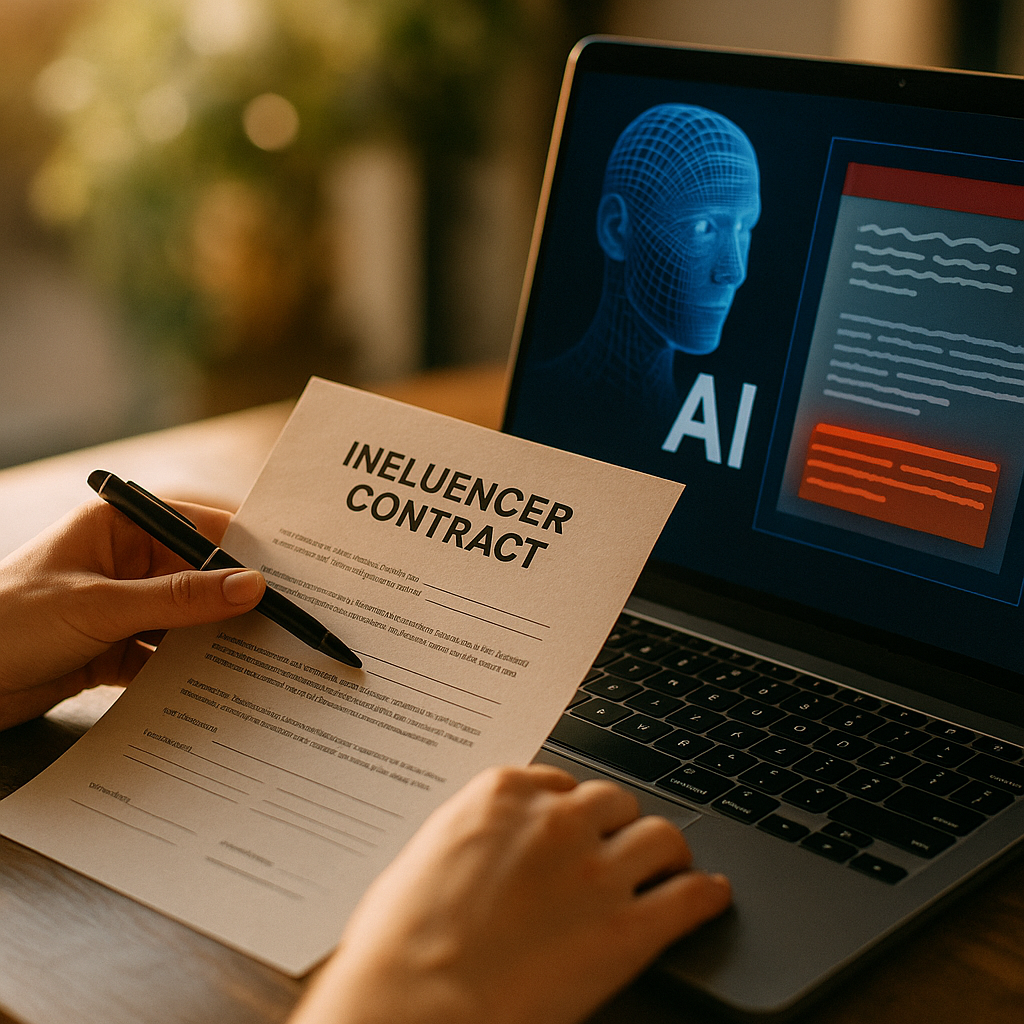
AI for Automated Narrative Drift Detection in Influencer Contracts is becoming essential as brands face faster content cycles, multi-platform reposting, and higher regulatory scrutiny in 2025. When an influencer’s messaging subtly shifts from approved claims, values, or disclosures, risk rises before anyone notices. This guide explains how drift happens, how AI spots it early, and how to operationalize alerts without killing creativity—are you monitoring what your audience actually hears?
Influencer contract compliance and the problem of narrative drift
Narrative drift is the gradual divergence between what a brand and influencer agreed to communicate and what the influencer ultimately publishes or implies. It rarely looks like a blatant breach. More often, it shows up as a small change in tone, an unapproved comparison, a softened disclosure, or a “helpful” claim added in a comment thread. Over time, those small changes can create real exposure.
Why drift happens even with good intentions
- Platform constraints: Character limits, trends, and editing tools push creators to compress nuance or lean into punchier claims.
- Iterative posting: Stories, shorts, and live streams encourage improvisation; improvisation increases variance.
- Audience Q&A: Replies and DMs can include off-script advice (especially in health, finance, or safety-adjacent products).
- Reposting and remix culture: A creator may reuse content across platforms and subtly alter the message to “fit the vibe.”
- Brand updates mid-campaign: New product guidance, new pricing, or updated claims may not reach every collaborator.
What’s at stake
- Regulatory and legal risk: Missing or unclear disclosures; unsubstantiated claims; misleading comparisons; prohibited targeting.
- Reputation risk: Values misalignment, sensitive topics, or polarizing framings that trigger backlash.
- Commercial risk: Confusion that depresses conversion, increases returns, or weakens brand positioning.
Influencer contracts typically define deliverables, required disclosures, prohibited claims, and brand safety rules. The problem is scale: teams cannot reliably review every story frame, comment, or livestream segment across dozens or hundreds of creators. That gap is where AI-based drift detection becomes practical.
Automated narrative drift detection using AI and NLP
Automated narrative drift detection uses machine learning and natural language processing (NLP) to compare what was agreed (contract, briefs, claim substantiation, approved copy) with what is actually published (captions, on-screen text, audio transcripts, comments, and linked content). The goal is to flag deviations early and prioritize human review.
How the system “knows” the approved narrative
- Contract parsing: AI extracts key obligations and constraints: mandatory tags, prohibited terms, claim categories, and approval requirements.
- Brief alignment: It ingests campaign messaging, audience guidelines, brand voice notes, and product facts.
- Approved asset library: It indexes approved talking points, FAQ answers, disclaimers, and substantiation references.
How it “reads” influencer content across formats
- Text analysis: Captions, titles, hashtags, and comments are scanned for claim language, sentiment, and prohibited topics.
- Audio transcription: Speech-to-text converts video and live content into searchable transcripts for claim detection.
- On-screen OCR: Computer vision extracts text overlays, discount codes, and disclaimers shown on-screen.
- Link and landing page checks: The system can verify that linked pages match approved offers and required legal copy.
What “drift” looks like to AI
- Semantic drift: The meaning changes (for example, “supports” becomes “prevents” or “treats”).
- Disclosure drift: Disclosures are missing, obscured, or not placed where required by platform norms and policy.
- Audience drift: Content appears to target a restricted audience or uses youth-coded cues when not allowed.
- Values drift: The tone becomes aggressive, divisive, or insensitive relative to the brand’s safety guidelines.
Why AI works here
Narratives are patterns. NLP models can compare meaning, detect risky claim templates, and notice changes in tone across a creator’s series of posts. Importantly, AI does not replace legal or brand judgment; it accelerates detection so people review the right items at the right time.
Brand safety monitoring and social listening beyond deliverables
Most contract reviews focus on deliverables: the post, the caption, the required hashtag. But in 2025, real risk often surfaces in the spaces around deliverables: follow-up stories, pinned comments, live Q&A, stitched reactions, and affiliate link updates.
Extending monitoring to the full narrative footprint
- Comment threads: AI can flag when creators answer questions with unapproved claims or medical/financial advice language.
- Edits and reposts: It can track when a post is edited after approval, or when a story is reposted with changed wording.
- Duets, stitches, and remixes: It can evaluate whether contextual framing introduces new risk, even if the original clip was compliant.
- Community management risk: It can detect inflammatory replies or escalation patterns that violate brand conduct clauses.
Connecting drift detection to brand safety
Drift detection works best when paired with brand safety monitoring rules: hate speech, harassment, misinformation markers, unsafe product usage depictions, and sensitive event context. The system should separate policy violations (high severity, immediate action) from narrative deviations (review, coaching, or clarification).
Follow-up question brands ask: “Will this stifle creativity?”
It doesn’t have to. The best programs define a small set of “hard boundaries” (non-negotiables such as disclosures, prohibited claims, and safety rules) and allow wide latitude elsewhere. AI supports that by focusing alerts on those boundaries, not style preferences.
Contract risk management, governance, and audit-ready workflows
For AI to improve contract outcomes, you need governance: clear ownership, documented rules, and an audit trail. This is where many teams move from “tool” to “program.”
Core workflow that holds up under scrutiny
- Pre-campaign: Convert contract clauses and briefs into structured rules. Confirm claim substantiation and approved language. Define escalation paths.
- In-flight monitoring: Continuously ingest content and score for drift. Route high-risk items to legal/compliance; medium-risk to brand; low-risk to creator management.
- Remediation: Provide precise guidance: what to edit, what to clarify, what to remove, and what disclosure to add. Track time-to-fix.
- Post-campaign: Generate compliance reports, creator scorecards, and lessons learned for better briefs and contracts next time.
What to log for audit readiness
- Source of truth: Contract version, brief version, approved claims list, and substantiation references.
- Detected issue: Timestamp, platform, URL, transcript snippet, and the rule that triggered the alert.
- Decision record: Who reviewed, what action was taken, and why.
- Outcome: Edit completed, post removed, clarification posted, or exception granted.
Answering “Who is accountable?”
Assign a single program owner (often in influencer marketing ops or compliance) with a cross-functional steering group (legal, brand, product, and PR). AI provides evidence; governance provides consistent decisions.
Model accuracy, privacy, and data protection in creator monitoring
Monitoring influencer content touches sensitive areas: personal data, biometric-like signals in video, and the creator’s own community interactions. EEAT-aligned practice in 2025 requires both technical safeguards and clear communication.
Improving accuracy without over-policing
- Human-in-the-loop review: Treat AI flags as triage, not verdict. Require human confirmation for enforcement actions.
- Precision over recall for enforcement: It is better to miss a low-risk nuance than to overwhelm teams with false positives.
- Calibration by category: Health, finance, and child-focused products need tighter thresholds than apparel or entertainment.
- Continuous learning: Feed back confirmed issues and false positives to refine rules and model prompts.
Privacy and data protection principles
- Minimize data: Ingest only what you need for contract compliance. Avoid collecting unrelated personal information.
- Secure storage and retention: Store transcripts and screenshots with access controls and time-bound retention aligned to contractual and legal needs.
- Transparency with creators: Contracts should disclose monitoring scope (platforms, content types, retention) and the remediation process.
- Separate monitoring from profiling: Focus on content compliance, not personal beliefs or unrelated behaviors.
Answering “Can AI misinterpret sarcasm or humor?”
Yes. That’s why you should require contextual review for tone-based findings and weight higher-confidence triggers more heavily (missing disclosures, prohibited terms, unapproved claim verbs). Humor is a reason to review, not a reason to penalize automatically.
Implementation roadmap and KPI measurement for influencer marketing teams
Adopting AI drift detection works best as an incremental rollout. The objective is measurable risk reduction and faster resolution, not perfect prediction.
Step-by-step rollout
- Start with a narrow use case: Mandatory disclosures and top prohibited claims. These are easy to define and high impact.
- Build a rule library: Convert contract language into standardized clauses and rule templates by product line and region.
- Integrate content ingestion: Connect to platform APIs where available, plus manual URL submission workflows for edge cases.
- Design escalation: Define what triggers instant takedown requests versus coaching edits versus “log only.”
- Train internal reviewers: Provide playbooks with examples of acceptable vs. unacceptable phrasing.
- Expand coverage: Add comment monitoring, livestream transcription, competitor comparisons, and values alignment checks.
KPIs that matter
- Time-to-detect: How quickly drift is identified after posting.
- Time-to-remediate: How quickly issues are corrected after detection.
- Severity-weighted incident rate: Count issues by severity, not just total volume.
- False positive rate by rule type: Helps refine detection and protect creator experience.
- Creator compliance trend: Whether repeat issues decrease after coaching and clearer briefs.
Common follow-up: “What should we change in contracts?”
Update templates to include: explicit disclosure standards, content monitoring scope, required cooperation on edits, substantiation boundaries for claims, and timelines for remediation. Also include a “clarification right” that allows the brand to request a follow-up comment or story when a post cannot be edited.
FAQs
What is narrative drift in influencer marketing?
Narrative drift is when the influencer’s published messaging gradually deviates from the approved claims, tone, values, or disclosure requirements set in the contract and campaign brief. It often appears as small wording changes, added comparisons, or improvised Q&A responses that create compliance or reputation risk.
How does AI detect narrative drift across video and live content?
AI converts audio to text using transcription, extracts on-screen text with OCR, and analyzes captions and comments with NLP. It then compares the meaning and required elements (like disclosures) against a structured set of contract and brief rules to flag likely deviations for human review.
Will automated monitoring violate creator privacy?
It can if implemented poorly. A privacy-respecting program minimizes collected data, limits retention, restricts access, and clearly discloses monitoring scope in the contract. The monitoring should focus on campaign-related compliance, not personal profiling.
What kinds of drift should be prioritized first?
Start with high-confidence, high-impact issues: missing or unclear disclosures, prohibited claim verbs (especially in regulated categories), unsafe usage depictions, and edits to previously approved posts. These deliver quick risk reduction and clearer operational wins.
Does AI replace legal review of influencer content?
No. AI improves speed and coverage by triaging what needs attention. Legal and compliance teams still make final decisions, especially for nuanced interpretation, sarcasm, jurisdiction-specific rules, and high-severity enforcement actions.
How do brands reduce false positives in drift alerts?
Use human-in-the-loop confirmation, tune thresholds by product category, prioritize rules tied to objective requirements (disclosures, prohibited terms), and continuously retrain or refine prompts and rule sets using feedback from confirmed cases and false alarms.
AI-powered drift detection turns influencer compliance from a manual, after-the-fact scramble into a proactive control system. By converting contracts and briefs into machine-readable rules, monitoring real-world posts, and routing only meaningful alerts to humans, brands reduce risk without constraining creative execution. In 2025, the winning approach pairs strong governance, transparent creator terms, and measurable KPIs—so every campaign stays aligned with what was promised and what audiences receive.