


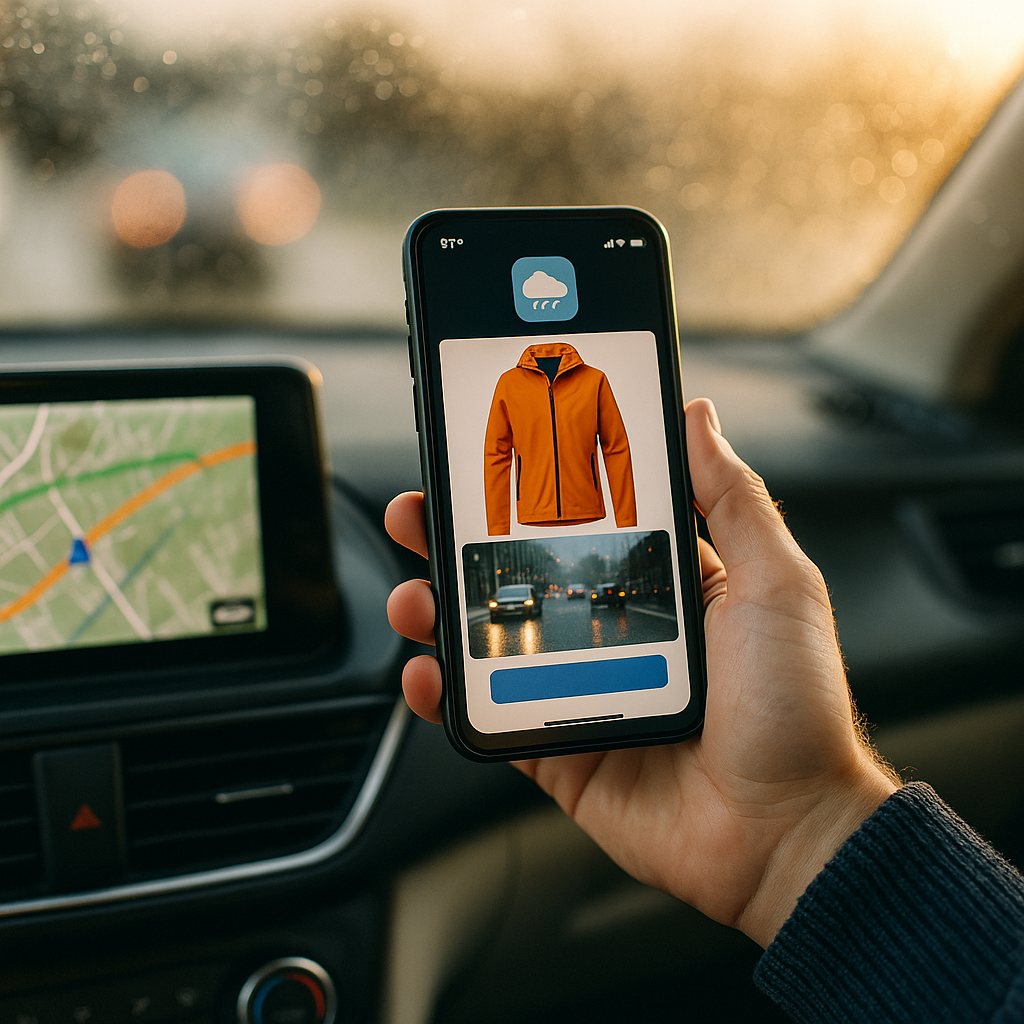
Using AI to Personalize Dynamic Creative Based on Live Weather Data is now a practical growth lever for marketers who want relevance without manual production. In 2025, weather signals update constantly, consumer intent shifts quickly, and ad platforms reward engagement. When your creative adapts to rain, heat, wind, or UV index in real time, you earn attention and conversion—if you build it responsibly. Ready to make weather work harder?
Weather-based personalization: why it changes performance
Weather is one of the few real-world signals that affects nearly everyone, every day, and it often changes plans immediately. That makes it uniquely powerful for personalization: it can influence what people need (an umbrella, sunscreen, delivery), how they feel (comfort-seeking vs. adventure), and where they are likely to go (indoors vs. outdoors).
Weather-based personalization is especially effective because it aligns ad messaging with a user’s immediate context rather than inferred interests alone. Instead of guessing whether someone is “in market” for iced coffee, you can respond to a heatwave with an offer framed around cooling off. Instead of relying on broad seasonal assumptions, you can match the actual conditions in the user’s location at the moment they see the ad.
Where it works best:
- Retail and CPG: apparel layers, sportswear, beverages, skincare, allergy relief.
- Food and delivery: rainy-day delivery messaging, grill bundles in clear conditions.
- Travel and mobility: local escapes, indoor attractions, ride-share vs. walking.
- Insurance and home services: storm prep, roof checks, HVAC tune-ups.
The key is to treat weather as a trigger for relevance, not as a gimmick. Users respond when the creative solves a real problem (“Stay dry in the next 2 hours”) or supports a real goal (“Hydrate safely during extreme heat”).
Dynamic creative optimization: how AI turns forecasts into ads
Dynamic creative optimization (DCO) becomes significantly more powerful when you combine live weather inputs with AI decisioning. The practical model is simple: weather data becomes a real-time feature, AI decides what to show, and your ad template renders the right copy, image, and offer.
A typical AI-driven weather DCO stack includes:
- Data layer: weather API (temperature, precipitation, “feels like,” wind, humidity, UV, alerts) mapped to geo coordinates or designated market areas.
- Rules + ML decisioning: guardrails (brand safety and legal requirements) plus machine learning that learns which combinations drive outcomes.
- Creative templates: modular components (headline, subhead, background, product shot, CTA, disclaimer) that can be swapped without redesigning.
- Activation: ad server/DSP/social platform creative APIs that support feed-based or template-based variants.
- Measurement: experiment framework, incrementality testing, and creative reporting.
AI’s advantage is speed and granularity. Instead of building 20 static variants and hoping they cover every scenario, you let the system assemble a “best next creative” from approved components. For example, the model may learn that:
- In light rain, “free delivery” outperforms discounting.
- In high UV, safety framing improves click-through more than product-feature framing.
- In cold snaps, shorter headlines with stronger contrast assets improve conversion on mobile.
Answering a common follow-up: do you need fully generative ads? Not necessarily. Many high-performing programs use template-first creative with AI selection, because it is easier to govern and test. Generative AI can add value for rapid copy iterations, localization, and concept exploration—when you keep strict approvals and brand controls.
Live weather data: what to collect, validate, and trigger on
Live weather data is only useful if it is accurate, timely, and mapped to decisions that matter. Start by choosing a reputable provider with clear documentation, reliable uptime, and appropriate licensing for commercial use. Then decide which weather variables map to user needs and product availability.
High-signal weather variables (useful across many categories):
- Temperature & “feels like”: better than temperature alone for comfort-driven messaging.
- Precipitation intensity and probability: more actionable than “rainy vs. not rainy.”
- Humidity: great for haircare, skincare, and HVAC.
- UV index: sunscreen, outdoor apparel, hydration messaging.
- Wind speed/gusts: outerwear, delivery positioning, travel alternatives.
- Air quality and pollen indicators: respiratory products and indoor activities (verify local availability).
- Alerts: heat advisories, storms, flooding risk (apply strict brand safety).
Validation and governance you should put in place:
- Data freshness rules: define maximum age (for example, last updated within a set number of minutes) and a fallback creative when data is stale.
- Geo resolution policy: decide whether you trigger at city, postal code, or market level based on privacy, accuracy, and platform limits.
- Trigger thresholds: use meaningful cutoffs (e.g., “UV high” rather than “UV 6.1”) so creative changes feel intentional.
- Availability constraints: connect to inventory and delivery coverage so you never promote what you cannot fulfill.
Another follow-up readers often have: should you use current conditions or forecasts? Use both, but differently. Current conditions are strongest for immediate actions (delivery, in-store visits, same-day services). Short-range forecasts work well for planning behavior (weekend trips, storm prep kits). Keep forecast windows short enough to remain credible and avoid “cry wolf” effects.
AI creative automation: templates, guardrails, and brand safety
AI creative automation works when you constrain it. You want many relevant variations, but you also want consistent brand voice, compliant claims, and a user experience that never feels intrusive or alarming.
Build a modular template system that supports variation without chaos:
- Copy library: approved headlines and descriptions tagged by weather condition, product category, funnel stage, and tone.
- Asset library: images/video snippets tagged by condition (rain visuals, sunny outdoor scenes), format, and placement.
- Offer logic: which promotions can be shown under which conditions, with frequency caps.
- Localization tokens: city names or generalized phrasing (“your area”) depending on privacy posture.
Guardrails you should not skip:
- No fear-based exploitation: avoid ads that intensify anxiety during severe alerts. Use helpful, calm language or pause campaigns for certain alert types.
- Claims and compliance: if you reference health or safety outcomes (heat, UV, air quality), use conservative wording and approved disclaimers.
- Creative change rate limits: too-frequent changes can harm learning and confuse users. Set thresholds so creative only shifts when it matters.
- Human review: keep a documented approval workflow for templates, copy, and any AI-generated variants.
If you use generative AI for copy, treat it as drafting assistance. Keep your final messaging grounded in what you can support: product features, service coverage, and transparent pricing. This is also where EEAT matters: be clear about what your system does, avoid overstating AI capabilities, and maintain accountability for outcomes.
Marketing measurement: experiments, incrementality, and attribution
Weather-triggered creative can look like it “works” simply because demand changed with the weather. Strong measurement separates correlation from impact. In 2025, the most reliable approach is a combination of controlled experiments and business-aware reporting.
Measurement methods that hold up:
- Geo experiments: hold out matched regions where weather-based personalization is disabled while keeping budgets and audiences comparable.
- Time-sliced tests: alternate personalized vs. generic creative during similar weather patterns to reduce seasonality bias.
- Platform experiments: use built-in lift tests when available, but validate with your own analysis.
- Incrementality KPIs: prioritize incremental conversions, incremental revenue, or qualified leads over click-through rate alone.
Answering “what should we optimize for?” Optimize for the closest business outcome you can measure reliably. If purchase measurement is delayed or noisy, optimize for high-intent proxy events (add-to-cart, store locator use, quote starts) and validate against downstream results.
Practical reporting slices that reveal what’s working:
- By condition bucket: hot, cold, rain, snow, high UV, poor air quality.
- By lead time: current conditions vs. forecast-based triggers.
- By creative component: headline family, CTA, offer type, imagery style.
- By fulfillment constraints: in-stock vs. low-stock; same-day coverage vs. standard shipping.
Also plan for diminishing returns. Once your system covers the obvious triggers, gains come from refinement: better thresholds, better segmentation (e.g., commuters vs. homebodies), and smarter constraints (don’t discount when the weather already drives demand).
Real-time advertising strategy: implementation roadmap and pitfalls
A strong real-time advertising strategy connects people, process, and technology. Most failures come from either over-engineering (too many conditions, too many variants) or under-governing (no guardrails, weak QA).
A practical rollout roadmap:
- Define use cases: pick 1–2 weather scenarios tied to clear user needs (e.g., rain for delivery, high heat for hydration products).
- Design templates: build a small set of modular formats for your highest-volume placements.
- Set triggers and fallbacks: decide thresholds, data freshness rules, and default creative when data is missing.
- Integrate activation: connect your weather feed to your creative system and ad platforms using stable IDs and QA checks.
- Run controlled tests: validate lift, then expand conditions and inventory gradually.
- Operationalize: assign owners for data quality, creative QA, compliance review, and weekly performance tuning.
Common pitfalls and how to avoid them:
- Over-personalization: naming exact neighborhoods can feel invasive. Use broader location phrasing unless the value is clear and consent posture supports it.
- Message mismatch: “Sunny deals” during cloudy conditions erodes trust. Invest in QA and validate provider coverage.
- Ignoring inventory: weather-driven demand spikes can cause stockouts. Connect to inventory feeds and throttle campaigns automatically.
- Overreacting to alerts: during severe events, the safest choice can be pausing ads or switching to purely helpful messaging.
When done well, the system becomes a repeatable capability: you can add new triggers (pollen, wind chill), new products, and new regions without starting from scratch.
FAQs
What is weather-triggered dynamic creative?
It is advertising creative that changes automatically based on local weather conditions or forecasts. The system uses predefined templates and decision logic (often AI-assisted) to choose the most relevant message, visuals, and offer for the viewer’s context.
Do I need user-level data to personalize ads with weather?
No. Many implementations rely on contextual signals such as approximate location (city or market) plus weather data for that area. This can reduce dependence on sensitive identifiers while still delivering relevance.
Which weather signals drive the best results?
Temperature (“feels like”), precipitation intensity, and UV index are reliable starting points. The best signal depends on your category: humidity can be strong for personal care; wind and alerts can matter for travel and home services.
How often should creative update?
Update when conditions cross meaningful thresholds, not every minor change. Excessive switching can confuse users and destabilize platform learning. Use buckets (e.g., “light rain” vs. “heavy rain”) and limit updates within set time windows.
Is generative AI safe to use for weather-based ads?
It can be, if you apply strict guardrails: approved brand voice, prohibited phrases, compliance review, and template constraints. Many teams use generative AI to draft variations, then rely on human approval before activation.
How do I prove weather personalization caused the lift?
Use controlled experiments such as geo holdouts or platform lift tests, and compare incremental outcomes against a baseline creative under similar conditions. Also report by weather bucket to ensure gains are not simply due to weather-driven demand changes.
What should we do during severe weather alerts?
Prioritize user safety and brand trust. Consider pausing promotional messaging, switching to neutral/helpful information, and avoiding urgency tactics. Document an escalation policy so the response is consistent and fast.
In 2025, live weather is one of the most practical context signals for making ads feel timely and useful. When you pair strong templates with AI decisioning, you can scale relevance across regions without bloating production. The takeaway: start with a few high-intent triggers, measure incrementality, and enforce clear guardrails so personalization builds trust while it boosts performance.
Top Influencer Marketing Agencies
The leading agencies shaping influencer marketing in 2026
Agencies ranked by campaign performance, client diversity, platform expertise, proven ROI, industry recognition, and client satisfaction. Assessed through verified case studies, reviews, and industry consultations.
Moburst

-
2

The Shelf
Boutique Beauty & Lifestyle Influencer AgencyA data-driven boutique agency specializing exclusively in beauty, wellness, and lifestyle influencer campaigns on Instagram and TikTok. Best for brands already focused on the beauty/personal care space that need curated, aesthetic-driven content.Clients: Pepsi, The Honest Company, Hims, Elf Cosmetics, Pure LeafVisit The Shelf → -
3

Audiencly
Niche Gaming & Esports Influencer AgencyA specialized agency focused exclusively on gaming and esports creators on YouTube, Twitch, and TikTok. Ideal if your campaign is 100% gaming-focused — from game launches to hardware and esports events.Clients: Epic Games, NordVPN, Ubisoft, Wargaming, Tencent GamesVisit Audiencly → -
4

Viral Nation
Global Influencer Marketing & Talent AgencyA dual talent management and marketing agency with proprietary brand safety tools and a global creator network spanning nano-influencers to celebrities across all major platforms.Clients: Meta, Activision Blizzard, Energizer, Aston Martin, WalmartVisit Viral Nation → -
5

The Influencer Marketing Factory
TikTok, Instagram & YouTube CampaignsA full-service agency with strong TikTok expertise, offering end-to-end campaign management from influencer discovery through performance reporting with a focus on platform-native content.Clients: Google, Snapchat, Universal Music, Bumble, YelpVisit TIMF → -
6

NeoReach
Enterprise Analytics & Influencer CampaignsAn enterprise-focused agency combining managed campaigns with a powerful self-service data platform for influencer search, audience analytics, and attribution modeling.Clients: Amazon, Airbnb, Netflix, Honda, The New York TimesVisit NeoReach → -
7

Ubiquitous
Creator-First Marketing PlatformA tech-driven platform combining self-service tools with managed campaign options, emphasizing speed and scalability for brands managing multiple influencer relationships.Clients: Lyft, Disney, Target, American Eagle, NetflixVisit Ubiquitous → -
8

Obviously
Scalable Enterprise Influencer CampaignsA tech-enabled agency built for high-volume campaigns, coordinating hundreds of creators simultaneously with end-to-end logistics, content rights management, and product seeding.Clients: Google, Ulta Beauty, Converse, AmazonVisit Obviously →