


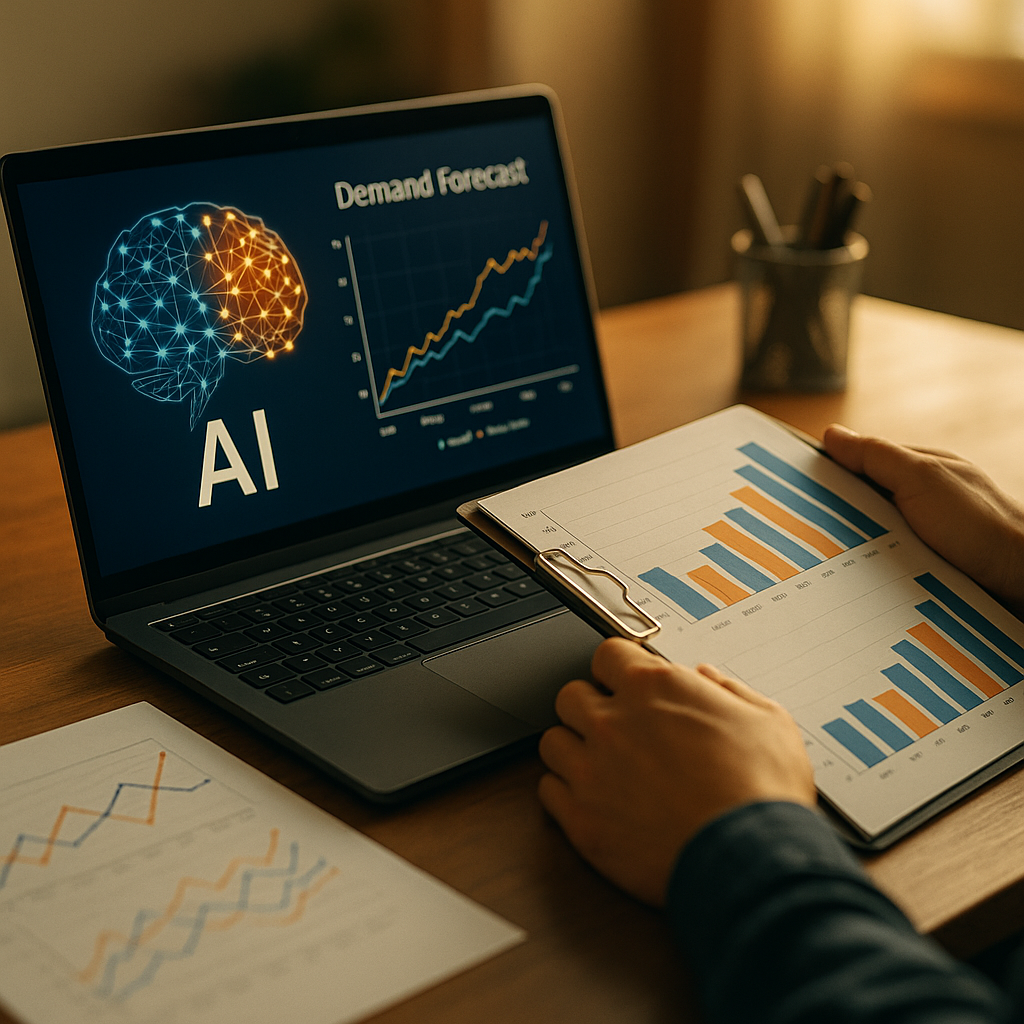
Brands are harnessing the power of AI for predictive analytics in demand forecasting for marketing like never before. As digital strategies become more data-driven, AI-driven models make predictions smarter and more accurate. Discover how your marketing team can transform decision-making, optimize campaigns, and outpace competitors using the latest in AI-powered forecasting.
The Role of Machine Learning in Marketing Demand Forecasting
Machine learning has revolutionized demand forecasting by enabling marketers to process and analyze vast datasets with unprecedented speed and accuracy. Unlike traditional methods that rely on historical sales alone, machine learning algorithms incorporate multiple data sources, such as customer behavior, market trends, and competitor activity. By doing so, businesses gain actionable insights into consumer demand and can pivot strategies in near real-time.
The key to this transformation lies in pattern detection. AI models rapidly identify sales patterns, seasonality, and anomalies, making it possible to forecast spikes or drops in demand well ahead of time. Marketers can use these insights to optimize inventory, allocate budgets more effectively, and create targeted campaigns that speak directly to the customer’s needs at the right moment.
Benefits of Predictive Analytics for Accurate Marketing Decisions
Predictive analytics powered by AI brings substantial benefits to marketing professionals seeking to optimize their campaigns and budgets. The accuracy of these forecasts enables data-backed decisions, reducing the risks of overstocking or missed sales opportunities. Some core benefits include:
- Increased ROI: With precise demand predictions, marketers can allocate spending for maximum impact and minimize wasted resources.
- Enhanced Customer Experiences: Personalized offers and communication based on predictive models drive loyalty and customer satisfaction.
- Optimized Marketing Mix: Predictive insights identify which channels and content yield the highest engagement and conversions.
- Inventory and Supply Chain Efficiency: By anticipating demand, supply chain teams can better manage inventory, reducing costs and improving delivery times.
- Agile Response to Market Shifts: Real-time analytics enable marketers to respond swiftly to changing consumer behaviors or emerging market trends.
These outcomes contribute to sustainable growth and help brands stay adaptive in fluctuating markets.
Leveraging Real-Time Data for Dynamic Forecasting Models
Integrating AI-driven predictive analytics into demand forecasting means tapping into dynamic, real-time data streams. No longer are forecasts generated from static spreadsheets. Marketers now harness customer clicks, website behaviors, transactional histories, and even social media sentiment as input sources for live models.
Dynamic forecasting equips marketing teams with the ability to:
- Track campaign performance and customer sentiment as it happens
- Fine-tune offers and messaging in response to live market signals
- Proactively identify upcoming surges or declines in product demand
For example, a sudden surge in positive mentions on social platforms could prompt marketers to boost ad budgets or scale up supply chain operations for in-demand products. The constant feedback loop between real-time data and AI models enables iterative forecasting, driving ongoing improvement and relevance in marketing execution.
AI-Driven Demand Forecasting Tools and Best Practices
As of 2025, an array of AI-powered demand forecasting tools is available, offering marketers intuitive ways to adopt predictive analytics. Leading platforms integrate seamlessly with CRM, e-commerce, and analytics stacks, facilitating a unified data ecosystem. When choosing and implementing these tools, follow these best practices to maximize predictive accuracy and business value:
- Choose Transparent, Interpretable Models: Opt for AI solutions that offer clear reasoning for their predictions, promoting trust and enabling marketers to justify decisions internally.
- Ensure High-Quality Data: Predictions are only as reliable as the underlying data—maintain clean, comprehensive datasets for the best results.
- Blend Internal and External Data Sources: Combine company-owned data with third-party and external datasets (like weather or economic indicators) for more nuanced forecasts.
- Continuously Validate and Iterate: Routinely compare forecasts to actual outcomes, adjusting models to improve precision over time.
- Invest in Employee Training: Equip marketing and analytics staff with the skills to interpret AI-driven insights and incorporate them into daily decision-making.
By adopting these strategies, organizations can move predictive analytics from a novelty to a core pillar of marketing success.
Ethical Considerations and Data Privacy in AI-Powered Marketing Forecasting
As brands collect and process increasingly granular data for AI-driven demand forecasting, ethical and privacy considerations become paramount. Adhering to privacy regulations and ensuring transparent data use builds trust with customers while safeguarding brand reputation. Commitment to ethical AI includes:
- Transparency: Clearly communicate how customer data is utilized in marketing predictions.
- Consent: Obtain explicit customer permission for data collection and processing, especially for sensitive personal data.
- Bias Mitigation: Regularly audit AI models for potential bias, ensuring fair and inclusive targeting across demographics.
- Data Security: Invest in robust cybersecurity to protect customer information from unauthorized access or breaches.
Maintaining an ethical approach ensures compliance with regulations and fosters long-term customer loyalty—a critical aspect of modern marketing.
Future Trends in AI for Demand Forecasting in Marketing
The landscape of AI-powered predictive analytics for demand forecasting is evolving rapidly. In 2025, we see several trends shaping the future of marketing technology:
- Greater User Personalization: Hyper-targeted predictions enable truly individualized marketing campaigns driven by real-time behavioral data.
- Contextual AI Models: Emerging algorithms adapt to context—such as location, economic climate, or cultural trends—improving forecast relevance.
- Integration with IoT Data: Internet of Things (IoT) devices are providing marketers with new streams of consumer usage data, further refining demand signals.
- Automated Decision-Making: AI systems are moving beyond recommendations to autonomous actions, such as auto-adjusting ads or pricing in response to market shifts.
Staying informed about these developments ensures your marketing strategies remain innovative, agile, and competitive in an AI-driven era.
FAQs: Using AI for Predictive Analytics in Demand Forecasting for Marketing
-
How does AI improve accuracy in demand forecasting for marketing?
AI leverages complex algorithms to analyze vast datasets, identifying patterns and trends beyond human capability. This results in more precise forecasts, enabling marketers to make proactive and informed decisions.
-
What data sources are commonly used in AI-powered predictive analytics?
Data sources include CRM systems, transactional data, web analytics, social media signals, external market data, weather, and economic indicators. Combining internal and external data leads to more accurate and holistic forecasts.
-
Are there risks to using AI in demand forecasting?
Risks include potential model bias, over-reliance on data quality, and privacy concerns. Regular model validation, ethical AI practices, and rigorous data governance are essential to mitigate these risks.
-
Can smaller businesses benefit from AI-driven demand forecasting?
Yes. Advances in cloud-based AI tools have made predictive analytics accessible to businesses of all sizes, allowing even small teams to forecast demand, optimize marketing, and compete more effectively.
-
How often should predictive models be updated?
Models should be updated frequently—ideally in real-time or at least monthly—to account for new data and evolving market or consumer behaviors, ensuring ongoing accuracy and relevance.
In summary, using AI for predictive analytics in demand forecasting for marketing empowers brands with actionable insights and agility. By leveraging dynamic data, ethical practices, and advanced tools, marketers can optimize campaigns, delight customers, and lead confidently in a rapidly changing digital world.
Top Influencer Marketing Agencies
The leading agencies shaping influencer marketing in 2026
Agencies ranked by campaign performance, client diversity, platform expertise, proven ROI, industry recognition, and client satisfaction. Assessed through verified case studies, reviews, and industry consultations.
Moburst

-
2

The Shelf
Boutique Beauty & Lifestyle Influencer AgencyA data-driven boutique agency specializing exclusively in beauty, wellness, and lifestyle influencer campaigns on Instagram and TikTok. Best for brands already focused on the beauty/personal care space that need curated, aesthetic-driven content.Clients: Pepsi, The Honest Company, Hims, Elf Cosmetics, Pure LeafVisit The Shelf → -
3

Audiencly
Niche Gaming & Esports Influencer AgencyA specialized agency focused exclusively on gaming and esports creators on YouTube, Twitch, and TikTok. Ideal if your campaign is 100% gaming-focused — from game launches to hardware and esports events.Clients: Epic Games, NordVPN, Ubisoft, Wargaming, Tencent GamesVisit Audiencly → -
4

Viral Nation
Global Influencer Marketing & Talent AgencyA dual talent management and marketing agency with proprietary brand safety tools and a global creator network spanning nano-influencers to celebrities across all major platforms.Clients: Meta, Activision Blizzard, Energizer, Aston Martin, WalmartVisit Viral Nation → -
5

The Influencer Marketing Factory
TikTok, Instagram & YouTube CampaignsA full-service agency with strong TikTok expertise, offering end-to-end campaign management from influencer discovery through performance reporting with a focus on platform-native content.Clients: Google, Snapchat, Universal Music, Bumble, YelpVisit TIMF → -
6

NeoReach
Enterprise Analytics & Influencer CampaignsAn enterprise-focused agency combining managed campaigns with a powerful self-service data platform for influencer search, audience analytics, and attribution modeling.Clients: Amazon, Airbnb, Netflix, Honda, The New York TimesVisit NeoReach → -
7

Ubiquitous
Creator-First Marketing PlatformA tech-driven platform combining self-service tools with managed campaign options, emphasizing speed and scalability for brands managing multiple influencer relationships.Clients: Lyft, Disney, Target, American Eagle, NetflixVisit Ubiquitous → -
8

Obviously
Scalable Enterprise Influencer CampaignsA tech-enabled agency built for high-volume campaigns, coordinating hundreds of creators simultaneously with end-to-end logistics, content rights management, and product seeding.Clients: Google, Ulta Beauty, Converse, AmazonVisit Obviously →