


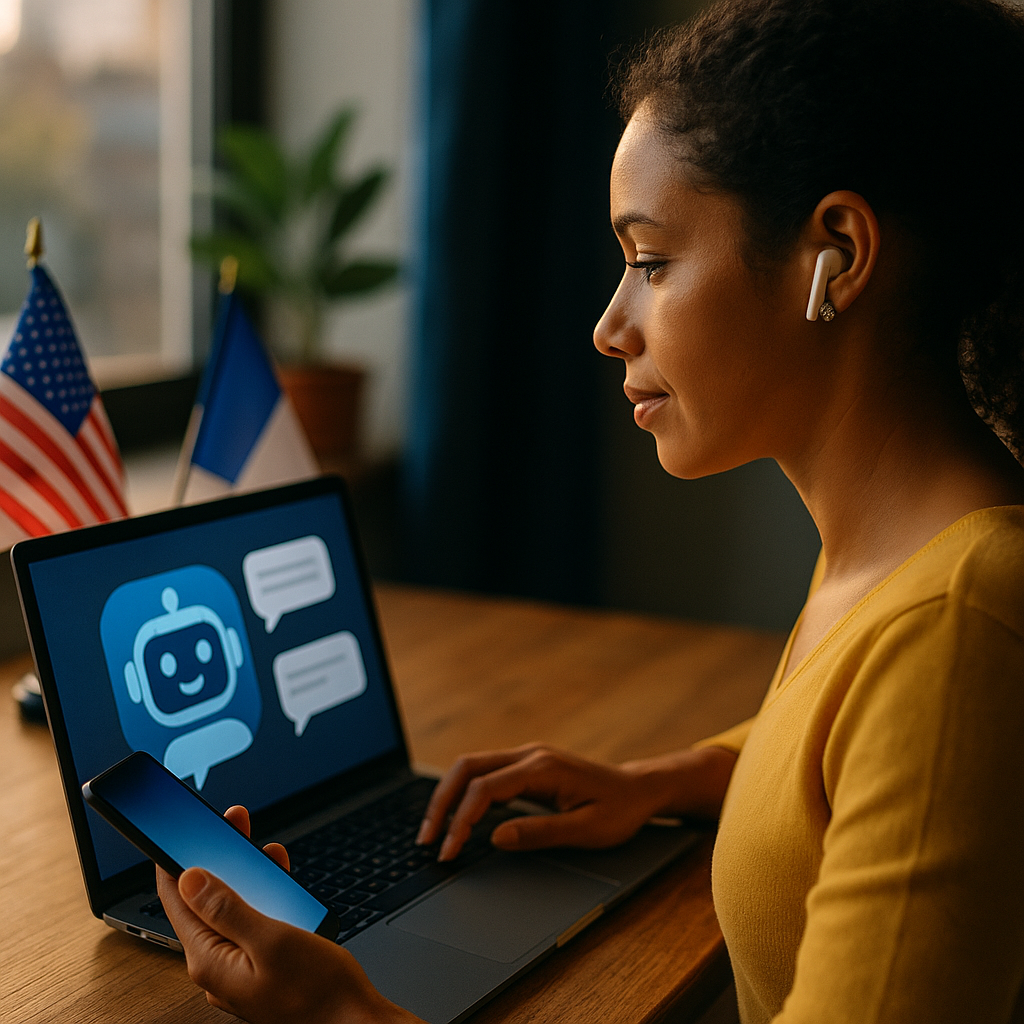
Using AI To Personalize Brand Voice For Global Translation Nuance is no longer optional in 2025. Customers expect the same tone, intent, and cultural respect in every market, not just correct words. Modern AI can adapt voice and style at scale while preserving meaning, compliance, and accessibility. The leaders treat localization as brand strategy, not an afterthought—are you ready to sound local everywhere?
What “brand voice” means in global translation nuance
Brand voice is the consistent personality your company expresses—through word choice, rhythm, formality, humor, and values. In global markets, voice must remain recognizable while adapting to local expectations. That is the core challenge of global translation nuance: translating meaning plus intent, emotion, and cultural context.
Literal translation fails because languages encode relationships differently. A friendly “Hey” in one market can read as disrespectful in another. A direct call-to-action can sound pushy in high-context cultures. Even punctuation, honorifics, and emoji usage can signal trust or carelessness depending on locale. Readers also judge credibility through small details like measurement units, date formats, legal phrasing, and customer-support tone.
To personalize voice across markets, you need more than a bilingual dictionary. You need a repeatable system that captures:
- Voice attributes (e.g., confident, calm, witty, minimalist, premium)
- Audience expectations by region, channel, and lifecycle stage
- Non-negotiables (legal disclaimers, safety phrasing, medical constraints, financial risk language)
- Local resonance (idioms, politeness level, taboo topics, inclusive language norms)
AI can operationalize this system—if you define guardrails and measure outcomes instead of hoping the model “gets it.”
How AI localization personalizes tone without losing accuracy
AI localization uses language models and translation engines to produce target-language copy aligned to intent and brand style, then refines it through human review and automated quality checks. The best workflows treat AI as a drafting and consistency engine, not a replacement for accountability.
Practically, personalization happens through structured inputs that guide generation:
- Style guides translated into actionable rules (do/don’t lists, sample rewrites, approved adjectives)
- Voice profiles per brand and sub-brand (e.g., enterprise vs. consumer support)
- Audience and channel context (homepage hero vs. in-app error message vs. legal notice)
- Terminology constraints (product names, regulated terms, inclusive language rules)
Instead of asking AI to “translate,” you instruct it to rewrite for the destination market while preserving meaning and required terms. This shift matters because nuance often lives in pragmatics—politeness, indirectness, emphasis, and what is left unsaid.
To prevent drift, strong systems add verification:
- Meaning checks: AI compares source intent vs. output and flags potential semantic changes.
- Terminology enforcement: detects forbidden synonyms and ensures approved terms appear.
- Risk filters: flags claims, guarantees, or sensitive content in regulated industries.
- Readability and tone scoring: evaluates formality, sentiment, and complexity against your profile.
When readers ask, “Will it still sound like us?” the answer should be grounded in process: your system defines “us,” and AI scales it consistently across languages.
Building a multilingual brand voice system: data, guardrails, and governance
A reliable multilingual brand voice program starts with evidence—your best-performing copy, your customer-support transcripts, and the policies you already enforce. In 2025, the winning approach is to centralize knowledge and decentralize nuance: one core voice, many local executions.
Step 1: Codify voice as measurable attributes. Avoid vague statements like “be friendly.” Use attributes with observable signals:
- Formality: contractions allowed? honorifics required?
- Directness: blunt CTA vs. suggestion-based phrasing
- Emotion: enthusiastic vs. calm reassurance
- Complexity: short sentences, fewer clauses, no jargon
Step 2: Create a bilingual (or multilingual) “voice map.” For each target market, define how those attributes typically appear. Example: “confident” might translate to concise authority in one locale and to respectful expertise in another.
Step 3: Establish guardrails. Guardrails protect your brand and your customers:
- Terminology and product naming (including transliteration rules)
- Claims and compliance language (especially healthcare, finance, and safety)
- Inclusive language and accessibility requirements
- Data privacy constraints (what content may be sent to external systems)
Step 4: Governance and approvals. Define who owns what:
- Brand team: core voice attributes, global messaging pillars
- Regional leads: cultural appropriateness, local market fit, channel norms
- Legal/compliance: required phrasing and claim boundaries
- Localization ops: tooling, QA, glossary management, release cadence
Step 5: Build feedback loops. Tie localization quality to real outcomes. If a market’s conversion drops after a tone shift, treat it like a product regression, not a translation “preference.”
This structure supports Google’s helpful-content expectations: you can explain what you did, why you did it, and how you validate it—clear signals of expertise and trust.
Achieving cultural adaptation at scale: nuance, sensitivity, and intent
Cultural adaptation goes beyond “localizing” a joke or swapping currency symbols. It means aligning your message with cultural norms around authority, privacy, humor, gender, time, and risk. AI can accelerate this work, but it must be paired with cultural knowledge and explicit constraints.
Focus on these nuance hotspots where brand voice often breaks:
- Politeness strategies: honorifics, softeners, indirect requests, apologies
- Trust signals: certifications, guarantees, social proof formatting, formality
- Humor and wordplay: often requires re-creation, not translation
- Taboos and sensitive domains: health, body, politics, religion, personal finance
- Metaphors and idioms: can confuse or offend when imported
A practical way to use AI here is a two-pass method:
- Pass A (meaning-first): produce a faithful translation that preserves intent and required terms.
- Pass B (voice-and-culture): rewrite for local tone and cultural fit while keeping key constraints unchanged.
Then add a “reasoning-free” checklist review (human or automated): Does this keep the same promise? Does it introduce stronger claims? Does it change the audience relationship? Does it sound like a local brand in this category?
Readers typically ask whether AI will “wash out” uniqueness. It can—if you only optimize for grammatical correctness. To prevent blandness, provide exemplars: your top-performing landing pages, brand manifestos, and support replies that represent your voice. AI mirrors what you feed it.
Ensuring translation quality assurance and EEAT in AI-driven workflows
Translation quality assurance is where many AI localization programs either earn trust or create brand risk. In 2025, the expectation is not perfection—it is control: documented standards, repeatable QA, and the ability to explain decisions.
Use a layered QA model that maps to EEAT principles:
- Experience: include feedback from customer-facing teams and regional staff who see real objections and misunderstandings.
- Expertise: use professional linguists for high-impact pages, regulated content, and brand campaigns.
- Authoritativeness: maintain approved glossaries, product taxonomies, and canonical messaging pillars.
- Trust: keep audit trails, versioning, and clear approval records for sensitive text.
Concrete QA checks to implement:
- Terminology compliance: glossary adherence, brand naming, feature labels
- Consistency checks: repeated strings translated consistently across product and help content
- Claim and risk detection: flags for absolutes (“guaranteed,” “always”), medical/financial promises, and comparative claims
- Tone alignment scoring: measure formality, sentiment, and verbosity against your market-specific voice map
- Accessibility checks: reading level targets, clear error messages, inclusive language
Security and privacy are part of trust. If you process user data, implement data minimization, redact personal information before translation, and use enterprise-grade settings and contracts where needed. When stakeholders ask, “Can we prove what happened?” your logs and QA reports should answer.
Measuring localization ROI and continuously improving brand voice
Localization ROI becomes clear when you connect language quality to business metrics and customer outcomes. AI makes iteration faster, but only measurement makes it smarter.
Start by choosing metrics that match the content type:
- Marketing pages: conversion rate, bounce rate, scroll depth, CTA click-through, paid-search quality signals
- Product UI: task completion, error rates, feature adoption, support tickets per user
- Support content: deflection rate, time-to-resolution, CSAT, repeat contact rate
- Brand perception: regional brand lift studies, sentiment analysis on reviews and social
Then run controlled improvements:
- A/B test tone variables: direct vs. gentle CTAs, formal vs. conversational support macros, short vs. explanatory onboarding.
- Market-specific experimentation: do not assume what works in one region will work elsewhere.
- Continuous glossary refinement: track terms that cause confusion and standardize them.
Operationally, treat localization like product development:
- Release notes for major voice changes
- Regression tests for critical flows (checkout, account recovery, safety notices)
- Quarterly voice audits by locale to catch drift
This answers the follow-up question, “How do we keep it consistent over time?” You keep it consistent by measuring, testing, and maintaining the system—not by relying on individual translators to remember every nuance.
FAQs about AI and personalized brand voice in global translation
Can AI maintain a consistent brand voice across dozens of languages?
Yes, if you provide a clear voice profile, enforce terminology, and run structured QA. AI is strong at consistency when the rules are explicit and the workflow includes review and measurement.
What’s the difference between translation, localization, and transcreation?
Translation focuses on meaning accuracy. Localization adapts language plus format, context, and conventions for a region. Transcreation re-invents creative copy (taglines, campaigns) to achieve the same emotional impact, often with more freedom than direct translation.
How do we prevent AI from introducing compliance or legal risk?
Lock required phrases, restrict claim language, and run automated checks for absolutes and regulated terms. Route high-risk content through human expert review and maintain an audit trail for approvals.
Should we use one global voice guide or separate guides per market?
Use one global core voice and create market-specific adaptations that explain how the voice is expressed locally (formality, directness, humor). This preserves brand identity while respecting cultural expectations.
How do we handle humor, idioms, and slogans?
Treat them as transcreation, not standard translation. Provide the intent, the audience reaction you want, and examples of what fits your brand. Validate with native reviewers and, when possible, performance testing in-market.
What content should never be fully automated?
High-stakes legal terms, safety instructions, medical or financial advice, crisis communications, and major brand campaigns should always include qualified human oversight, even if AI accelerates drafts and consistency checks.
AI-driven localization works when you treat language as a product: define the voice, encode constraints, and validate outcomes in every market. The goal is not identical wording, but identical intent and brand personality—expressed in a culturally natural way. In 2025, teams that combine AI speed with human expertise build trust faster, reduce rework, and grow globally with clarity.
Top Influencer Marketing Agencies
The leading agencies shaping influencer marketing in 2026
Agencies ranked by campaign performance, client diversity, platform expertise, proven ROI, industry recognition, and client satisfaction. Assessed through verified case studies, reviews, and industry consultations.
Moburst

-
2

The Shelf
Boutique Beauty & Lifestyle Influencer AgencyA data-driven boutique agency specializing exclusively in beauty, wellness, and lifestyle influencer campaigns on Instagram and TikTok. Best for brands already focused on the beauty/personal care space that need curated, aesthetic-driven content.Clients: Pepsi, The Honest Company, Hims, Elf Cosmetics, Pure LeafVisit The Shelf → -
3

Audiencly
Niche Gaming & Esports Influencer AgencyA specialized agency focused exclusively on gaming and esports creators on YouTube, Twitch, and TikTok. Ideal if your campaign is 100% gaming-focused — from game launches to hardware and esports events.Clients: Epic Games, NordVPN, Ubisoft, Wargaming, Tencent GamesVisit Audiencly → -
4

Viral Nation
Global Influencer Marketing & Talent AgencyA dual talent management and marketing agency with proprietary brand safety tools and a global creator network spanning nano-influencers to celebrities across all major platforms.Clients: Meta, Activision Blizzard, Energizer, Aston Martin, WalmartVisit Viral Nation → -
5

The Influencer Marketing Factory
TikTok, Instagram & YouTube CampaignsA full-service agency with strong TikTok expertise, offering end-to-end campaign management from influencer discovery through performance reporting with a focus on platform-native content.Clients: Google, Snapchat, Universal Music, Bumble, YelpVisit TIMF → -
6

NeoReach
Enterprise Analytics & Influencer CampaignsAn enterprise-focused agency combining managed campaigns with a powerful self-service data platform for influencer search, audience analytics, and attribution modeling.Clients: Amazon, Airbnb, Netflix, Honda, The New York TimesVisit NeoReach → -
7

Ubiquitous
Creator-First Marketing PlatformA tech-driven platform combining self-service tools with managed campaign options, emphasizing speed and scalability for brands managing multiple influencer relationships.Clients: Lyft, Disney, Target, American Eagle, NetflixVisit Ubiquitous → -
8

Obviously
Scalable Enterprise Influencer CampaignsA tech-enabled agency built for high-volume campaigns, coordinating hundreds of creators simultaneously with end-to-end logistics, content rights management, and product seeding.Clients: Google, Ulta Beauty, Converse, AmazonVisit Obviously →