


Your Creator Attribution Is Probably Already Broken
Google’s AI Max for Search Campaigns has a quiet default that brands running creator-linked traffic consistently overlook: URL expansion is on, and it will reroute visitors to whatever landing page its model deems most relevant, regardless of the creator-specific URL your influencer just drove 50,000 people toward. The technical term is AI Max swimlane architecture. The practical result is that your creator’s contribution to pipeline disappears into a generic “direct” or “paid search” bucket, and your attribution model has no idea what happened.
What AI Max URL Expansion Actually Does to Creator Traffic
Most paid search teams understand URL expansion in the context of broad match keywords and Performance Max asset groups. Fewer have mapped what it does when a creator campaign generates branded search volume. Here is the sequence that breaks attribution:
- A creator posts content with a tracked link (typically a UTM-parameterized URL pointing to a dedicated landing page, for example brand.com/creator/jenna).
- A portion of that creator’s audience, instead of clicking directly, searches the brand name or a phrase from the creator’s content on Google.
- AI Max intercepts that search, decides a different page on your site converts better, and serves an ad pointing to brand.com/shop or your homepage instead.
- The user lands on a page with no creator UTM parameters. The session is attributed to paid search. Jenna gets zero credit.
This is not a hypothetical edge case. Branded search volume spikes predictably after creator activations. According to Google’s own campaign documentation, URL expansion is enabled by default in AI Max configurations and the system actively tests alternative URLs from your domain without requiring explicit advertiser approval for each substitution.
When creator content drives branded search and AI Max redirects that traffic to a non-tracked URL, the revenue impact is real but invisible. You lose the creator’s revenue credit and the data you need to renew, renegotiate, or replicate the partnership.
For a deeper operational breakdown of this specific failure mode, the URL expansion fix for creator campaigns covers the remediation steps in detail.
The Swimlane Architecture Solution
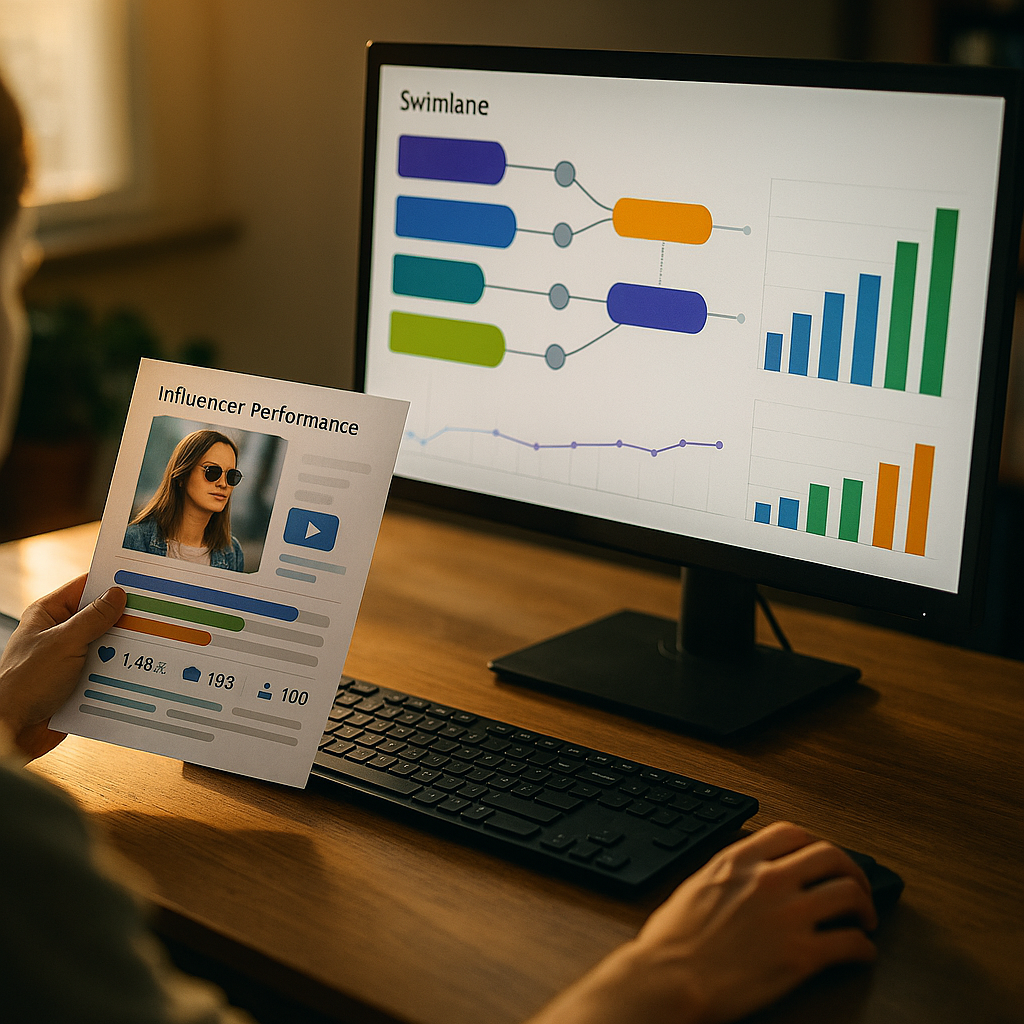
The swimlane approach treats each creator’s traffic as a protected channel with its own set of rules, separate from your brand’s general paid search logic. Operationally, it requires configuring three interdependent controls.
1. URL expansion exclusions at the campaign level. Inside your AI Max campaign settings, navigate to the “URL expansion” control and set it to “Specific URLs only.” This tells Google’s model it cannot substitute landing pages. The constraint applies per campaign, not per ad group, which is why smart teams run creator-linked campaigns in isolation from evergreen brand search campaigns. Mixing them means you cannot apply different URL rules without splitting the campaign.
2. Landing page parameter locking. Creator landing pages should be built with UTM parameters that are appended server-side, not just passed as query strings. Query strings are strippable. Server-side parameter injection via your CMS or a redirect layer (Rebrandly, Pretty Links, or a custom redirect stack) ensures that even if Google’s model somehow serves the right URL, the attribution parameters survive. Pair this with a unified CRM attribution layer so that sessions without intact UTMs can be probabilistically matched back to the creator activation window.
3. Audience signal segmentation. AI Max uses audience signals to inform both targeting and URL selection. If your creator campaign audience signals overlap with your general remarketing lists, the model conflates the two traffic streams. Create separate audience segments for creator campaign traffic using first-party data signals (email list from the creator’s audience, lookalikes built from creator landing page visitors) and feed those exclusively into the creator swimlane campaign. This reduces the probability of AI-mediated traffic blending.
Why Most Attribution Stacks Miss This Failure Mode
Standard last-click and even data-driven attribution models inside Google Ads will not surface this problem on their own. The rerouted traffic looks like high-intent branded search. It converts well. The model rewards it. Nobody flags it as anomalous because the revenue is still appearing, just credited to the wrong channel.
The tell is in your creator landing page analytics. If a creator post goes live and your brand.com/creator/jenna page receives significantly lower traffic than the creator’s platform analytics suggest it should (accounting for audience reach and typical click-through rates), AI Max URL expansion is a likely culprit alongside direct traffic cannibalization by branded search ads.
Cross-referencing creator platform data against landing page session data is a manual discipline that most teams skip because it requires pulling numbers from three or four sources simultaneously. Tools built for agentic campaign automation are starting to automate this reconciliation, but the configuration guardrails still require human judgment.
It is also worth examining how your attribution stack handles identity resolution across the branded search touchpoint. Platforms like identity graph vendors can stitch the branded search session back to a user who was exposed to creator content, but only if you have the first-party data infrastructure to support that matching in the first place.
Configuration Checklist Before Your Next Creator Campaign Launch
Run through these before any creator activation that includes paid search amplification or expects significant organic branded search lift:
- Confirm AI Max URL expansion is set to “Specific URLs only” in every campaign touching creator-linked traffic.
- Verify creator landing page URLs are excluded from the broader site’s URL expansion allowlist.
- Check that creator UTM parameters are not stripped by your CDN, load balancer, or any redirect chain.
- Confirm your CRM or analytics platform is configured to attribute sessions within a defined creator activation window (typically 7-14 days post-publish) even when UTM parameters are absent.
- Audit audience signal lists to ensure creator audiences are not merged with general remarketing pools inside Google Ads.
- Run a test click through the creator’s link post-launch to verify the landing page resolves correctly with parameters intact.
Swimlane architecture is not a one-time setup. Every new campaign, every new creator, every platform change by Google requires a fresh audit of these controls. Treat it as pre-flight, not post-production.
The Revenue Visibility Problem This Solves
When creator attribution breaks, the downstream consequences compound quickly. Performance reviews underpay creators whose actual impact was higher than recorded. Budget allocation models pull spend away from creator programs toward paid search, which is partially benefiting from creator-driven intent. And your ability to negotiate creator renewals on merit, with revenue data, is replaced by vague brand sentiment proxies.
The attribution and governance considerations inside AI-mediated campaign tools apply directly here: the systems optimizing your media are not aligned with your creator measurement objectives by default. You have to engineer that alignment explicitly.
Comparing how different AI ad platforms handle URL control is useful context here. The approaches taken by Snapchat, TikTok Symphony, and Meta Advantage+ each handle URL integrity and attribution differently, and understanding those differences informs how you architect cross-platform creator measurement.
For enterprise programs running dozens of creators simultaneously, the manual overhead of swimlane configuration per creator is real. The answer is not to skip the configuration. It is to template it: one AI Max campaign structure, cloned and parameterized per creator, with URL exclusions and audience segments populated programmatically. Most enterprise tag management systems and marketing technology stacks support this kind of templated campaign deployment at scale.
The operational cost of getting this right is measured in setup hours. The cost of getting it wrong is measured in misallocated budget, undervalued creator relationships, and revenue you technically earned but can’t prove.
Start with your live campaigns. Pull your current AI Max configurations today, check the URL expansion setting on every campaign where a creator has an active or recent post, and treat any campaign showing “all URLs” expansion as a broken attribution pipe that needs immediate isolation.
Frequently Asked Questions
What is AI Max swimlane architecture in the context of creator campaigns?
AI Max swimlane architecture refers to configuring Google’s AI Max for Search Campaigns so that creator-driven traffic flows through isolated campaign structures with dedicated URL controls, audience segments, and attribution rules. This prevents Google’s URL expansion feature from rerouting creator-linked visitors to non-tracked pages, which would sever the attribution chain between a creator’s content and downstream revenue.
How does Google AI Max URL expansion break creator attribution?
When URL expansion is enabled (the default), Google’s model can substitute the landing page URL in your ads with a different page on your domain that it predicts will perform better. If a creator has driven branded search intent and your paid search campaign serves an ad pointing to your homepage instead of the creator’s dedicated landing page, the visitor arrives without creator UTM parameters. That session gets attributed to paid search, not to the creator, and their revenue contribution is invisible to your reporting stack.
How do I disable URL expansion for creator campaigns in Google Ads?
Inside your AI Max campaign settings, navigate to the URL expansion control and change the setting from “All URLs” to “Specific URLs only.” This restricts Google’s model to serving only the URLs you have explicitly specified. This setting must be applied at the campaign level, which is why creator traffic should be housed in dedicated campaigns rather than mixed with evergreen brand search campaigns that may require different URL flexibility.
Will restricting URL expansion hurt campaign performance?
There is typically a small performance trade-off in raw conversion volume when you restrict URL expansion, because the AI cannot dynamically optimize landing page selection. However, for creator campaigns, maintaining attribution integrity is worth that trade-off. Without accurate attribution, you cannot make defensible budget or renewal decisions. Many teams running controlled tests also find that well-built creator landing pages perform comparably to or better than generic pages for the specific audience a creator drives.
What tools help reconcile creator platform data with landing page session data?
Reconciliation typically requires pulling data from the creator’s platform analytics (TikTok Creator Marketplace, Instagram Insights, YouTube Studio), your web analytics platform (GA4, Adobe Analytics), and your CRM. Some teams use identity graph vendors to match branded search sessions back to users who were exposed to creator content. Agentic marketing platforms and unified CRM attribution tools are beginning to automate this cross-source reconciliation, but configuration of URL controls and campaign isolation remains a prerequisite for any of those tools to produce reliable output.
How often should swimlane configurations be audited?
Swimlane configurations should be audited before every new creator campaign launch and after any significant platform update from Google, including AI Max feature updates. Google periodically changes default behaviors in Performance Max and AI Max products, so a configuration that was correct three months ago may have been overridden by a platform update. Treating swimlane configuration as a pre-flight checklist item rather than a one-time setup prevents attribution drift over time.
Top Influencer Marketing Agencies
The leading agencies shaping influencer marketing in 2026
Agencies ranked by campaign performance, client diversity, platform expertise, proven ROI, industry recognition, and client satisfaction. Assessed through verified case studies, reviews, and industry consultations.
Moburst

-
2

The Shelf
Boutique Beauty & Lifestyle Influencer AgencyA data-driven boutique agency specializing exclusively in beauty, wellness, and lifestyle influencer campaigns on Instagram and TikTok. Best for brands already focused on the beauty/personal care space that need curated, aesthetic-driven content.Clients: Pepsi, The Honest Company, Hims, Elf Cosmetics, Pure LeafVisit The Shelf → -
3

Audiencly
Niche Gaming & Esports Influencer AgencyA specialized agency focused exclusively on gaming and esports creators on YouTube, Twitch, and TikTok. Ideal if your campaign is 100% gaming-focused — from game launches to hardware and esports events.Clients: Epic Games, NordVPN, Ubisoft, Wargaming, Tencent GamesVisit Audiencly → -
4

Viral Nation
Global Influencer Marketing & Talent AgencyA dual talent management and marketing agency with proprietary brand safety tools and a global creator network spanning nano-influencers to celebrities across all major platforms.Clients: Meta, Activision Blizzard, Energizer, Aston Martin, WalmartVisit Viral Nation → -
5

The Influencer Marketing Factory
TikTok, Instagram & YouTube CampaignsA full-service agency with strong TikTok expertise, offering end-to-end campaign management from influencer discovery through performance reporting with a focus on platform-native content.Clients: Google, Snapchat, Universal Music, Bumble, YelpVisit TIMF → -
6

NeoReach
Enterprise Analytics & Influencer CampaignsAn enterprise-focused agency combining managed campaigns with a powerful self-service data platform for influencer search, audience analytics, and attribution modeling.Clients: Amazon, Airbnb, Netflix, Honda, The New York TimesVisit NeoReach → -
7

Ubiquitous
Creator-First Marketing PlatformA tech-driven platform combining self-service tools with managed campaign options, emphasizing speed and scalability for brands managing multiple influencer relationships.Clients: Lyft, Disney, Target, American Eagle, NetflixVisit Ubiquitous → -
8

Obviously
Scalable Enterprise Influencer CampaignsA tech-enabled agency built for high-volume campaigns, coordinating hundreds of creators simultaneously with end-to-end logistics, content rights management, and product seeding.Clients: Google, Ulta Beauty, Converse, AmazonVisit Obviously →