


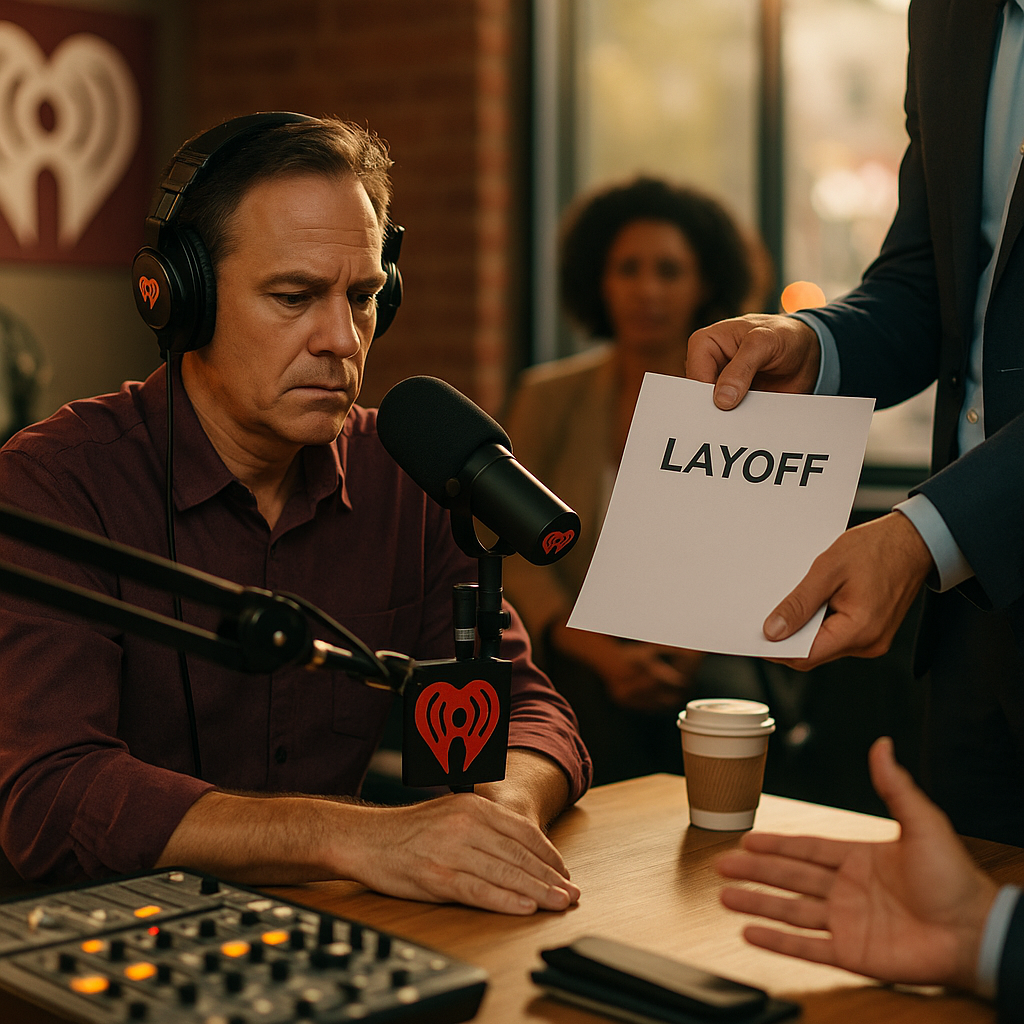
iHeartMedia has cut hundreds of on-air positions across markets, and the talent pipeline into the independent creator economy just got significantly wider. For brand partnership teams watching the iHeartMedia restructuring, this isn’t a media industry story. It’s a sourcing opportunity.
Why Legacy Audio Layoffs Matter to Brand Strategists
Legacy radio has been shedding headcount for years, but the scale of iHeartMedia’s recent restructuring represents a structural shift, not a cyclical dip. The company has eliminated local programming roles across dozens of markets, accelerating a consolidation pattern that Cumulus and Audacy have also followed. What exits with those personalities isn’t just airtime. It’s audience trust built over decades, voiceover-ready production polish, and interview skills that most native digital creators spend years trying to develop.
Brands that move quickly can access that professional credibility at rates that reflect an independent creator’s early-stage pricing, not a network media buy.
Broadcast-trained talent entering the creator economy carries something most influencers lack: institutional communication discipline. They know how to hold an audience through a 30-minute show, not just a 90-second reel.
The Talent Profile Brands Are Actually Getting
It’s worth being specific here, because the reflex to dismiss radio talent as “old media” will cost brand teams real partnership value. Consider what a mid-market morning drive host actually brings to the table:
- Live audio production experience including remote broadcast, interviews, and unscripted commentary
- Regulatory and compliance literacy from years of FCC disclosure requirements and advertiser guidelines
- Existing local audience relationships that frequently migrate to personal social channels and podcast feeds when talent departs
- Cross-platform instincts built from years of simulcasting radio with digital engagement
That last point matters more than most brand teams realize. Many of these personalities have been quietly building Instagram, TikTok, and YouTube presences alongside their broadcast careers. When the station role disappears, those secondary platforms often accelerate fast. Spotify and Statista both track podcast listener growth, and the pattern is consistent: broadcast personalities who launch independent podcasts within six months of departure retain a significant share of their former audience.
Positioning Your Outreach Before the Agent Layer Arrives
Here’s the operational reality: there is a window. Most departing broadcast personalities spend their first 60 to 90 days without formal representation in the creator economy. Their radio contracts are ending or have ended, but they haven’t yet signed with talent management firms that specialize in digital creators. That window is where brand teams with proactive sourcing strategies win.
The approach that works isn’t cold outreach with a rate card. It’s a positioning conversation. Reach out as a potential launch partner, not a media buyer. The framing matters enormously. These are professionals accustomed to structured media relationships, not the informal DM culture of native influencer marketing. Lead with a clear value exchange: you offer brand infrastructure (briefs, legal review, campaign reporting), they offer voice authority and audience trust.
If your team lacks a structured process for this kind of proactive sourcing, the creator economy shifts rebuilding roster framework is a useful starting point for building the internal capacity to identify and onboard non-traditional talent at scale.
Contract Structure for Broadcast-to-Creator Transitions
This is where many brand teams stumble. The instinct is to use a standard influencer agreement, which is almost always the wrong move with broadcast-trained talent. These individuals understand exclusivity clauses, talent fees versus usage fees, and production deliverables. They have negotiated broadcast contracts. Handing them a three-page influencer agreement signals that your organization doesn’t understand what they bring.
You need contracts that reflect entertainment-tier expectations. That means separating talent fees from content licensing, being explicit about exclusivity windows per category, and including clear provisions for live or audio-first deliverables (not just social posts). The entertainment standards now shaping creator contracts are directly relevant here, particularly around IP ownership and usage rights for audio content.
One structural consideration that often gets missed: non-compete obligations from the departing broadcast role. Some iHeartMedia contracts include geographic or format-specific non-competes that can restrict what a talent can create for 6 to 12 months post-departure. Build contingency language into your agreement and have legal counsel review any disclosed restrictions before finalizing terms.
Platform Strategy: Where Broadcast Talent Actually Lands
Not all platforms are equal for this talent profile. Audio-first creators with broadcast backgrounds tend to build strongest initial traction on podcast platforms (Spotify, Apple Podcasts, iHeart’s own app), YouTube as a video podcast destination, and LinkedIn for professional markets. TikTok and Instagram Reels are viable but require more creative adaptation from talent trained in longer-form formats.
Brand strategies that map to this reality tend to allocate budget differently than standard influencer campaigns. A podcast sponsorship or host-read integration is often a better first activation than a social post series, because it plays to the talent’s existing strengths and audience expectations. As the creator builds their independent digital footprint, brands already embedded in the content become the natural default sponsor rather than a late add-on.
For brands already rethinking YouTube video budget allocation in upfront planning cycles, podcast-first creator partnerships from broadcast alumni represent a natural budget adjacency, particularly if the talent is building a video podcast format simultaneously.
The first brand to sponsor a departing market radio personality’s independent podcast often captures six to twelve months of exclusive audience association at a fraction of what that relationship will cost once the talent’s independent numbers are established.
Measurement Expectations Need Resetting
One friction point that brand teams must manage proactively: broadcast talent often enters the creator economy with strong audience loyalty but relatively small initial digital metrics. Their Instagram follower count or podcast download numbers in month one will not reflect their actual influence or conversion potential. Measuring them against native influencer benchmarks at launch is a category error.
The right measurement framework looks at audience quality indicators (engaged listen-through rates, email list conversions, direct traffic from audio calls to action) rather than follower counts or raw reach. eMarketer data consistently shows that podcast host-read ads outperform standard display and social ad formats on brand recall metrics, which is precisely the environment these creators are building into.
Brands using creator roster investment frameworks that weight audience quality over raw size are already positioned to evaluate this talent accurately. If your current measurement stack only outputs follower-based CPM calculations, you will systematically undervalue broadcast-origin creators and lose them to competitors who measure differently.
The Compliance Dimension
One underappreciated advantage of partnering with broadcast-trained talent is their existing fluency with disclosure requirements. Years of operating under FTC guidelines and broadcaster advertising standards means these creators generally understand sponsorship transparency in ways that many native digital creators do not. That institutional literacy reduces your compliance risk and training overhead when onboarding them into brand partnership programs.
That said, digital-specific disclosure requirements (particularly for social posts, affiliate links, and AI-assisted content) are distinct from broadcast standards and will require briefing. Building a clear onboarding document that maps their existing compliance knowledge to digital-specific requirements is a low-effort, high-value step. For teams building creator governance infrastructure, in-house governance frameworks for creator programs provide relevant structural guidance that applies equally to broadcast-origin and native digital talent.
For additional context on how major brands are restructuring creator selection and compliance processes, the approaches being piloted at HubSpot and documented by Sprout Social offer useful operational benchmarks.
The window created by iHeartMedia’s restructuring will not stay open indefinitely. Talent agencies are already identifying the same opportunity. Brand teams that build a structured outreach process now, with appropriate contract frameworks and realistic measurement, will own the first-mover relationships. The brands that wait for these creators to have established independent numbers will pay significantly more for access to the same audiences.
Frequently Asked Questions
What types of brands benefit most from partnering with departing broadcast talent?
Brands with regional marketing priorities, podcast-adjacent product categories (automotive, financial services, health and wellness, home improvement), and audiences that over-index on 35-plus demographics tend to see the strongest alignment. Broadcast personalities often carry high trust with slightly older, high-income audiences that are difficult to reach efficiently through native social creator campaigns.
How should brands approach outreach to talent who just left a major broadcaster?
Treat it as a partnership conversation rather than a vendor negotiation. Lead with what your brand offers operationally: creative support, reliable payment terms, legal infrastructure, and a clear brief process. Many departing talent are navigating the independent creator economy for the first time and will respond to partners who reduce friction, not just those offering the highest flat fee.
What contract terms are most important when working with broadcast-trained creators?
Separate talent performance fees from content licensing fees, define exclusivity by category rather than broadly, clarify IP ownership for audio-first deliverables, and include provisions that address any existing non-compete obligations from prior broadcast contracts. Avoid using standard short-form influencer agreements without modification for this talent profile.
How do you measure ROI on partnerships with early-stage broadcast-origin creators?
Prioritize listen-through rates, host-read ad recall, and direct response metrics (promo codes, unique URLs) over follower counts or raw social reach. Podcast host-read integrations have documented brand recall advantages over social and display formats. Set measurement expectations internally before the campaign launches so that early-stage digital metrics are evaluated in context rather than against native influencer benchmarks.
Is there a risk that broadcast talent won’t transition successfully to the creator economy?
There is genuine transition risk, particularly for talent who lack existing social audiences or resist adapting their format for on-demand consumption. Mitigate this by evaluating the creator’s existing secondary platforms before committing to a long-term partnership, starting with a defined pilot campaign, and building performance benchmarks into the contract renewal structure rather than signing multi-year deals upfront.
Top Influencer Marketing Agencies
The leading agencies shaping influencer marketing in 2026
Agencies ranked by campaign performance, client diversity, platform expertise, proven ROI, industry recognition, and client satisfaction. Assessed through verified case studies, reviews, and industry consultations.
Moburst

-
2

The Shelf
Boutique Beauty & Lifestyle Influencer AgencyA data-driven boutique agency specializing exclusively in beauty, wellness, and lifestyle influencer campaigns on Instagram and TikTok. Best for brands already focused on the beauty/personal care space that need curated, aesthetic-driven content.Clients: Pepsi, The Honest Company, Hims, Elf Cosmetics, Pure LeafVisit The Shelf → -
3

Audiencly
Niche Gaming & Esports Influencer AgencyA specialized agency focused exclusively on gaming and esports creators on YouTube, Twitch, and TikTok. Ideal if your campaign is 100% gaming-focused — from game launches to hardware and esports events.Clients: Epic Games, NordVPN, Ubisoft, Wargaming, Tencent GamesVisit Audiencly → -
4

Viral Nation
Global Influencer Marketing & Talent AgencyA dual talent management and marketing agency with proprietary brand safety tools and a global creator network spanning nano-influencers to celebrities across all major platforms.Clients: Meta, Activision Blizzard, Energizer, Aston Martin, WalmartVisit Viral Nation → -
5

The Influencer Marketing Factory
TikTok, Instagram & YouTube CampaignsA full-service agency with strong TikTok expertise, offering end-to-end campaign management from influencer discovery through performance reporting with a focus on platform-native content.Clients: Google, Snapchat, Universal Music, Bumble, YelpVisit TIMF → -
6

NeoReach
Enterprise Analytics & Influencer CampaignsAn enterprise-focused agency combining managed campaigns with a powerful self-service data platform for influencer search, audience analytics, and attribution modeling.Clients: Amazon, Airbnb, Netflix, Honda, The New York TimesVisit NeoReach → -
7

Ubiquitous
Creator-First Marketing PlatformA tech-driven platform combining self-service tools with managed campaign options, emphasizing speed and scalability for brands managing multiple influencer relationships.Clients: Lyft, Disney, Target, American Eagle, NetflixVisit Ubiquitous → -
8

Obviously
Scalable Enterprise Influencer CampaignsA tech-enabled agency built for high-volume campaigns, coordinating hundreds of creators simultaneously with end-to-end logistics, content rights management, and product seeding.Clients: Google, Ulta Beauty, Converse, AmazonVisit Obviously →