


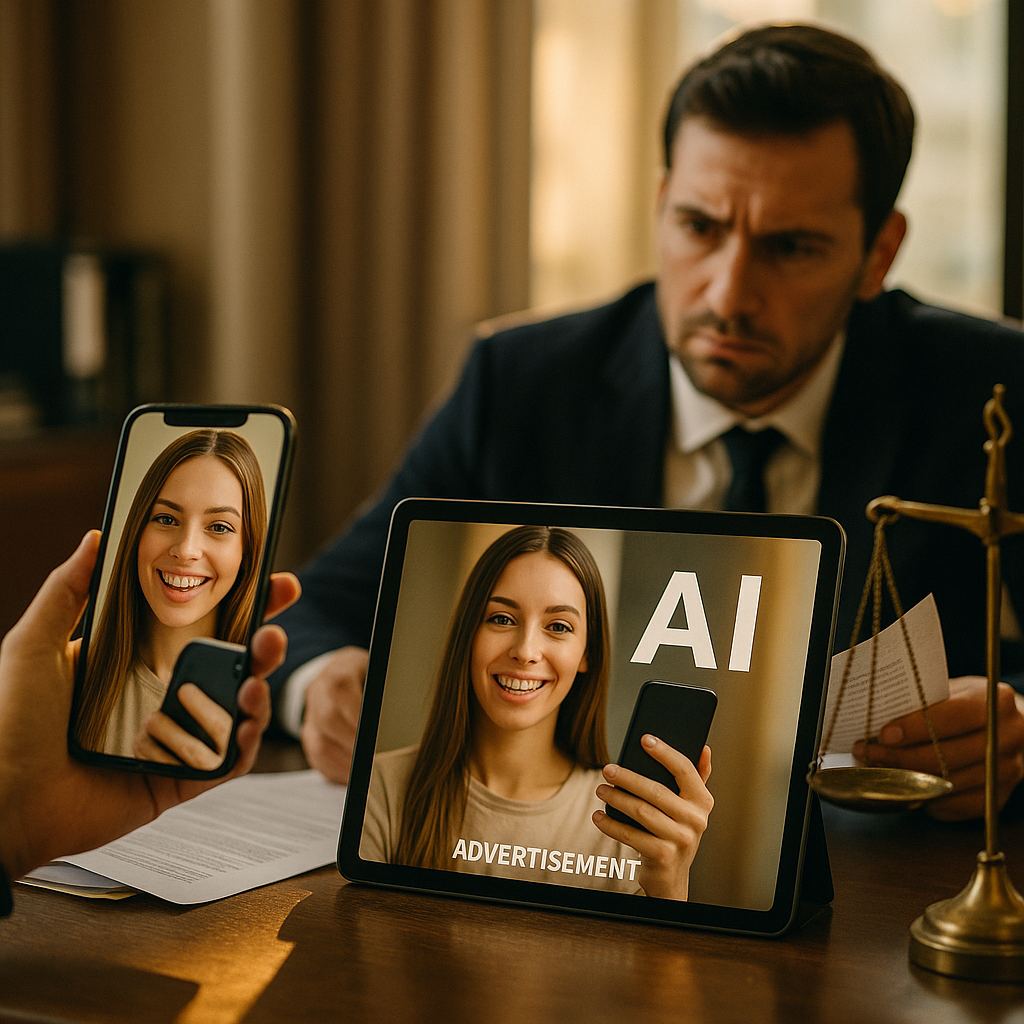
In 2025, brands can generate stunning visuals and music in seconds, but the legal boundary lines have not disappeared. The legal risks of using AI to mimic a specific artist’s style in ads include copyright, trademark, right of publicity, and unfair competition claims—often combined in a single lawsuit. Understanding where “inspiration” ends and infringement begins protects budgets and reputations. Want the safest path without killing creativity?
Copyright infringement in AI-generated ads
Copyright law can be the first and most expensive trap when an ad uses AI outputs that resemble a known artist’s work. Even if a brand never copies a specific file, liability can arise if the final output is substantially similar to protected expression in the artist’s works (for example, distinctive composition choices, recurring motifs, unique character designs, or recognizable musical phrases). A common misconception is that “style isn’t copyrighted,” so imitation must be safe. In practice, courts do not protect style as an abstract concept, but they do protect the concrete, original elements that often make up what people call “style.”
Key risk points for advertisers:
- Output similarity: If the ad image, animation, or soundtrack closely resembles particular copyrighted works, a brand can face a direct infringement claim, especially if the resemblance is strong enough that ordinary viewers would recognize it.
- Derivative works: If the AI output looks like it is “based on” a specific artwork or series, it may be treated as an unauthorized derivative work even if it is not an exact copy.
- Training and dataset questions: In 2025, disputes continue about whether training on copyrighted material requires authorization. Even when that question remains unsettled in some jurisdictions, advertisers still face litigation risk and discovery burdens if they cannot document lawful sourcing and licensing practices.
- Music and sound-alikes: For audio, short recognizable hooks, melodies, and distinctive arrangement choices can create substantial similarity concerns. Using AI to “make it sound like” a known recording also increases the chance of claims tied to both composition and recording rights.
Practical takeaway: treat AI-generated content like any other creative asset. If your concept relies on the audience recognizing a particular artist’s “look” or “sound,” assume copyright claims are plausible and build a clearance strategy before production.
Right of publicity and voice likeness laws
Even when no copyrighted work is copied, advertisers can trigger the right of publicity by using AI to mimic an identifiable person. This area is especially risky for ads because the use is commercial by definition. If the ad’s AI-generated voice, face, or performance cues lead viewers to believe the artist is involved, the brand may face claims for misappropriation of name, image, likeness, or other identity indicators.
In 2025, the most sensitive category is voice and vocal identity. Many audiences can recognize a famous voice instantly, and AI makes “sound-alike” production cheap and fast. If a campaign uses a synthetic voice that evokes a specific singer or narrator, legal exposure can arise even without using any original recordings. The core question becomes: is the person identifiable, and did you use that identity to sell something?
Advertisers should ask these clearance questions early:
- Would a typical viewer believe the artist endorsed this? Confusion and implied endorsement are major red flags.
- Are you using signature traits? Catchphrases, vocal cadence, accent patterns, performance mannerisms, and recognizable styling can strengthen identifiability.
- Do you have written consent? For any deliberate mimicry of a living person, assume consent (or a license through their representatives) is required.
Also consider that some jurisdictions recognize post-mortem rights for deceased celebrities, which can affect campaigns that mimic classic artists. If your creative brief references “make it feel like that artist,” you need a jurisdiction-by-jurisdiction plan rather than a one-size-fits-all assumption.
Trademark, false endorsement, and consumer confusion
When an ad evokes a specific artist, the legal problem is not only “copying,” but also confusing consumers. Trademark and unfair competition laws can apply if the campaign suggests the artist sponsored, approved, or is affiliated with the product. This can happen without using the artist’s name—visual cues, vocal mimicry, stage persona references, or a look-alike can be enough.
How confusion typically enters AI mimicry campaigns:
- Prompt-driven imitation: Prompts like “in the style of [Artist]” can push outputs toward recognizable brand identifiers of the artist’s persona.
- Ad placement context: Running the campaign near the artist’s known channels or fan communities can amplify the impression of endorsement.
- Social sharing dynamics: If viewers caption the ad with “This is basically [Artist],” that public interpretation can become evidence that the campaign created confusion.
Brands sometimes add disclaimers such as “not affiliated with any artist.” Disclaimers can help, but they are not a shield if the overall impression still implies endorsement. Courts and regulators usually evaluate the full context: visuals, audio, copy, targeting, and how the ad is likely understood by the audience.
Practical takeaway: if the campaign’s effectiveness depends on implied association with a famous artist, you are not in a “safe parody” zone; you are in a high-risk confusion zone that calls for either licensing or a redesign.
Copyright in training data and AI vendor contracts
Even if the final ad asset looks “original,” advertisers can inherit legal risk from how the model was built and how the vendor’s tools are used. In 2025, this is where many businesses get surprised: they assume the AI vendor “handles the legal stuff,” but the contract often pushes risk back onto the customer.
Key contract and sourcing issues to audit:
- Indemnities: Does the AI vendor indemnify you for copyright, publicity, and trademark claims, or do they limit coverage to narrow scenarios?
- Usage restrictions: Some tools prohibit use “in the style of” living artists or forbid outputs that imitate a recognizable individual. Violating these terms can void protections and create separate breach-of-contract exposure.
- Data provenance: Can the vendor explain the model’s training sources and filtering practices in a way that would withstand litigation scrutiny?
- Output ownership and licenses: Confirm that your organization receives commercial rights to use the outputs and that there are no hidden restrictions for advertising or paid media.
- Recordkeeping: Keep prompts, seeds, iteration history, and human edits. If challenged, being able to explain your process credibly supports a better defense and faster resolution.
Follow-up question many marketers ask: “If we use our own in-house model, are we safer?” Potentially, but only if you have clean training data, robust governance, and strong documentation. Otherwise, you may simply move risk from a vendor to your own balance sheet.
Regulatory compliance and deceptive advertising standards
Ads that mimic an artist can raise deceptive marketing concerns even when intellectual property claims are uncertain. Regulators and self-regulatory bodies typically focus on whether consumers are misled about endorsement, affiliation, or authenticity. In 2025, synthetic media adds a new layer: viewers often cannot tell what is real, so the burden on advertisers to avoid deception increases.
Compliance pitfalls include:
- Implied endorsement claims: If the ad implies the artist uses the product or participated in the campaign, that can be treated as a misleading claim.
- Hidden AI manipulation: When the ad relies on a synthetic performance that looks like the artist, failing to disclose key facts can attract scrutiny, especially for sensitive categories (health, finance, children’s products).
- Platform policies: Major ad platforms increasingly enforce rules on synthetic media, manipulated content, and impersonation. A takedown mid-campaign can be as damaging as a lawsuit.
What readers usually ask next: “Should we label AI-generated ads?” If the ad could be interpreted as a real artist appearance or endorsement, a clear disclosure can reduce confusion. However, disclosure does not replace permission if you are using an identifiable likeness or deliberately trading on a persona. Think of disclosure as a risk reducer, not a license substitute.
Risk mitigation: licensing, clearances, and creative alternatives
The safest route is straightforward: license what you want to evoke or build a creative direction that does not depend on a single identifiable artist. Risk mitigation works best when legal and creative collaborate at the concept stage, not after the assets are rendered and scheduled.
High-confidence steps for brands and agencies:
- Get written permission: If you want a specific artist’s recognizable style, voice, or persona, negotiate a license or endorsement. This also unlocks better creative options and cleaner headlines (“official collaboration”) that perform well without legal ambiguity.
- Use artist-adjacent briefs, not artist-specific prompts: Replace “in the style of [Artist]” with objective descriptors (color palette, lighting, tempo, instrumentation, composition rules) that do not point to an identifiable individual.
- Commission original work: A human creator can produce “inspired by” work with a documented process and a contract assigning rights. This can be safer than generating dozens of AI variations that drift toward a recognizable artist.
- Implement an AI creative review checklist: Include similarity screening, endorsement/confusion review, and a mandatory escalation path if any team member says, “This looks like [Artist].”
- Clear music separately: For audio, confirm composition and master rights. If using AI music tools, ensure commercial licensing terms cover paid ads, territories, and duration.
- Secure insurance and align stakeholders: Review whether your media liability or IP insurance covers synthetic media disputes, and ensure the brand understands the residual risk even with best practices.
When speed is the priority, use a “two-track” workflow: generate concepts with AI for internal ideation, then produce final ad assets through licensed, commissioned, or properly cleared pipelines. This preserves efficiency while controlling legal exposure.
FAQs about AI style mimicry in advertising
Is it legal to mimic an artist’s style if we don’t copy a specific artwork?
Not automatically. While “style” as an abstract idea may not be protected, the output can still infringe copyright if it is substantially similar to protectable elements in specific works. You can also trigger right of publicity or false endorsement claims if the artist is identifiable or the ad implies affiliation.
Can we use prompts like “in the style of [Artist]” for commercial ads?
Doing so materially increases risk because it signals intent to imitate a specific, identifiable creator. It can also violate AI tool terms of service and undermine your defense if litigation arises. Use descriptive, non-identity-based art direction instead, or obtain a license.
Does adding a disclaimer (“not affiliated”) prevent lawsuits?
No. Disclaimers can help reduce consumer confusion, but they do not cure unauthorized use of an identifiable likeness or prevent a substantial similarity claim. Courts and regulators evaluate the overall impression of the ad, not only a line of fine print.
What if the AI output is “original” but audiences still think it looks like the artist?
That perception itself is a warning sign. If the campaign benefits from the association, you may face false endorsement, publicity, or unfair competition claims even without copying. Conduct a confusion review, consider redesign, or pursue licensing.
Who is liable—the brand, the agency, or the AI vendor?
Potentially all of them. Plaintiffs often sue multiple parties involved in creation and distribution. Contracts may allocate responsibility, but they do not prevent a claim from being filed. Strong indemnities, documented workflows, and clearance procedures reduce exposure.
What documentation should we keep for AI-generated ad assets?
Maintain prompts, iteration history, model/tool used, licenses and terms, contributor agreements, human edit records, and approval notes. This supports your provenance story, helps counsel assess risk quickly, and can shorten disputes.
Using AI to imitate a known artist can boost attention, but in 2025 it also concentrates legal exposure. Copyright, publicity rights, trademark confusion, vendor contract gaps, and deceptive advertising rules can converge in one campaign. The clearest takeaway: if recognizability is the point, secure permission or redesign the concept. Build an AI clearance workflow early, document provenance, and treat synthetic media like any other high-stakes ad asset.