


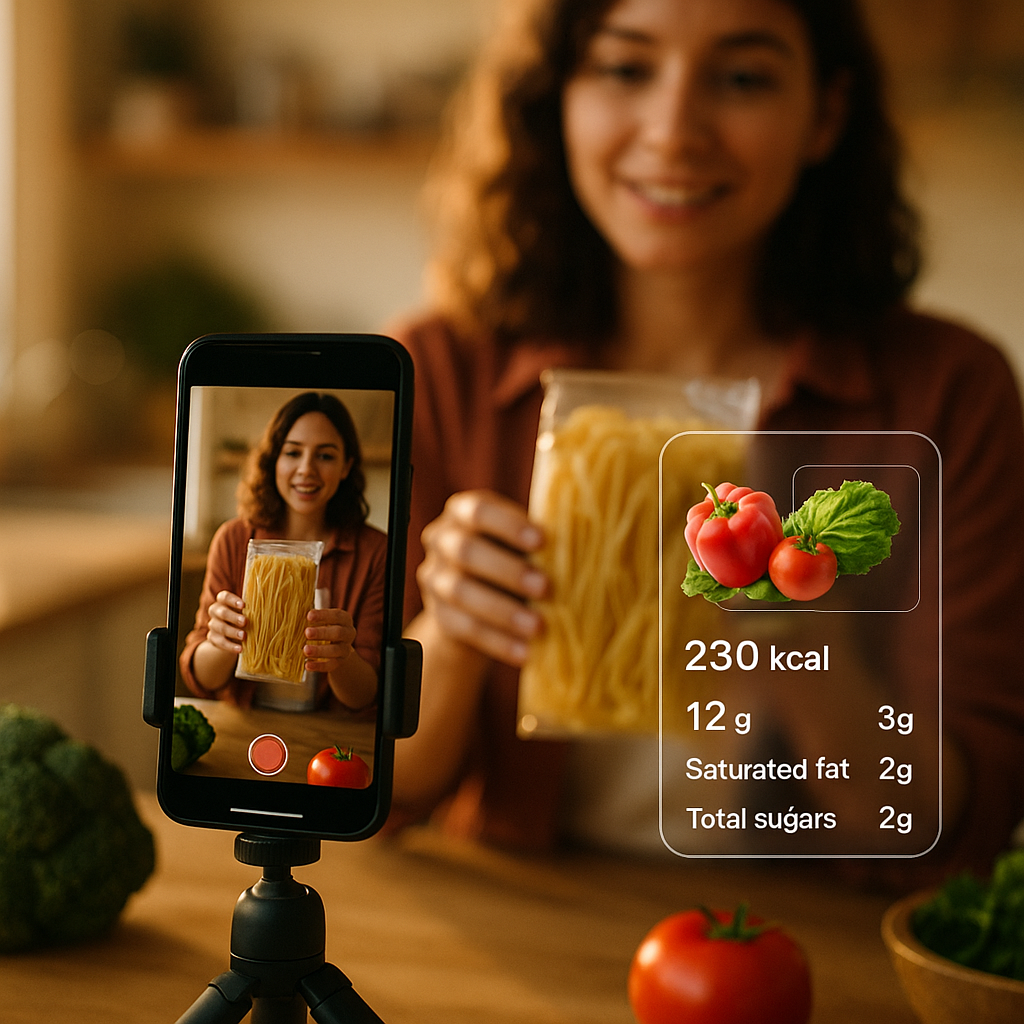
Nearly 40% of livestream shopping viewers say they’d trust an on-screen supplement claim without checking the label. That’s a lawsuit waiting to happen. As AI-powered nutrition overlay tools flood the livestream shopping market, supplement and food brands need a way to separate the vendors that reduce regulatory risk from the ones that just add flashy graphics.
This isn’t a hypothetical problem. FTC enforcement against unsubstantiated health claims has ramped up steadily, and livestream commerce — where hosts talk fast and claims fly faster than compliance teams can review — is exactly the kind of environment regulators are watching closely. AI nutrition overlays promise to solve this by auto-generating on-screen disclosures, ingredient breakdowns, and allergen flags in real time. The question is whether they actually work, and whether the ROI justifies the integration cost.
Why Nutrition Overlays Became a Livestream Shopping Necessity
Livestream shopping has a claims problem. Hosts improvise. They riff. They say things like “this cleared up my skin in three days” without anyone fact-checking in real time. For supplement and food brands, that’s a compliance nightmare waiting to trend on social media.
AI nutrition overlay tools attempt to fix this by layering structured, verified data directly onto the video feed — ingredient lists, daily value percentages, allergen warnings, even auto-flagging when a host makes a claim that isn’t backed by the product’s actual formulation. Think of it as a compliance co-pilot sitting quietly in the corner of the screen.
The appeal is obvious. Brands get a paper trail. Compliance teams get real-time flagging instead of post-broadcast damage control. Viewers, at least in theory, get more trustworthy information. But “in theory” is doing a lot of work in that sentence, and that’s where vendor differences start to matter.
The best overlay tools don’t just display nutrition data — they cross-reference host claims against verified product formulations in real time, creating an audit trail brands can hand to legal before a regulator ever asks.
What We Evaluated Across Vendors
We looked at overlay accuracy, latency, integration complexity, and — critically — how each platform handles claim verification versus simple label display. There’s a meaningful difference between a tool that shows a static nutrition panel and one that dynamically flags when a host says “clinically proven” without a citation attached to the SKU.
- Data accuracy: Does the overlay pull from a verified, brand-approved database, or does it scrape generic nutrition APIs that may not match the actual product formulation?
- Claim-flagging capability: Can the tool detect risky language in real time (via speech-to-text plus a claims library) and surface a warning to the host or moderator?
- Latency: How much lag exists between spoken claim and overlay response? Anything over 2-3 seconds defeats the purpose during live shopping events.
- Platform compatibility: Does it work natively inside TikTok Shop, Amazon Live, and Whatnot, or does it require a separate overlay layer bolted on via OBS or a custom SDK?
- Compliance documentation: Does the tool generate exportable logs for legal review, FDA inquiry response, or FTC substantiation requests?
This mirrors the earlier deep-dive our team ran in AI nutrition-facts overlay tools for livestream shopping, which vetted early-stage vendors on accuracy alone. This comparison goes further, focused specifically on operational fit for supplement and food brands running recurring livestream programs rather than one-off events.
The Vendor Landscape: Who’s Actually Ready for Production
Most vendors in this space fall into three camps: nutrition-data specialists who bolted on overlay tech, livestream commerce platforms building native compliance features, and AI claims-monitoring startups pivoting into visual overlays. Each has tradeoffs.
Nutrition-data specialists tend to have the most accurate underlying databases — think companies with roots in food labeling compliance software. Their overlays are reliable but often clunky, built as an afterthought rather than a live-video-native experience. Integration with TikTok Shop or Whatnot frequently requires custom middleware, which adds cost and engineering time.
Native livestream platform features (the overlay tools TikTok Shop and Amazon Live are quietly rolling into their creator dashboards) offer the smoothest integration since there’s no third-party plumbing required. The tradeoff: these tools are generally weaker on claims-flagging nuance. They’ll show a nutrition panel, but they won’t necessarily catch a host saying something regulators would flag as an unsubstantiated health claim.
AI claims-monitoring startups are the newest entrants, and frankly the most interesting for compliance-heavy categories. These tools use speech-to-text plus a trained claims library to flag risky language in near real time — closer to what a legal team actually needs. The catch: smaller vendors, less battle-tested infrastructure, and pricing that scales aggressively with stream volume.
Where the Real Differentiation Shows Up
Accuracy claims across vendors sound nearly identical in sales decks. Everyone says “99% accurate.” The real test happens under production conditions — multiple SKUs live at once, a host talking over background music, viewer comments scrolling. That’s when latency and false-positive rates diverge sharply between vendors.
One detail that surprised us: several tools that scored well on paper for “claims accuracy” struggled badly with regional dialects and fast-talking hosts, which matters enormously for brands running multi-market livestream programs. If your host base spans US, UK, and Southeast Asian markets, ask vendors directly for accuracy benchmarks segmented by accent and speaking pace — not just an aggregate number.
ROI: Does the Overlay Actually Reduce Risk (and Pay for Itself)?
Here’s the uncomfortable question brand teams need to ask before signing a contract: is this tool actually reducing legal exposure, or is it theater that makes compliance feel handled without changing outcomes?
The honest answer is it depends entirely on the claims-flagging layer. A static nutrition overlay is nice-to-have. A dynamic claims monitor that catches “boosts your metabolism by 40%” before it airs — or flags it for immediate correction — is the feature that actually moves the needle on risk. Brands should weight vendor evaluation heavily toward this capability rather than visual polish.
On the revenue side, early data from supplement brands running overlay-enabled streams suggests modest but real lift in conversion, largely attributed to increased viewer trust when nutrition facts are visibly verified rather than just spoken. That’s consistent with broader livestream commerce growth trends showing viewers increasingly expect transparency features as table stakes, not a differentiator.
Cost structures vary widely. Expect per-stream fees from native platform tools, seat-based SaaS pricing from nutrition-data specialists, and usage-based pricing (often tied to stream hours or claims-flagged volume) from the AI monitoring startups. Budget conversations should loop in whoever owns AI budget approval workflows early, since compliance tooling often gets stuck in procurement limbo when it’s treated as a marketing expense rather than a risk-mitigation investment.
Integration Realities Nobody Puts in the Sales Deck
Every vendor claims “seamless integration.” Few mean it. If your brand runs livestreams across TikTok Shop, Amazon Live, and Whatnot simultaneously, you’re likely looking at three separate integration paths, not one universal plugin. This is where composable stack thinking matters. Brands already leaning toward a composable martech stack approach will find overlay tools easier to slot in than teams locked into a rigid all-in-one suite.
Also worth checking: does the overlay data sync with your existing product information management (PIM) system, or does someone on your team need to manually update ingredient panels every time a formulation changes? Manual sync is a silent risk multiplier — a stale allergen warning during a live broadcast is worse than no warning at all, because it creates false confidence.
What Compliance Teams Should Demand Before Signing
- A live demo using an actual product SKU from your catalog, not a generic demo product.
- Documented false-positive and false-negative rates for claims-flagging, tested against your category’s common claim language.
- Exportable audit logs formatted for legal or regulatory review, not just internal dashboards.
- Clear data refresh cadence tied to your PIM or formulation database.
- Contractual language on liability if the tool fails to flag a claim that later draws regulatory attention.
That last point trips up a lot of brand teams. Vendors will happily sell you a compliance tool, but very few will contractually stand behind its accuracy. Push on this during negotiation. It’s a reasonable ask, and a vendor’s willingness to engage with it tells you a lot about how seriously they take the compliance use case versus treating it as a marketing add-on.
For guidance on evaluating AI tools more broadly before committing budget, our framework in how to evaluate before you buy applies well beyond ad format prediction — the same due-diligence discipline holds for overlay vendors.
Regulatory guidance is also evolving fast enough that brands should keep a direct line to primary sources rather than relying solely on vendor summaries. The FTC’s guidance on endorsements and testimonials remains the baseline reference point for what counts as a substantiated claim, and it’s worth reviewing directly rather than trusting a vendor’s interpretation of it.
FAQs
Frequently Asked Questions
What is an AI nutrition overlay tool for livestream shopping?
It’s software that displays real-time nutrition data, ingredient breakdowns, or allergen warnings directly on a livestream shopping broadcast, and in more advanced versions, flags spoken claims that aren’t substantiated by the product’s actual formulation.
Do these tools actually reduce FTC compliance risk?
Only if they include real-time claims-flagging, not just static nutrition panel display. A tool that shows label data but doesn’t catch a host making an unsubstantiated health claim provides limited legal protection.
Which livestream platforms support nutrition overlay integration?
TikTok Shop, Amazon Live, and Whatnot are the most common platforms brands use, though native overlay support varies. Some vendors require third-party middleware or OBS-based overlay layers to work across all three.
How much do AI nutrition overlay tools typically cost?
Pricing varies by vendor type: native platform tools often charge per-stream fees, nutrition-data specialists use seat-based SaaS pricing, and AI claims-monitoring startups typically price based on stream hours or flagged-claims volume.
What should brands ask vendors before signing a contract?
Request a live demo using your actual product catalog, documented false-positive/negative rates for claims-flagging, exportable audit logs, a clear data refresh cadence tied to your product database, and contractual liability terms for missed flags.
Can overlay tools handle multiple SKUs or multi-market streams?
Capability varies significantly. Ask vendors for accuracy benchmarks segmented by accent, speaking pace, and simultaneous SKU count, since aggregate accuracy claims often mask weaker performance under real production conditions.
The bottom line: pick the vendor with the strongest claims-flagging engine, not the prettiest overlay graphics — that’s the feature that actually holds up if a regulator comes calling. Run a live pilot with your riskiest SKU before rolling out across your full livestream calendar.
Top Influencer Marketing Agencies
The leading agencies shaping influencer marketing in 2026
Agencies ranked by campaign performance, client diversity, platform expertise, proven ROI, industry recognition, and client satisfaction. Assessed through verified case studies, reviews, and industry consultations.
Moburst

-
2

The Shelf
Boutique Beauty & Lifestyle Influencer AgencyA data-driven boutique agency specializing exclusively in beauty, wellness, and lifestyle influencer campaigns on Instagram and TikTok. Best for brands already focused on the beauty/personal care space that need curated, aesthetic-driven content.Clients: Pepsi, The Honest Company, Hims, Elf Cosmetics, Pure LeafVisit The Shelf → -
3

Audiencly
Niche Gaming & Esports Influencer AgencyA specialized agency focused exclusively on gaming and esports creators on YouTube, Twitch, and TikTok. Ideal if your campaign is 100% gaming-focused — from game launches to hardware and esports events.Clients: Epic Games, NordVPN, Ubisoft, Wargaming, Tencent GamesVisit Audiencly → -
4

Viral Nation
Global Influencer Marketing & Talent AgencyA dual talent management and marketing agency with proprietary brand safety tools and a global creator network spanning nano-influencers to celebrities across all major platforms.Clients: Meta, Activision Blizzard, Energizer, Aston Martin, WalmartVisit Viral Nation → -
5

The Influencer Marketing Factory
TikTok, Instagram & YouTube CampaignsA full-service agency with strong TikTok expertise, offering end-to-end campaign management from influencer discovery through performance reporting with a focus on platform-native content.Clients: Google, Snapchat, Universal Music, Bumble, YelpVisit TIMF → -
6

NeoReach
Enterprise Analytics & Influencer CampaignsAn enterprise-focused agency combining managed campaigns with a powerful self-service data platform for influencer search, audience analytics, and attribution modeling.Clients: Amazon, Airbnb, Netflix, Honda, The New York TimesVisit NeoReach → -
7

Ubiquitous
Creator-First Marketing PlatformA tech-driven platform combining self-service tools with managed campaign options, emphasizing speed and scalability for brands managing multiple influencer relationships.Clients: Lyft, Disney, Target, American Eagle, NetflixVisit Ubiquitous → -
8

Obviously
Scalable Enterprise Influencer CampaignsA tech-enabled agency built for high-volume campaigns, coordinating hundreds of creators simultaneously with end-to-end logistics, content rights management, and product seeding.Clients: Google, Ulta Beauty, Converse, AmazonVisit Obviously →