


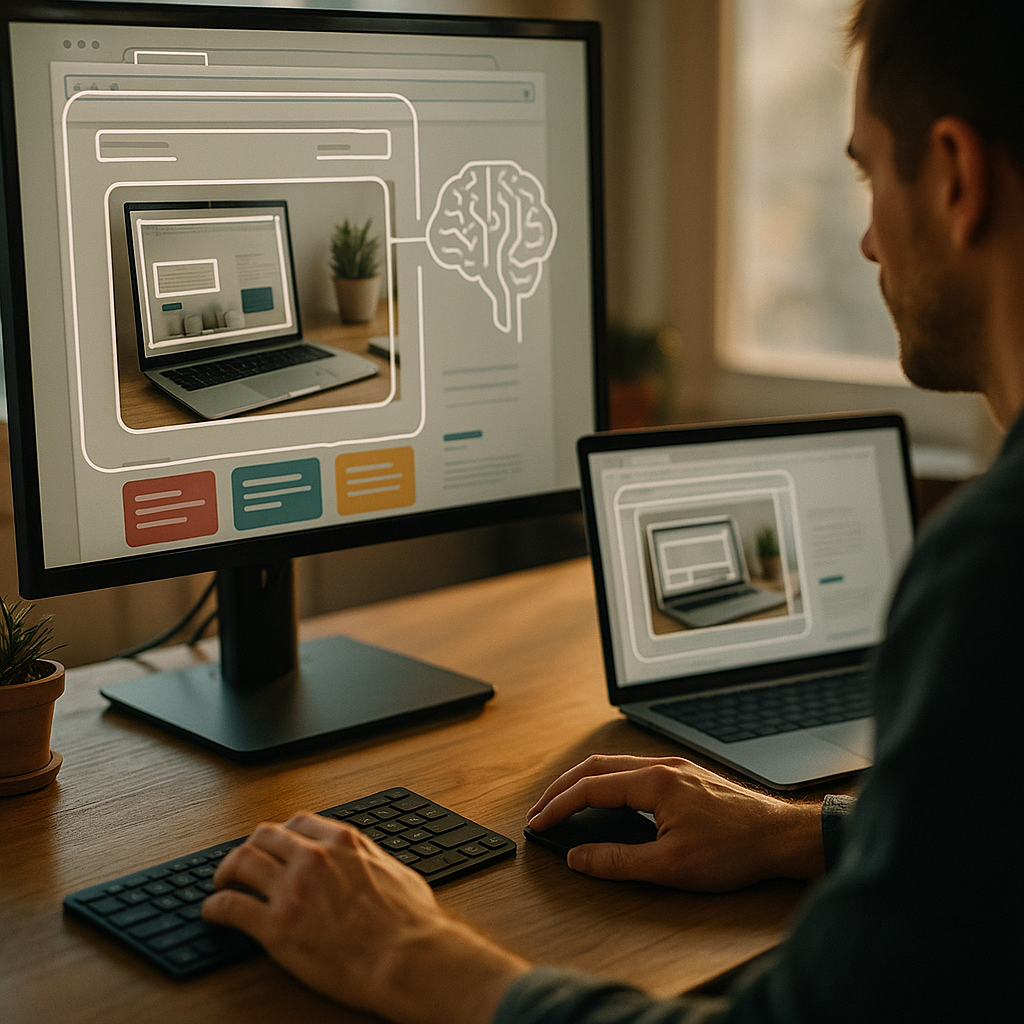
Using AI to analyze the visual elements of competitors’ websites has quickly become essential for brands seeking an edge in digital marketing. By leveraging cutting-edge tools and intelligent automation, businesses are uncovering design trends, usability factors, and branding strategies that drive conversions. Ready to transform your web design approach by learning how AI can reveal your competitors’ winning visual secrets?
AI Visual Comparison Tools: The New Standard for Web Design Analysis
In 2025, AI visual comparison tools have evolved beyond simple screenshot matching. Today’s platforms use deep learning and computer vision to dissect layouts, color schemes, font usage, image positioning, and interactive elements on competitors’ sites. Analyzing these visual factors with AI provides insights into what makes rival pages engaging or conversion-friendly.
For instance, generative AI can now simulate user behavior on competitor sites, identifying which layout features encourage longer bounces or higher interaction rates. Tools like Microsoft’s Clarity AI or Google’s Vision API even score competitors’ UX and design consistency, helping you prioritize what to replicate or improve on your own site. This technology gives you more than a glance at a rival’s homepage—it delivers a detailed breakdown of what’s visually working and where they’re innovating.
Uncover Key Branding Elements with Automated Image Recognition
Branding consistency is crucial for customer trust and recognition. AI-powered image recognition digests thousands of site visuals in seconds, identifying patterns in logos, icon styles, hero images, and mascots across your competition’s digital footprint. This data helps you spot the unspoken “visual language” competitors use to connect with their audiences.
Modern image-recognition AI can distinguish between subtle variations, such as gradient direction in a button or font pairing on a landing page. These nuances, once deciphered, allow your creative and marketing teams to refine your visual identity strategy, filling gaps that competitors miss or iterating to outdo their efforts. The result? A brand look that stands out while maintaining clarity and trust.
Design Trend Detection: Staying Ahead with AI Insights
Web design trends evolve rapidly, and AI is your early-alert system for what’s resonating across your industry. AI-driven analysis highlights recurring elements—think glassmorphism, neobrutalism, or animated micro-interactions—across several competitor sites, pinpointing which design directions are gaining traction in 2025.
By automating the identification and cataloging of these trends, decision-makers in marketing and design teams can proactively update their websites, campaign visuals, or sales assets. Instead of playing catch-up, you’ll adopt or reimagine popular visual elements as soon as they begin to deliver real engagement for your competition. This keeps your site fresh and relevant, driving up time-on-page and conversion rates.
UX/UI Effectiveness: Using AI to Benchmark Competitor Websites
Evaluating UX/UI goes beyond aesthetics—it’s about usability. Sophisticated AI now quantifies aspects like readability, navigation clarity, element spacing, and call-to-action visibility on competitor sites. By scanning hundreds of pages, these tools reveal which layouts prevent frustration and which design choices inspire user action.
This benchmarking process delivers meaningful metrics: average scroll depth, time-to-interaction, and even predicted emotional response to color or iconography. Armed with this intelligence, web designers and digital strategists can iterate layouts or tests that close the engagement gap with competitors—or leapfrog them by addressing usability weaknesses that AI analysis uncovers.
Competitor Content Visuals: AI Insights on Imagery, Video, and Infographics
Content is king, and that includes the visual content competitors use to explain, persuade, or sell. With AI, you can automatically inventory and categorize every image, infographic, chart, or embedded video competitors feature. This exposes which content types get the most real estate and highlights possible opportunities—such as underused formats or weak visual storytelling on their end.
By pairing this data with social listening and heatmap analytics (both increasingly powered by AI), you’ll know which visuals drive the highest interaction and social sharing metrics. Incorporating these findings into your web design and content planning can maximize user engagement and strengthen your competitive advantage.
Practical Steps for Implementing AI Visual Analysis in 2025
Starting your AI-powered competitor visual analysis is more accessible than ever. Here’s a step-by-step process to get actionable insights:
- Define your analysis goals: Decide if you want to focus on branding, usability, conversion optimization, or trend detection.
- Choose your AI tools: Reliable platforms include ChatGPT Vision, Google Vision API, and LambdaTest for cross-browser visual AI analysis.
- Upload competitor URLs: Most tools will crawl and analyze all accessible visual content.
- Interpret findings: Review the AI’s reports on color patterns, layout metrics, UX scores, and visual trends.
- Apply and iterate: Test improvements on your website, measure results, and repeat the analysis quarterly.
Combining AI-driven insights with human expertise is the optimal strategy—let the technology surface the data, then apply your brand’s creative vision for maximum impact.
FAQs: Using AI to Analyze Visual Elements of Competitors’ Websites
-
Can AI really understand web design as well as humans?
While AI can rapidly quantify and analyze several visual elements, human creativity and context remain essential. Think of AI as a powerful assistant that finds patterns and saves time, which you can interpret and build on with expertise. -
How accurate are AI visual analysis results?
Current AI visual tools regularly reach over 90% accuracy in recognizing layout and branding elements. However, always validate critical insights with your own experience or A/B testing before acting on recommendations. -
Is there a way to use AI ethically for competitive analysis?
Yes—AI tools should only analyze publicly available site content and images, not proprietary assets or internal data. Always respect privacy guidelines and industry best practices. -
What skills do I need to use AI in this context?
Most platforms today are user-friendly, requiring no coding. However, basic knowledge of web layout principles and UX metrics will help you interpret results more effectively and collaborate with design teams.
AI-powered analysis of your competitors’ website visuals arms you with essential data—on branding, usability, trends, and content effectiveness. By pairing these insights with strategic execution, you’ll maintain a responsive, compelling web presence that keeps you ahead in the digital marketplace.
Top Influencer Marketing Agencies
The leading agencies shaping influencer marketing in 2026
Agencies ranked by campaign performance, client diversity, platform expertise, proven ROI, industry recognition, and client satisfaction. Assessed through verified case studies, reviews, and industry consultations.
Moburst

-
2

The Shelf
Boutique Beauty & Lifestyle Influencer AgencyA data-driven boutique agency specializing exclusively in beauty, wellness, and lifestyle influencer campaigns on Instagram and TikTok. Best for brands already focused on the beauty/personal care space that need curated, aesthetic-driven content.Clients: Pepsi, The Honest Company, Hims, Elf Cosmetics, Pure LeafVisit The Shelf → -
3

Audiencly
Niche Gaming & Esports Influencer AgencyA specialized agency focused exclusively on gaming and esports creators on YouTube, Twitch, and TikTok. Ideal if your campaign is 100% gaming-focused — from game launches to hardware and esports events.Clients: Epic Games, NordVPN, Ubisoft, Wargaming, Tencent GamesVisit Audiencly → -
4

Viral Nation
Global Influencer Marketing & Talent AgencyA dual talent management and marketing agency with proprietary brand safety tools and a global creator network spanning nano-influencers to celebrities across all major platforms.Clients: Meta, Activision Blizzard, Energizer, Aston Martin, WalmartVisit Viral Nation → -
5

The Influencer Marketing Factory
TikTok, Instagram & YouTube CampaignsA full-service agency with strong TikTok expertise, offering end-to-end campaign management from influencer discovery through performance reporting with a focus on platform-native content.Clients: Google, Snapchat, Universal Music, Bumble, YelpVisit TIMF → -
6

NeoReach
Enterprise Analytics & Influencer CampaignsAn enterprise-focused agency combining managed campaigns with a powerful self-service data platform for influencer search, audience analytics, and attribution modeling.Clients: Amazon, Airbnb, Netflix, Honda, The New York TimesVisit NeoReach → -
7

Ubiquitous
Creator-First Marketing PlatformA tech-driven platform combining self-service tools with managed campaign options, emphasizing speed and scalability for brands managing multiple influencer relationships.Clients: Lyft, Disney, Target, American Eagle, NetflixVisit Ubiquitous → -
8

Obviously
Scalable Enterprise Influencer CampaignsA tech-enabled agency built for high-volume campaigns, coordinating hundreds of creators simultaneously with end-to-end logistics, content rights management, and product seeding.Clients: Google, Ulta Beauty, Converse, AmazonVisit Obviously →