


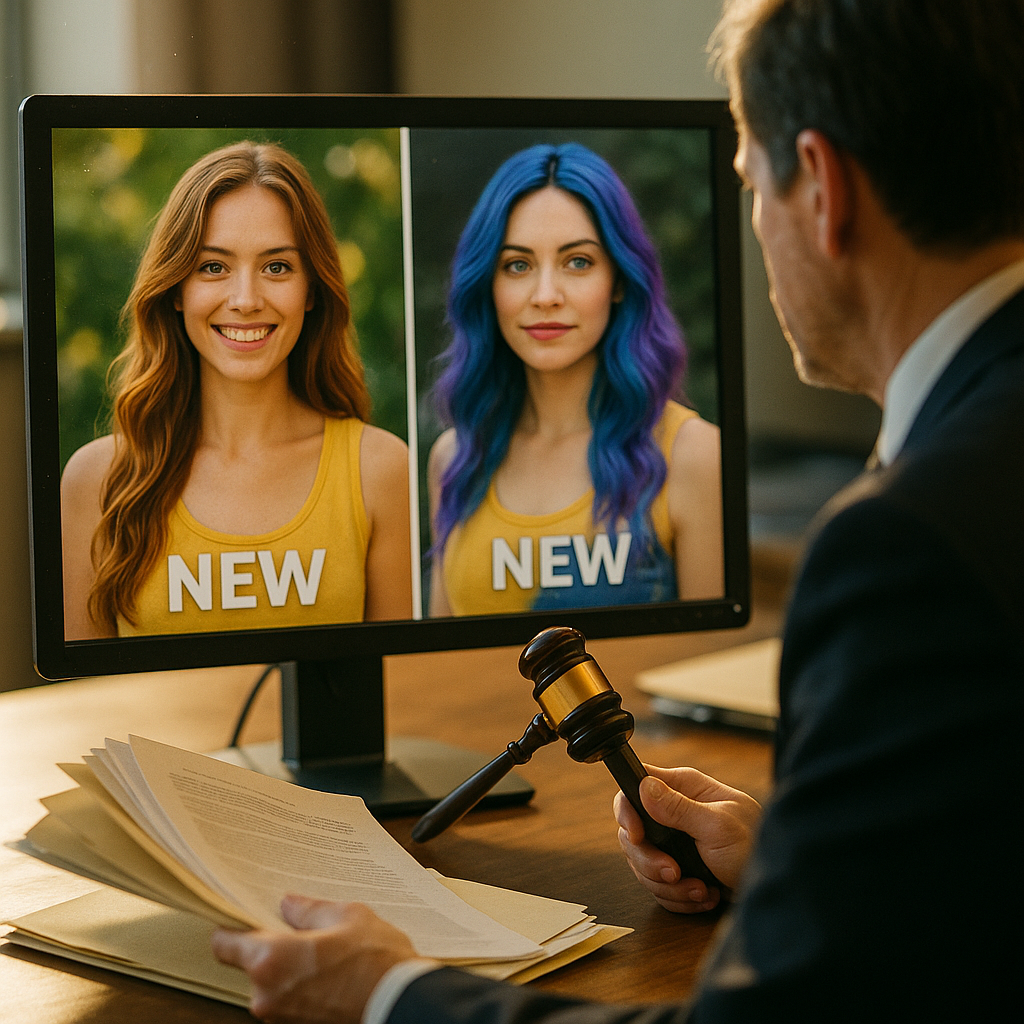
TikTok’s AI remix tools can now splice a sponsored post into a stranger’s video, strip the caption, and republish it with zero disclosure. Who’s liable when that happens? If your contracts don’t answer that question, the answer defaults to whoever the FTC decides to sue first — and that’s usually the brand. A tight platform-algorithm-change indemnification clause is no longer optional boilerplate. It’s risk allocation for a feature you can’t control and didn’t build.
The Remix Problem Nobody Priced Into Their Contracts
AI remix features were sold as engagement tools. Meta’s AI-driven content variations, TikTok’s remix and duet expansions, YouTube’s Dream Screen — all designed to let creators and, increasingly, algorithms themselves, repurpose existing content into new formats. Sounds harmless until you realize what “remix” actually does to a sponsored post.
It can strip disclosure hashtags. It can crop out the branded-content banner. It can insert a creator’s face into an AI-generated scene that never happened, next to your product, without the #ad tag surviving the transformation. The FTC doesn’t care that an algorithm did it instead of a human. Material connection disclosure rules under the FTC’s endorsement guidelines apply regardless of who — or what — removed the label.
When a platform’s AI remix feature strips disclosure from sponsored content, the brand is often still the one holding regulatory exposure — not the platform, not the algorithm, and sometimes not even the creator.
This is a distinct problem from general algorithm volatility. We’ve covered the broader category of algorithm-change indemnification clauses before, and the mechanics of who eats the cost when reach or format shifts unexpectedly, in AI remix liability clauses. This piece goes narrower: how do you draft the disclosure-specific carve-out inside that clause? Because “who pays for lost reach” and “who’s liable when the FTC sends a warning letter” are two very different legal problems, and most contracts only solve for the first one.
Why Disclosure Liability Needs Its Own Clause, Not a Footnote
Most influencer agreements bury disclosure obligations in a single sentence: “Creator shall comply with all applicable FTC guidelines.” That’s fine when the creator controls the post. It’s useless when a platform’s AI system alters the post after publication, without the creator’s knowledge, in a format neither party approved.
Ask yourself three questions before your next contract renewal:
- Does your current agreement define what happens when a platform automatically remixes sponsored content into a derivative post?
- Who is contractually responsible for monitoring derivative versions for disclosure integrity?
- Does your indemnification language distinguish between creator-caused disclosure failures and platform-caused ones?
If you answered “no” or “not sure” to any of these, you have a gap. And gaps in indemnification language don’t stay theoretical — they surface the moment a regulator or a plaintiff’s attorney goes looking. We’ve seen similar exposure play out with TikTok’s branded-content toggle, where brands assumed a platform checkbox equaled compliance. It doesn’t. The same logic applies here: a platform feature is not a legal shield.
What the Clause Actually Needs to Cover
A workable clause has to do more than say “creator is responsible.” It needs to allocate responsibility across three distinct failure points: pre-publication disclosure, platform-triggered alteration, and post-alteration monitoring.
Here’s the structure that holds up under scrutiny.
1. Define “Algorithmic Alteration” Precisely
Vague language is where these clauses die. Don’t write “changes made by the platform.” Write something closer to:
“Algorithmic Alteration means any modification to the Sponsored Content initiated by the Platform’s automated systems, including but not limited to AI remix, duet, stitch, auto-dub, auto-caption, or content-recombination features, that occurs without direct action or approval from either Brand or Creator.”
Specificity matters because platforms keep renaming and relaunching these features. If your definition only names “remix,” you’ll be renegotiating every time TikTok ships a rebrand. Anchor the definition to function, not feature name.
2. Assign a Disclosure Monitoring Duty — With a Time Window
This is the piece most contracts skip entirely. Someone has to actually check whether the disclosure survived the remix. Put a number on it. A clause without a monitoring cadence is a clause nobody follows.
Sample language: “Creator shall monitor for Algorithmic Alterations to Sponsored Content within 48 hours of initial publication and for the duration of the Campaign Term, and shall notify Brand within 24 hours of discovering any alteration that removes, obscures, or modifies required disclosure language.”
Note what this does: it puts monitoring on the creator (who has platform access and notification visibility) but sets a Brand notification trigger, so the brand isn’t relying on the creator to unilaterally fix it.
3. Split Indemnification by Fault Origin
This is the core of the clause. Don’t make it one-directional. Structure it as a fault-tree:
- Creator-caused failure (e.g., creator disabled the branded-content toggle, used a script the brand didn’t approve): creator indemnifies brand.
- Platform-caused failure via remix/AI alteration occurring after correct initial disclosure: liability shifts to a shared-notice framework — neither party indemnifies the other for the initial alteration, but both share obligation to cure it within a defined window once discovered.
- Failure to cure after discovery: whichever party had notice and failed to act (remove the post, request platform correction, re-disclose) bears indemnification responsibility going forward.
This third bucket is what actually protects brands. Platforms won’t indemnify you — check any current creator marketplace terms of service and you’ll find broad disclaimers of liability for AI feature outputs. So the enforceable leverage you have is against your own contracting parties, not against Meta or TikTok directly. Structure the clause to reward fast cure behavior and penalize inaction.
You can’t sue a platform’s algorithm. You can only contractually assign who’s responsible for catching what it did.
4. Build In a Platform Change Notice Requirement
Add a clause requiring either party to flag known platform policy or feature changes that could affect disclosure integrity. This isn’t about predicting every update — it’s about creating a paper trail showing the brand acted reasonably once it had knowledge. Regulators and courts weigh good-faith diligence heavily; documented monitoring is half your defense in any FTC inquiry, a point echoed in our breakdown of FTC AI testimonial documentation requirements.
Where Brands Get This Wrong
The most common mistake: treating this like a force majeure clause. Force majeure logic says “nobody’s fault, nobody’s liable.” That doesn’t work for disclosure law, because the FTC doesn’t recognize “the algorithm did it” as a defense. Someone in the contract chain has to own the response, even if nobody owns the cause.
The second mistake is assuming agency-managed campaigns transfer this risk automatically. They don’t — unless your master services agreement with the agency explicitly extends the same fault-tree language downstream to creator contracts. Review your agency vendor risk documentation to confirm indemnification language actually flows through, not just sits at the top-level MSA.
The third mistake: forgetting cross-border exposure. A remix that strips a disclosure in the US triggers FTC risk. The same remix distributed into the UK or EU triggers separate obligations under ASA and DSA frameworks. If you’re running multi-market influencer programs, your indemnification clause needs to reference the applicable disclosure regime per territory, not just assume US rules travel. Our cross-border disclosure matrix is a useful companion reference when drafting multi-jurisdiction language.
A Practical Drafting Checklist
- Define “Algorithmic Alteration” by function, not platform-specific feature name.
- Set explicit monitoring windows (recommend 48 hours post-publication, then weekly for campaign duration).
- Split indemnification into creator-fault, platform-triggered, and failure-to-cure categories.
- Require notice obligations for known platform policy changes affecting disclosure mechanics.
- Reference jurisdiction-specific disclosure regimes if the campaign runs cross-border.
- Tie indemnification survival clauses to a minimum 12-month post-campaign window, since remix features can resurface old content long after a campaign ends.
That last point trips people up. AI remix and recommendation systems don’t respect campaign end dates. A sponsored post from a wrapped campaign can get algorithmically resurfaced and altered eight months later. If your indemnification clause expires with the campaign term, you’ve got zero coverage for exactly the scenario most likely to happen. Extend the survival period. It costs nothing to negotiate and covers a real, growing exposure window — something also worth cross-checking against your creator contract audit process before any renewal cycle.
Data on this risk is still catching up to the tech. Platforms aren’t publishing remix-related disclosure failure rates, and neither the FTC nor eMarketer has issued hard numbers yet on AI remix disclosure incidents specifically. That data vacuum is itself a risk signal — it means legal teams are drafting ahead of precedent, not behind it, which is exactly when clauses need to be more conservative, not less.
The Takeaway
Don’t wait for a remix incident to find out your indemnification language doesn’t cover it. Pull your current creator agreements this quarter, run them against the fault-tree structure above, and add explicit algorithmic-alteration language before your next renewal cycle — not after your next compliance scare.
FAQs
What is a platform-algorithm-change indemnification clause?
It’s a contract provision that assigns financial and legal responsibility when a platform’s algorithm — including AI remix, recommendation, or auto-editing features — alters sponsored content in a way that creates compliance or performance risk for the brand.
Who is liable when an AI remix feature removes a disclosure tag?
Liability depends entirely on how the contract is drafted. Without a specific clause, brands typically bear FTC exposure since they’re considered responsible for material connection disclosures regardless of platform or creator action. A well-drafted clause splits liability based on fault origin: creator error, platform alteration, or failure to cure after discovery.
Can a brand sue a platform for AI remix disclosure failures?
Rarely, and it’s not a practical primary strategy. Most platform terms of service disclaim liability for outputs of automated features. The enforceable leverage sits in contracts between brand, agency, and creator — not against the platform itself.
How often should creators monitor sponsored posts for algorithmic alteration?
A common standard is checking within 48 hours of publication and then on a recurring basis throughout the campaign term, with a defined notification window (24-48 hours) for reporting any discovered alteration to the brand.
Does this liability risk apply outside the United States?
Yes, and it can be more complex. UK and EU markets have separate disclosure frameworks under ASA and DSA rules. Multi-market campaigns need jurisdiction-specific language in the indemnification clause rather than a single US-centric standard.
Should indemnification obligations expire when a campaign ends?
No. AI remix and recommendation systems can resurface and alter content long after a campaign concludes. Extending the indemnification survival period to at least 12 months post-campaign is standard best practice.
FAQs
Top Influencer Marketing Agencies
The leading agencies shaping influencer marketing in 2026
Agencies ranked by campaign performance, client diversity, platform expertise, proven ROI, industry recognition, and client satisfaction. Assessed through verified case studies, reviews, and industry consultations.
Moburst

-
2

The Shelf
Boutique Beauty & Lifestyle Influencer AgencyA data-driven boutique agency specializing exclusively in beauty, wellness, and lifestyle influencer campaigns on Instagram and TikTok. Best for brands already focused on the beauty/personal care space that need curated, aesthetic-driven content.Clients: Pepsi, The Honest Company, Hims, Elf Cosmetics, Pure LeafVisit The Shelf → -
3

Audiencly
Niche Gaming & Esports Influencer AgencyA specialized agency focused exclusively on gaming and esports creators on YouTube, Twitch, and TikTok. Ideal if your campaign is 100% gaming-focused — from game launches to hardware and esports events.Clients: Epic Games, NordVPN, Ubisoft, Wargaming, Tencent GamesVisit Audiencly → -
4

Viral Nation
Global Influencer Marketing & Talent AgencyA dual talent management and marketing agency with proprietary brand safety tools and a global creator network spanning nano-influencers to celebrities across all major platforms.Clients: Meta, Activision Blizzard, Energizer, Aston Martin, WalmartVisit Viral Nation → -
5

The Influencer Marketing Factory
TikTok, Instagram & YouTube CampaignsA full-service agency with strong TikTok expertise, offering end-to-end campaign management from influencer discovery through performance reporting with a focus on platform-native content.Clients: Google, Snapchat, Universal Music, Bumble, YelpVisit TIMF → -
6

NeoReach
Enterprise Analytics & Influencer CampaignsAn enterprise-focused agency combining managed campaigns with a powerful self-service data platform for influencer search, audience analytics, and attribution modeling.Clients: Amazon, Airbnb, Netflix, Honda, The New York TimesVisit NeoReach → -
7

Ubiquitous
Creator-First Marketing PlatformA tech-driven platform combining self-service tools with managed campaign options, emphasizing speed and scalability for brands managing multiple influencer relationships.Clients: Lyft, Disney, Target, American Eagle, NetflixVisit Ubiquitous → -
8

Obviously
Scalable Enterprise Influencer CampaignsA tech-enabled agency built for high-volume campaigns, coordinating hundreds of creators simultaneously with end-to-end logistics, content rights management, and product seeding.Clients: Google, Ulta Beauty, Converse, AmazonVisit Obviously →