


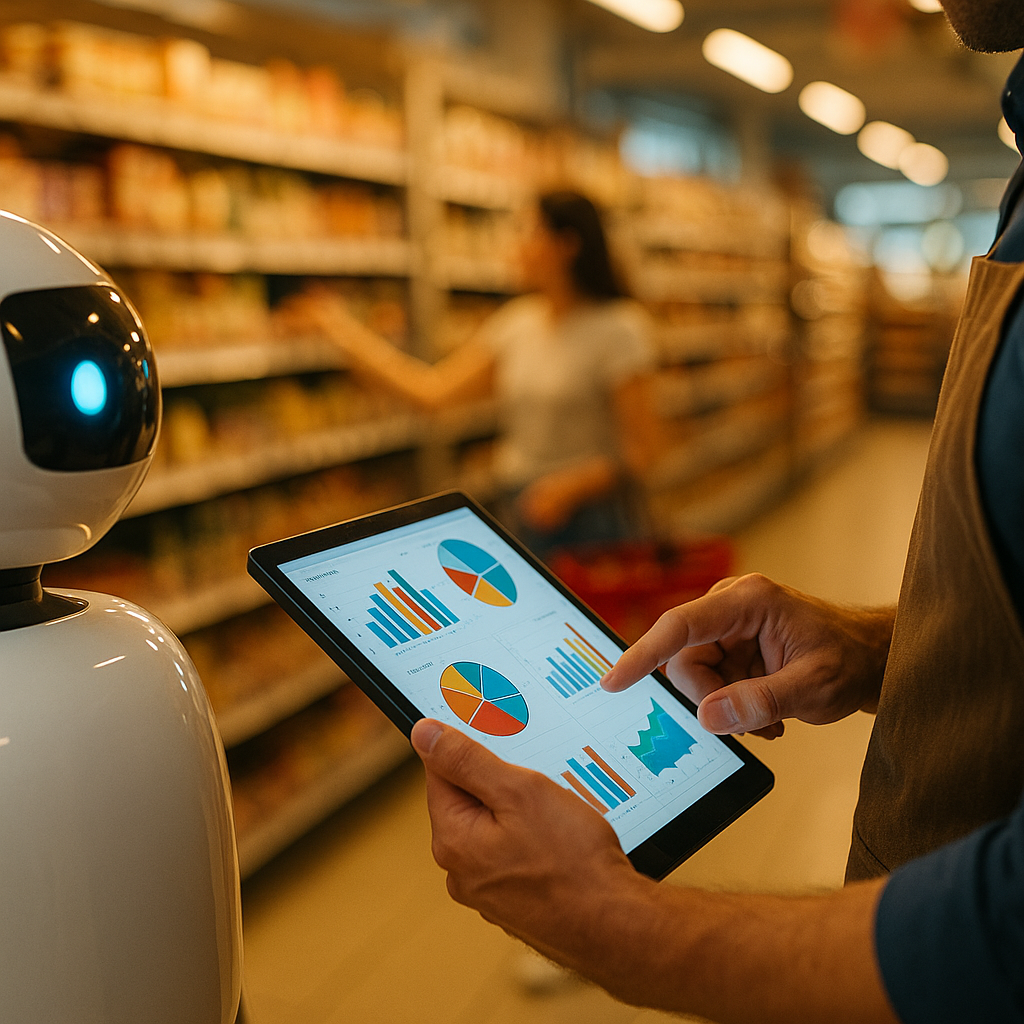
Retailers deployed more AI checkout, inventory, and personalization tools in a single month than in the previous two years combined. That’s the blunt takeaway buried inside Trendhunter’s August business roundup, and it’s one every marketing leader should be reading closely. The AI-powered retail automation trend isn’t a back-office story anymore — it’s rewriting how brands justify, allocate, and defend marketing budgets. If you’re still treating AI retail tools as an IT line item, you’re already behind.
Why a Trend Roundup Matters More Than It Sounds
Trendhunter’s roundups get dismissed sometimes as trend-spotting fluff, a grab-bag of shiny gadgets and startup pitches. Fair, some of it is speculative. But the August edition reads differently. It clusters dozens of independent product launches, funding rounds, and retailer pilots around one theme: automation is moving from warehouse to storefront to screen. Smart shelving, AI-driven dynamic pricing, autonomous fulfillment, conversational commerce agents — all converging in the same 30-day window.
That clustering matters because it signals market timing, not just novelty. When multiple retailers and vendors move simultaneously, it usually means the underlying technology has crossed a cost threshold. Cheaper compute, better small models, more retail-specific training data. The result: automation that used to be a five-year roadmap item is now a Q3 budget line.
What’s Actually Being Automated
Strip away the buzzwords and the trend breaks into a few concrete categories:
- Personalized merchandising engines that adjust product placement and pricing in near real-time based on foot traffic and purchase signals.
- Conversational shopping agents embedded in retailer apps and websites, replacing static search with AI-guided product discovery.
- Automated content generation for product pages, ad variants, and localized listings at a scale no in-house team can match manually.
- Inventory-to-marketing feedback loops, where stock signals automatically trigger (or throttle) promotional spend.
None of this is theoretical. Amazon, Walmart, and a wave of mid-market retailers have all published pilot results or expanded rollouts this year. The pattern lines up with what we’ve tracked around generative search driving product research: discovery and purchase are collapsing into fewer, AI-mediated touchpoints. Retail automation is the fulfillment side of that same shift.
When inventory systems start talking directly to ad platforms without a human in the loop, the traditional media-planning calendar becomes a bottleneck, not a safeguard.
The Budget Signal Marketers Can’t Ignore
Here’s the part that should land on a CMO’s desk. Retail automation isn’t just an operations upgrade — it’s quietly redistributing where marketing dollars need to go. Three shifts are already visible in how brands are reallocating spend.
First, content production budgets are moving toward output-based models. If retailers can generate thousands of AI-personalized product variants a day, brands supplying content into those retail ecosystems can’t rely on flat-fee creative contracts anymore. This mirrors what we’ve seen in creator content, where output-based pricing is replacing flat fees in UGC production. Retail media is heading the same direction, fast.
Second, martech vendor contracts are getting exposed. A lot of brands signed multi-year deals with platforms that are now scrambling to bolt on AI features after the fact. Trendhunter’s roundup includes several funding announcements for AI-native retail startups explicitly built to leapfrog incumbent point solutions. That’s the same dynamic covered in our look at how AI-native martech valuations should trigger contract renegotiation. If your retail media vendor hasn’t shipped a real AI feature in the last two quarters, that’s a red flag worth raising at renewal time.
Third, retail data is becoming the credibility layer for everything else. Automated retail systems throw off enormous volumes of purchase-intent data, and brands that can tie influencer and content performance to that data are winning budget arguments internally. This is the throughline in our coverage of how retail data has become the new trust signal in influencer measurement. If your reporting still stops at engagement rate, you’re negotiating from a weaker position than a competitor who can show basket-level lift.
Is This Just Automation, or a Deeper Shift in Trust?
Worth pausing here. Automation on its own doesn’t build brand trust — it can actually erode it if consumers feel over-optimized at, rather than served. Circana and Nielsen data over the past year has repeatedly shown that consumers reward creators and retailers who feel authentic over those who feel algorithmically slick. That tension is real, and it’s why the smartest brands in Trendhunter’s roundup aren’t automating the whole funnel — they’re automating logistics and personalization while keeping human creators and community voices at the point of persuasion.
This is consistent with findings we covered on Circana data showing creator ROI clusters in specific categories. Automation handles the plumbing. Trust still runs through people. Brands that confuse the two — assuming a slicker AI checkout replaces the need for credible voices recommending the product — are going to overspend on tech and underspend on the influencer relationships that actually drive conversion.
Where the Money Should Actually Move
So what does a marketing leader do with this information, practically? A few moves worth making before next quarter’s budget lock:
- Audit retail media contracts for AI capability gaps. Ask vendors directly what’s shipped versus roadmap. Compare against what’s already live at competitors named in the Trendhunter data.
- Shift a portion of flat-fee content budgets to output or performance-based structures. Retail automation rewards volume and speed; your creative sourcing model should match.
- Invest in the measurement bridge between retail data and creator performance. This is the single biggest gap in most influencer programs right now, and it’s the difference between brands underspending on creators and brands defending bigger budgets with hard numbers.
- Protect the human layer. Long-term creator partnerships, not one-off automated content drops, are what’s outperforming one-off sponsorships in the data. Don’t let automation budgets cannibalize that.
There’s also a compliance angle that tends to get overlooked in the rush to automate. Automated pricing and personalization engines raise the same data-use and disclosure questions influencer marketing has been wrestling with for years. The FTC has already signaled interest in algorithmic pricing practices, and UK marketers should keep an eye on ICO guidance on automated decision-making. If your retail automation vendor can’t clearly explain how personalization decisions are made, that’s a legal risk sitting inside a marketing budget line.
A Quick Reality Check on Timing
None of this means every brand needs to sprint into AI retail automation by next quarter. Plenty of the tools in Trendhunter’s roundup are early-stage, funded but unproven at scale. The lesson isn’t “adopt everything now.” It’s “budget for the audit now.” Set aside resources this quarter to evaluate where automation genuinely reduces cost or improves personalization, versus where it’s vendor hype dressed up as innovation.
Data from eMarketer and Statista both point to retail media and AI-driven commerce tools as one of the fastest-growing ad categories heading into next year. Growth that fast tends to attract both genuinely useful tools and a lot of noise. Trendhunter’s roundup is useful precisely because it surfaces the volume of activity — it’s on marketing leaders to separate signal from shiny object.
The Takeaway
Treat this month’s retail automation surge as a budget-planning trigger, not a tech curiosity: earmark spend now for vendor audits and retail-data measurement upgrades, and protect creator relationship budgets from getting quietly absorbed into automation line items.
FAQs
What is the AI-powered retail automation trend?
It refers to the rapid adoption of AI tools across retail operations — dynamic pricing, personalized merchandising, conversational shopping agents, and automated content generation — that Trendhunter’s August roundup identified as accelerating simultaneously across major and mid-market retailers.
How does retail automation affect influencer marketing budgets?
It shifts value toward brands that can connect retail purchase data with creator performance, pushes content sourcing toward output-based pricing, and increases pressure on legacy martech vendors to prove they’ve integrated real AI capabilities.
Should brands cut creator budgets to fund AI retail tools?
No. Data consistently shows creator-driven trust and long-term partnerships still drive conversion better than automation alone. The smarter move is reallocating within budgets, not trading creator investment for automation investment.
What’s the biggest risk in adopting AI retail automation too fast?
Compliance exposure around automated pricing and personalization decisions, plus the risk of over-indexing on tech polish at the expense of authentic, trust-building content that still drives most purchase decisions.
How can marketing leaders prepare their budgets for this trend?
Audit existing retail media and martech vendor contracts for AI capability gaps, invest in measurement that links retail data to creator ROI, and set aside a review budget rather than committing to full-scale automation immediately.
Top Influencer Marketing Agencies
The leading agencies shaping influencer marketing in 2026
Agencies ranked by campaign performance, client diversity, platform expertise, proven ROI, industry recognition, and client satisfaction. Assessed through verified case studies, reviews, and industry consultations.
Moburst

-
2

The Shelf
Boutique Beauty & Lifestyle Influencer AgencyA data-driven boutique agency specializing exclusively in beauty, wellness, and lifestyle influencer campaigns on Instagram and TikTok. Best for brands already focused on the beauty/personal care space that need curated, aesthetic-driven content.Clients: Pepsi, The Honest Company, Hims, Elf Cosmetics, Pure LeafVisit The Shelf → -
3

Audiencly
Niche Gaming & Esports Influencer AgencyA specialized agency focused exclusively on gaming and esports creators on YouTube, Twitch, and TikTok. Ideal if your campaign is 100% gaming-focused — from game launches to hardware and esports events.Clients: Epic Games, NordVPN, Ubisoft, Wargaming, Tencent GamesVisit Audiencly → -
4

Viral Nation
Global Influencer Marketing & Talent AgencyA dual talent management and marketing agency with proprietary brand safety tools and a global creator network spanning nano-influencers to celebrities across all major platforms.Clients: Meta, Activision Blizzard, Energizer, Aston Martin, WalmartVisit Viral Nation → -
5

The Influencer Marketing Factory
TikTok, Instagram & YouTube CampaignsA full-service agency with strong TikTok expertise, offering end-to-end campaign management from influencer discovery through performance reporting with a focus on platform-native content.Clients: Google, Snapchat, Universal Music, Bumble, YelpVisit TIMF → -
6

NeoReach
Enterprise Analytics & Influencer CampaignsAn enterprise-focused agency combining managed campaigns with a powerful self-service data platform for influencer search, audience analytics, and attribution modeling.Clients: Amazon, Airbnb, Netflix, Honda, The New York TimesVisit NeoReach → -
7

Ubiquitous
Creator-First Marketing PlatformA tech-driven platform combining self-service tools with managed campaign options, emphasizing speed and scalability for brands managing multiple influencer relationships.Clients: Lyft, Disney, Target, American Eagle, NetflixVisit Ubiquitous → -
8

Obviously
Scalable Enterprise Influencer CampaignsA tech-enabled agency built for high-volume campaigns, coordinating hundreds of creators simultaneously with end-to-end logistics, content rights management, and product seeding.Clients: Google, Ulta Beauty, Converse, AmazonVisit Obviously →