


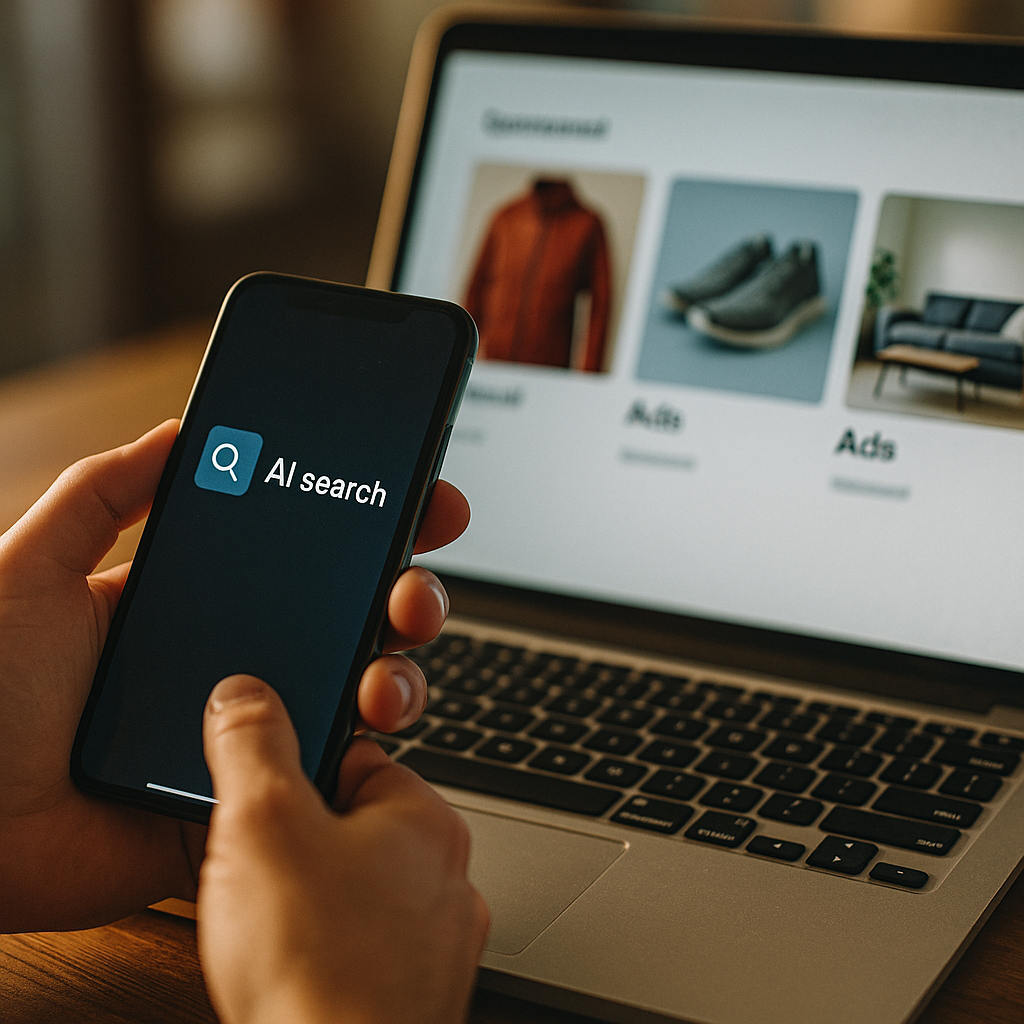
Only 34% of consumers trust brands to use AI responsibly with their data, according to recent industry surveys, even as more than half now rely on AI-powered search to research products before buying. That gap is not a fluke. It is the defining tension of marketing right now, and it has a name worth remembering: the demand-trust paradox. Consumers want AI to help them decide. They just don’t want AI deciding things for them, especially not through an ad.
If you run paid media, lifecycle marketing, or brand strategy, this paradox isn’t academic. It’s showing up in your CTR curves, your unsubscribe rates, and your CFO’s questions about why personalization spend keeps climbing while conversion lifts flatten.
The Paradox, Defined
AI search adoption is not slowing down. Google’s AI Overviews now appear on a majority of informational queries. ChatGPT, Perplexity, and Gemini have become genuine research tools for purchase decisions, not novelties. Consumers are letting AI summarize reviews, compare specs, and shortlist products. That’s demand for AI-assisted discovery, and it’s real.
But ask that same consumer how they feel about a retargeted ad that seems to know they were just browsing hiking boots on a different device, and the mood flips. Edelman’s trust research and multiple Pew studies over the past two years point to the same pattern: people trust AI more as a neutral research assistant than as a marketing tool acting on their behalf. The moment AI personalization feels like it’s working *for* the brand instead of *for* them, trust collapses.
Consumers aren’t rejecting AI. They’re rejecting AI that feels like it’s optimizing against their interests instead of for their outcomes.
This is the paradox in one sentence: adoption of AI as a search and decision layer keeps rising, while trust in AI as a persuasion layer keeps falling. Same technology, wildly different reception, depending on who it appears to serve.
Why This Is Happening Now
Three forces are converging, and none of them are going away.
First, transparency has gotten worse, not better. As personalization engines get more sophisticated, the “why am I seeing this ad” explanations consumers get have stayed vague or disappeared entirely. Meta and Google both offer ad transparency tools, but usage is low and comprehension is lower. Consumers feel the sophistication increasing while their visibility into it shrinks. That asymmetry breeds suspicion.
Second, AI-generated content has flooded the same channels as AI-personalized ads. When consumers can’t tell if a product review, an influencer post, or an ad creative was written by a human or a model, they start discounting everything in that channel. We covered this dynamic in depth in our piece on AI content disclosure: trust doesn’t erode selectively. It erodes across the whole surface once consumers sense they can’t distinguish authentic from synthetic.
Third, data breaches and creepy personalization moments keep compounding. Every story about a retailer predicting a pregnancy before a family knew, or a voice assistant recording private conversations, resets the baseline suspicion for the entire category. Consumers don’t parse which specific brand did what. They generalize. “AI ads are creepy” becomes a durable belief, reinforced every few months by a new headline.
Put those three together and you get a public that increasingly wants AI’s help finding things, while increasingly resenting AI’s help finding them.
What the Data Actually Shows
It’s tempting to wave this off as anecdotal vibes. It isn’t. Multiple data points triangulate on the same conclusion:
- Adoption is climbing. Search behavior data from major platforms shows AI-assisted queries growing steadily, and eMarketer’s research on AI search and shopping assistants shows consumers increasingly starting product research in AI tools rather than traditional search results pages.
- Trust in ad targeting is not climbing with it. Surveys on data privacy consistently show a majority of consumers uncomfortable with how their browsing and purchase data feeds into ad personalization, a number that has held steady or worsened over the past several survey cycles.
- Younger consumers are not the exception. There’s a lazy assumption that Gen Z is desensitized to data usage because they grew up with it. The data doesn’t support that. Younger cohorts are often more skeptical of algorithmic ad targeting, precisely because they understand the mechanics better than older users.
We explored the brand-side implications of this gap previously in our analysis of the AI personalization trust paradox and again when the numbers hardened into a measurable brand risk. The throughline across both: this isn’t a messaging problem you can fix with a better privacy policy footer. It’s a structural mismatch between how personalization engines are built and what consumers are actually willing to tolerate.
Why This Is a Brand Risk, Not Just a Marketing Nuisance
Here’s where it gets uncomfortable for budget owners. Declining trust in personalized ads doesn’t just suppress click-through rates. It compounds into three concrete risks.
Regulatory exposure is rising. The FTC has signaled increasing scrutiny of AI-driven ad targeting and algorithmic pricing, and the ICO in the UK has published specific guidance on AI and data protection that goes well beyond GDPR boilerplate. If your personalization stack can’t explain its own logic in plain language, you have a compliance gap, not just a trust gap.
Brand equity erodes quietly. Unlike a performance dip you catch in a weekly report, trust erosion shows up in brand tracking studies months later, usually as declining consideration or rising “this brand feels intrusive” sentiment. By the time it hits your NPS scores, the damage has been compounding for a while.
Efficiency gains get eaten by opt-outs. Every consumer who disables tracking, uses ad blockers, or opts out of personalized advertising because of accumulated distrust makes your remaining targeting data less representative. The paradox isn’t just a sentiment problem, it’s a data quality problem. Your model gets trained on an increasingly narrow, less-trusting slice of your audience.
A personalization engine that alienates its most privacy-conscious users over time is training itself on an increasingly biased sample, and nobody budgets for that risk.
What Brands Should Actually Do About It
You can’t opt out of AI personalization. Competitors will use it whether you do or not, and AI search adoption means consumers expect intelligent, relevant experiences. The fix isn’t retreat. It’s recalibration.
- Make the “why” visible. If an ad is personalized based on browsing behavior, say so in plain language, not buried in a settings menu three clicks deep. Brands that explain targeting logic upfront see measurably less backlash than those that don’t.
- Separate AI search optimization from AI ad targeting in your reporting. These are different consumer relationships with different trust thresholds. Treating them as one KPI dashboard hides the paradox instead of managing it.
- Audit your disclosure practices against current guidance, not just what passed compliance review two years ago. Regulatory expectations are moving faster than most internal policy reviews.
- Lean into creator and micro-influencer channels for trust-sensitive moments. Consumers extend more trust to a recognizable person’s recommendation than an algorithmic ad, even when both are technically “personalized.” Our coverage of vetted micro-influencer networks as a trust layer is directly relevant here: it’s a channel structurally built to route around the exact suspicion that’s killing personalized ad performance.
- Invest in first-party, consent-driven personalization over inferred, third-party signal stacking. It’s slower to scale but it’s the only version of personalization that survives the next round of regulatory tightening.
None of this requires abandoning AI. It requires being honest that AI-as-research-assistant and AI-as-ad-targeter are earning very different levels of consumer goodwill, and building your program to reflect that difference rather than pretend it doesn’t exist.
For teams building out AI capability more broadly, it’s also worth reading how social teams are actually using AI day to day, since operational AI use and consumer-facing AI personalization require very different trust safeguards, and conflating the two internally is a common source of blind spots.
The Takeaway
The demand-trust paradox isn’t going to resolve itself, and it isn’t a phase consumers will grow out of. Brands that win the next few years will be the ones that treat AI search and AI ad targeting as separate trust economies, disclose personalization logic before regulators force them to, and route trust-sensitive moments through human channels like creators rather than algorithms alone.
FAQs
What is the demand-trust paradox in AI marketing?
It refers to the growing gap between consumers’ rising use of AI tools for search and product research, and their declining trust in AI-personalized advertising. People want AI to help them find things but don’t trust AI to target them with ads.
Why is trust in AI-personalized ads declining while AI search grows?
Consumers experience AI search as a neutral tool working for them, while they experience AI ad targeting as a tool working for the brand at their expense. Lower transparency into targeting logic, rising AI content saturation, and repeated data privacy incidents have compounded distrust in the ad-targeting use case specifically.
Does this trend affect younger consumers less?
No. Data suggests younger consumers, including Gen Z, are often more skeptical of algorithmic ad targeting than older cohorts, largely because they understand the underlying mechanics better and have grown up amid repeated data privacy controversies.
What regulatory risks does declining AI ad trust create for brands?
Regulators including the FTC and the UK’s ICO have increased scrutiny of AI-driven targeting and algorithmic personalization. Brands that cannot clearly explain how their personalization systems use consumer data face rising compliance exposure, separate from any reputational risk.
How can brands rebuild trust without abandoning AI personalization?
Practical steps include disclosing targeting logic in plain language, separating AI search and AI ad-targeting metrics in reporting, shifting toward consent-based first-party data, and routing trust-sensitive messaging through creators and micro-influencers rather than algorithmic ads alone.
FAQs
What is the demand-trust paradox in AI marketing?
It refers to the growing gap between consumers’ rising use of AI tools for search and product research, and their declining trust in AI-personalized advertising. People want AI to help them find things but don’t trust AI to target them with ads.
Why is trust in AI-personalized ads declining while AI search grows?
Consumers experience AI search as a neutral tool working for them, while they experience AI ad targeting as a tool working for the brand at their expense. Lower transparency into targeting logic, rising AI content saturation, and repeated data privacy incidents have compounded distrust in the ad-targeting use case specifically.
Does this trend affect younger consumers less?
No. Data suggests younger consumers, including Gen Z, are often more skeptical of algorithmic ad targeting than older cohorts, largely because they understand the underlying mechanics better and have grown up amid repeated data privacy controversies.
What regulatory risks does declining AI ad trust create for brands?
Regulators including the FTC and the UK’s ICO have increased scrutiny of AI-driven targeting and algorithmic personalization. Brands that cannot clearly explain how their personalization systems use consumer data face rising compliance exposure, separate from any reputational risk.
How can brands rebuild trust without abandoning AI personalization?
Practical steps include disclosing targeting logic in plain language, separating AI search and AI ad-targeting metrics in reporting, shifting toward consent-based first-party data, and routing trust-sensitive messaging through creators and micro-influencers rather than algorithmic ads alone.
Top Influencer Marketing Agencies
The leading agencies shaping influencer marketing in 2026
Agencies ranked by campaign performance, client diversity, platform expertise, proven ROI, industry recognition, and client satisfaction. Assessed through verified case studies, reviews, and industry consultations.
Moburst

-
2

The Shelf
Boutique Beauty & Lifestyle Influencer AgencyA data-driven boutique agency specializing exclusively in beauty, wellness, and lifestyle influencer campaigns on Instagram and TikTok. Best for brands already focused on the beauty/personal care space that need curated, aesthetic-driven content.Clients: Pepsi, The Honest Company, Hims, Elf Cosmetics, Pure LeafVisit The Shelf → -
3

Audiencly
Niche Gaming & Esports Influencer AgencyA specialized agency focused exclusively on gaming and esports creators on YouTube, Twitch, and TikTok. Ideal if your campaign is 100% gaming-focused — from game launches to hardware and esports events.Clients: Epic Games, NordVPN, Ubisoft, Wargaming, Tencent GamesVisit Audiencly → -
4

Viral Nation
Global Influencer Marketing & Talent AgencyA dual talent management and marketing agency with proprietary brand safety tools and a global creator network spanning nano-influencers to celebrities across all major platforms.Clients: Meta, Activision Blizzard, Energizer, Aston Martin, WalmartVisit Viral Nation → -
5

The Influencer Marketing Factory
TikTok, Instagram & YouTube CampaignsA full-service agency with strong TikTok expertise, offering end-to-end campaign management from influencer discovery through performance reporting with a focus on platform-native content.Clients: Google, Snapchat, Universal Music, Bumble, YelpVisit TIMF → -
6

NeoReach
Enterprise Analytics & Influencer CampaignsAn enterprise-focused agency combining managed campaigns with a powerful self-service data platform for influencer search, audience analytics, and attribution modeling.Clients: Amazon, Airbnb, Netflix, Honda, The New York TimesVisit NeoReach → -
7

Ubiquitous
Creator-First Marketing PlatformA tech-driven platform combining self-service tools with managed campaign options, emphasizing speed and scalability for brands managing multiple influencer relationships.Clients: Lyft, Disney, Target, American Eagle, NetflixVisit Ubiquitous → -
8

Obviously
Scalable Enterprise Influencer CampaignsA tech-enabled agency built for high-volume campaigns, coordinating hundreds of creators simultaneously with end-to-end logistics, content rights management, and product seeding.Clients: Google, Ulta Beauty, Converse, AmazonVisit Obviously →