


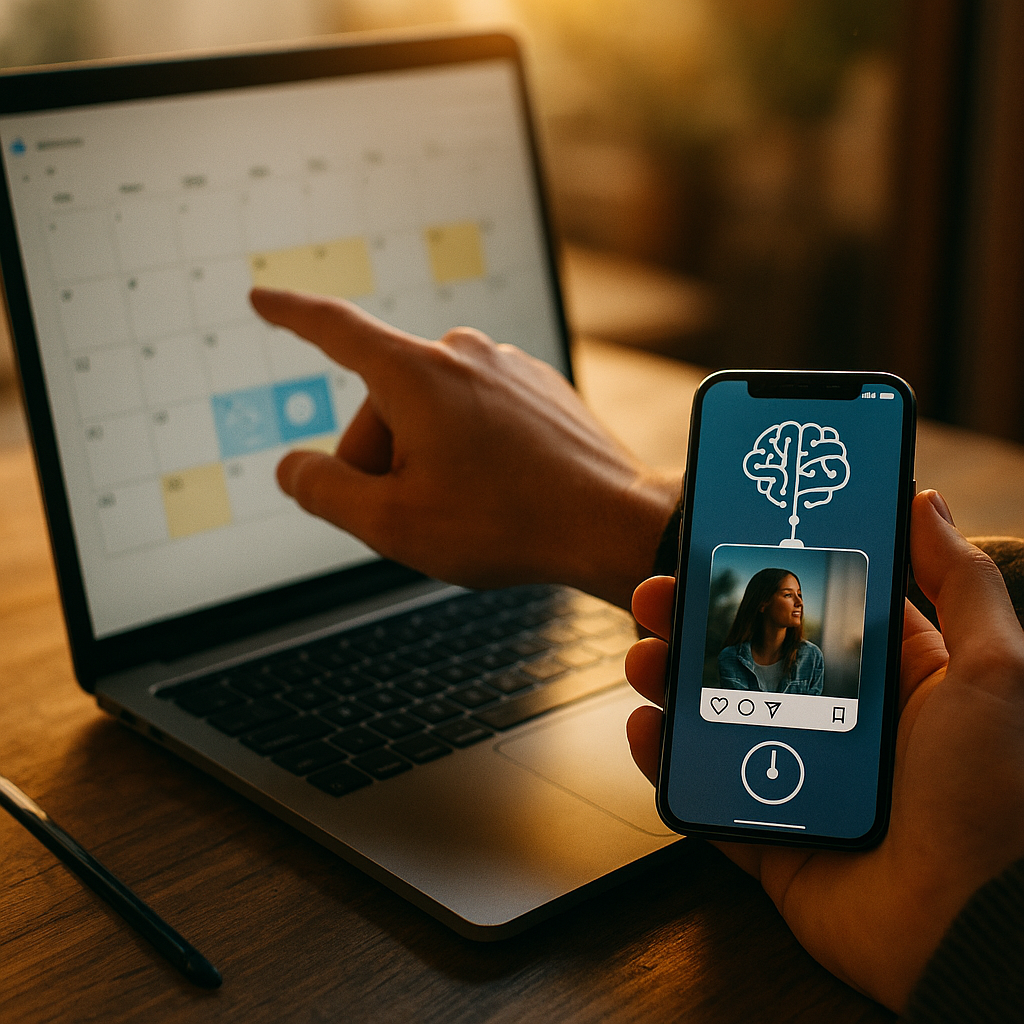
Your Creator Posts Are Going Live at the Wrong Time
Brands running influencer programs at scale lose an estimated 30–40% of potential engagement simply by posting at suboptimal times — not because the content is weak, but because the scheduling logic is manual, intuition-driven, and audience-agnostic. AI timing engines fix this. And the brands already deploying Shopify-style send-time optimization logic across creator post cadences are seeing measurable lifts in sponsored content performance.
What Shopify-Style Send-Time Optimization Actually Means
If you’ve managed email programs on Klaviyo or a comparable platform, you already understand the principle. The system analyzes each subscriber’s historical open behavior and delivers the message at the individual’s personal peak engagement window — not a single broadcast time for the whole list. Shopify merchants using Klaviyo’s AI send-time optimization have reported open rate lifts of 15–25% compared to fixed-time sends. That’s not a small margin in a competitive market.
Now apply that same logic to a creator campaign with 50 influencers posting across TikTok, Instagram, and YouTube. Each creator has a distinct audience with distinct behavioral patterns. A fitness creator’s followers might spike in engagement at 6 AM on weekdays. A gaming creator’s audience might peak at 10 PM on weekends. A food creator targeting working mothers may see maximum interaction at 12:30 PM and again at 8:45 PM. If your brand is briefing all 50 creators to post “Tuesday or Wednesday between 9 AM and 12 PM,” you’re leaving a significant portion of that audience reach on the table.
Send-time optimization in email marketing is table stakes. In creator campaign management, it’s still a competitive differentiator — but not for long.
The Data Inputs That Make This Work
An AI timing engine for creator scheduling ingests several distinct data streams to build its recommendations. Understanding what feeds the model helps brand teams evaluate vendor claims more rigorously.
- Platform engagement telemetry: Historical likes, comments, shares, saves, and click-through rates per post, segmented by time of publication. Platforms like Sprout Social and Dash Hudson expose this data at the audience level.
- Creator-specific audience analytics: Each creator’s audience demographic breakdown, including timezone distribution, device usage patterns, and peak scrolling windows — available via native platform analytics APIs and third-party tools.
- Content format signals: Video content has different peak consumption patterns than static images or carousels. Short-form video (Reels, TikTok) tends to perform well during commute windows; longer YouTube integrations see stronger completion rates in evening sessions.
- Historical campaign performance data: First-party data from the brand’s prior campaigns, layered with creator audience segmentation models to identify which cohorts respond at which times.
- Competitive scheduling intelligence: Some advanced systems monitor competitor posting cadences to identify scheduling gaps — windows where share-of-attention is lower, making brand content easier to break through.
The engine doesn’t just recommend a single best time. It outputs a recommended posting window per creator, per platform, per audience segment — and recalibrates as campaign data accumulates.
How to Deploy This Operationally
Most brand teams hit the same operational friction point: creators don’t want brands dictating post times. Fair. But there’s a practical middle ground that preserves creator autonomy while inserting data-informed scheduling logic into the workflow.
Start by building timing recommendations into your campaign brief as a suggested window rather than a hard requirement. When you provide a creator with data showing their audience engagement peaks at specific times — pulled from their own analytics — the recommendation lands as intelligence, not control. Creators tend to respond well when the data is specific to them, not generic industry advice.
For managed creator programs running through platforms like CreatorIQ, Grin, or Aspire, scheduling integration is increasingly native. These platforms can connect to creator social accounts (with permission) and surface AI-generated timing recommendations directly inside the campaign workflow. Some now support calendar-blocking features that flag optimal posting windows for each creator in the roster, reducing the back-and-forth between brand managers and talent coordinators.
For performance-focused campaigns where the brand controls paid amplification — boosting creator posts via Meta’s partnership ads or TikTok Spark Ads — timing optimization becomes even more critical. The organic post needs to accumulate early engagement signals before paid amplification kicks in, because the algorithm uses those signals to determine initial distribution. A poorly timed organic post that launches the paid boost from a low-engagement baseline undercuts your entire paid media investment.
The Audience Segmentation Layer
This is where most scheduling tools stop short, and where the real performance delta lives. Basic send-time optimization asks: when should this creator post to maximize overall engagement? Advanced timing engines ask a harder question: which audience segments are we trying to reach, and when are those specific segments active?
These are different problems. A creator with a 60/40 US/UK audience split needs timing logic that accounts for the Atlantic time gap — or a brand targeting UK buyers specifically needs to optimize for BST peak windows, even if that means deprioritizing US engagement rates on that post. AI-driven audience cohort models make this level of segment-specific timing feasible at scale.
The same logic applies to demographic segmentation within a single market. If you’re running a campaign targeting Gen Z women aged 18–24 versus Millennial women aged 30–38, their scrolling behavior patterns differ meaningfully — and those differences show up clearly in platform analytics data. An AI timing engine trained on this segmented behavioral data will surface recommendations that reflect those differences, rather than averaging them out into a single suboptimal posting window.
Averaging your audience into a single posting time is the scheduling equivalent of sending one email to your whole list with no personalization. You already know better. Apply it.
Measurement and Feedback Loop Design
Deploying an AI timing engine without a structured feedback loop is a wasted investment. The model needs to learn from campaign outcomes to improve its recommendations over time.
Set up your creative performance measurement framework to capture engagement velocity data — not just total engagement, but the rate at which engagement accumulated in the first 1, 3, and 6 hours post-publication. This velocity data is the primary signal the timing model should be optimizing for, because early engagement velocity directly influences algorithmic amplification on TikTok and Instagram.
Run controlled cadence experiments across your creator roster. If you have 30 creators in a campaign, split them into timing cohorts — some posting at AI-recommended windows, others at brand-standard times — and compare performance. This isn’t academic A/B testing; it’s operational calibration that makes your next campaign materially better. Tools that support AI creative feedback loops can automate much of this calibration work.
Also monitor for cannibalization. If multiple creators in your roster are posting simultaneously to overlapping audiences, you’re competing with yourself for the same attention window. A timing engine that manages scheduling across your full creator roster — not just per-creator in isolation — can stagger posts to maximize unduplicated reach.
Risk and Compliance Considerations
A few things brand teams need to keep front of mind when implementing AI-driven scheduling systems.
First, data access agreements. Pulling creator audience analytics at scale requires explicit permission structures. Ensure your platform agreements and creator contracts specify what data is being accessed, how it’s used, and how long it’s retained. The ICO’s guidance on data processing applies if you’re operating in or targeting UK audiences. Similar frameworks apply under CCPA for US operations.
Second, FTC disclosure requirements don’t change based on post timing. Sponsored content must be disclosed clearly regardless of when it publishes. Don’t let operational automation create gaps in compliance review — the disclosure tag needs to be in the content before any scheduled post goes live.
Third, watch for over-optimization. Audiences do notice when creator content feels machine-scheduled and inauthentic in its precision. The timing engine optimizes distribution; the creator still owns the creative voice. Keep those roles distinct.
The Vendors Building This Infrastructure
The timing optimization space for creator campaigns is maturing fast. Sprout Social now offers AI-powered optimal send-time recommendations integrated into their publishing workflow. HubSpot‘s Marketing Hub includes send-time intelligence for content scheduling. At the creator-specific layer, platforms like Dash Hudson have invested in machine learning models that surface posting window recommendations based on creator audience behavior.
For enterprise brands running large creator rosters, the real capability gap is cross-creator scheduling orchestration — managing timing across 50+ creators simultaneously, with audience overlap detection and real-time recalibration. This is where custom integrations between creator management platforms and AI scheduling layers become necessary. If your current tech stack doesn’t support this, it’s worth evaluating as part of a broader MarTech stack restructure.
Start with one campaign. Pull your top 10 performing creators, map their audience peak windows, and run a split-schedule test over four weeks. The data will tell you exactly what the ROI case looks like for your specific program before you commit to a platform-wide implementation.
FAQs
What is AI send-time optimization for creator campaigns?
AI send-time optimization applies machine learning to analyze creator audience behavioral data — including historical engagement patterns, timezone distribution, and content format signals — to recommend the optimal posting window for each creator’s sponsored content. The goal is to ensure sponsored posts reach their target audience segments during peak engagement windows, rather than publishing at generic industry-average times.
How is this different from standard best-time-to-post advice?
Generic best-time-to-post recommendations are industry averages that ignore the specific behavioral patterns of individual creator audiences. AI timing engines analyze each creator’s own audience data to generate creator-specific, segment-specific recommendations that reflect actual audience behavior — not population-level benchmarks.
Can brands mandate posting times in creator contracts?
Brands can include posting window parameters in creator contracts, and many do for large-scale managed programs. The more effective approach is to provide data-backed timing recommendations as campaign intelligence rather than hard mandates, which preserves creator autonomy while still achieving scheduling optimization. Framing timing recommendations as audience insights — pulled from the creator’s own analytics — tends to increase creator compliance significantly.
Does timing optimization affect FTC disclosure compliance?
No — FTC disclosure requirements apply regardless of when content is published. Sponsored content must include clear disclosure labels at all times. Brands should ensure that compliance review processes are completed before any AI-scheduled post goes live, and that automation workflows cannot publish unreviewed or undisclosed content.
What metrics should brands track to evaluate timing optimization performance?
The primary metric is engagement velocity — the rate of engagement accumulation in the first 1, 3, and 6 hours after publication. Early engagement velocity drives algorithmic amplification on TikTok and Instagram. Secondary metrics include reach, save rate, click-through rate, and conversion attribution. Comparing these metrics between AI-optimized timing cohorts and control groups provides the clearest read on timing optimization ROI.
Which platforms support AI timing optimization for creator content?
Tools like Sprout Social, Dash Hudson, and Klaviyo offer AI-powered send-time optimization for content scheduling. Creator-specific platforms including CreatorIQ, Grin, and Aspire are increasingly integrating timing intelligence into their campaign management workflows. For enterprise programs, custom API integrations between creator management platforms and AI scheduling layers may be required for full cross-creator scheduling orchestration.
Top Influencer Marketing Agencies
The leading agencies shaping influencer marketing in 2026
Agencies ranked by campaign performance, client diversity, platform expertise, proven ROI, industry recognition, and client satisfaction. Assessed through verified case studies, reviews, and industry consultations.
Moburst

-
2

The Shelf
Boutique Beauty & Lifestyle Influencer AgencyA data-driven boutique agency specializing exclusively in beauty, wellness, and lifestyle influencer campaigns on Instagram and TikTok. Best for brands already focused on the beauty/personal care space that need curated, aesthetic-driven content.Clients: Pepsi, The Honest Company, Hims, Elf Cosmetics, Pure LeafVisit The Shelf → -
3

Audiencly
Niche Gaming & Esports Influencer AgencyA specialized agency focused exclusively on gaming and esports creators on YouTube, Twitch, and TikTok. Ideal if your campaign is 100% gaming-focused — from game launches to hardware and esports events.Clients: Epic Games, NordVPN, Ubisoft, Wargaming, Tencent GamesVisit Audiencly → -
4

Viral Nation
Global Influencer Marketing & Talent AgencyA dual talent management and marketing agency with proprietary brand safety tools and a global creator network spanning nano-influencers to celebrities across all major platforms.Clients: Meta, Activision Blizzard, Energizer, Aston Martin, WalmartVisit Viral Nation → -
5

The Influencer Marketing Factory
TikTok, Instagram & YouTube CampaignsA full-service agency with strong TikTok expertise, offering end-to-end campaign management from influencer discovery through performance reporting with a focus on platform-native content.Clients: Google, Snapchat, Universal Music, Bumble, YelpVisit TIMF → -
6

NeoReach
Enterprise Analytics & Influencer CampaignsAn enterprise-focused agency combining managed campaigns with a powerful self-service data platform for influencer search, audience analytics, and attribution modeling.Clients: Amazon, Airbnb, Netflix, Honda, The New York TimesVisit NeoReach → -
7

Ubiquitous
Creator-First Marketing PlatformA tech-driven platform combining self-service tools with managed campaign options, emphasizing speed and scalability for brands managing multiple influencer relationships.Clients: Lyft, Disney, Target, American Eagle, NetflixVisit Ubiquitous → -
8

Obviously
Scalable Enterprise Influencer CampaignsA tech-enabled agency built for high-volume campaigns, coordinating hundreds of creators simultaneously with end-to-end logistics, content rights management, and product seeding.Clients: Google, Ulta Beauty, Converse, AmazonVisit Obviously →