


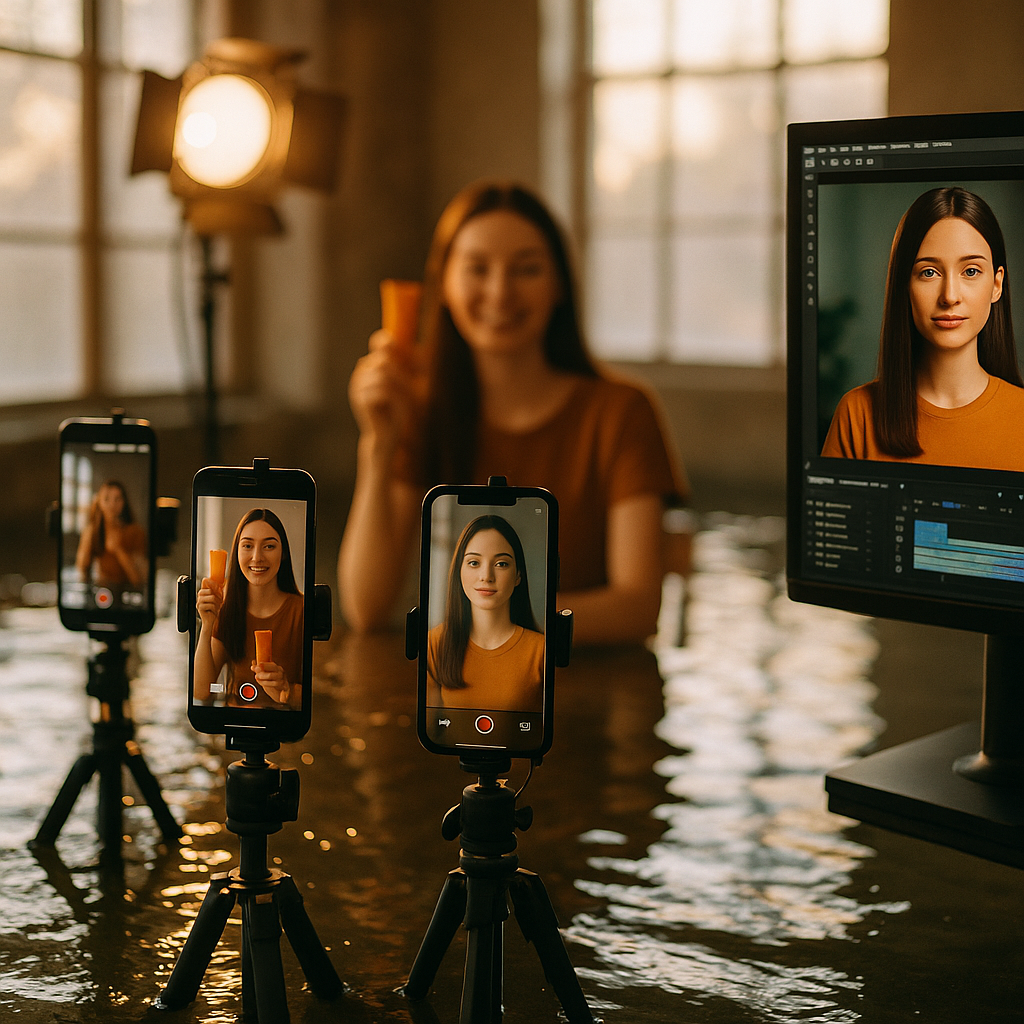
Templated AI content studios spun up more than 30 million new pieces of branded content last year, and a growing share came from people who’d never called themselves “creators” before generative tools handed them a studio in their pocket. That’s the story hiding inside every micro-creator pool conversation right now. The pool isn’t just growing. It’s mutating.
If your discovery strategy still assumes a finite universe of vetted micro-influencers with polished bios and media kits, you’re already behind. The bottleneck has moved.
The Supply Shock Nobody Priced In
For years, the micro-influencer segment (typically 10K-100K followers) was constrained by production friction. Shooting, editing, captioning, thumbnail testing — it took time, skill, or a budget for freelance editors. That friction kept the pool relatively self-selecting. People who stuck with it long enough to build an audience usually had some baseline competence.
Generative AI tools removed that friction almost overnight. Templated studio platforms — think CapCut’s AI suite, Canva’s Magic Studio, Runway, and a wave of newer creator-specific tools like Captions and Opus Clip — now let anyone with a phone and a product sample produce broadcast-quality UGC in minutes. No editing skill required. No lighting kit. No hours lost to scrubbing timelines.
The result: a flood of new entrants who look like creators, post like creators, and pitch brands like creators, but who arrived via a completely different path than the community-builders brands are used to vetting.
The micro-creator pool didn’t just get bigger — it got structurally different, and most brand vetting workflows haven’t caught up to that shift.
Why This Matters for Discovery Strategy, Not Just Production
Here’s the part brand teams keep missing: this isn’t a production story. It’s a discovery story. When the cost of “looking like a creator” drops to near zero, your existing filters — follower count, post frequency, aesthetic consistency — stop correlating with the thing you actually care about, which is whether this person has real audience trust and can move product.
Brands that built seeding programs around part-time creator behavior already know audience size is a weak proxy for influence. Add templated AI studios into the mix, and you get a pool where technical polish is even less predictive of trust than it was two years ago.
That’s not a reason to panic. It’s a reason to rebuild your discovery criteria around signals that AI tools can’t fake: comment sentiment quality, repeat purchase mentions, response rates in DMs, and consistency of niche focus over time.
What’s Actually Expanding — Volume or Value?
Volume, mostly. Value is more contested.
Some of these AI-assisted new entrants are genuinely talented storytellers who simply lacked the tools to execute before. Give a sharp, funny person a templated studio and a hook-writing assistant, and you might find your next standout affiliate partner. Others are running content-farming plays: batch-producing dozens of templated videos across a handful of near-identical accounts, hoping volume beats quality in the algorithm’s eyes.
This bifurcation matters for budget allocation. eMarketer data on creator economy growth shows spend continuing to shift toward smaller, more niche creators — but that spend only pays off if brands can tell the two cohorts apart before signing a contract, not after the campaign underperforms.
Templated Studios Are Also a Vetting Problem
Let’s be specific about what “templated studio access” actually changes in your workflow.
First, portfolio review gets harder. A media kit full of slick, on-trend Reels no longer tells you whether someone can film, write hooks, and edit — it might just tell you they have a CapCut subscription. Second, authenticity signals shift. UGC has outperformed polished ads precisely because it reads as unscripted and real. Templated AI production risks eroding that exact advantage if brands aren’t careful about which creators lean on AI for efficiency versus which ones use it as a crutch that flattens their voice into generic sameness.
Third — and this is the one most compliance teams haven’t fully gamed out — disclosure obligations get murkier when AI tools are involved in generating claims, voiceovers, or even the creator’s likeness in a video. The FTC’s endorsement guidance already requires clear disclosure of material connections; AI-assisted content adds a layer of “was this even the creator’s own experience or an AI-generated approximation of one?” that brands need to address in contracts now, not after a complaint lands.
- Portfolio polish is no longer a reliable quality signal — assume AI assistance by default.
- Voice consistency across a creator’s back-catalog is a better authenticity check than production value.
- Disclosure language in contracts should explicitly cover AI-generated or AI-assisted content, not just paid partnerships.
- Engagement quality (comment specificity, DM response behavior) matters more than ever as a trust proxy.
How AI Matching Platforms Are Adjusting
The discovery tooling layer is already reacting. Platforms that once ranked creators primarily on follower count and engagement rate are adding new filters: content originality scoring, historical posting consistency, and in some cases AI-detection flags that estimate the likelihood a given piece of content was templated versus shot organically.
This mirrors a broader trend covered in how AI matching platforms are reshaping brand-creator sourcing — the tools are getting smarter, but they’re only as good as the signals fed into them. If your matching platform still weights raw follower count heavily, you’re going to keep surfacing the same inflated-looking accounts that templated studios made easy to produce.
Smart brand teams are pairing platform-level filtering with manual spot-checks: pulling three to five pieces of a shortlisted creator’s content from before and after they started using visible AI tools, and comparing tone, pacing, and audience reaction. It’s not scalable to do this for every candidate, but for anyone entering a paid, ongoing relationship, it’s a 20-minute check that saves a lot of wasted budget.
If your matching criteria haven’t changed since the templated-studio boom started, you’re still filtering for a market that no longer exists.
The Upside Brands Shouldn’t Ignore
It’s easy to frame this entirely as a risk story. It isn’t.
A larger, more accessible micro-creator pool means brands running vetted micro-influencer network programs have more raw material to work with — more niche coverage, more geographic spread, more language and dialect variety. For brands doing international expansion or targeting hyper-specific subcultures, that’s genuinely useful. You’re no longer limited to the handful of creators in a given niche who happened to also be skilled video editors.
It also lowers the cost of testing. Seeding a product to fifty new-to-platform creators with templated-studio access costs less in both product and negotiation time than it did when every creator needed a professional-grade setup to say yes. That changes the math on AI-powered sampling programs — you can run wider funnels and let performance data do the filtering instead of relying entirely on upfront vetting.
The trade-off is obvious: wider top-of-funnel, messier signal. Brands need to decide where in that funnel they want to spend their scrutiny budget.
Building a Discovery Strategy for the New Pool
Practically, this means a few adjustments to how brand and agency teams should be running discovery in the near term.
Start weighting historical consistency over current polish. A creator who’s posted in the same niche, same voice, for over a year is a safer bet than one who suddenly appeared with twenty perfectly templated videos last month. Second, build a two-tier testing structure: low-commitment product seeding for the wide, AI-assisted long tail, and only escalate to paid, contracted partnerships once you’ve seen real engagement and conversion data, not just view counts.
Third, update contracts and briefs to explicitly address AI tool usage — not to ban it, but to require disclosure of when AI voice, avatar, or script-generation tools were used, particularly for claims about product performance. This protects the brand as much as it protects the creator. Fourth, keep an eye on payment models; platforms shifting toward performance-based creator pay naturally self-correct for the volume-over-value problem, since low-value templated content simply won’t convert regardless of how polished it looks.
Finally, don’t underestimate the compliance layer. As HubSpot’s marketing research and Sprout Social’s industry reporting have both noted in recent creator economy coverage, disclosure and authenticity concerns are rising up the priority list for both regulators and consumers. Getting ahead of that now costs a lot less than a retroactive audit.
FAQs
Is generative AI actually increasing the number of active micro-creators, or just the volume of content?
Both, but the effects aren’t equal. Templated studio tools have genuinely lowered the barrier to entry, bringing in people who wanted to create but lacked production skills. At the same time, they’ve also enabled a much larger volume of low-effort, templated content from a smaller set of accounts trying to game reach. Brands need to distinguish between the two when building shortlists.
Should brands avoid creators who obviously use AI editing tools?
No — avoiding AI-assisted creators entirely would eliminate a huge and often high-quality segment of the pool. The better approach is checking whether AI tools are enhancing an authentic voice or replacing one. Consistency of tone and niche focus over time is a more useful filter than whether AI was used at all.
How does this affect influencer disclosure requirements?
Existing FTC endorsement guidance already covers material connections and misleading claims, and that applies regardless of whether AI tools were used in production. Brands should update contracts to require creators to disclose when AI voice, script, or avatar tools were used, especially for any content making product performance claims.
What’s the biggest mistake brands make when discovering micro-creators in this environment?
Relying on follower count and production polish as quality signals. Both are now trivially easy to fake or inflate with templated AI tools. Engagement quality, posting consistency, and audience sentiment are far more reliable indicators of real influence.
Does a larger micro-creator pool mean lower costs for brands?
Generally yes, at the top of the funnel. Wider supply and lower production friction mean brands can seed products more broadly at lower cost per creator. But budget should still concentrate on proven performers once initial testing data comes in, rather than spreading evenly across the entire expanded pool.
Next step: Audit your current discovery filters this quarter — if follower count and content polish are still your top two screening criteria, replace them with historical consistency and engagement-quality checks before your next seeding cycle.
FAQs
Is generative AI actually increasing the number of active micro-creators, or just the volume of content?
Both, but the effects aren’t equal. Templated studio tools have genuinely lowered the barrier to entry, bringing in people who wanted to create but lacked production skills. At the same time, they’ve also enabled a much larger volume of low-effort, templated content from a smaller set of accounts trying to game reach. Brands need to distinguish between the two when building shortlists.
Should brands avoid creators who obviously use AI editing tools?
No — avoiding AI-assisted creators entirely would eliminate a huge and often high-quality segment of the pool. The better approach is checking whether AI tools are enhancing an authentic voice or replacing one. Consistency of tone and niche focus over time is a more useful filter than whether AI was used at all.
How does this affect influencer disclosure requirements?
Existing FTC endorsement guidance already covers material connections and misleading claims, and that applies regardless of whether AI tools were used in production. Brands should update contracts to require creators to disclose when AI voice, script, or avatar tools were used, especially for any content making product performance claims.
What’s the biggest mistake brands make when discovering micro-creators in this environment?
Relying on follower count and production polish as quality signals. Both are now trivially easy to fake or inflate with templated AI tools. Engagement quality, posting consistency, and audience sentiment are far more reliable indicators of real influence.
Does a larger micro-creator pool mean lower costs for brands?
Generally yes, at the top of the funnel. Wider supply and lower production friction mean brands can seed products more broadly at lower cost per creator. But budget should still concentrate on proven performers once initial testing data comes in, rather than spreading evenly across the entire expanded pool.
Top Influencer Marketing Agencies
The leading agencies shaping influencer marketing in 2026
Agencies ranked by campaign performance, client diversity, platform expertise, proven ROI, industry recognition, and client satisfaction. Assessed through verified case studies, reviews, and industry consultations.
Moburst

-
2

The Shelf
Boutique Beauty & Lifestyle Influencer AgencyA data-driven boutique agency specializing exclusively in beauty, wellness, and lifestyle influencer campaigns on Instagram and TikTok. Best for brands already focused on the beauty/personal care space that need curated, aesthetic-driven content.Clients: Pepsi, The Honest Company, Hims, Elf Cosmetics, Pure LeafVisit The Shelf → -
3

Audiencly
Niche Gaming & Esports Influencer AgencyA specialized agency focused exclusively on gaming and esports creators on YouTube, Twitch, and TikTok. Ideal if your campaign is 100% gaming-focused — from game launches to hardware and esports events.Clients: Epic Games, NordVPN, Ubisoft, Wargaming, Tencent GamesVisit Audiencly → -
4

Viral Nation
Global Influencer Marketing & Talent AgencyA dual talent management and marketing agency with proprietary brand safety tools and a global creator network spanning nano-influencers to celebrities across all major platforms.Clients: Meta, Activision Blizzard, Energizer, Aston Martin, WalmartVisit Viral Nation → -
5

The Influencer Marketing Factory
TikTok, Instagram & YouTube CampaignsA full-service agency with strong TikTok expertise, offering end-to-end campaign management from influencer discovery through performance reporting with a focus on platform-native content.Clients: Google, Snapchat, Universal Music, Bumble, YelpVisit TIMF → -
6

NeoReach
Enterprise Analytics & Influencer CampaignsAn enterprise-focused agency combining managed campaigns with a powerful self-service data platform for influencer search, audience analytics, and attribution modeling.Clients: Amazon, Airbnb, Netflix, Honda, The New York TimesVisit NeoReach → -
7

Ubiquitous
Creator-First Marketing PlatformA tech-driven platform combining self-service tools with managed campaign options, emphasizing speed and scalability for brands managing multiple influencer relationships.Clients: Lyft, Disney, Target, American Eagle, NetflixVisit Ubiquitous → -
8

Obviously
Scalable Enterprise Influencer CampaignsA tech-enabled agency built for high-volume campaigns, coordinating hundreds of creators simultaneously with end-to-end logistics, content rights management, and product seeding.Clients: Google, Ulta Beauty, Converse, AmazonVisit Obviously →