


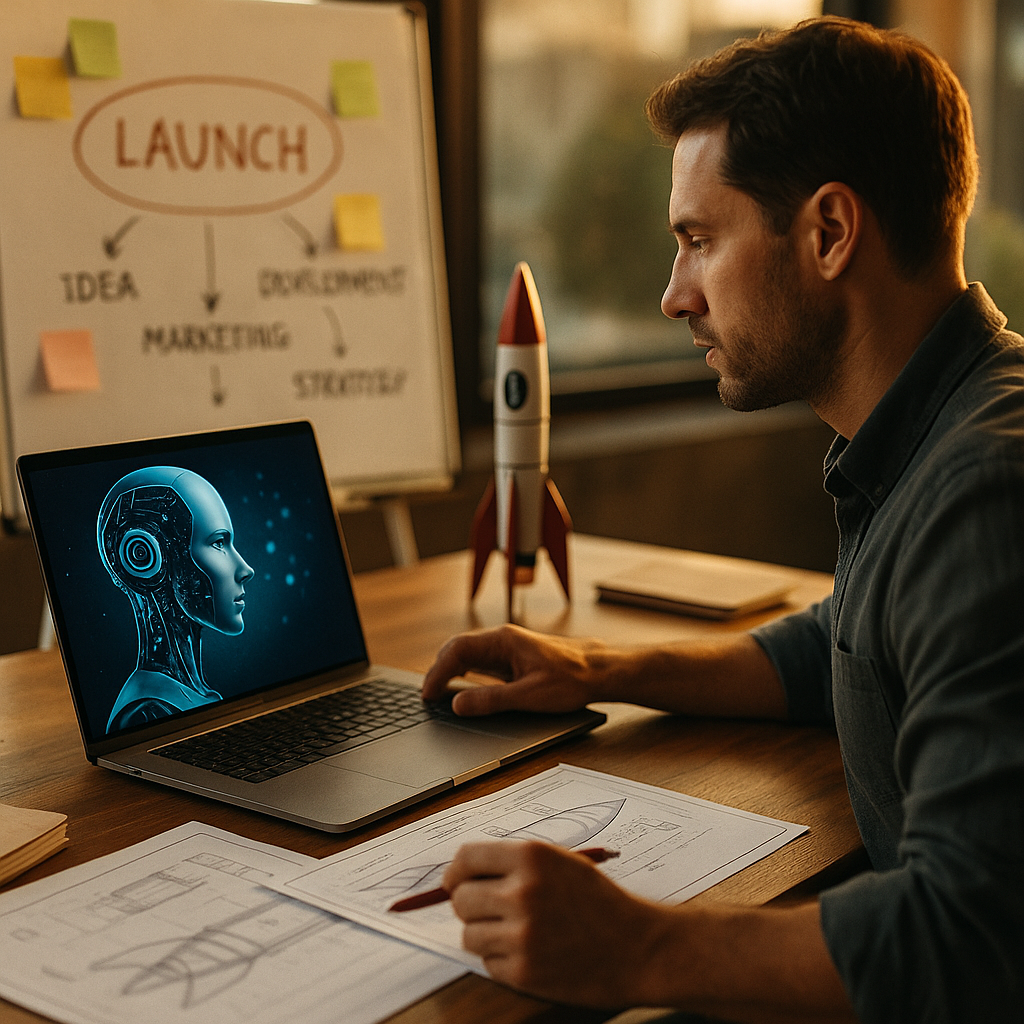
Using AI to analyze and predict the success of a new product launch is revolutionizing how businesses bring innovations to market. Advanced algorithms sift through massive data volumes to forecast product performance and optimize strategies. Brands harness these insights for a competitive edge—and to sidestep costly mistakes. Want to learn how AI transforms your launch from risky to strategic?
How AI Enhances New Product Launch Analysis
AI-powered analysis tools deliver a sophisticated lens for examining new product launches. By evaluating market trends, consumer sentiment, and historical launch data, AI surfaces patterns undetectable by traditional analytics. These tools rapidly process multichannel data—from social media buzz to real-time sales figures—giving organizations a holistic view of market readiness and customer appetite. Natural language processing (NLP) is particularly powerful; it sifts through product reviews, forums, and competitor feedback to highlight unmet needs and potential pitfalls. When launching a product, this comprehensive analysis supports smarter targeting and more effective positioning, reducing both financial risk and time to market.
Key Benefits of Predictive Analytics for New Products
Predictive analytics, a cornerstone of AI in product launches, offers clear advantages over guesswork and legacy forecasting models:
- Accurate Demand Forecasting: AI predicts demand surges or slowdowns using historical and current sales data. This ensures appropriate inventory levels, avoiding both stockouts and overproduction.
- Optimized Marketing Strategies: By analyzing customer personas and preferred channels, AI tailors campaigns to maximize reach and conversion.
- Early Detection of Threats: Machine learning algorithms flag potential post-launch challenges, such as negative sentiment spikes or competitor activity, enabling brands to respond proactively.
- Resource Allocation: AI highlights which regions, demographics, or sales channels offer best potential for ROI, fine-tuning how budgets are allocated.
According to a 2025 Deloitte survey, 73% of brands leveraging AI-powered insights during product launches reported faster market traction and improved post-launch growth compared to those using traditional processes.
Implementing Machine Learning in Go-to-Market Strategies
Machine learning elevates go-to-market strategies by infusing agility and data-driven decision-making at every stage. By ingesting diverse datasets—think customer databases, competitive intelligence, and behavioral analytics—machine learning models segment buyers, prioritize features, and even suggest ideal pricing.
- Model Training: Training AI models on both successful and failed launches uncovers the factors most strongly correlated with market success.
- Real-Time Scenario Testing: Companies can simulate various launch scenarios to predict outcomes, minimizing uncertainty before making real-world investments.
- Continuous Improvement: After going live, AI refines its recommendations based on sales trends, customer feedback, and competitor responses. This feedback loop enables ongoing adaptation.
To implement this effectively, organizations must ensure data quality and securely integrate internal systems with AI tools. Collaboration between data scientists, product managers, and marketers solidifies the connection between AI output and on-the-ground actions.
Data Sources Essential for AI Product Launch Predictions
AI-driven product launch predictions are only as accurate as their underlying data. The following sources are integral to a robust AI analysis:
- Historical Product Performance Data: Past launches, sales curves, product returns, and customer retention help AI establish relevant baselines.
- Consumer and Market Sentiment: Insights from social listening, online reviews, and even direct surveys provide a public pulse pre- and post-launch.
- Competitive Intelligence: Monitoring competitors’ pricing, promotions, and product updates enables comparative positioning.
- Macroeconomic Indicators: Factors like inflation, supply chain disruptions, and overall market health can significantly impact launch outcomes.
- Web and Behavioral Analytics: Tracking website visits, ad responses, and online cart activity highlights pre-launch interest and purchase intent.
Data completeness and integrity are non-negotiable. Organizations should regularly audit sources for bias, gaps, or outdated information to ensure AI recommendations remain actionable and trustworthy.
Overcoming Challenges and Ensuring AI Ethics in Product Launch Predictions
Despite its promise, deploying AI for product launch predictions comes with challenges:
- Bias and Fairness: Biased training data can skew predictions, harming both reputation and results. Regular bias checks and diverse data sourcing counteract this risk.
- Transparency: Explainable AI (XAI) frameworks help stakeholders understand why models make certain predictions, improving trust and regulatory compliance.
- Data Privacy: Adhering to strict data governance and privacy laws, such as GDPR, is essential when handling consumer insights.
- Human Oversight: AI should augment, not replace, expert judgment. Successful organizations maintain multidisciplinary oversight on all major AI-powered launch decisions.
Gartner’s 2025 research notes that companies deploying transparent, ethical AI in product launches see 25% higher consumer trust and post-launch advocacy than those using “black box” models.
Future Trends: AI Shaping the Next Generation of Product Launches
The future of AI in product launches is incredibly promising. In 2025, brands invest in more sophisticated generative AI models to simulate customer conversations, generate faster market hypotheses, and co-create novel concepts. Additionally, autonomous AI agents are being integrated into adaptive launch teams, able to adjust campaign execution on the fly based on minute-by-minute performance data. Forward-thinking organizations will pair these advances with robust human oversight and ethical frameworks, ensuring AI drives innovation while building authentic customer value.
In summary, harnessing AI to analyze and predict the success of a new product launch turns uncertainty into actionable intelligence. Companies that integrate trustworthy AI with strong human collaboration unlock faster, smarter, and more successful go-to-market strategies in 2025.
FAQs: Using AI to Analyze and Predict the Success of a New Product Launch
-
How does AI predict product launch success?
AI analyzes historical data, market trends, customer sentiment, and real-time feedback to forecast demand, optimal pricing, and potential risks, giving businesses a data-driven launch plan.
-
What types of AI models are used for launch predictions?
Companies primarily use machine learning for scenario forecasting, natural language processing for sentiment analysis, and deep learning for pattern recognition across large datasets.
-
Can small businesses benefit from AI-driven launch analysis?
Yes, many cloud-based AI tools are accessible, scalable, and tailored for SMEs, helping them make data-backed launch decisions without massive in-house data science teams.
-
How accurate are AI-powered predictions for new products?
Accuracy depends on data quality, model selection, and ongoing fine-tuning. With robust implementation, AI can improve launch outcome accuracy by up to 60% compared to manual approaches, according to 2025 industry reports.
-
What should I look for in an AI product launch platform?
Seek solutions offering explainable results, seamless integration with your data sources, regular model updates, and compliance with privacy regulations. Transparent support and clear ROI measurement are also crucial.
Top Influencer Marketing Agencies
The leading agencies shaping influencer marketing in 2026
Agencies ranked by campaign performance, client diversity, platform expertise, proven ROI, industry recognition, and client satisfaction. Assessed through verified case studies, reviews, and industry consultations.
Moburst

-
2

The Shelf
Boutique Beauty & Lifestyle Influencer AgencyA data-driven boutique agency specializing exclusively in beauty, wellness, and lifestyle influencer campaigns on Instagram and TikTok. Best for brands already focused on the beauty/personal care space that need curated, aesthetic-driven content.Clients: Pepsi, The Honest Company, Hims, Elf Cosmetics, Pure LeafVisit The Shelf → -
3

Audiencly
Niche Gaming & Esports Influencer AgencyA specialized agency focused exclusively on gaming and esports creators on YouTube, Twitch, and TikTok. Ideal if your campaign is 100% gaming-focused — from game launches to hardware and esports events.Clients: Epic Games, NordVPN, Ubisoft, Wargaming, Tencent GamesVisit Audiencly → -
4

Viral Nation
Global Influencer Marketing & Talent AgencyA dual talent management and marketing agency with proprietary brand safety tools and a global creator network spanning nano-influencers to celebrities across all major platforms.Clients: Meta, Activision Blizzard, Energizer, Aston Martin, WalmartVisit Viral Nation → -
5

The Influencer Marketing Factory
TikTok, Instagram & YouTube CampaignsA full-service agency with strong TikTok expertise, offering end-to-end campaign management from influencer discovery through performance reporting with a focus on platform-native content.Clients: Google, Snapchat, Universal Music, Bumble, YelpVisit TIMF → -
6

NeoReach
Enterprise Analytics & Influencer CampaignsAn enterprise-focused agency combining managed campaigns with a powerful self-service data platform for influencer search, audience analytics, and attribution modeling.Clients: Amazon, Airbnb, Netflix, Honda, The New York TimesVisit NeoReach → -
7

Ubiquitous
Creator-First Marketing PlatformA tech-driven platform combining self-service tools with managed campaign options, emphasizing speed and scalability for brands managing multiple influencer relationships.Clients: Lyft, Disney, Target, American Eagle, NetflixVisit Ubiquitous → -
8

Obviously
Scalable Enterprise Influencer CampaignsA tech-enabled agency built for high-volume campaigns, coordinating hundreds of creators simultaneously with end-to-end logistics, content rights management, and product seeding.Clients: Google, Ulta Beauty, Converse, AmazonVisit Obviously →