


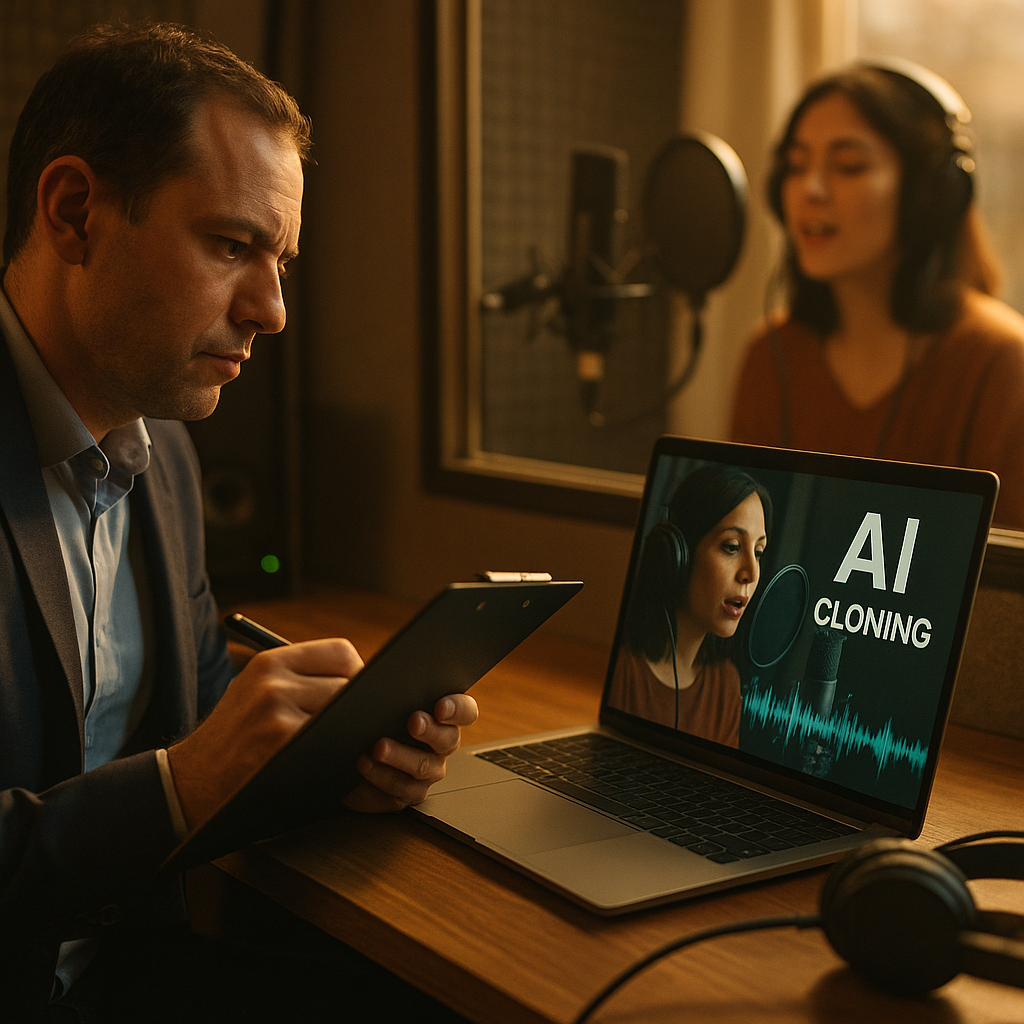
Twenty-eight states now have right-of-publicity statutes on the books, and at least a dozen have amended them in the past two years specifically to address digital replicas. Yet most brand dubbing pipelines still treat AI voice cloning as a production choice, not a legal one. That gap is where the next wave of creator lawsuits will come from — and a compliance audit framework for AI voice cloning is no longer optional for anyone localizing creator content at scale.
If your team is dubbing a creator’s voice into Spanish, Portuguese, or Hindi using synthetic voice models, you’re not just translating content. You’re replicating a person’s identity, and every state has a different opinion on what that requires.
Why This Suddenly Matters
Localized dubbing used to mean hiring a voice actor who sounded vaguely like the original talent. Now brands run a creator’s actual voice through an AI model, clone it, and generate dubbed audio in a dozen languages without the creator ever stepping into a booth. It’s faster. It’s cheaper. Agencies love it because it collapses production timelines from weeks to days.
But right-of-publicity law wasn’t written with voice cloning in mind — it was patched onto it. Tennessee’s ELVIS Act, passed in 2024, explicitly protects voice as a property right and imposes liability on anyone who creates or distributes an unauthorized AI replica. California’s AB 1836 and its earlier voice-and-likeness statutes go further, covering both living performers and, in some cases, deceased ones. New York, Illinois, and Washington all have their own variations, each with different consent requirements, different statutes of limitations, and different definitions of what counts as a “voice.”
A single dubbing campaign that runs across ten states can trigger ten different consent thresholds — and a single missing clause can expose a brand to statutory damages in more than one jurisdiction at once.
This is the part general counsel teams miss until it’s too late: right-of-publicity claims don’t require proof of confusion, unlike trademark. They require proof of unauthorized use of identity for commercial purpose. Voice qualifies. Dubbing counts. And “the creator agreed to the campaign” is not the same as “the creator agreed to have their voice cloned.”
The Core Compliance Gaps Brands Keep Hitting
Three failure patterns show up again and again in audits.
- Consent scope mismatch. The original creator agreement covers “use of likeness in sponsored content” but never mentions voice cloning, synthetic replication, or localization into other languages. Generic likeness language does not cover AI voice generation in most state statutes.
- Jurisdiction blindness. Brands sign one master agreement and assume it travels. It doesn’t. A creator based in Texas, dubbed for a campaign targeting audiences in California and Tennessee, triggers the law of the state where the harm occurs — often the audience state, not the creator’s home state.
- Vendor pass-through risk. Dubbing studios and AI voice vendors rarely warrant that their cloning process meets state-specific consent standards. Brands assume the vendor handled it. Vendors assume the brand handled it. Nobody handled it.
This is structurally similar to the synthetic performer problem covered in our 50-state compliance matrix on disclosure laws — except voice cloning adds a layer because the underlying person is real, identifiable, and often still under contract with the brand for other deliverables. That overlap creates confusion about which agreement governs.
Building the Audit Framework
A workable audit framework needs four layers: consent mapping, jurisdictional exposure scoring, vendor warranty review, and disclosure alignment. Skip any one of them and you’ve got a framework that looks thorough but leaves a hole big enough for a plaintiff’s attorney to drive through.
Layer One: Consent Mapping
Start by pulling every creator contract tied to a dubbing or localization initiative. Map each one against three questions:
- Does the contract explicitly authorize AI voice cloning, or only “translation” and “dubbing” in the generic sense?
- Does the authorization specify duration, territory, and permitted languages?
- Is there a revocation mechanism, and does it match the state’s requirements where the creator or audience resides?
Tennessee and California both allow creators (or their estates) to revoke consent under certain conditions, and some statutes require that revocation be honored within a defined window. If your contract is silent on revocation, you’re operating on borrowed time. This is the same discipline we recommend in the creator contract audit process for AI clause gaps generally — voice cloning just raises the stakes.
Layer Two: Jurisdictional Exposure Scoring
Not all states carry equal risk. Build a simple scoring matrix: statute strength (does it explicitly cover digital replicas?), statutory damages available, and enforcement history. Tennessee, California, and New York currently sit at the top of most legal teams’ risk lists. States without explicit AI replica language still often apply traditional right-of-publicity common law, so “no statute” doesn’t mean “no risk” — it just means more litigation uncertainty.
Score every campaign against where the dubbed content will actually run, not just where it was produced. Geotargeting data from your media buy should feed directly into this scoring, because that’s the exposure that counts.
Layer Three: Vendor Warranty Review
This is where most brands are exposed and don’t know it. Pull every AI voice cloning vendor contract and check for three things: a warranty that the vendor’s process complies with applicable right-of-publicity law, an indemnification clause covering unauthorized replication claims, and a data retention policy for the voice model itself. If the vendor keeps a persistent voice clone of your creator after the campaign ends, that’s an ongoing liability, not a one-time production cost.
We’ve written about this exact structural gap in the context of AI vendor due-diligence more broadly, and the same due-diligence discipline applies here almost line for line. Ask your vendor directly: where is the voice model stored, who can access it, and what happens to it when the contract ends?
Layer Four: Disclosure Alignment
Right-of-publicity compliance and disclosure compliance are two different obligations that often get conflated. Getting consent to clone a voice doesn’t satisfy FTC or state AI-disclosure requirements to label the content as synthetic. Both boxes need checking, separately. Our guide on AI ad labels across platforms is a useful companion here, since dubbed content distributed on Meta, TikTok, or YouTube may need a platform-level AI label in addition to the underlying consent.
Consent solves the right-of-publicity problem. Disclosure solves the deception problem. Brands that only solve one end up fighting the other in a different courtroom.
What an Audit Actually Looks Like in Practice
Picture a mid-size DTC brand running a creator campaign originally shot in English, then dubbed into five languages for expansion into Latin America and parts of Europe. The audit process, done right, takes about two to three weeks for a portfolio of twenty creators.
Legal and brand ops pull every contract, tag it by consent scope, and flag anything predating the last eighteen months (most older agreements were drafted before voice cloning was a mainstream production method, so they’re almost guaranteed to be silent on it). Simultaneously, procurement pulls vendor MSAs for whichever AI dubbing platform handled the cloning — ElevenLabs, HeyGen, or an in-house model — and checks for the specific warranty language above.
Where gaps show up, the fix is usually a contract amendment, not a full renegotiation: a short addendum specifying voice cloning consent, territory, and revocation terms. Similar to how AI remix contract clauses got bolted onto existing creator agreements rather than replacing them wholesale.
The output of the audit isn’t a binder nobody reads. It’s a live tracker: creator name, contract status, jurisdictions targeted, vendor warranty status, and disclosure status, updated every time a campaign touches a new state or a new language. Treat it like a compliance dashboard, not a one-time legal memo.
Where Brands Underestimate Risk
Ask most marketing directors whether their dubbing vendor’s cloning process is compliant, and you’ll get a shrug. That’s the problem. Right-of-publicity enforcement has historically been sparse, which breeds a false sense of safety. But enforcement patterns are shifting fast, partly because state legislatures passed these laws specifically in response to visible AI misuse cases in music and entertainment. Marketing campaigns are the next obvious target because the commercial intent is undeniable — there’s no argument that a dubbed ad wasn’t “for commercial purpose.”
According to Statista, synthetic media production in advertising has grown sharply as brands chase faster localization at lower cost, and that volume increase is exactly what’s drawing regulatory attention. Meanwhile, eMarketer data on creator economy spend shows localization budgets rising as brands push into non-English-speaking markets — meaning more dubbing, more cloning, more exposure, all at once.
Regulators are watching, too. The FTC has signaled interest in AI-generated endorsements broadly, and state attorneys general have shown willingness to act on publicity rights when public figures are involved. This isn’t hypothetical risk anymore.
Practical Guardrails to Put in Place Now
- Require explicit, written consent for “AI voice cloning and synthetic replication” in every creator contract — not implied consent through general likeness language.
- Build a jurisdiction tag into every campaign brief so legal knows which states’ laws apply before dubbing begins, not after.
- Demand vendor warranties and indemnification specific to right-of-publicity compliance, not generic IP language.
- Set a data retention limit on voice models and confirm deletion in writing after campaign end.
- Pair every cloned-voice asset with the appropriate AI disclosure label per platform and per state, treating it as a separate compliance step.
None of this needs to slow production down dramatically. It needs to happen once, get built into your standard creator contract template, and then run on autopilot for every future campaign.
FAQs
Does right-of-publicity law apply to AI-cloned voices, or only to a person’s face and name?
Most modern right-of-publicity statutes, including Tennessee’s ELVIS Act and California’s updated provisions, explicitly include voice as a protected element of identity. Older common-law versions of the right in other states may not mention voice directly, but courts have increasingly applied the same protection by analogy.
Who is liable if a vendor’s AI cloning process violates a state law — the brand or the vendor?
Typically both, unless the vendor contract includes a specific indemnification clause shifting liability. Brands are usually treated as the party that commercially benefited from the unauthorized use, which makes them a primary target regardless of what the vendor’s terms say.
Is generic “likeness” language in a creator contract enough to cover voice cloning?
No. Most attorneys advise treating voice cloning as a distinct consent category, separate from likeness or image rights, because several state statutes define voice replication as its own protected right requiring specific authorization.
How often should brands re-audit their dubbing and voice cloning contracts?
At minimum, once a year, and immediately whenever entering a new state’s audience or launching a new AI dubbing vendor relationship. Given how fast state laws are changing, a static audit done once and forgotten becomes outdated within months.
Does disclosing that content is AI-dubbed satisfy right-of-publicity requirements?
No. Disclosure and consent solve different legal problems. Labeling content as AI-generated addresses transparency and deception concerns; it does nothing to establish that the creator consented to having their voice cloned in the first place.
FAQs
Does right-of-publicity law apply to AI-cloned voices, or only to a person’s face and name?
Most modern right-of-publicity statutes, including Tennessee’s ELVIS Act and California’s updated provisions, explicitly include voice as a protected element of identity. Older common-law versions of the right in other states may not mention voice directly, but courts have increasingly applied the same protection by analogy.
Who is liable if a vendor’s AI cloning process violates a state law — the brand or the vendor?
Typically both, unless the vendor contract includes a specific indemnification clause shifting liability. Brands are usually treated as the party that commercially benefited from the unauthorized use, which makes them a primary target regardless of what the vendor’s terms say.
Is generic “likeness” language in a creator contract enough to cover voice cloning?
No. Most attorneys advise treating voice cloning as a distinct consent category, separate from likeness or image rights, because several state statutes define voice replication as its own protected right requiring specific authorization.
How often should brands re-audit their dubbing and voice cloning contracts?
At minimum, once a year, and immediately whenever entering a new state’s audience or launching a new AI dubbing vendor relationship. Given how fast state laws are changing, a static audit done once and forgotten becomes outdated within months.
Does disclosing that content is AI-dubbed satisfy right-of-publicity requirements?
No. Disclosure and consent solve different legal problems. Labeling content as AI-generated addresses transparency and deception concerns; it does nothing to establish that the creator consented to having their voice cloned in the first place.
Pull your top ten localized creator campaigns this quarter and check one thing first: does the contract say “AI voice cloning,” or does it just say “dubbing”? If it’s the latter, you have a gap to close before your next media buy runs.
Top Influencer Marketing Agencies
The leading agencies shaping influencer marketing in 2026
Agencies ranked by campaign performance, client diversity, platform expertise, proven ROI, industry recognition, and client satisfaction. Assessed through verified case studies, reviews, and industry consultations.
Moburst

-
2

The Shelf
Boutique Beauty & Lifestyle Influencer AgencyA data-driven boutique agency specializing exclusively in beauty, wellness, and lifestyle influencer campaigns on Instagram and TikTok. Best for brands already focused on the beauty/personal care space that need curated, aesthetic-driven content.Clients: Pepsi, The Honest Company, Hims, Elf Cosmetics, Pure LeafVisit The Shelf → -
3

Audiencly
Niche Gaming & Esports Influencer AgencyA specialized agency focused exclusively on gaming and esports creators on YouTube, Twitch, and TikTok. Ideal if your campaign is 100% gaming-focused — from game launches to hardware and esports events.Clients: Epic Games, NordVPN, Ubisoft, Wargaming, Tencent GamesVisit Audiencly → -
4

Viral Nation
Global Influencer Marketing & Talent AgencyA dual talent management and marketing agency with proprietary brand safety tools and a global creator network spanning nano-influencers to celebrities across all major platforms.Clients: Meta, Activision Blizzard, Energizer, Aston Martin, WalmartVisit Viral Nation → -
5

The Influencer Marketing Factory
TikTok, Instagram & YouTube CampaignsA full-service agency with strong TikTok expertise, offering end-to-end campaign management from influencer discovery through performance reporting with a focus on platform-native content.Clients: Google, Snapchat, Universal Music, Bumble, YelpVisit TIMF → -
6

NeoReach
Enterprise Analytics & Influencer CampaignsAn enterprise-focused agency combining managed campaigns with a powerful self-service data platform for influencer search, audience analytics, and attribution modeling.Clients: Amazon, Airbnb, Netflix, Honda, The New York TimesVisit NeoReach → -
7

Ubiquitous
Creator-First Marketing PlatformA tech-driven platform combining self-service tools with managed campaign options, emphasizing speed and scalability for brands managing multiple influencer relationships.Clients: Lyft, Disney, Target, American Eagle, NetflixVisit Ubiquitous → -
8

Obviously
Scalable Enterprise Influencer CampaignsA tech-enabled agency built for high-volume campaigns, coordinating hundreds of creators simultaneously with end-to-end logistics, content rights management, and product seeding.Clients: Google, Ulta Beauty, Converse, AmazonVisit Obviously →