


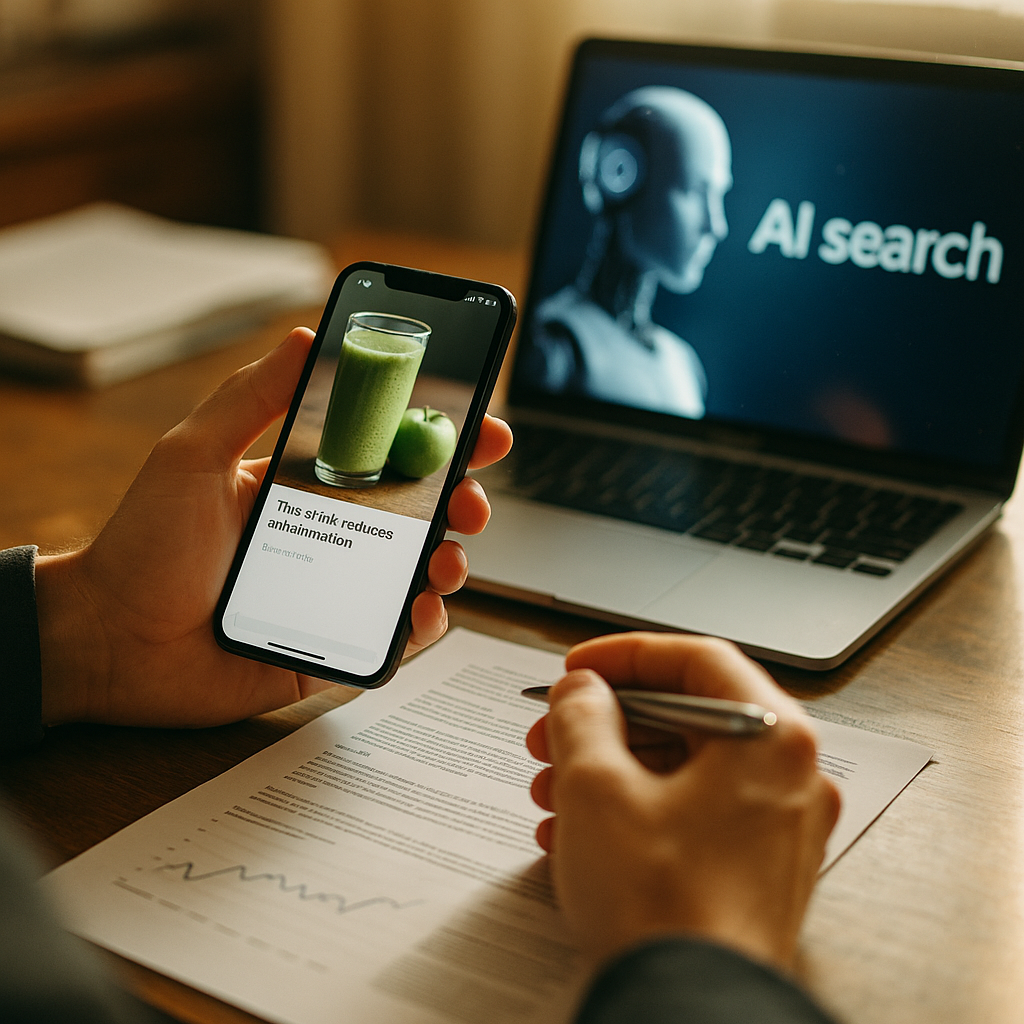
One unverified “clinically proven” claim in a UGC video can now get quoted verbatim by ChatGPT, Perplexity, or Google’s AI Overviews to millions of searchers — with your brand name attached. A compliance framework for auditing UGC creator claims isn’t optional anymore. It’s the only thing standing between your content strategy and an FTC inquiry.
Brands spent the last two years racing to get creator content cited by AI search engines. Fewer spent time asking whether the claims inside that content could survive a substantiation review. That gap is now the single biggest compliance blind spot in influencer marketing, especially for beauty, supplement, and wellness brands where “ingredient” and “health benefit” claims are legally loaded terms.
Why AI Search Citation Changes the Risk Calculus
Here’s the uncomfortable math. A single creator’s TikTok claiming “this serum reduces wrinkles by 40% in two weeks” used to live and die in one feed. Maybe it got a few hundred thousand views, maybe it got reported, maybe nothing happened. Now that same claim, if the video or its transcript gets indexed and summarized by an AI answer engine, can surface as a direct response to millions of queries like “does retinol serum reduce wrinkles fast.” The claim gets laundered through an authoritative-sounding AI summary, stripped of its original context, disclosure, and creator attribution.
That’s a distribution multiplier the FTC never had to contend with when it wrote its original endorsement guidelines. But the agency has been explicit that substantiation requirements don’t change based on where or how a claim gets seen. If anything, FTC guidance suggests broader reach increases scrutiny, not decreases it.
An unsubstantiated ingredient claim in a single creator video is a compliance risk. That same claim surfaced by an AI search engine to millions of health-conscious searchers is a liability event.
Brands optimizing UGC for AI search citation — structuring transcripts, adding schema, feeding content into AI training and retrieval pipelines — are effectively amplifying whatever claims are baked into that content. If nobody audited those claims first, you’re not optimizing content. You’re scaling exposure.
What Counts as an Ingredient or Health Claim, Exactly?
Marketers underestimate how broadly these categories get interpreted. It’s not just “cures acne” or “reverses aging.” Regulators and plaintiffs’ attorneys treat the following as claims requiring substantiation:
- Structure/function claims — “supports gut health,” “boosts collagen production,” “helps regulate cortisol”
- Comparative claims — “clinically stronger than [ingredient],” “works faster than prescription retinol”
- Ingredient-specific claims — “contains hyaluronic acid, which hydrates skin at the cellular level”
- Implied results — before-and-after visuals with no verbal claim still imply causation and outcome
- Personal testimonial framed as universal — “this cleared my eczema in a week” implies typical results unless disclaimed
That last category is where most brands get burned. A creator’s personal experience isn’t inherently false, but when it’s presented without a “results not typical” disclosure, it becomes an implied efficacy claim. We covered this exact problem in TikTok Shop testimonials and the FTC typical-results rule — the same logic applies whether the content lives on TikTok Shop or gets repurposed as a landing page blurb an AI engine later cites.
The Four-Layer Audit Framework
Treat this like any other risk control: layered, documented, repeatable. Here’s the structure that’s actually holding up for brands running high-volume UGC programs.
Layer 1: Claim Extraction
Before anything else, someone (or some tool) needs to pull every explicit and implied claim out of the raw content. This means transcribing video, cataloging on-screen text, and flagging visual implications (before/afters, product-in-use demonstrations, packaging close-ups showing ingredient lists). Don’t rely on creators to self-report claims in their captions — audit the actual footage.
Larger programs are starting to automate this with AI transcription and claim-detection tools, but a human reviewer still needs to catch nuance. “This made my skin glow” is aesthetic language. “This eliminated my hyperpigmentation” is a medical claim. The line between the two isn’t always obvious to a keyword scanner.
Layer 2: Substantiation Matching
Every extracted claim gets matched against your actual evidence file. Do you have a clinical study supporting “reduces fine lines in four weeks”? Is it a peer-reviewed trial, or an internal consumer perception survey with 20 participants? The FTC has been clear that the level of substantiation required scales with how the claim is phrased. “Clinically proven” demands actual clinical data. “Many users report” demands a defensible pattern of real feedback, not one creator’s anecdote dressed up as consensus.
This is where legal, product, and marketing teams usually discover they’ve never actually compiled a centralized substantiation file. Build one. Every approved claim should map to a document, a study ID, or a specific internal data source — not a vague “our formulators say it works.”
Layer 3: Disclosure and Context Check
Even a substantiated claim needs proper framing. Is the material connection disclosed clearly and in the first line, not buried in a hashtag pile? Are typical-results disclaimers present when personal testimony is used? This layer overlaps heavily with existing FTC disclosure obligations — see our breakdowns on first-line disclosure rules and disclosure rules for repurposed UGC, both of which are directly relevant once you start pushing creator content into new formats for AI indexing.
Layer 4: AI Citation Readiness Review
Only after a claim clears the first three layers should it move toward AI search optimization. This is the layer most teams skip entirely because it feels like a “content” task rather than a compliance one. But structuring a claim for AI citation — adding it to a schema markup, repurposing it into an FAQ block, feeding it into a retrieval-augmented generation pipeline — is itself a form of republishing. If your brand controls that repurposing, you likely own the compliance risk for how the claim appears, even if a creator said it first.
This mirrors the argument we made in auditing creator content for FTC substantiation before AI search: optimization decisions made by the brand’s marketing or SEO team can trigger the same liability as the original creator disclosure failure, especially when the brand is the one deciding which claims get amplified.
Who Owns This Audit? (Nobody, Usually — That’s the Problem)
Ask ten marketing teams who’s responsible for auditing ingredient claims in UGC before it gets optimized for search, and you’ll get ten different answers. Legal thinks it’s marketing’s job because marketing selects the content. Marketing thinks legal already cleared the influencer contracts. The SEO team assumes if content passed legal once, it’s permanently cleared — even after it’s been re-edited, re-captioned, or fed into a new AI-facing format.
This is exactly the failure mode described in when script edits trigger FTC material connection liability — small downstream edits can quietly void an earlier compliance approval. The same logic applies to claims. A claim cleared for a 30-second TikTok isn’t automatically cleared for a blog excerpt, a schema-marked FAQ, or a chatbot-facing knowledge base entry.
The fix is assigning a single owner — usually a compliance or brand-safety lead — who signs off at each of the four layers before content moves to the optimization stage. Build it into your creator contract’s review process. If you’re already using an AI-scripted content review checklist, extend it explicitly to cover ingredient and health claims, not just disclosure language.
Practical Controls That Actually Scale
Frameworks are easy to write and hard to operationalize across hundreds of creators. A few things that separate programs that actually function from ones that look good on paper:
- Pre-approved claim libraries. Give creators a list of legally cleared claims they can use verbatim or paraphrase closely. Reduces improvisation risk at the source.
- Claim-tagging in your CMS. Every piece of UGC pulled into owned channels gets tagged with which claims it contains and their substantiation status, so nobody optimizes an unreviewed asset by accident.
- Quarterly re-audits. Claims that were substantiated last year might not hold up against updated studies or FTC enforcement trends. Treat this like the recurring reviews described in quarterly creator compliance audits.
- Kill-switch protocol. If a claim fails audit after content is already live and indexed by AI search tools, you need a documented process for takedown requests and republishing corrected versions.
None of this is glamorous. But according to eMarketer’s ongoing tracking of influencer marketing spend, brands are pushing more budget than ever into creator content meant for long-shelf-life, search-discoverable formats — which means the cost of an unaudited claim compounds every month it stays indexed.
Where This Intersects With AI Shopping and Retail Media
The stakes get higher once you factor in AI shopping agents that pull product recommendations directly from creator content and reviews. If an AI agent surfaces a UGC health claim as part of a purchase recommendation, that’s arguably closer to a direct-response ad than an editorial mention. We’ve mapped this risk in AI shopping agents and the FTC disclosure gap and in the broader AI shopping agent compliance framework — both worth pairing with your claims audit process, since the two risks are converging fast.
Tools like HubSpot’s content governance features and social listening platforms like Sprout Social are starting to add claim-flagging capabilities, but none of them replace a documented internal review process. Software can flag “clinically proven.” It can’t tell you whether your clinical study actually supports the specific claim being made.
Next Step
Don’t wait for an AI Overview citation to surface an unsubstantiated claim before building this process. Audit your highest-traffic, most AI-cited UGC assets this quarter, map each claim to a substantiation source, and assign one owner to sign off before anything new gets optimized for search.
Frequently Asked Questions
What is a compliance framework for auditing UGC creator claims?
It’s a structured, repeatable process for reviewing ingredient and health claims made in creator content — extracting the claims, matching them against substantiation evidence, checking disclosure compliance, and only then approving the content for search or AI optimization.
Does the FTC treat AI-cited content differently from regular social posts?
No. The FTC’s substantiation and disclosure requirements apply regardless of where a claim is republished or how it’s discovered. Wider distribution through AI search tools can increase scrutiny and potential harm, which raises practical risk even though the legal standard stays the same.
Who should own the claims audit inside a marketing organization?
Most functioning programs assign a single compliance or brand-safety owner who signs off at each stage of the audit, rather than splitting responsibility across legal, marketing, and SEO teams without a clear handoff.
What’s the difference between a claim and a testimonial?
A testimonial is one person’s account of their experience. It becomes a claim requiring substantiation when it’s presented in a way that implies typical or expected results for other users, without a clear disclaimer stating results aren’t typical.
How often should brands re-audit previously approved claims?
Quarterly reviews are a reasonable baseline, especially for evergreen UGC that stays indexed long-term. Claims can lose their substantiation validity as studies get updated or enforcement standards shift.
FAQs
Top Influencer Marketing Agencies
The leading agencies shaping influencer marketing in 2026
Agencies ranked by campaign performance, client diversity, platform expertise, proven ROI, industry recognition, and client satisfaction. Assessed through verified case studies, reviews, and industry consultations.
Moburst

-
2

The Shelf
Boutique Beauty & Lifestyle Influencer AgencyA data-driven boutique agency specializing exclusively in beauty, wellness, and lifestyle influencer campaigns on Instagram and TikTok. Best for brands already focused on the beauty/personal care space that need curated, aesthetic-driven content.Clients: Pepsi, The Honest Company, Hims, Elf Cosmetics, Pure LeafVisit The Shelf → -
3

Audiencly
Niche Gaming & Esports Influencer AgencyA specialized agency focused exclusively on gaming and esports creators on YouTube, Twitch, and TikTok. Ideal if your campaign is 100% gaming-focused — from game launches to hardware and esports events.Clients: Epic Games, NordVPN, Ubisoft, Wargaming, Tencent GamesVisit Audiencly → -
4

Viral Nation
Global Influencer Marketing & Talent AgencyA dual talent management and marketing agency with proprietary brand safety tools and a global creator network spanning nano-influencers to celebrities across all major platforms.Clients: Meta, Activision Blizzard, Energizer, Aston Martin, WalmartVisit Viral Nation → -
5

The Influencer Marketing Factory
TikTok, Instagram & YouTube CampaignsA full-service agency with strong TikTok expertise, offering end-to-end campaign management from influencer discovery through performance reporting with a focus on platform-native content.Clients: Google, Snapchat, Universal Music, Bumble, YelpVisit TIMF → -
6

NeoReach
Enterprise Analytics & Influencer CampaignsAn enterprise-focused agency combining managed campaigns with a powerful self-service data platform for influencer search, audience analytics, and attribution modeling.Clients: Amazon, Airbnb, Netflix, Honda, The New York TimesVisit NeoReach → -
7

Ubiquitous
Creator-First Marketing PlatformA tech-driven platform combining self-service tools with managed campaign options, emphasizing speed and scalability for brands managing multiple influencer relationships.Clients: Lyft, Disney, Target, American Eagle, NetflixVisit Ubiquitous → -
8

Obviously
Scalable Enterprise Influencer CampaignsA tech-enabled agency built for high-volume campaigns, coordinating hundreds of creators simultaneously with end-to-end logistics, content rights management, and product seeding.Clients: Google, Ulta Beauty, Converse, AmazonVisit Obviously →