


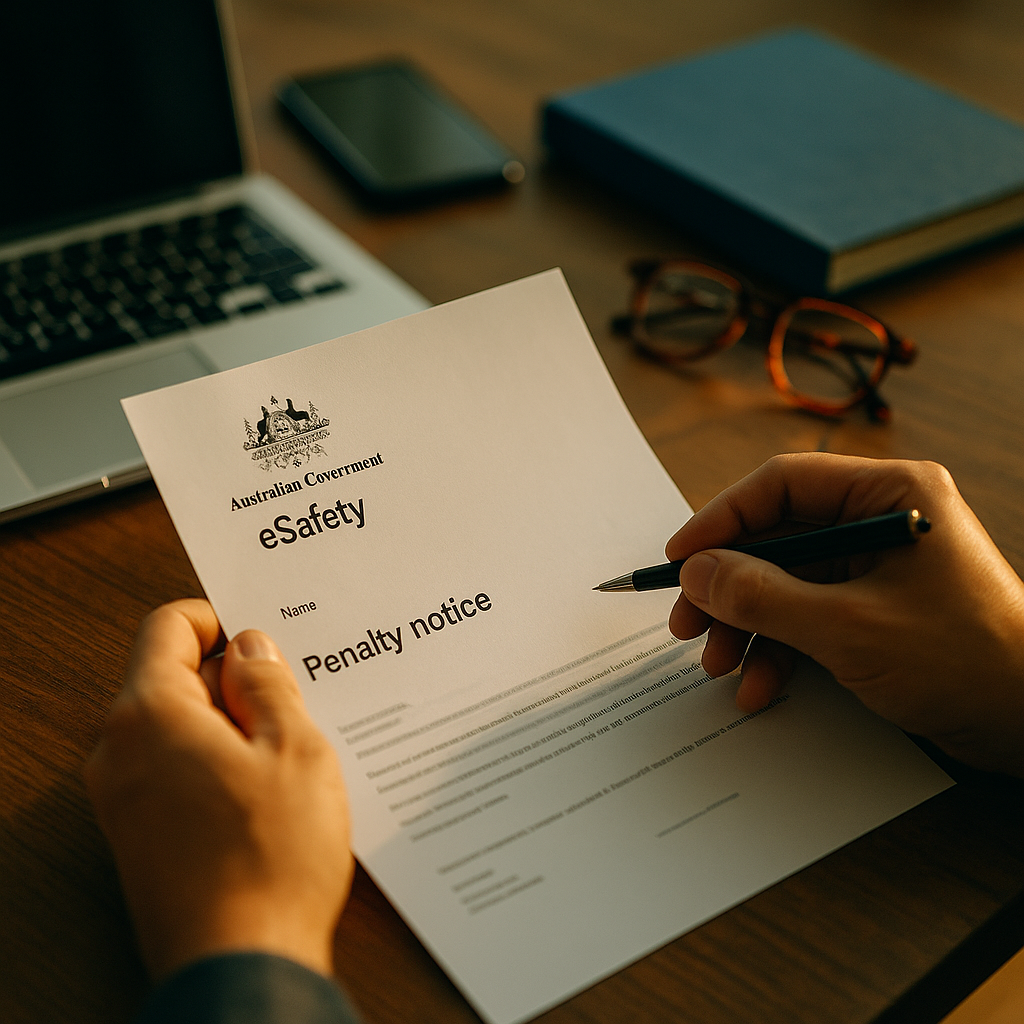
Australia’s eSafety Commissioner just doubled civil penalty units. For APAC brand teams running influencer programs, that single regulatory move transforms a manageable compliance checkbox into a genuine liability event — and most creator agreements were written before this enforcement environment existed.
What the Doubled Penalty Environment Actually Means for Brands
The eSafety Commissioner has been steadily escalating enforcement posture, with the Online Safety Act providing authority to pursue platforms — and, by extension, advertisers operating on those platforms — for failures to prevent minors from accessing age-restricted content. The penalty escalation raises the maximum civil penalty to 500 penalty units per contravention for individuals and significantly higher for corporations. When a campaign runs across Meta, TikTok, and YouTube simultaneously, “per contravention” becomes a number that your legal team will want explained in writing.
The compliance gap most brands haven’t closed: their eSafety age-blocking compliance posture is built on platform self-attestation rather than independently documented evidence. That distinction matters enormously when a regulator asks you to prove what safeguards were in place on a specific campaign date.
Platform self-attestation is not evidence. If the eSafety Commissioner requests your compliance documentation and you produce a screenshot of a TikTok audience settings page, you have not produced a defensible record — you’ve produced a screenshot.
Building a Platform Compliance Evidence Stack
Defensible documentation requires a structured audit trail, not a folder of ad manager exports. For each active Australian campaign, brand teams should be capturing and timestamping four categories of evidence.
- Audience setting exports: Pull and archive targeting parameters at campaign launch, at any modification point, and at close. Meta’s Ads Manager, TikTok Ads Manager, and Google’s campaign tools all allow parameter exports. These should be stored in a compliance repository with version control, not in a campaign manager’s personal drive.
- Platform age-gating attestations: Obtain written confirmation (email or dashboard certificate) from each platform confirming that age-verification or age-gating mechanisms were active during the campaign window. For organic creator content tied to your brand, this means documented instructions to creators on platform-level age restriction settings.
- Content classification records: For any content that could be interpreted as youth-adjacent (gaming, fashion, music, food and beverage with lifestyle angles), document the internal classification decision and who approved it.
- Third-party verification reports: Tools like Pixalate or DoubleVerify offer audience verification layers that can confirm demographic delivery against declared targeting. These third-party reports carry significantly more weight as compliance evidence than internal screenshots.
Schedule this evidence pull monthly for always-on programs and at campaign close for project-based work. The cadence matters because enforcement inquiries often reference a specific date window, and you need granular records that match.
Updating Creator Agreements Before the Next Brief Goes Out
Most creator contracts drafted before this enforcement escalation have a compliance clause that reads roughly as follows: “Creator agrees to comply with all applicable laws and platform terms.” That clause is not adequate. It places compliance responsibility on the creator without specifying what compliance looks like, who verifies it, or what happens when a breach occurs.
The revised agreement structure should include three specific additions. For deeper context on how to restructure these documents, the framework in how brands must rewrite creator contracts provides a strong operational baseline. On top of that baseline, APAC-specific agreements now need:
- An eSafety-specific compliance representation: The creator warrants that any content produced under the agreement, whether posted organically or as paid partnership content, will not be distributed to audiences that include minors in Australia unless the brand has provided written approval and documented age-gating is in place.
- A platform settings obligation: Creators are required to apply platform age-restriction settings to any content that the brand classifies as restricted and to provide evidence of those settings (screenshot with timestamp) within 24 hours of posting.
- An indemnification carve-out: If a penalty event is triggered by the creator’s failure to apply agreed settings or to disclose accurate audience demographics during influencer selection, liability flows back to the creator. This needs to be explicit, not implied by a general indemnity clause.
Run these changes through Australian-qualified legal counsel, not a generic international template. The Online Safety Act has specific definitional structures that generic indemnity language may not capture correctly. For compliance programs that span multiple markets, the cross-border compliance checklist framework helps identify where Australian-specific obligations differ from EU or US equivalents.
Youth-Adjacent Targeting: Where the Real Exposure Lives
The term “age-restricted content” in eSafety enforcement is narrower than most brands assume. The immediate concern is platforms providing minors access to content meeting specific harm thresholds. But “youth-adjacent targeting” — campaigns where the primary audience is adults but the creative or channel selection predictably over-indexes to under-18s — is where enforcement interest is expanding.
Consider a beauty brand running a campaign with creators who have documented audiences that are 35% to 40% under-18. Even if the brand’s declared targeting excludes minors, the creator’s organic reach doesn’t care about your ad settings. That gap, between paid targeting and organic amplification, is currently under-documented in virtually every APAC influencer program.
The practical restructuring steps:
- Audit your active creator roster against audience demographic data. Platforms like Heepsy, Modash, or Klear provide third-party audience age breakdowns that are more defensible than creator self-reported figures.
- Establish a threshold. Some brands are setting a maximum of 25% under-18 audience composition for any creator activated on campaigns involving products with age considerations. Whatever threshold you choose, document it in writing as a formal policy.
- For creators who exceed the threshold but are strategically important, require platform age-gating on all campaign content and obtain written evidence before the brief is fulfilled.
- Brief your media agency to flag any placements — paid or earned — where contextual signals suggest youth-dominant environments. This includes specific YouTube channels, TikTok sounds, and Instagram hashtag ecosystems that skew young even when the creator’s stated audience does not.
The EU and UK have already moved through a version of this conversation, and the documentation frameworks developed there are directly applicable to the Australian context. The compliance approaches detailed for EU and UK youth safety rules translate with relatively minor adaptation for eSafety purposes.
The gap between paid targeting and organic amplification is currently under-documented in virtually every APAC influencer program. That gap is where enforcement exposure lives in a doubled-penalty environment.
Operational Readiness: What Your Compliance Stack Should Include
Documentation and contract updates are necessary but not sufficient on their own. The operational layer matters. Specifically, brand teams need a designated compliance owner for Australian campaigns, not a shared responsibility across the campaign team. That person should have authority to pause a campaign if platform verification is not received within the required window.
For program-level risk assessment, the creator program risk audit framework gives strategists a structured methodology for identifying where eSafety exposure concentrates across a portfolio of campaigns. Run that audit now, before the next enforcement escalation cycle.
Training is also non-negotiable. Campaign managers making targeting decisions on Australian accounts need to understand what constitutes a contravention, not just what the settings options look like. The eSafety Commissioner’s published guidance documents are a reasonable starting point for internal training material, supplemented by legal counsel’s interpretation of the penalty structure.
Finally, establish a documentation retention policy. Compliance records for Australian campaigns should be retained for a minimum period that your legal team specifies relative to the statute of limitations for enforcement action. Deleting campaign files after a project closes is standard practice in many agencies. It is not compatible with a defensible compliance posture under the current enforcement environment.
If your program involves ad labeling compliance across TikTok and Instagram (and most APAC programs do), integrate the eSafety documentation protocol into the same compliance workflow. Running parallel checklists for labeling and age-gating creates gaps. One integrated process, one compliance owner, one audit trail.
Start this week: pull the targeting parameter exports for every active Australian campaign, identify which creator agreements lack eSafety-specific compliance representations, and brief legal on the contract amendment timeline. The penalty environment is already in force. The documentation backlog is not theoretical risk — it’s current exposure.
FAQs
What does Australia’s eSafety penalty escalation mean for brand advertisers specifically?
The Online Safety Act penalty increases apply primarily to platforms, but brands operating advertising programs on those platforms can face scrutiny if their campaigns contributed to minors accessing age-restricted content. Brands that cannot produce documented evidence of compliance measures — audience targeting settings, age-gating instructions to creators, third-party verification reports — are in a weaker position if an enforcement inquiry arises. The practical risk for brands is reputational and financial, both from direct regulatory action and from the liability exposure in creator agreements that lack eSafety-specific representations.
How should APAC campaign teams document platform compliance evidence?
Teams should archive timestamped exports of audience targeting parameters from each platform’s ad manager at campaign launch, at any modification point, and at campaign close. They should obtain written confirmation from platforms that age-verification or age-gating mechanisms were active during the campaign window. For creator-led content, they should require creators to provide timestamped screenshots of platform age-restriction settings within 24 hours of posting. Third-party verification reports from tools like DoubleVerify or Pixalate add an independent layer that carries more regulatory weight than internal documentation alone.
What specific contract clauses need to be updated for Australian creator agreements?
Generic compliance clauses (“creator agrees to comply with applicable laws”) are insufficient. Updated agreements need: an eSafety-specific compliance representation stating that content will not be distributed to Australian minors without brand approval and documented age-gating; a platform settings obligation requiring creators to apply age-restriction settings and provide evidence within 24 hours; and an explicit indemnification carve-out that routes liability back to the creator if a penalty event results from the creator’s failure to apply agreed settings or disclose accurate audience demographics.
How do brands identify youth-adjacent targeting risk in their current campaigns?
The first step is auditing the active creator roster against third-party audience demographic data from tools like Modash, Heepsy, or Klear, rather than relying on creator self-reported figures. Brands should establish a formal written policy with a maximum under-18 audience composition threshold — many brands are using 25% as a benchmark. Media agencies should also be briefed to flag placements in contextual environments that skew young even when the creator’s stated audience does not, including specific YouTube channels, TikTok audio trends, and Instagram hashtag ecosystems.
Does the eSafety compliance obligation apply to organic creator content or only paid advertising?
Both. Paid advertising targeting settings provide some protection for declared audience parameters, but organic reach generated by creator content operates outside those settings entirely. A creator with a significant under-18 audience posting branded content will reach those minors regardless of the brand’s paid targeting exclusions. This is why creator agreements need explicit platform age-restriction obligations for organic posts, not just paid placements, and why creator audience composition audits are essential before activation rather than after a campaign closes.
Top Influencer Marketing Agencies
The leading agencies shaping influencer marketing in 2026
Agencies ranked by campaign performance, client diversity, platform expertise, proven ROI, industry recognition, and client satisfaction. Assessed through verified case studies, reviews, and industry consultations.
Moburst

-
2

The Shelf
Boutique Beauty & Lifestyle Influencer AgencyA data-driven boutique agency specializing exclusively in beauty, wellness, and lifestyle influencer campaigns on Instagram and TikTok. Best for brands already focused on the beauty/personal care space that need curated, aesthetic-driven content.Clients: Pepsi, The Honest Company, Hims, Elf Cosmetics, Pure LeafVisit The Shelf → -
3

Audiencly
Niche Gaming & Esports Influencer AgencyA specialized agency focused exclusively on gaming and esports creators on YouTube, Twitch, and TikTok. Ideal if your campaign is 100% gaming-focused — from game launches to hardware and esports events.Clients: Epic Games, NordVPN, Ubisoft, Wargaming, Tencent GamesVisit Audiencly → -
4

Viral Nation
Global Influencer Marketing & Talent AgencyA dual talent management and marketing agency with proprietary brand safety tools and a global creator network spanning nano-influencers to celebrities across all major platforms.Clients: Meta, Activision Blizzard, Energizer, Aston Martin, WalmartVisit Viral Nation → -
5

The Influencer Marketing Factory
TikTok, Instagram & YouTube CampaignsA full-service agency with strong TikTok expertise, offering end-to-end campaign management from influencer discovery through performance reporting with a focus on platform-native content.Clients: Google, Snapchat, Universal Music, Bumble, YelpVisit TIMF → -
6

NeoReach
Enterprise Analytics & Influencer CampaignsAn enterprise-focused agency combining managed campaigns with a powerful self-service data platform for influencer search, audience analytics, and attribution modeling.Clients: Amazon, Airbnb, Netflix, Honda, The New York TimesVisit NeoReach → -
7

Ubiquitous
Creator-First Marketing PlatformA tech-driven platform combining self-service tools with managed campaign options, emphasizing speed and scalability for brands managing multiple influencer relationships.Clients: Lyft, Disney, Target, American Eagle, NetflixVisit Ubiquitous → -
8

Obviously
Scalable Enterprise Influencer CampaignsA tech-enabled agency built for high-volume campaigns, coordinating hundreds of creators simultaneously with end-to-end logistics, content rights management, and product seeding.Clients: Google, Ulta Beauty, Converse, AmazonVisit Obviously →