


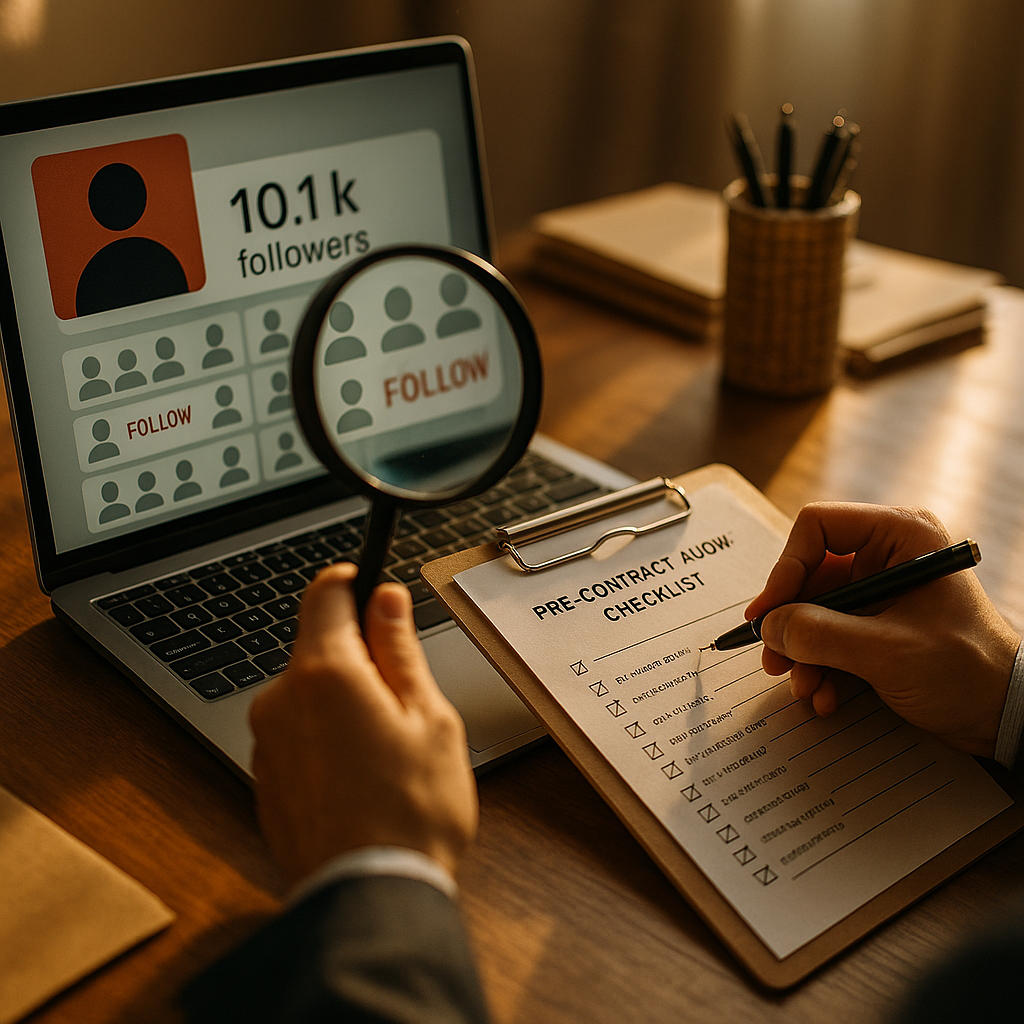
One in three followers on a mid-tier influencer’s account could be fake, bot-driven, or purchased. Some audits peg the number closer to 37%. If your legal team signs contracts based on follower counts alone, you’re not just wasting media budget — you’re building an FTC endorsement substantiation problem before the ink dries.
That’s the uncomfortable intersection brand counsel now has to navigate: inflated audiences colliding with an agency that expects brands to have “a reasonable basis” for the claims made in sponsored content, including claims about reach and engagement baked into the deal itself.
Why Fake Followers Are Now a Legal Problem, Not Just a Media-Buying One
For years, fake followers were treated as a performance issue. Marketing teams grumbled about wasted impressions, finance flagged inflated CPMs, and everyone moved on. That framing is outdated.
The FTC’s endorsement guides require advertisers to substantiate claims made in connection with an endorsement — and that includes implicit claims about an influencer’s actual reach and audience composition when those numbers factor into pricing, targeting, or campaign selection. If a brand pays a premium because a creator claims 500,000 engaged followers, and 37% of that audience is fabricated, the brand has arguably acted on and amplified an unsubstantiated claim. The FTC has made clear in recent enforcement actions that ignorance isn’t a defense when reasonable diligence was available and skipped.
A follower count is now a legal representation, not just a vanity metric — and brand legal teams need to treat it that way in contract review.
This shift matters because fake follower rates aren’t shrinking. Third-party audit platforms like HypeAuditor and Modash routinely report double-digit fake or inactive follower percentages across mid-tier creators, and niche categories (finance, wellness, crypto) tend to skew even higher. Combine that with the FTC’s growing appetite for “shared responsibility” enforcement, and you have a compliance gap that legal teams can no longer route around.
The 37% Number: Where It Comes From, and Why It’s Conservative
The 37% figure circulating in industry reports draws from aggregated audience-quality audits across mid-sized influencer tiers (50K–500K followers) — the segment brands rely on most heavily for cost-efficient reach. Nano and micro creators sometimes score cleaner, but verification is harder because sample sizes are smaller and audit tools have less historical data to work with.
Here’s the part that should worry legal teams more than marketing: creators don’t need to intentionally inflate their numbers for a brand to have exposure. Follower/bot decay happens organically through platform migrations, old giveaway campaigns, and pod-based engagement schemes the creator may not even control anymore. Intent doesn’t matter for FTC substantiation purposes. Outcome does.
What “Reasonable Basis” Actually Requires Before You Sign
The FTC doesn’t demand perfection. It demands a documented, reasonable process. That’s good news for legal teams — it means you don’t need forensic-level audits on every micro-influencer deal. But it does mean “we trusted the media kit” won’t hold up if a complaint or investigation arrives.
A reasonable basis standard typically means three things: independent verification of audience data, contractual warranties from the creator, and a documented decision trail showing the brand acted on that verification. Skip any leg of that stool, and you’re exposed.
- Independent verification: third-party tools, not creator-supplied screenshots.
- Contractual warranties: explicit representations about audience authenticity, with remedies attached.
- Decision documentation: a record showing legal or compliance reviewed the audit before contract execution.
This is where a lot of brand legal teams get tripped up — they treat audience authenticity as a marketing due-diligence task, disconnected from the contract itself. It shouldn’t be. For a deeper technical breakdown of scoring methodologies, our follower authenticity audit framework walks through how to structure the underlying data review before legal ever touches the paperwork.
The Pre-Contract Audit Checklist
Below is the sequence brand legal teams should run before any influencer agreement gets a signature. Treat it as a gate, not a suggestion.
- Run a third-party audience audit. Use a platform like HypeAuditor, Modash, or an equivalent tool to generate a fake-follower percentage, engagement authenticity score, and audience geography breakdown. Save the report as an exhibit.
- Set a materiality threshold. Decide in advance what percentage of fake followers triggers renegotiation or walk-away. Many brands now use 15-20% as a soft cap; above that, pricing or scope must adjust.
- Cross-check platform-reported metrics. Where possible, request platform insights screenshots (not just media kits) and compare against the third-party audit. Discrepancies are a red flag worth escalating.
- Insert an audience-authenticity warranty clause. The creator represents that their audience has not been materially inflated through purchased followers, bots, or engagement pods, with a defined remedy (fee reduction, termination, indemnification) if the warranty is breached.
- Require an FTC compliance affirmative. A clause confirming the creator understands and will comply with disclosure obligations, separate from the audience-quality warranty.
- Log the review internally. A simple compliance memo — who reviewed the audit, what threshold was applied, what decision was made — creates the paper trail regulators actually look for.
- Re-audit for renewals and long-term ambassadorships. Audience composition drifts. A creator vetted 12 months ago isn’t automatically clean today.
Notice what’s missing from that list: nothing here requires legal to become a data science team. The checklist leans on existing third-party tools and folds the output into standard contract mechanics — warranties, thresholds, remedies. That’s the point. Compliance doesn’t need to be exotic to be effective.
Where This Connects to Broader Disclosure Risk
Fake-follower exposure rarely travels alone. Brands dealing with inflated-audience risk are usually the same brands cutting corners on disclosure language, AI-generated content labeling, or platform-specific compliance quirks. If your team hasn’t recently reviewed how paid partnership labels interact with substantive disclosure requirements, that’s a companion gap worth closing in the same contract cycle.
The same logic applies to AI-generated or AI-assisted content. If a creator’s engagement is partly synthetic (bots) and their content is partly synthetic (AI avatars or scripts), you’re stacking two substantiation problems into one deal. Our coverage of AI avatar labeling risk is a useful companion read if your program touches regulated categories like supplements or finance, where the FTC has shown heightened enforcement interest.
Fake followers and weak disclosure practices tend to cluster in the same accounts — audit for one, and you’ll usually find the other.
Building the Warranty Clause That Actually Holds Up
A lot of “audience authenticity” clauses circulating in standard influencer agreements are toothless. They say something vague like “Influencer represents their audience is genuine” without defining genuine, without attaching a remedy, and without referencing any measurement standard. That’s not a warranty. That’s a sentence.
A defensible clause needs four elements: a defined measurement standard (name the tool or methodology), a materiality threshold (the percentage that triggers breach), a cure or remedy path (fee adjustment, right to terminate, refund of paid fees), and an indemnification tie-in for cases where the brand faces regulatory scrutiny tied to inflated metrics the creator knew or should have known about.
Brands running revenue-share or affiliate-heavy programs face compounded risk here, since inflated audiences directly distort commission payouts. If your contracts include performance-based compensation, it’s worth reviewing how revenue sharing clauses are structured so fake-follower exposure doesn’t quietly inflate what you’re paying out.
What Happens When You Skip This Step
Consider the operational cost, separate from the legal risk. Brands that don’t audit audience authenticity before signing routinely overpay for reach that doesn’t exist — industry estimates from eMarketer suggest wasted influencer spend from bot-inflated audiences runs into the billions annually across the sector. That’s before you factor in regulatory exposure.
Then there’s reputational risk. A brand named in an FTC inquiry over inflated influencer metrics doesn’t just pay a fine (if it comes to that) — it eats a news cycle. Trade press, including outlets like ours, covers these cases closely, and “brand knew or should have known” headlines travel fast. Compare that cost to the price of a HypeAuditor subscription and a half-day of legal review. The math isn’t close.
For teams building out broader compliance infrastructure across creator programs, it’s worth benchmarking against frameworks used for adjacent risks, like the health claims substantiation practices covered in our substantiation file playbook. The documentation discipline is nearly identical, just applied to a different claim category.
A Note on Scale
None of this scales well if legal reviews every micro-influencer deal manually. Larger programs need tiered review: full audit and warranty language for mid-tier and above creators, lighter-touch spot checks for nano-influencer campaigns where dollar exposure is lower. Build the threshold into your creator management workflow, not just your contract template, so the audit happens automatically before a deal reaches legal’s desk. Tools like Sprout Social and dedicated influencer platforms increasingly offer audience-quality flags natively, which can pre-filter the riskiest accounts before they ever generate a contract draft.
Set the threshold too low, and you’ll bottleneck your program. Set it too high, and you’re back to rubber-stamping media kits. Most legal teams land somewhere around full review for five-figure-plus deals and above, sampling below that.
The bottom line: build the audit into your contract workflow now, before a regulator, a journalist, or a competitor’s lawsuit forces the question. Start with one checklist item this week — insert the audience-authenticity warranty clause into your standard template — and expand from there.
FAQs
What percentage of fake followers triggers FTC concern?
The FTC hasn’t published a specific numeric threshold. Legal teams typically set internal materiality thresholds (commonly 15-20%) as a business risk trigger, but the underlying obligation is a “reasonable basis” for claims made, not a fixed percentage test.
Who is liable if a creator’s followers turn out to be fake — the brand or the influencer?
Both can face exposure. The FTC has pursued shared-responsibility theories where brands failed to conduct reasonable diligence, even when the creator originated the inflated metrics. Contractual warranties and indemnification clauses help allocate that risk but don’t eliminate regulatory exposure entirely.
Which tools do brand legal teams use to verify follower authenticity?
HypeAuditor and Modash are among the most commonly cited third-party audit platforms. Many brands also cross-reference platform-native insights (screenshots of actual analytics dashboards) against these tools to catch discrepancies.
Does this apply to nano and micro-influencers, or just larger creators?
It applies across tiers, though risk concentration tends to be higher in mid-tier accounts (50K-500K followers) where audience inflation is common but audit scrutiny has historically been lighter than with major influencers.
How often should brands re-audit long-term creator partnerships?
At minimum, at each contract renewal. High-spend or long-term ambassador relationships warrant re-auditing every two to three quarters, since audience composition and bot activity can shift materially over the life of a partnership.
Top Influencer Marketing Agencies
The leading agencies shaping influencer marketing in 2026
Agencies ranked by campaign performance, client diversity, platform expertise, proven ROI, industry recognition, and client satisfaction. Assessed through verified case studies, reviews, and industry consultations.
Moburst

-
2

The Shelf
Boutique Beauty & Lifestyle Influencer AgencyA data-driven boutique agency specializing exclusively in beauty, wellness, and lifestyle influencer campaigns on Instagram and TikTok. Best for brands already focused on the beauty/personal care space that need curated, aesthetic-driven content.Clients: Pepsi, The Honest Company, Hims, Elf Cosmetics, Pure LeafVisit The Shelf → -
3

Audiencly
Niche Gaming & Esports Influencer AgencyA specialized agency focused exclusively on gaming and esports creators on YouTube, Twitch, and TikTok. Ideal if your campaign is 100% gaming-focused — from game launches to hardware and esports events.Clients: Epic Games, NordVPN, Ubisoft, Wargaming, Tencent GamesVisit Audiencly → -
4

Viral Nation
Global Influencer Marketing & Talent AgencyA dual talent management and marketing agency with proprietary brand safety tools and a global creator network spanning nano-influencers to celebrities across all major platforms.Clients: Meta, Activision Blizzard, Energizer, Aston Martin, WalmartVisit Viral Nation → -
5

The Influencer Marketing Factory
TikTok, Instagram & YouTube CampaignsA full-service agency with strong TikTok expertise, offering end-to-end campaign management from influencer discovery through performance reporting with a focus on platform-native content.Clients: Google, Snapchat, Universal Music, Bumble, YelpVisit TIMF → -
6

NeoReach
Enterprise Analytics & Influencer CampaignsAn enterprise-focused agency combining managed campaigns with a powerful self-service data platform for influencer search, audience analytics, and attribution modeling.Clients: Amazon, Airbnb, Netflix, Honda, The New York TimesVisit NeoReach → -
7

Ubiquitous
Creator-First Marketing PlatformA tech-driven platform combining self-service tools with managed campaign options, emphasizing speed and scalability for brands managing multiple influencer relationships.Clients: Lyft, Disney, Target, American Eagle, NetflixVisit Ubiquitous → -
8

Obviously
Scalable Enterprise Influencer CampaignsA tech-enabled agency built for high-volume campaigns, coordinating hundreds of creators simultaneously with end-to-end logistics, content rights management, and product seeding.Clients: Google, Ulta Beauty, Converse, AmazonVisit Obviously →