


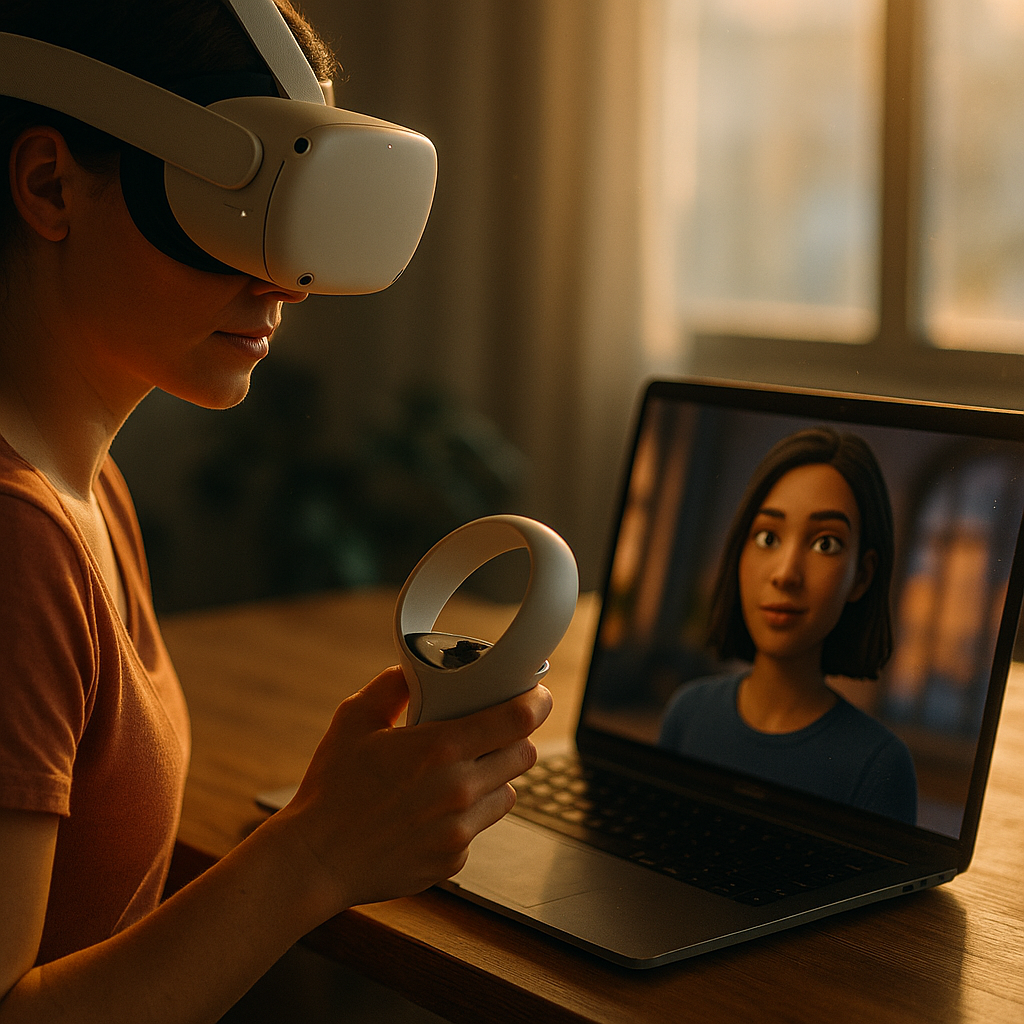
The Future Of Direct-To-Avatar Marketing In Immersive Virtual Environments is shifting from ad placement to lived experience. As people spend more time in spatial, social worlds, brands can reach customers through the avatars they inhabit, the items they wear, and the moments they share. The winners will treat identity, consent, and usefulness as core product features, not campaign add-ons. What changes first?
Avatar marketing strategy: from impressions to identity-led experiences
Direct-to-avatar marketing (DTAM) targets the digital self: the avatar’s look, accessories, behaviors, and the social context around it. In 2025, the strategic shift is clear: optimize for identity alignment and in-world utility, not just reach. Traditional funnels still matter, but they need translation into immersive terms: discovery becomes presence, consideration becomes interaction, and conversion often happens as a purchase of a wearable, upgrade, pass, or service that changes how the avatar functions or is perceived.
Effective avatar marketing strategy starts with three questions brands should answer before building anything:
- Who is the avatar persona? Not demographics, but identity motivations: status signaling, creativity, belonging, performance, or role-play.
- What is the “value moment” in-world? A tool, shortcut, enhancement, or social advantage that feels earned, not imposed.
- Where does trust come from? Creator partnerships, transparent permissions, fair pricing, and consistent world etiquette.
Brands that rush into “virtual billboards” tend to underperform because they ignore how users perceive space. Immersive environments are closer to neighborhoods than webpages; intrusive elements trigger avoidance, muting, blocking, or simply leaving. DTAM works when the brand behaves like a good citizen: it contributes to the world’s culture, improves the user’s experience, and respects social norms.
In practice, identity-led experiences usually outperform static placements. Examples include wearable items that unlock micro-features (enhanced emotes, effects, or collaboration tools), limited-run drops connected to events, and avatar upgrades linked to real-world loyalty programs. The key is to offer something users want to keep, not something they merely tolerate.
Immersive advertising formats: wearables, spatial commerce, and interactive quests
Immersive advertising formats are expanding beyond product placement into interactive systems that users can choose to engage with. In 2025, the most reliable formats share two traits: they are opt-in and functional. That combination reduces friction, improves sentiment, and supports measurement without invasive tracking.
High-performing immersive formats include:
- Wearable commerce: skins, apparel, accessories, and props that users display socially. The marketing value persists after purchase because the item travels with the avatar.
- Spatial storefronts: showrooms that feel like places, with guided demos, tactile previews, and staff or creator hosts. These work best when they provide education and customization rather than replicating 2D shopping aisles.
- Interactive quests: narrative challenges that teach users about features through play. A strong quest rewards skill or curiosity, not time-wasting grind.
- Event sponsorships: concerts, tournaments, premieres, and creator meetups. Sponsorship should enhance production quality or provide perks, not dominate the stage.
- Utility items: tools that improve creator workflows, social coordination, or performance (for example, collaboration features tied to branded “kits”).
Readers often ask how “ads” fit into experiences without feeling manipulative. The answer is to treat the brand interaction as a product: design it with clear outcomes, minimal steps, and visible benefits. If users can’t explain why they should engage within five seconds, the format is wrong for the setting.
Another common follow-up: do discounts matter in virtual worlds? Yes, but they are rarely the main driver. Limited drops, personalization, and social proof (what respected creators wear) usually matter more. Discounts work best when tied to in-world actions, such as completing a tutorial or attending a demo, because the user has already received value before being asked to buy.
Metaverse consumer behavior: how trust, status, and social norms drive purchases
Metaverse consumer behavior is shaped by social presence. People buy avatar items for reasons that look familiar—identity, belonging, aspiration—but the triggers are intensified because the “product” is immediately visible and socially interpreted. In immersive spaces, a purchase is often a public statement, and that creates both opportunity and risk for brands.
Three behavioral patterns matter most for DTAM planning:
- Status signaling: rarity, creator affiliation, and event-linked items can outperform utilitarian products because they communicate taste and access. Brands should be careful with artificial scarcity; transparency about supply and resale rules protects trust.
- Community conformity and differentiation: users want to fit in with their group while still standing out. Offer modular customization—colorways, badges, mix-and-match elements—so users can personalize within a shared aesthetic.
- Trust through proximity: in-world interactions feel intimate. Aggressive selling can feel like personal pressure. Clear consent, visible labeling, and easy exit paths reduce discomfort and increase long-term engagement.
Because social norms differ by platform and community, brands should build a “world etiquette brief” before launching. It should cover: how users greet, whether voice is common, what counts as spam, what creators consider respectful, and what moderation rules exist. This is not a branding exercise; it’s risk management.
Users also care about safety and authenticity. If an item looks like a knockoff or the purchase flow feels sketchy, people assume it is. Brands should validate official stores, use clear provenance signals, and publish simple, plain-language terms for returns, upgrades, and account restoration. A strong DTAM program treats customer support as part of the experience, not a back-office function.
Virtual goods economy: pricing, interoperability, and creator-led distribution
The virtual goods economy is maturing into a layered marketplace: first-party platform items, third-party brand goods, and creator-made assets compete for attention. In 2025, consumers increasingly expect three things: fair value, portability where possible, and recognition for creators.
Pricing strategy needs to reflect what the customer is really buying. For avatar goods, the value components typically include:
- Aesthetic value: craftsmanship, design credibility, and fit with current style trends.
- Functional value: animations, effects, abilities, access, or workflow improvements.
- Social value: recognition, affiliation, and the ability to participate in group rituals.
Brands often ask whether interoperability is required. It depends. Full portability across worlds remains technically and commercially complex, but users do respond well to practical alternatives: consistent brand identity across platforms, “equivalent” items in multiple ecosystems, and account-linked entitlements that reduce the fear of losing purchases. A helpful approach is to publish an interoperability promise that is specific: where an item works today, where it won’t, and what the roadmap is.
Creator-led distribution is becoming a default go-to-market channel. Creators are not just influencers; they are often worldbuilders, community managers, and taste-makers. Partnering with them improves cultural fit and reduces the “outsider brand” problem. Strong partnerships share upside transparently through revenue splits, co-ownership of designs, and clear rules on reuse. Brands should also set quality standards—poly counts, performance budgets, accessibility requirements—so items don’t harm user experience.
Finally, consider resale and royalties. If a platform supports secondary markets, brands should decide whether they welcome them, restrict them, or offer official trading. The most sustainable stance is usually to allow resale with clear consumer protections, while preventing scams through verified marketplaces and warnings against off-platform deals.
AI personalization in VR: contextual offers without surveillance creep
AI personalization in VR can improve relevance, but it can also erode trust if it feels like surveillance. The future of DTAM depends on striking a hard line: personalization should be contextual and consent-based. Users will accept smart recommendations when they understand why they are seeing them and can control the inputs.
Helpful personalization examples include:
- Style matching: recommending compatible items based on the avatar’s current wardrobe, with an obvious toggle to disable it.
- Event-based suggestions: offering gear that suits an upcoming activity (a concert, sports mode, creator workshop) when the user opts into event planning.
- Skill-based onboarding: adapting tutorials and demos to the user’s familiarity level, reducing friction for newcomers.
To avoid “creep,” brands and platforms should follow practical guardrails:
- Explainability: show a short reason for recommendations, such as “suggested because you saved similar items.”
- Data minimization: rely on in-session context and aggregated signals instead of persistent sensitive data.
- Granular controls: let users opt out of categories (style, location, social) rather than an all-or-nothing switch.
- Age-aware experiences: stricter defaults for minors, with conservative personalization and clear purchase protections.
Measurement should also evolve. Instead of chasing hyper-attribution, prioritize metrics that map to user value: opt-in rate, time-to-value, repeat usage of a wearable, satisfaction ratings, refunds, and support tickets. These indicators align with EEAT principles because they reward usefulness over manipulation.
Brand safety and privacy in metaverse: governance, verification, and ethical playbooks
Brand safety and privacy in metaverse environments will determine how far DTAM can scale. Immersive spaces introduce new risks: harassment near branded locations, impersonation of brand staff, deepfake voice misuse, and unsafe adjacency in user-generated areas. In 2025, responsible marketers treat governance as part of campaign design.
A practical brand safety playbook includes:
- Verified presence: official accounts, verified storefronts, and clear staff identification to prevent impersonation.
- Moderation coordination: align with platform policies and establish escalation paths for incidents during events.
- Spatial controls: manage proximity features, personal space bubbles, and safe zones around commerce points.
- Content adjacency rules: choose placements with clear boundaries from mature or risky content where appropriate.
- Fraud prevention: warnings about counterfeit items, phishing links, and unofficial “support” accounts.
Privacy deserves equal attention. If your DTAM program uses voice, gesture, or biometric-adjacent signals, be explicit about what you collect, why, and how long you keep it. Provide a simple in-world privacy panel that users can access without leaving the experience. Make consent reversible. These steps are not just compliance-driven; they are trust-building moves that protect conversion rates over time.
Teams should also formalize internal accountability. Assign an owner for user safety, publish partner standards, and run pre-launch risk reviews. When incidents happen, respond in-world quickly and transparently. Silence reads as indifference in social environments.
FAQs
What is direct-to-avatar marketing?
Direct-to-avatar marketing targets consumers through their digital identities in immersive environments, using wearables, interactive experiences, events, and spatial commerce that the avatar can use, display, or benefit from.
How is direct-to-avatar marketing different from traditional digital advertising?
Traditional ads optimize for clicks and impressions. DTAM optimizes for identity fit, utility, and social value in real time, often converting through virtual goods, access passes, or services that change the avatar’s experience.
What immersive formats perform best for brands in 2025?
Opt-in wearables, interactive quests with meaningful rewards, creator-hosted events, and utility-driven items tend to perform best because they add value and persist beyond a single exposure.
How do brands measure success without invasive tracking?
Use metrics tied to user value: opt-in rate, engagement depth, repeat use of items, event return rates, satisfaction signals, refunds, and support volume. Combine these with aggregated campaign reporting rather than individual-level surveillance.
Do virtual goods need to be interoperable across platforms?
Not always. What users expect is clarity and fairness. If full portability is not possible, offer consistent equivalents across ecosystems, publish where items work, and consider account-linked entitlements to reduce purchase anxiety.
What are the biggest risks in direct-to-avatar marketing?
Trust erosion from creepy personalization, brand safety incidents near social spaces, impersonation, counterfeit goods, and poor moderation during events. Mitigate these with verification, clear consent, and coordinated governance.
In 2025, direct-to-avatar marketing will grow fastest where brands act like world participants rather than advertisers. Build value users can wear, use, and share, then protect it with transparent consent, creator collaboration, and clear governance. Focus on identity fit, opt-in interaction, and measurable usefulness over intrusive targeting. The takeaway is simple: earn presence by improving the experience, and conversion follows.
Top Influencer Marketing Agencies
The leading agencies shaping influencer marketing in 2026
Agencies ranked by campaign performance, client diversity, platform expertise, proven ROI, industry recognition, and client satisfaction. Assessed through verified case studies, reviews, and industry consultations.
Moburst

-
2

The Shelf
Boutique Beauty & Lifestyle Influencer AgencyA data-driven boutique agency specializing exclusively in beauty, wellness, and lifestyle influencer campaigns on Instagram and TikTok. Best for brands already focused on the beauty/personal care space that need curated, aesthetic-driven content.Clients: Pepsi, The Honest Company, Hims, Elf Cosmetics, Pure LeafVisit The Shelf → -
3

Audiencly
Niche Gaming & Esports Influencer AgencyA specialized agency focused exclusively on gaming and esports creators on YouTube, Twitch, and TikTok. Ideal if your campaign is 100% gaming-focused — from game launches to hardware and esports events.Clients: Epic Games, NordVPN, Ubisoft, Wargaming, Tencent GamesVisit Audiencly → -
4

Viral Nation
Global Influencer Marketing & Talent AgencyA dual talent management and marketing agency with proprietary brand safety tools and a global creator network spanning nano-influencers to celebrities across all major platforms.Clients: Meta, Activision Blizzard, Energizer, Aston Martin, WalmartVisit Viral Nation → -
5

The Influencer Marketing Factory
TikTok, Instagram & YouTube CampaignsA full-service agency with strong TikTok expertise, offering end-to-end campaign management from influencer discovery through performance reporting with a focus on platform-native content.Clients: Google, Snapchat, Universal Music, Bumble, YelpVisit TIMF → -
6

NeoReach
Enterprise Analytics & Influencer CampaignsAn enterprise-focused agency combining managed campaigns with a powerful self-service data platform for influencer search, audience analytics, and attribution modeling.Clients: Amazon, Airbnb, Netflix, Honda, The New York TimesVisit NeoReach → -
7

Ubiquitous
Creator-First Marketing PlatformA tech-driven platform combining self-service tools with managed campaign options, emphasizing speed and scalability for brands managing multiple influencer relationships.Clients: Lyft, Disney, Target, American Eagle, NetflixVisit Ubiquitous → -
8

Obviously
Scalable Enterprise Influencer CampaignsA tech-enabled agency built for high-volume campaigns, coordinating hundreds of creators simultaneously with end-to-end logistics, content rights management, and product seeding.Clients: Google, Ulta Beauty, Converse, AmazonVisit Obviously →