


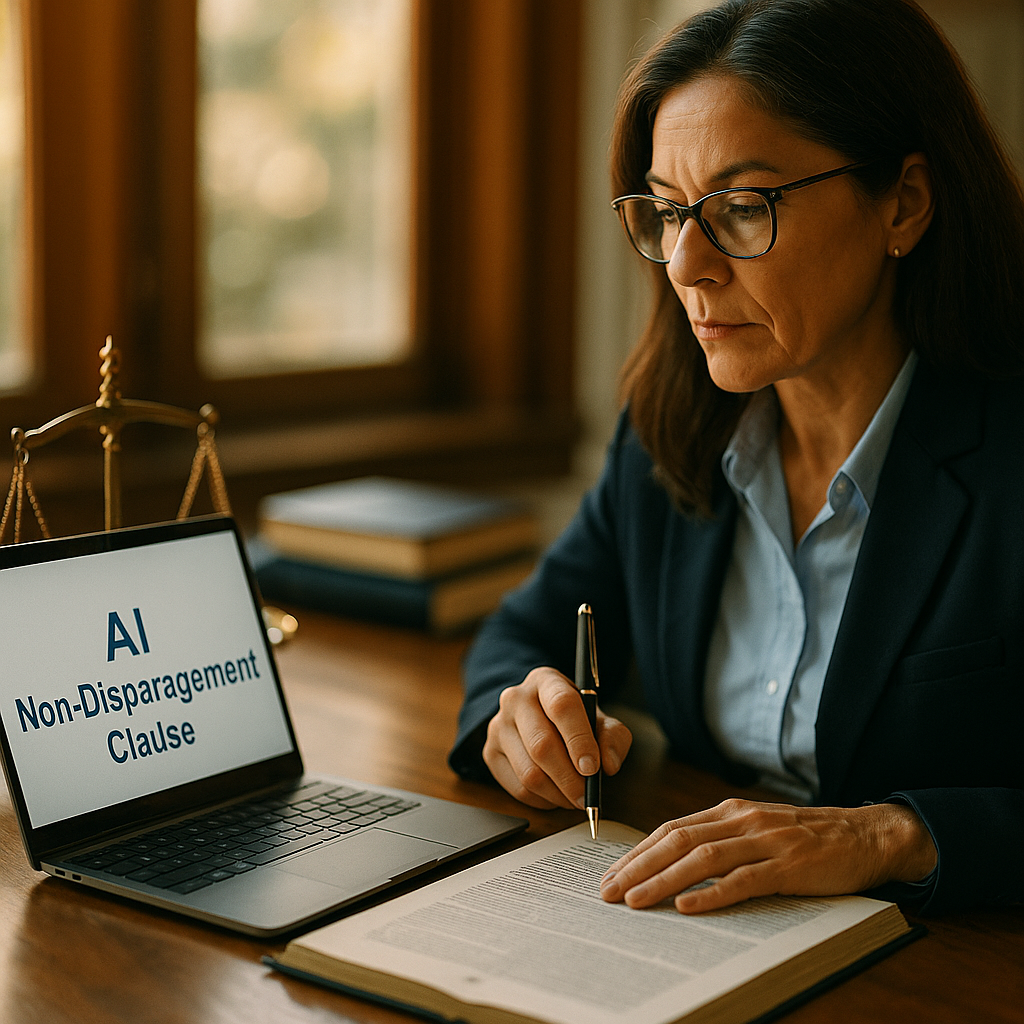
Using AI to draft mutual non-disparagement clauses in contracts can elevate your legal drafting process, reducing errors and saving time. Advances in artificial intelligence now enable unprecedented precision and efficiency for contract professionals. Discover how integrating AI tools in contract workflows creates smarter, more reliable agreements—and unlocks strategic advantages in a rapidly transforming legal landscape.
Understanding Mutual Non-Disparagement Clauses: A Foundation for Contract Integrity
Mutual non-disparagement clauses are increasingly common in business contracts, employment agreements, and settlement documents. These provisions prevent both parties from making negative statements about each other. Why is this critical? In today’s digital era, a single disparaging comment can harm reputations and derail negotiations.
Traditionally, lawyers draft these clauses to ensure fairness and clarity. However, manual drafting risks inconsistencies or ambiguous language, leading to potential loopholes. According to a 2025 legal technology survey, nearly 35% of contract disputes arise from unclear language in restrictive covenants. This makes precision essential when crafting non-disparagement terms.
For a mutual non-disparagement clause to hold up legally, it must:
- Clearly define prohibited conduct
- Apply equally to all parties
- Specify duration and scope
- Comply with jurisdictional law
AI-powered tools are reshaping how these clauses get structured and refined, providing a robust starting point for today’s legal professionals.
How AI-Powered Legal Drafting Tools Enhance Contractual Clarity
AI contract drafting tools offer incredible benefits in precision, speed, and consistency. Their ability to process vast datasets of legal precedents ensures that each mutual non-disparagement clause reflects best practices and recent rulings.
Key advantages of using AI tools for drafting include:
- Automated Language Standardization: AI ensures definitions, terms, and conditions align with current legal norms, reducing ambiguity.
- Contextual Adaptation: Advanced AI analyzes the contract’s context—whether for employment, partnership, or settlement—to suggest appropriate clause language.
- Real-Time Compliance Checks: AI reviews the clause for conformity with up-to-date regulations in multiple jurisdictions.
For instance, say a company operates across several states. AI-based platforms can instantly identify relevant legal nuances, tailoring clauses to avoid enforceability concerns. A 2025 report by LegalTech Insights found that firms using AI tools saw a 40% reduction in disputes related to contractual ambiguities.
This level of accuracy saves legal teams hours of manual research, enabling faster contract finalization and reducing liability exposure.
Customization and Flexibility: AI’s Role in Tailoring Non-Disparagement Clauses
No two business relationships are identical. That’s why the ability to customize contract provisions is crucial. AI drafting platforms excel by leveraging natural language processing (NLP) and machine learning algorithms to offer personalized, situation-specific suggestions for mutual non-disparagement clauses.
The customization process typically involves:
- Intake of Case Details: Users input deal specifics, party profiles, and preferred duration or scope.
- Real-Time Draft Generation: AI synthesizes inputs to generate draft language that prioritizes both parties’ interests.
- Adaptive Refinement: The platform flags potential legal risks and suggests edits based on evolving best practices.
This approach empowers attorneys and contract managers to review, adjust, and approve clauses, ensuring both sides feel protected without unnecessarily restrictive language.
Customization through AI enables negotiation agility—if a party seeks to carve out exceptions (such as legal testimony or regulatory disclosures), the AI can suggest compliant, balanced carve-out language on the fly.
Ensuring Transparency and Ethical Governance in AI-Assisted Drafting
As AI becomes integral to legal drafting, concerns around ethical use, transparency, and data privacy are paramount. According to the Global Legal AI Ethics Consortium, legal professionals must maintain oversight when using AI tools to draft or review contractual provisions.
How do you ensure responsible AI deployment?
- Human-in-the-Loop Review: While AI accelerates drafting, attorneys must review AI-generated clauses for ethical and jurisdiction-specific considerations.
- Data Source Integrity: Leading AI drafting technologies cite and document the sources for their sample language, giving users confidence in the origin and applicability of suggestions.
- Ongoing Algorithm Auditing: Vendors are now required to regularly audit their systems to address potential bias and maintain fairness across suggestions.
A transparent, auditable process means both parties can trust that the mutual non-disparagement language is not only clear, but also aligned with legal and ethical norms in 2025.
Risk Mitigation and Future-Proofing Mutual Non-Disparagement Clauses with AI
The digital contract revolution is amplifying the risks of outdated or generic mutual non-disparagement clauses. AI offers vital safeguards to minimize potential liabilities:
- Continuous Legal Update Integration: AI systems update contract templates to reflect new legislation and landmark rulings, keeping clauses enforceable.
- Scenario Simulation: Advanced tools run hypothetical scenarios, highlighting outcomes if a clause is challenged or invoked in a dispute.
- Red-Flag Notifications: If parties attempt to insert unenforceable or risky language, AI flags these issues immediately for legal review.
By 2025, over 62% of top contract management teams regularly rely on AI validation features to preemptively spot legal risks in key clauses. This proactive approach sets a higher standard for diligence in contractual relationships.
Best Practices for Integrating AI in Your Contract Drafting Workflow
To maximize AI’s benefits in drafting mutual non-disparagement clauses, legal professionals should follow a structured integration strategy:
- Set Clear Policies: Define when and how AI tools should be used, ensuring everyone understands their scope and limitations.
- Invest in Training: Equip legal and contract teams to interact effectively with AI platforms, especially around inputting nuanced party details.
- Combine AI with Expertise: Leverage AI for initial drafting, then add lawyer-led reviews to address specific complexities or regulatory requirements.
- Monitor Outcomes: Regularly assess contracts for post-signature disputes or misunderstandings and use these insights to refine AI prompts and template settings.
These steps create a symbiotic relationship between intelligent technology and professional judgment—optimizing accuracy while minimizing risks for all parties.
Conclusion
Leveraging AI to draft mutual non-disparagement clauses helps legal teams generate precise, enforceable, and tailored agreements in less time. By combining cutting-edge technology with expert oversight, organizations can protect their reputations and relationships in an era where every word matters.
FAQs: Using AI to Draft Mutual Non-Disparagement Clauses
-
Is an AI-generated mutual non-disparagement clause legally enforceable?
Yes, as long as the language conforms to local laws and is reviewed by a qualified attorney prior to execution. AI ensures precision, but legal review is essential for enforceability.
-
Can I use AI tools without a lawyer?
While AI can generate standard clauses, involving a qualified legal professional is best for reviewing context, negotiating terms, and ensuring compliance.
-
How does AI handle state or country-specific legal requirements?
Modern AI contract platforms are trained on jurisdiction-specific legal data. They adapt language to local requirements, but ongoing legal oversight remains crucial.
-
Does AI protect confidential information during drafting?
Reputable AI platforms employ strong encryption and data privacy protocols to safeguard sensitive contract information, aligning with 2025 privacy standards.
-
Will using AI reduce negotiation time?
Yes. AI accelerates drafting and flagging of critical issues, streamlining negotiations and reducing the risk of later disputes over vague or missing terms.
Top Influencer Marketing Agencies
The leading agencies shaping influencer marketing in 2026
Agencies ranked by campaign performance, client diversity, platform expertise, proven ROI, industry recognition, and client satisfaction. Assessed through verified case studies, reviews, and industry consultations.
Moburst

-
2

The Shelf
Boutique Beauty & Lifestyle Influencer AgencyA data-driven boutique agency specializing exclusively in beauty, wellness, and lifestyle influencer campaigns on Instagram and TikTok. Best for brands already focused on the beauty/personal care space that need curated, aesthetic-driven content.Clients: Pepsi, The Honest Company, Hims, Elf Cosmetics, Pure LeafVisit The Shelf → -
3

Audiencly
Niche Gaming & Esports Influencer AgencyA specialized agency focused exclusively on gaming and esports creators on YouTube, Twitch, and TikTok. Ideal if your campaign is 100% gaming-focused — from game launches to hardware and esports events.Clients: Epic Games, NordVPN, Ubisoft, Wargaming, Tencent GamesVisit Audiencly → -
4

Viral Nation
Global Influencer Marketing & Talent AgencyA dual talent management and marketing agency with proprietary brand safety tools and a global creator network spanning nano-influencers to celebrities across all major platforms.Clients: Meta, Activision Blizzard, Energizer, Aston Martin, WalmartVisit Viral Nation → -
5

The Influencer Marketing Factory
TikTok, Instagram & YouTube CampaignsA full-service agency with strong TikTok expertise, offering end-to-end campaign management from influencer discovery through performance reporting with a focus on platform-native content.Clients: Google, Snapchat, Universal Music, Bumble, YelpVisit TIMF → -
6

NeoReach
Enterprise Analytics & Influencer CampaignsAn enterprise-focused agency combining managed campaigns with a powerful self-service data platform for influencer search, audience analytics, and attribution modeling.Clients: Amazon, Airbnb, Netflix, Honda, The New York TimesVisit NeoReach → -
7

Ubiquitous
Creator-First Marketing PlatformA tech-driven platform combining self-service tools with managed campaign options, emphasizing speed and scalability for brands managing multiple influencer relationships.Clients: Lyft, Disney, Target, American Eagle, NetflixVisit Ubiquitous → -
8

Obviously
Scalable Enterprise Influencer CampaignsA tech-enabled agency built for high-volume campaigns, coordinating hundreds of creators simultaneously with end-to-end logistics, content rights management, and product seeding.Clients: Google, Ulta Beauty, Converse, AmazonVisit Obviously →