


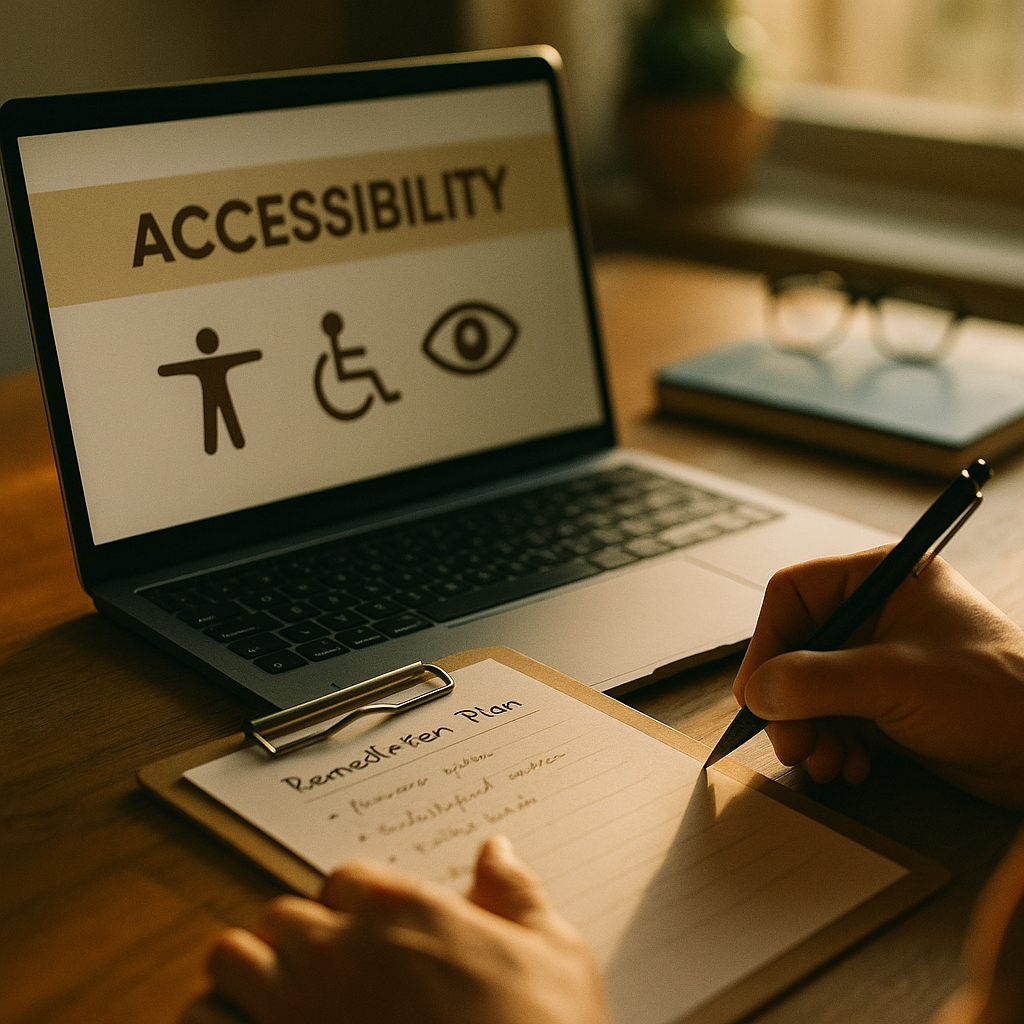
Creating a website accessibility remediation plan is critical for ensuring your digital presence accommodates all users, including those with disabilities. A clear and effective accessibility remediation plan helps organizations meet legal requirements and improve user experience. Learn how to build a comprehensive, actionable plan that transforms accessibility from a compliance burden into a business advantage.
Understanding Why a Web Accessibility Remediation Process Matters
Accessibility remediation is not just about meeting legal standards; it’s about opening your website to everyone. Over 1.3 billion people globally experience some form of disability, according to the World Health Organization. Failing to offer accessible digital content excludes a significant audience and can damage your reputation, lead to lost revenue, or result in legal consequences. Implementing a structured remediation process boosts your site’s reach and demonstrates your commitment to inclusion. In 2025, an accessibility-first approach attracts loyal customers who value equitable digital experiences.
Conducting a Thorough Accessibility Audit
A comprehensive website accessibility audit is the foundation of every effective remediation plan. Start by using automated tools aligned with the Web Content Accessibility Guidelines (WCAG) 2.2 to detect common issues such as missing alt text, insufficient color contrast, or keyboard navigation errors. However, automated scans catch only about 30% of problems. Combine them with expert manual testing and involve users with disabilities to identify complex issues, such as problematic forms or confusing navigation. Document every issue with detailed descriptions, severity ratings, and related WCAG guidelines for each problem. This audit sets actionable priorities and informs every step of your remediation roadmap.
Setting Clear Remediation Priorities and Goals
The next step is to prioritize accessibility fixes based on risk, impact, and feasibility. Address critical barriers first—especially those affecting navigation, content consumption, or site functionality for screen readers and keyboard-only users. Consider legal requirements (such as the Americans with Disabilities Act or related local laws) and business objectives. Clearly define measurable goals, such as achieving WCAG 2.2 Level AA compliance across all public pages. Create a timeline with realistic deadlines and assign responsibilities to accountable team members, from developers to content creators and designers. This structure drives meaningful progress and helps secure management buy-in.
Developing a Remediation Workflow with Stakeholder Collaboration
A successful remediation workflow relies on cross-functional cooperation. Educate your team—including developers, content editors, and designers—on the basics of accessible design and why it matters. Involve stakeholders from the start: include project managers, customer-facing staff, and legal advisors in regular progress meetings. Break down remediation tasks into manageable units; for example:
- Fixing non-compliant headings or alternative text
- Adjusting color schemes for proper contrast
- Rewriting link text for clarity
- Rebuilding navigation for keyboard and screen reader access
Track progress using project management tools, documenting which issues have been fixed and which remain open. Frequent communication and updates build momentum and accountability across teams.
Testing Remediated Features and Validating Accessibility
Accessibility validation goes beyond initial remediation. Every change should be tested both automatically and manually to ensure issues are truly resolved. Involve users with disabilities in real-world scenarios to uncover any remaining obstacles that tools may miss. Utilize screen readers, voice recognition, screen magnifiers, and keyboard-only navigation during testing. Document the validation process and results thoroughly, maintaining a record of improvements for future reference or legal defense. Sharing these results builds trust and demonstrates your continuous commitment to accessibility.
Maintaining Accessibility: Ongoing Monitoring and Training
Accessibility is not a one-time project—it’s a continuous process. Implement ongoing accessibility monitoring using automated scans and periodic manual reviews. Train new and existing staff on accessibility best practices, updating them on WCAG changes or relevant local laws. Establish clear guidelines for content updates, template changes, and new feature development to keep your site compliant as technology and standards evolve. Make accessibility part of your organization’s values and workflows, not just a technical checkpoint.
Conclusion: The Impact of a Strong Accessibility Remediation Plan
An effective website accessibility remediation plan helps your organization achieve compliance, reach broader audiences, and build brand trust. By auditing, prioritizing, collaborating, validating, and maintaining accessibility efforts, you foster digital inclusion. Start your remediation journey today and turn accessibility into a sustainable competitive edge.
Frequently Asked Questions
-
What is a website accessibility remediation plan?
A website accessibility remediation plan outlines the steps needed to identify, prioritize, fix, and prevent accessibility barriers, ensuring your site meets WCAG standards and serves all users, including those with disabilities.
-
How do I know if my website needs accessibility remediation?
If your site has not been evaluated for WCAG compliance—or if users report issues using assistive technology—an accessibility audit will help you discover what remediation is required.
-
How long does remediation take?
Timeframes depend on your site’s size and complexity. Small sites may need days; enterprise sites can require months. Clear planning, prioritization, and stakeholder involvement help accelerate progress.
-
Who should be involved in the remediation process?
Developers, content creators, designers, legal advisors, and project managers should all participate. Involving users with disabilities in testing is essential for authentic accessibility validation.
-
What are the most common web accessibility issues?
Frequent issues include missing alt text, poor color contrast, inaccessible forms, lack of keyboard navigation, non-descriptive link text, and improper heading structure. Regular audits help spot and fix these problems.
-
How can I maintain website accessibility over time?
Establish regular monitoring, continuous team training, and accessibility checkpoints for all new content and features. Follow evolving WCAG standards and integrate accessibility into your ongoing digital strategy.
Top Influencer Marketing Agencies
The leading agencies shaping influencer marketing in 2026
Agencies ranked by campaign performance, client diversity, platform expertise, proven ROI, industry recognition, and client satisfaction. Assessed through verified case studies, reviews, and industry consultations.
Moburst

-
2

The Shelf
Boutique Beauty & Lifestyle Influencer AgencyA data-driven boutique agency specializing exclusively in beauty, wellness, and lifestyle influencer campaigns on Instagram and TikTok. Best for brands already focused on the beauty/personal care space that need curated, aesthetic-driven content.Clients: Pepsi, The Honest Company, Hims, Elf Cosmetics, Pure LeafVisit The Shelf → -
3

Audiencly
Niche Gaming & Esports Influencer AgencyA specialized agency focused exclusively on gaming and esports creators on YouTube, Twitch, and TikTok. Ideal if your campaign is 100% gaming-focused — from game launches to hardware and esports events.Clients: Epic Games, NordVPN, Ubisoft, Wargaming, Tencent GamesVisit Audiencly → -
4

Viral Nation
Global Influencer Marketing & Talent AgencyA dual talent management and marketing agency with proprietary brand safety tools and a global creator network spanning nano-influencers to celebrities across all major platforms.Clients: Meta, Activision Blizzard, Energizer, Aston Martin, WalmartVisit Viral Nation → -
5

The Influencer Marketing Factory
TikTok, Instagram & YouTube CampaignsA full-service agency with strong TikTok expertise, offering end-to-end campaign management from influencer discovery through performance reporting with a focus on platform-native content.Clients: Google, Snapchat, Universal Music, Bumble, YelpVisit TIMF → -
6

NeoReach
Enterprise Analytics & Influencer CampaignsAn enterprise-focused agency combining managed campaigns with a powerful self-service data platform for influencer search, audience analytics, and attribution modeling.Clients: Amazon, Airbnb, Netflix, Honda, The New York TimesVisit NeoReach → -
7

Ubiquitous
Creator-First Marketing PlatformA tech-driven platform combining self-service tools with managed campaign options, emphasizing speed and scalability for brands managing multiple influencer relationships.Clients: Lyft, Disney, Target, American Eagle, NetflixVisit Ubiquitous → -
8

Obviously
Scalable Enterprise Influencer CampaignsA tech-enabled agency built for high-volume campaigns, coordinating hundreds of creators simultaneously with end-to-end logistics, content rights management, and product seeding.Clients: Google, Ulta Beauty, Converse, AmazonVisit Obviously →