


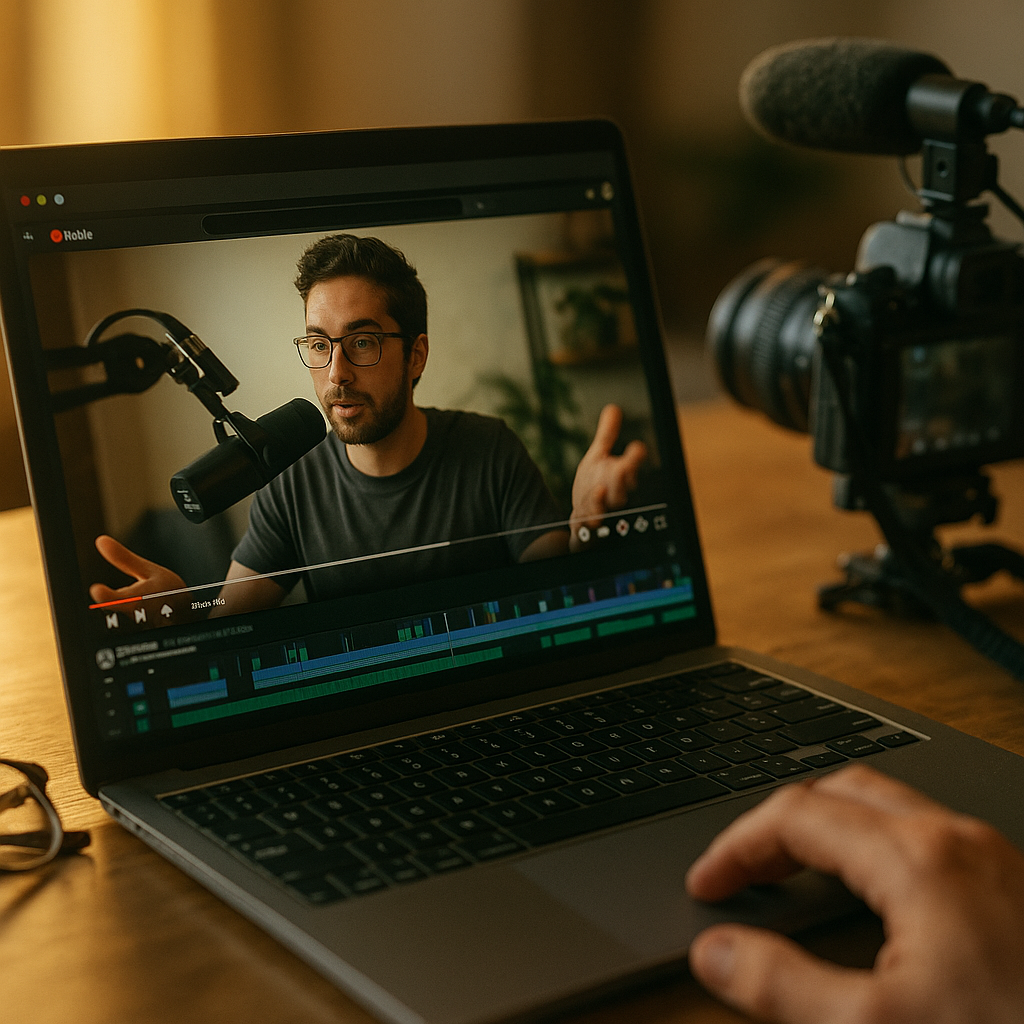
YouTube now demotes or outright demonetizes reused footage that lacks “substantial original commentary,” and its detection has gotten aggressive enough to flag channels that used to coast on repost culture. So what’s a brand supposed to do when half its creator roster built audiences on clip compilations and reaction cuts? Enter commentary-layer edits, the format where creators layer fresh analysis, voiceover, and on-screen reaction over existing footage, turning “repost” into “original work” in the eyes of both the algorithm and the audience.
What Counts as a Commentary-Layer Edit, Exactly?
A commentary-layer edit isn’t a reaction video with a facecam bolted on. It’s a structural rebuild: the creator takes source footage (a product demo, a news clip, a competitor ad, a customer’s own UGC) and wraps it in a continuous layer of original narration, annotation, or critique that changes the meaning or value of the content. Think of it as the difference between quoting a paragraph and writing a book report on it.
YouTube’s enforcement guidance distinguishes between “reaction content with minimal added value” and content where the creator’s commentary becomes the primary driver of watch time. The platform has been explicit about this in its creator policy resources, and the practical upshot for brands is simple: if your creator’s voice isn’t doing at least half the narrative work, you’re gambling with demonetization.
Why the Originality Filter Started Biting Harder
The spike in enforcement tracks with a broader platform trend. Reused, low-effort content flooded Shorts and long-form alike through 2023 and 2024, and advertisers noticed their placements sitting next to recycled clip farms with no brand safety upside. eMarketer and Statista have both tracked rising advertiser scrutiny of content quality signals on video platforms, and YouTube’s response was to tighten its monetization and recommendation algorithms around originality markers: unique audio, substantive edits, and demonstrable added value.
For brand marketers, this isn’t just a creator headache. It’s a media buying risk. Sponsored placements inside demonetized or shadow-throttled videos lose reach fast, and agencies that didn’t adjust briefs in time saw campaign impressions quietly collapse mid-flight.
Commentary-layer edits aren’t a workaround for lazy content. They’re the format that converts “borrowed footage” into a defensible, monetizable asset, which is exactly what risk-averse brand teams should want.
The ROI Case Brand Teams Actually Care About
Here’s the part that matters for budget owners: commentary-layer edits are cheaper to produce than fully original shoots, yet they outperform straight reaction content on watch time because the added narration creates narrative tension the raw clip never had. A creator reacting silently to a product demo gives you maybe 20 seconds of engagement before drop-off. The same clip, re-cut with pointed commentary (“here’s the part the brand doesn’t want you to notice”), can hold viewers through a 90-second breakdown.
That retention curve matters for two reasons. First, YouTube’s recommendation engine rewards watch time disproportionately, so commentary-layer edits get pushed harder once they clear the originality bar. Second, longer watch time means more mid-roll ad inventory and more opportunities for a brand’s own pre-roll or sponsored segment to land. This is the same mechanic driving performance in reaction content that critiques ads, where critique, not passive reaction, is what cuts CPA.
Budget-wise, expect commentary-layer production to run 30 to 50 percent below a fresh branded shoot, since the creator is editing against existing footage rather than scheduling new production days. For brands running high-volume always-on programs, that math adds up fast.
Where the Source Footage Comes From (and Why It Matters Legally)
Not all source material is created equal, and this is where legal and compliance teams need a seat at the table before creators start cutting. Three common sourcing paths:
- Brand-owned footage: B-roll, past ads, or livestream VODs the brand already licenses. Lowest risk, easiest to clear.
- Customer UGC: Reviews or unboxings submitted under a usage agreement. Requires a documented rights grant, not just a comment thread “yes you can use this.”
- Third-party or competitor content: News clips, competitor ads, or trending videos. This is fair-use territory, and fair use is a legal defense, not a guarantee. Commentary has to be transformative, not decorative.
Brands pulling from livestream archives have an easier path here, since the footage is often already owned. If your program includes shopping streams or live demos, pairing commentary-layer edits with livestream clip mining for hook libraries gives you a steady, rights-clean supply of source material without touching third-party content at all.
Briefing Creators Without Killing the Format’s Authenticity
The fastest way to ruin a commentary-layer edit is to over-script it. If the commentary reads like ad copy, viewers smell it in the first ten seconds and bounce, which defeats the entire retention advantage you’re chasing. The better approach is a structured brief that defines the commentary’s job without dictating every line.
A workable brief template includes:
- The source footage and its rights status (cleared, licensed, fair-use argument documented)
- Three to five “commentary beats” the creator must hit (a claim to validate, a myth to address, a comparison point)
- Required disclosure language per platform policy
- A tone guardrail (skeptical, enthusiastic, neutral analyst) rather than a script
This is structurally similar to the approach outlined in hook taxonomy systems for pre-production at scale, where the goal is giving creators a framework, not a teleprompter. Over-direct a commentary layer and you lose the credibility that made the format work in the first place.
Disclosure and Compliance: The Part Nobody Wants to Slow Down For
Because commentary-layer edits sit on top of someone else’s footage, disclosure gets murkier than a standard sponsored post. If a creator is commentating on a competitor’s ad while promoting your product, viewers need to understand both relationships: what’s being discussed and who’s paying for the video. The FTC’s endorsement guidance doesn’t carve out an exception for commentary formats, and regulators have shown they’ll treat vague “sponsored” tags as inadequate when the underlying content involves third-party material.
Agencies running programs across regions should also check UK ICO guidance if any EU or UK creators are involved, since disclosure standards diverge slightly from US norms. Build this into your legal review step, not as an afterthought after the video’s already live.
What to Measure (It’s Not Just Views)
Commentary-layer edits reward a different scorecard than standard branded content. Retention curve shape matters more than total views, because a flat retention line tells you the commentary isn’t adding narrative pull. Track:
- Average view duration against a benchmark reaction video (aim for at least 40 percent longer)
- Audience retention at the 30-second and 90-second marks specifically, since that’s where unscripted commentary either earns trust or loses it
- Comment sentiment split between “this is helpful” versus “this feels like an ad,” which is your authenticity gut-check
- Monetization status post-publish, confirming the edit actually cleared the originality filter rather than getting quietly demonetized days later
Brands already tracking comprehension or trust metrics on explainer-style content can borrow the same measurement discipline described in comprehension-first briefs for explainer videos, since commentary-layer edits live in that same “informational, not purely promotional” bucket YouTube rewards.
For broader context on how creator content performance is shifting platform-wide, HubSpot’s marketing research and Sprout Social’s platform benchmarks are useful baselines when you’re building internal reporting templates for this format.
The Takeaway for Brand Teams
Commentary-layer edits aren’t a loophole, they’re a production standard YouTube is actively rewarding, and the brands that brief for substantive narration now will keep their media spend working while slower competitors get caught flat-footed by demonetized placements. Start by auditing your current creator roster for reaction-heavy content with thin commentary, then rebrief with the beat-sheet structure above before your next flight goes live.
FAQs
What exactly triggers YouTube’s originality filter?
The filter flags videos where reused footage dominates screen time without substantial original narration, analysis, or added context from the creator. Minimal facecam reactions or silent overlays typically don’t clear the bar.
Are commentary-layer edits cheaper than standard branded video?
Generally yes. Because creators edit against existing footage instead of scheduling new shoots, production costs typically run 30 to 50 percent lower than a comparable original production.
Do commentary-layer edits need special FTC disclosure?
Yes, and often more detail than a standard sponsored post. If the video discusses a competitor’s content or third-party footage, viewers need clarity on both the sponsorship and the source material’s origin.
Can brands use competitor ads as source footage legally?
Only under a fair-use argument, which requires the commentary to be genuinely transformative rather than decorative. Legal review before publishing is strongly recommended, not optional.
How do I know if a commentary-layer edit is working?
Watch retention at the 30-second and 90-second marks, not just total views. A flat retention curve means the commentary isn’t adding enough narrative value to hold the audience.
Top Influencer Marketing Agencies
The leading agencies shaping influencer marketing in 2026
Agencies ranked by campaign performance, client diversity, platform expertise, proven ROI, industry recognition, and client satisfaction. Assessed through verified case studies, reviews, and industry consultations.
Moburst

-
2

The Shelf
Boutique Beauty & Lifestyle Influencer AgencyA data-driven boutique agency specializing exclusively in beauty, wellness, and lifestyle influencer campaigns on Instagram and TikTok. Best for brands already focused on the beauty/personal care space that need curated, aesthetic-driven content.Clients: Pepsi, The Honest Company, Hims, Elf Cosmetics, Pure LeafVisit The Shelf → -
3

Audiencly
Niche Gaming & Esports Influencer AgencyA specialized agency focused exclusively on gaming and esports creators on YouTube, Twitch, and TikTok. Ideal if your campaign is 100% gaming-focused — from game launches to hardware and esports events.Clients: Epic Games, NordVPN, Ubisoft, Wargaming, Tencent GamesVisit Audiencly → -
4

Viral Nation
Global Influencer Marketing & Talent AgencyA dual talent management and marketing agency with proprietary brand safety tools and a global creator network spanning nano-influencers to celebrities across all major platforms.Clients: Meta, Activision Blizzard, Energizer, Aston Martin, WalmartVisit Viral Nation → -
5

The Influencer Marketing Factory
TikTok, Instagram & YouTube CampaignsA full-service agency with strong TikTok expertise, offering end-to-end campaign management from influencer discovery through performance reporting with a focus on platform-native content.Clients: Google, Snapchat, Universal Music, Bumble, YelpVisit TIMF → -
6

NeoReach
Enterprise Analytics & Influencer CampaignsAn enterprise-focused agency combining managed campaigns with a powerful self-service data platform for influencer search, audience analytics, and attribution modeling.Clients: Amazon, Airbnb, Netflix, Honda, The New York TimesVisit NeoReach → -
7

Ubiquitous
Creator-First Marketing PlatformA tech-driven platform combining self-service tools with managed campaign options, emphasizing speed and scalability for brands managing multiple influencer relationships.Clients: Lyft, Disney, Target, American Eagle, NetflixVisit Ubiquitous → -
8

Obviously
Scalable Enterprise Influencer CampaignsA tech-enabled agency built for high-volume campaigns, coordinating hundreds of creators simultaneously with end-to-end logistics, content rights management, and product seeding.Clients: Google, Ulta Beauty, Converse, AmazonVisit Obviously →