


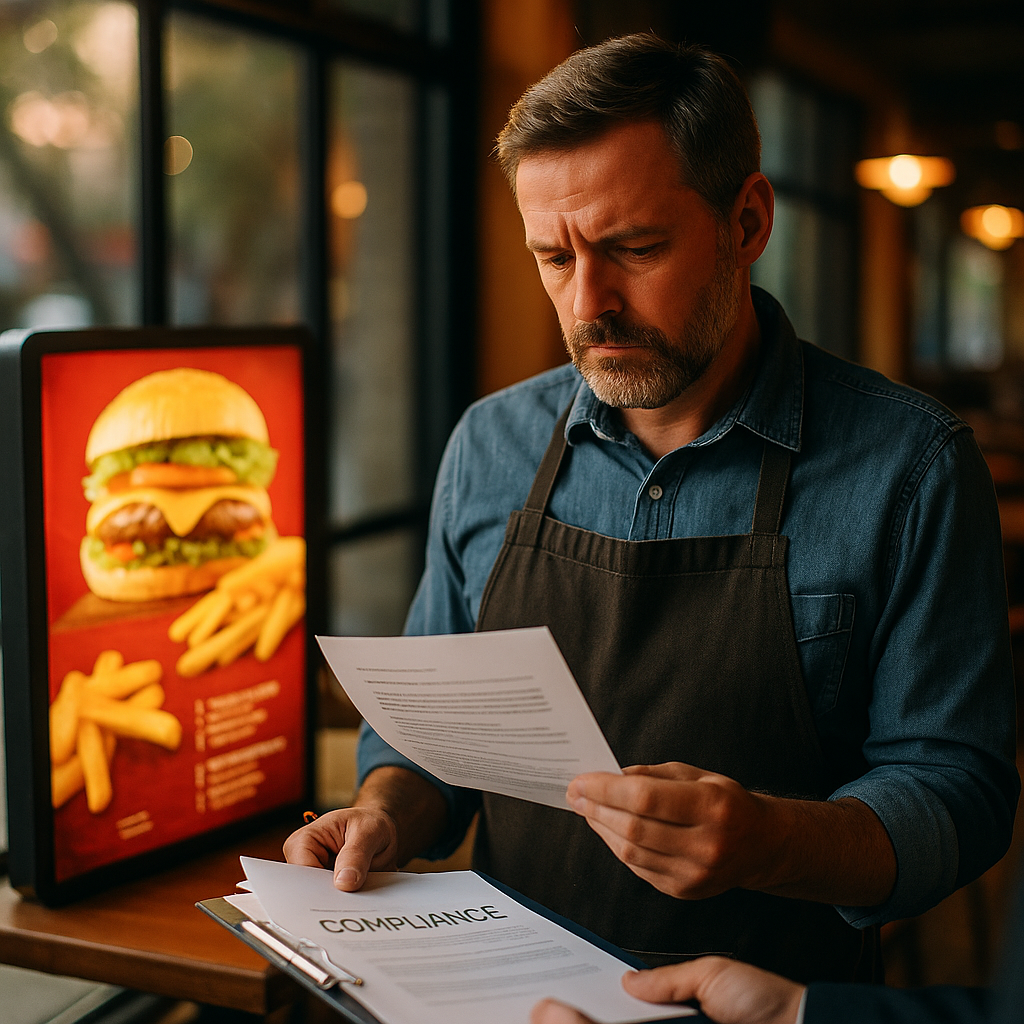
Learning how to comply with food advertising regulations for restaurants is essential in 2025. Strict rules protect consumers from misleading information and help restaurants build trust. Non-compliance can result in heavy fines and damage to your reputation. This guide breaks down the key requirements and best practices so your restaurant’s marketing efforts always stay on the right side of the law.
Understanding Food Advertising Laws and Standards
Food advertising laws for restaurants serve to ensure honesty and accuracy in marketing. In 2025, these rules are primarily set by regulatory bodies like the Federal Trade Commission (FTC) and the Food and Drug Administration (FDA), as well as local and state authorities. The goal: prevent deceptive, false, or unsubstantiated claims about your food or drinks.
Key points include:
- Truthful Representation: Ads must accurately reflect the food’s ingredients, source, size, nutritional content, and health benefits.
- Transparency: Disclose all material information—such as whether food is pre-packaged, microwaved, or contains allergens.
- Market-Specific Laws: States and municipalities can have stricter food advertising guidance (e.g., specific rules on calorie claims or sustainability messages).
In 2025, there’s a trend toward even greater transparency. For example, California’s new Digital Menu Act requires online food listings to display the same nutrition facts as in-person menus. Keep abreast of such updates to remain compliant.
Avoiding Misleading Claims in Restaurant Promotions
Ensuring your promotions align with food advertising regulations for restaurants requires attention to your language and visuals. Avoid superlatives (such as “best” or “healthiest”) unless you can substantiate them with objective evidence. “Fresh,” “natural,” “organic,” and similar descriptors have specific regulatory meanings and must be used accurately.
- Substantiation Is Key: Back every claim with hard data, such as supplier certificates or lab analyses.
- Comparative Claims: If you say your burger has “50% less fat than others,” name your benchmark and provide details.
- Visual Accuracy: Images should depict the actual menu item as served. Edited or staged photos must not exaggerate.
Pay attention to social media advertising. The rise in influencer partnerships means all sponsored posts and endorsements must clearly disclose their financial relationship to your restaurant, per FTC guidelines.
Managing Nutrition and Allergen Information in Menus
Compliance with food advertising regulations extends to menu labeling. Federal law requires restaurants with 20 or more locations to display calories on menus and menu boards. Many states also require restaurants to provide full nutritional breakdowns, either at point-of-sale or upon request.
- Menu Transparency: List calories and key nutritional information in a format that’s easy to read, both in-house and online.
- Allergens: Clearly identify dishes containing major allergens like peanuts, tree nuts, milk, eggs, wheat, soy, fish, and shellfish.
- Claims Management: Any claim such as “gluten-free” or “low sodium” must meet formal FDA definitions and be verifiable across all servings.
In 2025, technology supports compliance. Digital menu management tools now automate nutrient calculation and allergen alerts, reducing manual error and ensuring real-time updates for customers.
Best Practices for Responsible Marketing to Children
Food advertising regulations for restaurants are especially strict when targeting children. Research shows kids are highly susceptible to persuasive marketing, so ethical advertising is non-negotiable. The Children’s Food and Beverage Advertising Initiative (CFBAI) outlines extra requirements:
- Product Eligibility: Only advertise foods that meet specific nutritional standards to children under 13.
- Engagement Limits: Avoid manipulative tactics like “nag factors” or incentivizing unhealthy food choices with toys and games.
- Truth-in-Marketing: Ensure cartoon characters, mascots, and digital games accurately represent the product offered.
Regularly audit your kid-focused promotions and menu sections for compliance, especially in digital and app-based channels, to avoid penalties and protect your reputation.
Training, Documentation, and Ongoing Compliance
Sustainable compliance with food advertising regulations for restaurants requires staff training and strong processes. Keep your team up to date on regulatory changes, ethical messaging, and the latest labeling technology.
- Staff Training: Educate new hires and refresh current staff regularly on compliant messaging and customer questions.
- Document Everything: Retain documentation for all claims, nutritional data, and supplier certifications for at least 24 months, in case of inspections.
- Compliance Audits: Schedule quarterly reviews of your advertising materials, menus, and digital channels to spot and correct issues early.
Join industry associations and sign up for food safety and legal updates to stay aware of changes in food marketing laws. In today’s fast-evolving regulatory landscape, proactivity is your best tool.
Conclusion: Stay Ahead with Honest, Transparent Food Advertising
To comply with food advertising regulations for restaurants, prioritize honesty, accuracy, and transparency in every marketing channel. Equip your staff, document your claims, and embrace technology for ongoing compliance. Protect your restaurant’s reputation, customer trust, and bottom line by making these regulatory best practices a core part of your brand strategy.
FAQs: Food Advertising Regulations for Restaurants
-
What are the most common mistakes restaurants make in food advertising?
Using unsubstantiated claims (like “all-natural” without evidence), displaying misleading food images, neglecting allergen labeling, or failing to disclose sponsorships in influencer posts top the list of compliance risks.
-
How often should I update my menu’s nutritional information?
Update nutritional info whenever you change recipes, sourcing, or suppliers. Plan for a formal review at least quarterly. Use digital tools to keep both print and online menus synchronized in real time.
-
Do local food advertising laws override federal rules?
Yes, where state or local regulations are stricter, you must follow the more stringent rule. Always check both federal and local rules before launching new ad campaigns or menus.
-
What should I do if a customer challenges an advertising claim?
Respond transparently and promptly. Provide documentation to support your claim. If you find an error, correct your materials immediately and notify regulatory authorities if required.
-
Is using AI-generated food images allowed in advertising?
You may use AI-generated images, provided they accurately reflect the actual products served and are not misleading. Clearly note if an image is for illustrative purposes only, especially on delivery apps or online menus.
Top Influencer Marketing Agencies
The leading agencies shaping influencer marketing in 2026
Agencies ranked by campaign performance, client diversity, platform expertise, proven ROI, industry recognition, and client satisfaction. Assessed through verified case studies, reviews, and industry consultations.
Moburst

-
2

The Shelf
Boutique Beauty & Lifestyle Influencer AgencyA data-driven boutique agency specializing exclusively in beauty, wellness, and lifestyle influencer campaigns on Instagram and TikTok. Best for brands already focused on the beauty/personal care space that need curated, aesthetic-driven content.Clients: Pepsi, The Honest Company, Hims, Elf Cosmetics, Pure LeafVisit The Shelf → -
3

Audiencly
Niche Gaming & Esports Influencer AgencyA specialized agency focused exclusively on gaming and esports creators on YouTube, Twitch, and TikTok. Ideal if your campaign is 100% gaming-focused — from game launches to hardware and esports events.Clients: Epic Games, NordVPN, Ubisoft, Wargaming, Tencent GamesVisit Audiencly → -
4

Viral Nation
Global Influencer Marketing & Talent AgencyA dual talent management and marketing agency with proprietary brand safety tools and a global creator network spanning nano-influencers to celebrities across all major platforms.Clients: Meta, Activision Blizzard, Energizer, Aston Martin, WalmartVisit Viral Nation → -
5

The Influencer Marketing Factory
TikTok, Instagram & YouTube CampaignsA full-service agency with strong TikTok expertise, offering end-to-end campaign management from influencer discovery through performance reporting with a focus on platform-native content.Clients: Google, Snapchat, Universal Music, Bumble, YelpVisit TIMF → -
6

NeoReach
Enterprise Analytics & Influencer CampaignsAn enterprise-focused agency combining managed campaigns with a powerful self-service data platform for influencer search, audience analytics, and attribution modeling.Clients: Amazon, Airbnb, Netflix, Honda, The New York TimesVisit NeoReach → -
7

Ubiquitous
Creator-First Marketing PlatformA tech-driven platform combining self-service tools with managed campaign options, emphasizing speed and scalability for brands managing multiple influencer relationships.Clients: Lyft, Disney, Target, American Eagle, NetflixVisit Ubiquitous → -
8

Obviously
Scalable Enterprise Influencer CampaignsA tech-enabled agency built for high-volume campaigns, coordinating hundreds of creators simultaneously with end-to-end logistics, content rights management, and product seeding.Clients: Google, Ulta Beauty, Converse, AmazonVisit Obviously →