


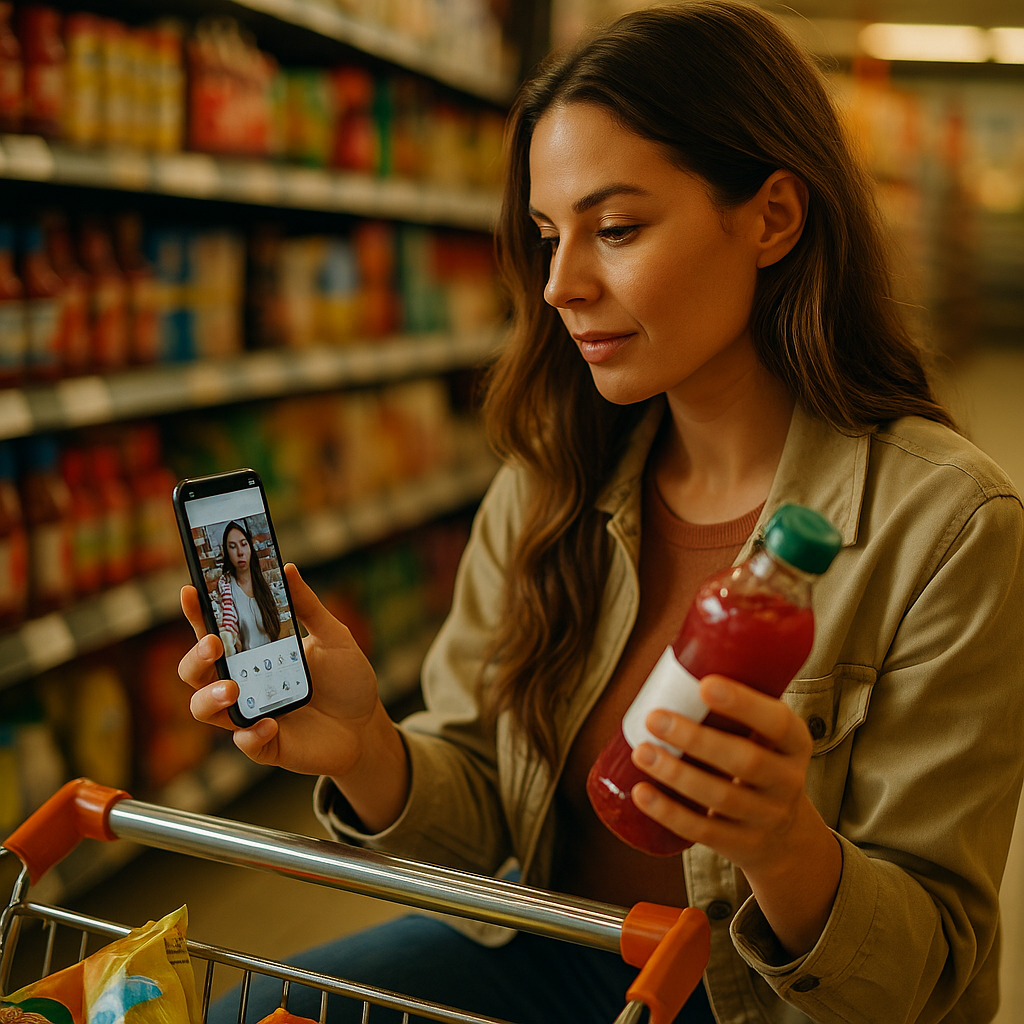
Beauty brands now route north of 25 percent of marketing budget through creators. Packaged food brands? Often below 8 percent. That gap is not a coincidence, it is a map of category maturity. CPG influencer spend benchmarks have become one of the clearest signals of which FMCG categories understand the creator channel and which ones are still treating it like a rounding error on the media plan.
If you run brand or shopper marketing for a packaged goods company, these numbers are not trivia. They are a budget negotiation tool.
Why FMCG Spend Data Tells a Bigger Story
Consumer packaged goods has always been a category of benchmarks. Share of voice, share of shelf, cost per thousand on linear TV: FMCG marketers grew up on comparative data because the category is brutally competitive and margins are thin. Influencer spend is just the newest line item getting the same scrutiny.
What makes CPG different from, say, fashion or tech is the purchase cycle. A skincare serum has consideration and loyalty dynamics. A bag of tortilla chips does not. That difference shapes how much a category invests in creators, which platforms it favors, and how it measures return. Beauty and personal care behave almost like discretionary retail. Food, beverage, and household categories behave more like commodity marketing with a trust layer bolted on.
Category maturity in influencer marketing is not about how much a brand spends, it is about whether spend tracks to a repeatable, measurable system rather than one off campaigns.
The Benchmark Spread Across FMCG Subcategories
Pull data from agency pitch decks, platform case studies, and public marketing spend disclosures, and a pattern emerges. Mature categories spend more, but they also spend smarter.
- Beauty and personal care: Typically allocates 20 to 30 percent of total marketing budget to influencer and creator content, often the single largest line item after traditional media.
- Food and beverage: Usually sits in the 8 to 15 percent range, with spend concentrated around seasonal moments and new product launches rather than always on programs.
- Household and cleaning products: Often the laggard, frequently under 10 percent, with heavy reliance on a small number of trusted mid tier creators rather than broad rosters.
- Pet care and baby products: A fast riser, climbing toward 15 to 20 percent as trust and community signals matter more in these purchase decisions.
These numbers move constantly, and any single data point ages fast. But the ranking order between subcategories has held remarkably steady for several reporting cycles, which is itself useful. Statista’s marketing spend tracking and eMarketer’s creator economy forecasts both show beauty consistently outpacing food and household by a wide margin year over year.
What “Mature” Actually Means in Creator Spend
Spend level alone is a blunt instrument. A brand can throw 25 percent of budget at influencers and still run an immature program if it is all one off gifting with no attribution. Maturity shows up in four operational traits.
- Always on cadence instead of campaign bursts. Mature CPG marketers run creator programs the way they run paid search: continuous, optimized, and budgeted monthly rather than per launch.
- Tiered creator mix with defined roles. Macro for reach, mid tier for credibility, nano for conversion and cost efficiency. Our coverage of how nano creator spend forces celebrity budgets to shrink shows this shift is already reshaping allocation across categories, not just CPG.
- Retainer based relationships. Food and beverage brands are increasingly moving away from one off posts toward structured retainers, a shift documented in how monthly retainers cut acquisition costs versus one off spend.
- Contractual and compliance discipline. Mature programs document FTC disclosure compliance, usage rights, and content approval workflows before a single dollar moves, not after a creator posts something off brand.
If your category still runs on handshake deals and DMs, you are not behind on spend, you are behind on process. That is actually good news. Process is fixable faster than budget.
Beauty Set the Pace. Everyone Else Is Catching Up.
Beauty’s dominance in creator spend did not happen by accident. The category had three advantages other FMCG segments lacked: visually demonstrable product benefits, a built in community of enthusiasts already making content, and margins healthy enough to absorb experimentation. A $35 serum has far more room to fund a creator program than a $3 can of soup.
But the gap is narrowing. Household and food brands are learning from beauty’s playbook, particularly around nano and micro creator economics. Our analysis of how nano creators beat mid tier influencers on cost per sale is especially relevant for lower margin FMCG categories that cannot justify beauty style spend per post but can afford volume plays with smaller creators.
Platform rate cards back this up. Facebook micro influencer rates holding steady around 1,250 dollars per post make the math work for grocery and household brands in a way that macro influencer fees simply do not.
Budget Reallocation Is the Real Signal
Spend levels matter less than where the dollars came from. The most telling benchmark in CPG right now is not “how much,” it is “shifted from where.”
Across the industry, the money is coming out of display and traditional digital media. Coverage of how display budgets shrink as CFOs reroute dollars to creators tracks a pattern that is especially pronounced in CPG, where CFOs have grown skeptical of banner ad performance against grocery and mass retail audiences.
This reallocation is part of a broader trend. The 44 billion dollar creator economy is forcing brands to rewrite budget plans across every vertical, and CPG finance teams are watching category peers closely before committing further. Nobody wants to be the CMO who overspent on an unproven channel, and nobody wants to be the one who missed the shift either.
The brands winning the CPG creator game are not necessarily spending the most, they are the ones who moved budget from the lowest performing legacy channel first.
Where ROI Proof Still Falls Short
Here is the uncomfortable part. Even as CPG spend climbs, proof of return lags behind. Industry wide research on the creator ROI paradox, where 94 percent see gains but 79 percent cannot prove it, applies directly to packaged goods marketers who are under constant pressure from finance to justify every line item.
Agencies are not always helping. Plenty of pitch decks lean on vague “engagement lift” metrics without a credible baseline. If you have ever pushed back on a vendor’s ROI claim and gotten a shrug, you already know how common this problem is. Our piece on how agency ROI claims hide weak baselines is worth sending to your procurement team before the next renewal conversation.
For CPG specifically, the fix is tying creator content to retail media signals: point of sale lift, promo code redemption, and retailer app attribution where available. Categories with strong grocery partnerships (think Walmart Connect or Kroger Precision Marketing style data) have a real advantage here because they can close the loop between a creator’s content and an actual basket.
Documentation Is Becoming Non Negotiable
As CPG influencer budgets grow, so does legal exposure. A food brand making health claims through a creator carries very different FTC risk than a beauty brand showing a before and after. Regulatory guidance from the Federal Trade Commission on endorsement disclosure applies regardless of category, but enforcement attention on health and wellness claims in food and supplements has intensified.
This is pushing more CPG marketers toward structured deal rooms and audit trails. The trend covered in IMCX diligence rooms turning creator deals into audit trails reflects a broader move toward documentation that protects brands when a creator’s claim gets flagged six months after a campaign ends. If your legal team has not asked about this yet, they will.
A Quick Gut Check for Your Own Budget
Before benchmarking against competitors, ask three internal questions: Does our spend track to a documented strategy or to whoever pitched us last quarter? Can we attribute at least one sales signal to creator content, beyond vanity metrics? And do we have disclosure and usage rights documentation for every active creator relationship? If the answer to any of these is no, that is your actual starting point, not the industry average.
For broader context on where budgets are headed next, the Technavio forecast mapping where creator budgets shift next is a useful companion read for planning next fiscal year’s allocation. Tools like HubSpot’s marketing analytics and Sprout Social’s reporting suite can also help close the attribution gap most CPG teams still struggle with.
Frequently Asked Questions
What percentage of marketing budget should CPG brands allocate to influencer marketing?
There is no universal figure, but benchmarks suggest beauty and personal care brands allocate 20 to 30 percent, food and beverage brands typically sit between 8 and 15 percent, and household products often fall below 10 percent. The right number depends on margin structure and how visually demonstrable the product benefit is.
Why does beauty spend so much more on influencers than food and beverage?
Beauty products have higher margins, more visually demonstrable results, and an existing creator community built around product reviews and tutorials. Food and beverage products have lower margins and less inherent “show and tell” value, which limits how much budget the category can justify per creator relationship.
How can CPG brands prove influencer marketing ROI to finance teams?
Tie creator content to retail media signals such as point of sale lift, promo code redemption, and retailer app attribution wherever possible. Avoid relying solely on engagement metrics, which finance teams increasingly view as insufficient justification for sustained spend.
Are nano and micro creators a better fit for lower margin CPG categories?
Often yes. Nano and micro creators typically charge far less per post than macro influencers or celebrities, which makes the economics work better for lower margin categories like household goods and packaged food, where the cost per sale needs to stay tight.
What compliance risks should CPG marketers watch for in influencer campaigns?
FTC disclosure requirements apply across all categories, but health and wellness claims in food, supplements, and personal care face heightened scrutiny. Brands should maintain documented usage rights, disclosure compliance records, and content approval workflows for every creator partnership.
CPG influencer spend benchmarks are useful, but they are a starting point, not a scoreboard. Compare your category’s typical allocation, then audit your own program for retainer structure, attribution, and compliance documentation before deciding whether to spend more or spend smarter.
Top Influencer Marketing Agencies
The leading agencies shaping influencer marketing in 2026
Agencies ranked by campaign performance, client diversity, platform expertise, proven ROI, industry recognition, and client satisfaction. Assessed through verified case studies, reviews, and industry consultations.
Moburst

-
2

The Shelf
Boutique Beauty & Lifestyle Influencer AgencyA data-driven boutique agency specializing exclusively in beauty, wellness, and lifestyle influencer campaigns on Instagram and TikTok. Best for brands already focused on the beauty/personal care space that need curated, aesthetic-driven content.Clients: Pepsi, The Honest Company, Hims, Elf Cosmetics, Pure LeafVisit The Shelf → -
3

Audiencly
Niche Gaming & Esports Influencer AgencyA specialized agency focused exclusively on gaming and esports creators on YouTube, Twitch, and TikTok. Ideal if your campaign is 100% gaming-focused — from game launches to hardware and esports events.Clients: Epic Games, NordVPN, Ubisoft, Wargaming, Tencent GamesVisit Audiencly → -
4

Viral Nation
Global Influencer Marketing & Talent AgencyA dual talent management and marketing agency with proprietary brand safety tools and a global creator network spanning nano-influencers to celebrities across all major platforms.Clients: Meta, Activision Blizzard, Energizer, Aston Martin, WalmartVisit Viral Nation → -
5

The Influencer Marketing Factory
TikTok, Instagram & YouTube CampaignsA full-service agency with strong TikTok expertise, offering end-to-end campaign management from influencer discovery through performance reporting with a focus on platform-native content.Clients: Google, Snapchat, Universal Music, Bumble, YelpVisit TIMF → -
6

NeoReach
Enterprise Analytics & Influencer CampaignsAn enterprise-focused agency combining managed campaigns with a powerful self-service data platform for influencer search, audience analytics, and attribution modeling.Clients: Amazon, Airbnb, Netflix, Honda, The New York TimesVisit NeoReach → -
7

Ubiquitous
Creator-First Marketing PlatformA tech-driven platform combining self-service tools with managed campaign options, emphasizing speed and scalability for brands managing multiple influencer relationships.Clients: Lyft, Disney, Target, American Eagle, NetflixVisit Ubiquitous → -
8

Obviously
Scalable Enterprise Influencer CampaignsA tech-enabled agency built for high-volume campaigns, coordinating hundreds of creators simultaneously with end-to-end logistics, content rights management, and product seeding.Clients: Google, Ulta Beauty, Converse, AmazonVisit Obviously →