


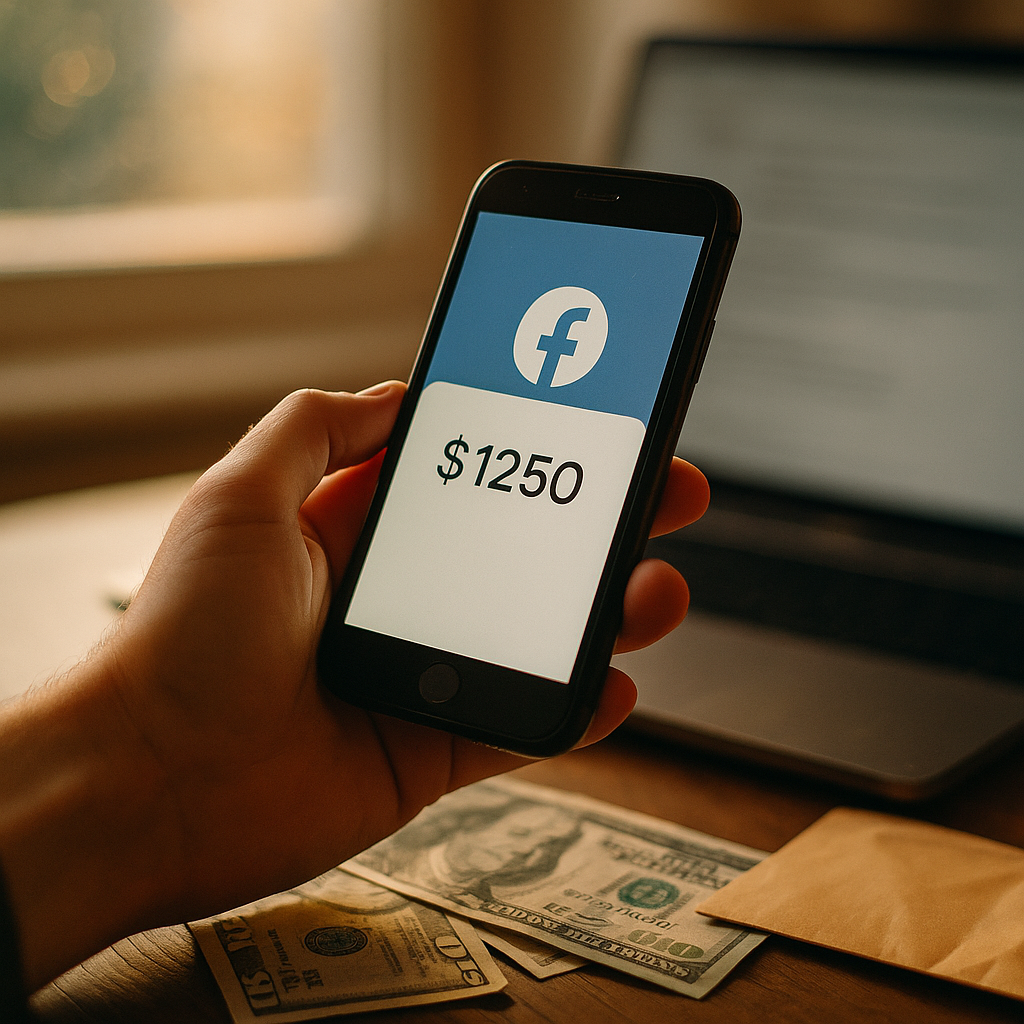
Would you pay $1,250 for a single Facebook post from a creator with 40,000 followers? Brands are doing exactly that, and the rate has barely moved in two years. While marketers keep writing Facebook’s obituary, Facebook micro influencers continue commanding premium fees that rival or beat what you’d pay on platforms everyone insists are “where the audience actually is.” The platform refuses to fade, and the pricing data explains why.
The Number That Keeps Surprising Media Buyers
A $1,250 average for a single micro influencer post (typically 10,000 to 50,000 followers) sounds high until you compare it against the alternative. Many brands assume Instagram or TikTok delivers more value per dollar simply because the content format feels more native to younger audiences. But Instagram posts command roughly four times the Facebook rate at comparable follower tiers, and the ROI gap isn’t always proportional to that price difference.
Facebook’s pricing stability is the real story. Rates on Instagram and TikTok swing with trend cycles, algorithm updates, and creator demand spikes. Facebook has stayed flat. That predictability matters enormously to procurement teams running quarterly budgets, because it removes a variable that makes forecasting a headache on other platforms.
Facebook micro influencer rates have held near $1,250 per post for two consecutive years, even as Instagram and TikTok pricing fluctuated by double digits quarter over quarter.
Why an “Outdated” Platform Still Converts
Here’s the uncomfortable truth nobody at the agency happy hour wants to say out loud: Facebook’s user base skews older, wealthier, and more likely to actually buy something after seeing an ad. Meta’s own advertiser tools confirm that Facebook’s audience composition still leans heavily toward adults 35 and up, a demographic with more disposable income and less ad fatigue than the average TikTok scroller.
Micro influencers on Facebook also benefit from something increasingly rare across social platforms: functioning organic reach within niche groups. Facebook Groups built around parenting, home improvement, local commerce, or hobbyist communities still deliver real engagement without heavy ad spend propping up every post. A creator embedded in one of those communities isn’t just posting content, they’re vouching for a product inside a trusted social circle. That’s a different kind of influence than a TikTok duet chasing an algorithm spike.
There’s also the age factor on the creator side. Many Facebook micro influencers built their audiences over five or more years. Their followers have watched them raise kids, renovate kitchens, or grow small businesses in real time. That longevity builds a trust layer that newer platforms simply haven’t had time to replicate.
The Compliance Angle Brands Keep Underrating
Facebook’s advertising policies and disclosure tools are more mature than most competitors, which matters more than ever as regulators tighten scrutiny on influencer marketing. The platform’s branded content tools make FTC-compliant disclosure almost automatic, reducing legal exposure for brands running paid partnerships. Compare that to platforms still building out disclosure infrastructure, and Facebook starts looking less like a legacy channel and more like a risk management tool. The FTC’s endorsement guidelines apply everywhere, but not every platform makes compliance this frictionless.
What’s Actually Driving That $1,250 Price Tag
Pricing on any platform comes down to supply, demand, and perceived conversion value. Facebook checks boxes on all three in ways that aren’t obvious from the outside.
- Lower creator supply: Fewer new creators are building primary audiences on Facebook, which keeps established micro influencers in a scarcer, higher-leverage position.
- Older, higher-spend audiences: Categories like home services, financial products, and health supplements see stronger conversion on Facebook than on younger-skewing platforms.
- Group-based trust: Niche community posting carries more weight than a public feed post, and brands are willing to pay for that context.
- Measurement maturity: Meta’s ad and attribution tools, including those detailed on Meta’s business platform, give brands cleaner data to justify spend to finance teams.
None of this means Facebook is “winning” the platform wars. It means Facebook occupies a specific lane, bottom-of-funnel, trust-driven, demographically mature, and brands in that lane keep paying for it regardless of what’s trending on the feed-growth charts.
The Budget Allocation Problem Nobody’s Solving
Most influencer budgets still get allocated based on follower growth charts and platform hype rather than category-specific performance. That’s a mistake. A supplement brand chasing Gen Z attention on TikTok might get more impressions, but a Facebook micro influencer post in a parenting group could outperform on actual purchase intent. The category context matters as much as the platform.
This is the same logic reshaping budgets across the industry. As cost per sale overtakes engagement as the dominant budgeting metric, platforms that convert quietly (like Facebook) start looking a lot more attractive than platforms that generate noise without proportional sales. Marketers obsessed with reach metrics are often the same ones surprised when a “boring” Facebook campaign outperforms a flashy TikTok push on actual revenue.
When brands shift from engagement metrics to cost-per-sale benchmarking, Facebook’s conversion-heavy audience often outperforms flashier platforms on a per-dollar basis.
There’s a broader trend here too. As CAC benchmarks by platform expose inflated budgets across the industry, Facebook’s steady, if unglamorous, performance numbers are forcing procurement teams to rethink which channels actually deserve the biggest line items. It’s hard to justify a 4x premium for Instagram reach when a Facebook micro influencer closes more sales per thousand impressions in certain categories.
Where Facebook Still Loses
None of this is an argument that Facebook beats every platform in every scenario. It doesn’t. Younger-skewing brands, fashion, beauty, and entertainment categories almost always perform better on Instagram, TikTok, or even emerging channels like Reddit’s brand-safe commerce environment. Short-form video saturation has also made attention scarcer everywhere, a trend documented in recent CTR data showing engagement below 1 percent across major platforms. Facebook isn’t immune to attention fatigue, it’s just immune to some of the hype-driven pricing volatility that affects its competitors.
Brands running awareness-first campaigns targeting under-30 audiences should still weight budgets toward video-first platforms. The point isn’t that Facebook wins everywhere. It’s that writing Facebook off entirely leaves conversion dollars on the table for the categories where it still performs.
How Brands Should Actually Use This Data
Stop treating platform selection as a popularity contest. Instead, map category and funnel stage to platform strength before locking in creator budgets. A few practical moves:
- Run a small-batch test (five to eight Facebook micro influencer posts) in categories like home, finance, health, or local services before scaling spend elsewhere.
- Compare cost-per-sale, not just engagement rate, against your Instagram or TikTok benchmarks for the same product line.
- Use Facebook’s branded content disclosure tools to streamline compliance documentation, especially for regulated categories like supplements or financial services.
- Leverage Facebook Groups data to identify micro influencers already embedded in relevant niche communities, rather than searching by follower count alone.
Marketers who treat platform selection as a data problem rather than a vibe check are the ones finding pockets of efficiency competitors are ignoring. Facebook micro influencer pricing is one of those pockets right now, hiding in plain sight because nobody expects a decade-old platform to still be pulling its weight.
Frequently Asked Questions
Why do Facebook micro influencers still charge $1,250 per post?
Rates reflect strong conversion performance among Facebook’s older, higher-spend audience, lower creator supply compared to newer platforms, and the trust built within niche Facebook Groups. Pricing has also stayed stable rather than swinging with trend cycles, which keeps rates consistent year over year.
Is Facebook still worth including in an influencer marketing budget?
For categories like home services, personal finance, health, and local commerce, yes. Facebook tends to underperform for youth-skewing categories like fashion and beauty, where Instagram and TikTok typically deliver stronger results.
How does Facebook micro influencer pricing compare to Instagram?
Instagram posts from comparable creator tiers often command roughly four times the Facebook rate, driven by higher demand and younger audience appeal. However, the ROI gap isn’t always proportional to the price difference, particularly for conversion-focused campaigns.
What size audience qualifies as a Facebook micro influencer?
Most brands define Facebook micro influencers as creators with roughly 10,000 to 50,000 followers, a range that balances authentic community engagement with enough reach to move the needle on campaign goals.
How should brands measure Facebook influencer campaign success?
Cost per sale and conversion rate are more reliable indicators than engagement metrics alone, especially given Facebook’s older, higher-intent audience base. Brands should benchmark these figures against other platforms within the same product category rather than comparing raw engagement numbers.
Next step: Before reallocating next quarter’s creator budget, run a small Facebook micro influencer test in your highest-intent category and benchmark cost per sale against your current top-performing platform. The data, not the platform’s reputation, should decide where the dollars go.
Top Influencer Marketing Agencies
The leading agencies shaping influencer marketing in 2026
Agencies ranked by campaign performance, client diversity, platform expertise, proven ROI, industry recognition, and client satisfaction. Assessed through verified case studies, reviews, and industry consultations.
Moburst

-
2

The Shelf
Boutique Beauty & Lifestyle Influencer AgencyA data-driven boutique agency specializing exclusively in beauty, wellness, and lifestyle influencer campaigns on Instagram and TikTok. Best for brands already focused on the beauty/personal care space that need curated, aesthetic-driven content.Clients: Pepsi, The Honest Company, Hims, Elf Cosmetics, Pure LeafVisit The Shelf → -
3

Audiencly
Niche Gaming & Esports Influencer AgencyA specialized agency focused exclusively on gaming and esports creators on YouTube, Twitch, and TikTok. Ideal if your campaign is 100% gaming-focused — from game launches to hardware and esports events.Clients: Epic Games, NordVPN, Ubisoft, Wargaming, Tencent GamesVisit Audiencly → -
4

Viral Nation
Global Influencer Marketing & Talent AgencyA dual talent management and marketing agency with proprietary brand safety tools and a global creator network spanning nano-influencers to celebrities across all major platforms.Clients: Meta, Activision Blizzard, Energizer, Aston Martin, WalmartVisit Viral Nation → -
5

The Influencer Marketing Factory
TikTok, Instagram & YouTube CampaignsA full-service agency with strong TikTok expertise, offering end-to-end campaign management from influencer discovery through performance reporting with a focus on platform-native content.Clients: Google, Snapchat, Universal Music, Bumble, YelpVisit TIMF → -
6

NeoReach
Enterprise Analytics & Influencer CampaignsAn enterprise-focused agency combining managed campaigns with a powerful self-service data platform for influencer search, audience analytics, and attribution modeling.Clients: Amazon, Airbnb, Netflix, Honda, The New York TimesVisit NeoReach → -
7

Ubiquitous
Creator-First Marketing PlatformA tech-driven platform combining self-service tools with managed campaign options, emphasizing speed and scalability for brands managing multiple influencer relationships.Clients: Lyft, Disney, Target, American Eagle, NetflixVisit Ubiquitous → -
8

Obviously
Scalable Enterprise Influencer CampaignsA tech-enabled agency built for high-volume campaigns, coordinating hundreds of creators simultaneously with end-to-end logistics, content rights management, and product seeding.Clients: Google, Ulta Beauty, Converse, AmazonVisit Obviously →