


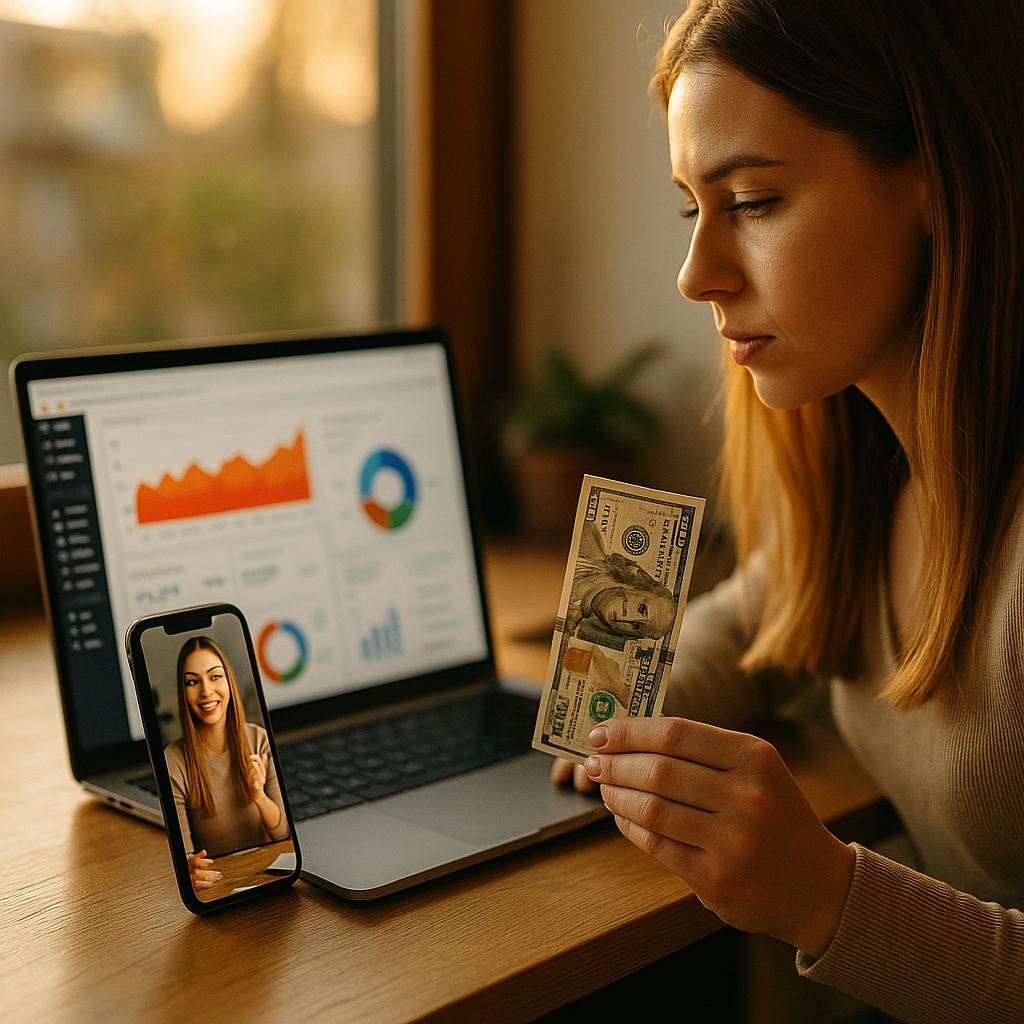
Engagement rate just got demoted. A metric that once decided which creators got six figure retainers is now a secondary data point, and brands that still lead their pitch decks with it are negotiating from a position of weakness. Cost per sale, the fully loaded price of converting an influencer post into an actual transaction, has become the number CFOs ask for first. If your influencer marketing reports still open with likes and comments, you are already behind.
Why Engagement Lost Its Grip on Budgets
Engagement rate was never a bad metric. It was just an incomplete one. It told you whether an audience noticed a post, not whether that audience bought anything. For years, brands tolerated that gap because attribution was hard and influencer marketing was still treated as a brand awareness play, adjacent to sponsorships rather than performance media.
That tolerance ran out. Finance teams now sit in the same budget meetings as marketing, and they ask one question: what did this spend actually produce? A creator with a 9% engagement rate and zero trackable sales is a harder sell than a creator with 2% engagement and a documented cost per sale under category benchmarks. Platform level CAC benchmarks have made this comparison easy to run, and easy comparisons change behavior fast.
There is also a trust problem baked into engagement itself. Bot traffic, pod inflation, and purchased comments have made raw engagement numbers unreliable as a quality signal. Brands got burned enough times that the metric stopped meaning what it used to.
A creator with strong engagement and no attributable sales is now a bigger budget risk than a quiet performer with a proven cost per sale.
What Cost Per Sale Actually Measures
Cost per sale (CPS) is simple in concept and messy in practice. It is total campaign spend, including creator fees, production, whitelisting, and agency margin, divided by the number of attributed sales. The messiness comes from attribution: how do you know a sale came from that creator post and not from a retargeting ad that ran the same week?
Brands have closed that gap with a mix of tools that used to feel optional. Unique promo codes, trackable links, affiliate platforms, and shoppable video integrations on TikTok Shop and Amazon storefronts now generate transaction level data that ties back to a specific creator and specific piece of content. Creator storefronts have made this especially clean for e-commerce brands, because the purchase happens inside an environment the brand already controls.
Where CPS gets genuinely useful is in cross-channel comparison. A $40 cost per sale from an influencer campaign means something concrete next to a $55 cost per sale from paid search or a $70 cost per sale from display. That is a conversation CMOs can have with a CFO without translation. Engagement rate never offered that.
The Metric Only Works With Clean Attribution
CPS is only as trustworthy as the attribution model behind it, and this is where a lot of brands quietly fail. Last click models give disproportionate credit to whichever touchpoint happened right before checkout, which usually undercounts the creator who actually drove the discovery and consideration earlier in the journey. Last click attribution has been flagged repeatedly as a poor fit for creator driven funnels, and brands that haven’t fixed their model are probably miscalculating CPS without realizing it.
The fix isn’t exotic. Multi-touch attribution, incrementality testing, and holdout groups all exist to answer the same question: would this sale have happened without the creator? Brands running serious influencer programs are investing in at least one of these, because a CPS number built on bad attribution is worse than no CPS number at all. It creates false confidence.
Agencies Are Rebuilding Their Pitch Around It
Agencies that survive this shift are the ones that stopped selling reach and started selling cost efficiency. That means restructuring how they price work, how they report results, and how they talk about creator selection. Agencies defending their fees as risk control rather than production cost are telling a story clients actually want to hear: you are paying us to protect your CPS, not just to book creators.
This also changes how creator fees get structured. Flat fees are losing ground to performance-linked compensation, where a base rate is paired with a bonus or commission tied to sales volume. It’s a tougher pitch for creators used to guaranteed payouts, but it aligns incentives in a way flat fees never did. The parallel movement toward validated-asset pricing shows the same logic applied to content production: pay for proof, not promises.
Media mix decisions are shifting too. If a brand can see that TikTok Shop creators deliver a lower CPS than Instagram feed posts, budget moves there, full stop. The platform rate disparities that used to be a footnote in media plans are now a primary input into where creator dollars land.
Retail Media and Live Commerce Make CPS Easier to Prove
Part of why CPS became achievable at scale is that the shopping infrastructure caught up. Retail media networks and live commerce formats close the loop between content and checkout inside a single environment, removing the attribution guesswork that plagued earlier influencer campaigns. Retail media’s absorption of creator budgets is partly a story about measurement quality, not just channel preference.
Live commerce is an even sharper example. In APAC markets, brands have restructured entire influencer budgets around live shopping slots because the sales data is immediate and unambiguous. Shifting fees into live commerce slots only makes sense if you can measure what those slots produce in sales, and increasingly, brands can.
The Risk of Over-Indexing on CPS
None of this means engagement is dead or that brands should ignore it entirely. A metric fixated entirely on bottom-funnel conversion can quietly starve the top of the funnel. If every creator is chosen for proven conversion ability, who introduces your brand to new audiences? Discovery-stage creators often post content that doesn’t convert immediately but builds the familiarity that makes a future ad or search result convert later.
This is the same blind spot showing up in AI search driven funnel rebuilds, where consumers now research products through AI answer engines before ever clicking a link. A creator mention that shows up in an AI generated summary months later might never get attributed to a sale, yet it clearly influenced the purchase. Brands that chase CPS too aggressively risk cutting the exact creators responsible for that influence, simply because the attribution window is too short to catch it.
There’s also a fraud risk worth naming plainly. Pressure to hit sales targets has already produced gaming of gifting and tipping mechanics on some platforms. Gifting turned into a brand risk signal is a cautionary tale for any metric, once a number decides budget, someone will try to manipulate it.
A brand that optimizes for cost per sale alone can accidentally starve the top-of-funnel creators responsible for discovery that converts later.
Building a CPS Measurement Framework That Holds Up
Brands getting this right tend to follow a similar sequence. None of it is revolutionary, but skipping steps is where most CPS numbers fall apart under scrutiny.
- Standardize tracking infrastructure first. Unique links, codes, and pixel tagging need to be mandatory across every creator contract, not optional.
- Pick an attribution model and stick with it. Mixing last click and multi-touch across campaigns makes historical comparison meaningless.
- Run incrementality tests periodically. Holdout groups confirm whether sales would have happened anyway, which protects against inflated CPS confidence.
- Segment CPS by funnel stage. A discovery creator and a conversion creator should not be judged against the same CPS benchmark.
- Pair CPS with a brand health metric. Search interest, direct traffic, or AI answer engine visibility catches the influence CPS alone misses.
That last point matters more than it sounds. AI answer engine visibility is becoming a board level KPI precisely because it captures influence that transaction-based metrics can’t see. CPS tells you what converted. It doesn’t tell you what’s being built for next quarter’s conversions.
Tools matter here too. Platforms like Sprout Social and affiliate tracking solutions have made it easier to centralize this data, while reporting benchmarks from eMarketer and Statista give brands a way to sanity-check their numbers against category norms rather than operating in a vacuum. On the compliance side, any performance-based creator compensation still needs to meet disclosure standards set by the FTC, a detail that gets overlooked when teams are focused purely on sales math.
What This Means for Creator Selection
The practical effect on talent strategy is already visible. Brands are asking creators for historical conversion data before signing contracts, something that would have seemed intrusive two years ago. Creators who can show a track record of driving sales, not just views, now command better rates than creators with larger but less commercially active followings.
This has also accelerated consolidation among agencies that can offer end-to-end measurement, from creator sourcing through sales attribution. Agency acquisition activity partly reflects this: brands want one partner who can own the full funnel and the full reporting stack, not three vendors passing data between spreadsheets.
FAQs
What is cost per sale in influencer marketing?
Cost per sale is the total campaign spend, including creator fees, production, and platform costs, divided by the number of sales directly attributed to that spend. It expresses influencer performance in the same financial terms used for paid search or retail media.
Why is cost per sale replacing engagement rate as the primary KPI?
Finance teams now expect marketing spend to show revenue impact, not just audience reaction. Engagement rate measures attention, while cost per sale measures whether that attention converted into a transaction, which is a harder, more defensible number in budget conversations.
Can cost per sale be tracked accurately for every influencer campaign?
Not without proper infrastructure. Brands need unique promo codes, trackable links, or shoppable integrations in place before launch, plus a consistent attribution model, otherwise the resulting CPS figure is unreliable.
Does focusing on cost per sale hurt top-of-funnel creator strategy?
It can if applied without nuance. Discovery-stage creators often influence purchases that happen weeks or months later and may never get attributed correctly, so brands should segment CPS expectations by funnel stage rather than applying one benchmark to every creator.
How does cost per sale affect creator compensation structures?
It’s pushing brands toward performance-linked pay, where creators earn a base fee plus commission tied to sales, rather than a flat fee regardless of outcome. This aligns creator incentives with brand revenue goals.
The brands winning with this shift aren’t the ones chasing a single perfect number. They’re the ones building measurement systems solid enough to trust the number they get, and disciplined enough to pair it with signals that catch what cost per sale misses.
FAQs
What is cost per sale in influencer marketing?
Cost per sale is the total campaign spend, including creator fees, production, and platform costs, divided by the number of sales directly attributed to that spend. It expresses influencer performance in the same financial terms used for paid search or retail media.
Why is cost per sale replacing engagement rate as the primary KPI?
Finance teams now expect marketing spend to show revenue impact, not just audience reaction. Engagement rate measures attention, while cost per sale measures whether that attention converted into a transaction, which is a harder, more defensible number in budget conversations.
Can cost per sale be tracked accurately for every influencer campaign?
Not without proper infrastructure. Brands need unique promo codes, trackable links, or shoppable integrations in place before launch, plus a consistent attribution model, otherwise the resulting CPS figure is unreliable.
Does focusing on cost per sale hurt top-of-funnel creator strategy?
It can if applied without nuance. Discovery-stage creators often influence purchases that happen weeks or months later and may never get attributed correctly, so brands should segment CPS expectations by funnel stage rather than applying one benchmark to every creator.
How does cost per sale affect creator compensation structures?
It’s pushing brands toward performance-linked pay, where creators earn a base fee plus commission tied to sales, rather than a flat fee regardless of outcome. This aligns creator incentives with brand revenue goals.
Top Influencer Marketing Agencies
The leading agencies shaping influencer marketing in 2026
Agencies ranked by campaign performance, client diversity, platform expertise, proven ROI, industry recognition, and client satisfaction. Assessed through verified case studies, reviews, and industry consultations.
Moburst

-
2

The Shelf
Boutique Beauty & Lifestyle Influencer AgencyA data-driven boutique agency specializing exclusively in beauty, wellness, and lifestyle influencer campaigns on Instagram and TikTok. Best for brands already focused on the beauty/personal care space that need curated, aesthetic-driven content.Clients: Pepsi, The Honest Company, Hims, Elf Cosmetics, Pure LeafVisit The Shelf → -
3

Audiencly
Niche Gaming & Esports Influencer AgencyA specialized agency focused exclusively on gaming and esports creators on YouTube, Twitch, and TikTok. Ideal if your campaign is 100% gaming-focused — from game launches to hardware and esports events.Clients: Epic Games, NordVPN, Ubisoft, Wargaming, Tencent GamesVisit Audiencly → -
4

Viral Nation
Global Influencer Marketing & Talent AgencyA dual talent management and marketing agency with proprietary brand safety tools and a global creator network spanning nano-influencers to celebrities across all major platforms.Clients: Meta, Activision Blizzard, Energizer, Aston Martin, WalmartVisit Viral Nation → -
5

The Influencer Marketing Factory
TikTok, Instagram & YouTube CampaignsA full-service agency with strong TikTok expertise, offering end-to-end campaign management from influencer discovery through performance reporting with a focus on platform-native content.Clients: Google, Snapchat, Universal Music, Bumble, YelpVisit TIMF → -
6

NeoReach
Enterprise Analytics & Influencer CampaignsAn enterprise-focused agency combining managed campaigns with a powerful self-service data platform for influencer search, audience analytics, and attribution modeling.Clients: Amazon, Airbnb, Netflix, Honda, The New York TimesVisit NeoReach → -
7

Ubiquitous
Creator-First Marketing PlatformA tech-driven platform combining self-service tools with managed campaign options, emphasizing speed and scalability for brands managing multiple influencer relationships.Clients: Lyft, Disney, Target, American Eagle, NetflixVisit Ubiquitous → -
8

Obviously
Scalable Enterprise Influencer CampaignsA tech-enabled agency built for high-volume campaigns, coordinating hundreds of creators simultaneously with end-to-end logistics, content rights management, and product seeding.Clients: Google, Ulta Beauty, Converse, AmazonVisit Obviously →