


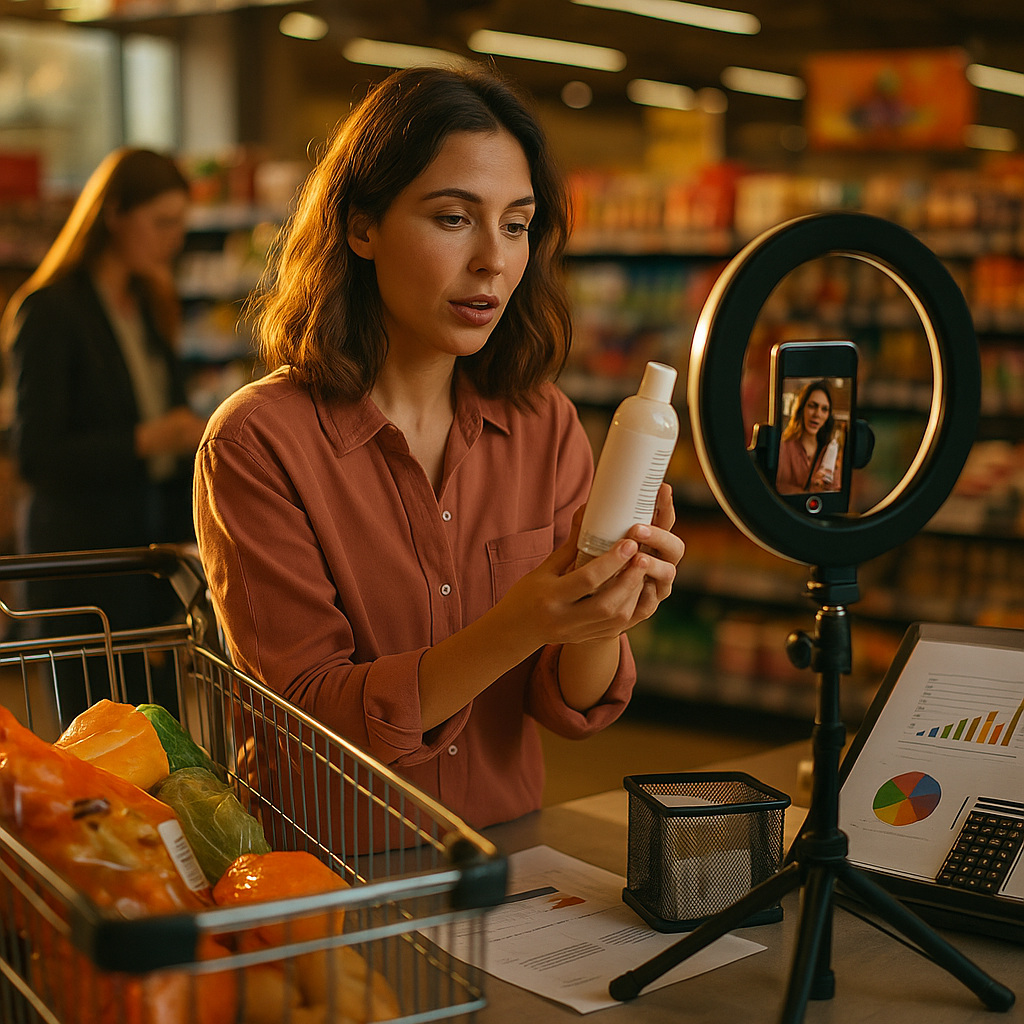
Amazon’s retail media business pulled in more than $56 billion in the past year, and Walmart Connect, Target’s Roundel, and Instacart are all racing to grab their share of budgets that used to flow straight to creators. If your agency is still pitching influencer programs as a standalone line item, you’re competing against a retail media network that promises closed-loop attribution and shelf placement in the same breath. The question isn’t whether retail media is eating influencer budgets. It’s how fast, and what agencies do about it.
Why CFOs Suddenly Love Retail Media
Here’s the uncomfortable truth agencies have to sit with: retail media networks solve the one problem influencer marketing has never fully cracked, which is last-touch, revenue-attributed proof. A CMO can show a board exactly how much Amazon Sponsored Brands spend converted to purchases. Try doing that with a TikTok creator post that drove brand awareness three weeks before a sale closed on a competitor’s site. Last click attribution fails creator driven buying journeys, but finance teams still reward it because it’s clean, defensible, and easy to put in a slide.
That’s the structural advantage retail media has baked in. It’s not that the ROI is necessarily better. It’s that the ROI is legible. And legible wins budget in a climate where 61 percent of CMOs cannot measure ROI on their broader marketing mix.
Retail media networks aren’t beating influencer marketing on performance. They’re beating it on reportability, and in a budget review, reportability wins almost every time.
The Money Is Moving, Not Disappearing
Let’s be precise about what’s actually happening, because “budgets are shifting” sounds vague and agencies need specifics to act on. eMarketer has tracked U.S. retail media ad spend climbing well past $60 billion annually, and brands in categories like CPG, beauty, and supplements are reallocating dollars that previously funded standalone creator campaigns into retail media placements that happen to feature creator content.
This matters because it’s not a straight cut. It’s a repackaging. Amazon’s creator storefronts, for instance, let influencers earn commission while brands pay for amplification inside Amazon’s own ad stack. Amazon creator storefronts quietly become retail media engine is exactly the mechanism agencies need to understand: the creator still makes content, but the spend now routes through a retail media auction instead of a direct brand deal or a traditional influencer platform fee.
Walmart Connect has built similar infrastructure, pairing Spark creator partnerships with onsite media buys. Target’s Roundel is doing the same with its Roundel Creator Collective. The pattern is consistent across every major retailer: absorb the creator relationship, monetize it through the ad platform, and keep the margin in-house rather than letting it flow to a brand’s external agency of record.
What This Does to Agency Margins
Agencies have historically made money three ways on influencer work: strategy and creator sourcing fees, content production markups, and media management commissions. Retail media networks threaten all three at once.
- Sourcing fees shrink because retailers now pre-vet and pre-package creator rosters inside their own marketplaces, cutting out the need for an agency to find talent from scratch.
- Production markups compress as retailers push standardized content specs optimized for their ad units rather than bespoke brand storytelling.
- Media commissions disappear when the brand buys directly through the retailer’s self-serve ad console instead of routing spend through an agency’s media desk.
This is the same compression pattern agencies saw when programmatic display matured. The players who survive aren’t the ones who fight the shift. They’re the ones who reposition around the parts of the workflow that retailers can’t automate: strategy, compliance, and cross-channel measurement.
Is This Actually Bad for Agencies?
Not entirely, and it would be lazy to frame it as pure threat. Retail media budgets are often incremental, meaning they come from shopper marketing or trade budgets that never touched an agency’s influencer retainer in the first place. For agencies willing to build retail media literacy, there’s a genuine expansion opportunity: helping brands navigate Amazon DSP, Criteo’s retail media offering, and Instacart Ads alongside their existing creator programs rather than treating them as separate disciplines.
The brands winning right now are the ones blending the two. Supplement brands chase lower CAC with TikTok Shop pivot while simultaneously running retail media campaigns on Amazon that feature the same creator content repurposed as sponsored product imagery. One asset, two revenue engines. That’s the operational efficiency agencies should be selling, not resisting.
The agencies losing budget to retail media are the ones still pitching influencer and shopper marketing as separate line items. The ones gaining ground are packaging them as one unified commerce strategy.
Contracts, Compliance, and the New Risk Surface
There’s a less discussed angle here that matters enormously for risk-averse brand teams: retail media networks come with their own compliance regimes, and creators don’t always understand them. Amazon has strict rules about incentivized reviews, disclosure language, and creator storefront claims that differ from FTC guidance for general social posts. An agency managing a campaign that spans both a brand’s owned social channels and a retailer’s ad network needs a single compliance framework, not two.
Review the FTC’s endorsement guidelines alongside each retailer’s specific creator content policy before greenlighting any cross-platform campaign. The gaps between what a retailer allows and what the FTC requires are where legal exposure lives, and that exposure now sits with whichever agency signed off on the content.
This is also why agencies reject AI discounts, defend fees as risk control. The value an agency provides isn’t just creative output anymore. It’s the compliance layer that keeps a brand out of regulatory trouble when content lives across five different retail ecosystems with five different rulebooks.
Measurement Is the Real Battleground
Ask any retail media buyer what they love about the channel and they’ll say the same thing: attribution. Ask any influencer strategist what they struggle with and they’ll say the same thing back. That’s not a coincidence, it’s the entire reason budgets are migrating.
But retail media attribution has its own blind spots. It captures bottom-funnel conversion beautifully and misses almost everything that happens upstream. A creator video that builds brand consideration on TikTok before a shopper ever searches on Amazon gets zero credit in a retail media dashboard, even though it did the hard work of creating demand. Creator CAC benchmarks by platform expose inflated budgets precisely because brands keep measuring creator spend with the wrong attribution model, then wonder why the numbers look worse than retail media’s.
Agencies that can build a measurement framework bridging both worlds, something closer to media mix modeling than last-click, are the ones who’ll keep a seat at the budget table. HubSpot and Sprout Social both publish regularly on multi-touch attribution approaches worth referencing when you’re building that case internally.
What Agencies Should Actually Do Next Quarter
Theory is cheap. Here’s what this looks like operationally for an agency trying to protect revenue in the next two quarters:
- Build a retail media practice, don’t ignore it. Get certified on Amazon DSP and Walmart Connect. Clients will ask, and “we don’t do that” is a losing answer.
- Repackage creator content for dual use. Negotiate usage rights upfront so the same creator asset can run as a social post and a retail media sponsored unit without a second production cycle. This ties directly into reusable creative libraries cut production costs in half, which is becoming the default operating model for lean creative teams.
- Renegotiate fee structures around strategy, not media commission. If media buying commissions are disappearing into retailer self-serve platforms, the agency fee needs to shift toward planning, compliance, and measurement consulting.
- Get ahead of AI search implications. Retail media isn’t the only force rerouting budgets. 60 percent AI search summaries reroute retail media spend shows these two trends are converging, and agencies need a point of view on both simultaneously.
- Audit existing creator contracts for retail exclusivity clauses. Many legacy influencer agreements never anticipated that a creator’s content might also live inside a retailer’s ad network, which creates usage rights headaches nobody wants to discover mid-campaign.
None of this is optional anymore. Statista’s ad spend tracking shows retail media’s growth trajectory outpacing nearly every other digital channel, and brands are following the data whether or not their agency is ready for it.
The Agencies That Win Here Treat It as Convergence, Not Competition
The smartest move isn’t defending influencer budgets as sacred territory separate from retail media. It’s positioning the agency as the entity that makes both channels work together, with one creator roster, one compliance process, and one measurement framework that satisfies both the CMO who wants brand lift and the CFO who wants attributable revenue. Agencies that keep pitching these as separate services are going to keep losing the budget conversation, one retail media dashboard at a time.
Frequently Asked Questions
Why are retail media networks taking budget from influencer marketing?
Retail media networks offer closed-loop, revenue-attributed reporting that’s easier for finance teams to approve than the awareness-based metrics traditional influencer campaigns often rely on, even when actual performance is comparable.
Are influencer budgets actually shrinking, or just moving?
Mostly moving. Spend is shifting from standalone creator campaigns into retail media placements that still use creator content, meaning the creative work survives but the revenue routes through a different channel and often a different budget owner.
How should agencies adjust their pricing model?
Shift fee structures away from media commission, which retailers are absorbing through self-serve platforms, and toward strategy, compliance, and cross-channel measurement services that retail media networks can’t replicate.
What compliance risks come with blending influencer and retail media campaigns?
Each retailer enforces its own creator content and disclosure rules, which can differ from FTC endorsement guidelines. Agencies managing cross-platform campaigns need a unified compliance framework to avoid gaps in legal coverage.
Can creator content be reused across both social and retail media channels?
Yes, but only if usage rights are negotiated upfront in the creator contract. Many legacy agreements didn’t anticipate retail media reuse, so agencies should audit existing contracts before repurposing assets.
Top Influencer Marketing Agencies
The leading agencies shaping influencer marketing in 2026
Agencies ranked by campaign performance, client diversity, platform expertise, proven ROI, industry recognition, and client satisfaction. Assessed through verified case studies, reviews, and industry consultations.
Moburst

-
2

The Shelf
Boutique Beauty & Lifestyle Influencer AgencyA data-driven boutique agency specializing exclusively in beauty, wellness, and lifestyle influencer campaigns on Instagram and TikTok. Best for brands already focused on the beauty/personal care space that need curated, aesthetic-driven content.Clients: Pepsi, The Honest Company, Hims, Elf Cosmetics, Pure LeafVisit The Shelf → -
3

Audiencly
Niche Gaming & Esports Influencer AgencyA specialized agency focused exclusively on gaming and esports creators on YouTube, Twitch, and TikTok. Ideal if your campaign is 100% gaming-focused — from game launches to hardware and esports events.Clients: Epic Games, NordVPN, Ubisoft, Wargaming, Tencent GamesVisit Audiencly → -
4

Viral Nation
Global Influencer Marketing & Talent AgencyA dual talent management and marketing agency with proprietary brand safety tools and a global creator network spanning nano-influencers to celebrities across all major platforms.Clients: Meta, Activision Blizzard, Energizer, Aston Martin, WalmartVisit Viral Nation → -
5

The Influencer Marketing Factory
TikTok, Instagram & YouTube CampaignsA full-service agency with strong TikTok expertise, offering end-to-end campaign management from influencer discovery through performance reporting with a focus on platform-native content.Clients: Google, Snapchat, Universal Music, Bumble, YelpVisit TIMF → -
6

NeoReach
Enterprise Analytics & Influencer CampaignsAn enterprise-focused agency combining managed campaigns with a powerful self-service data platform for influencer search, audience analytics, and attribution modeling.Clients: Amazon, Airbnb, Netflix, Honda, The New York TimesVisit NeoReach → -
7

Ubiquitous
Creator-First Marketing PlatformA tech-driven platform combining self-service tools with managed campaign options, emphasizing speed and scalability for brands managing multiple influencer relationships.Clients: Lyft, Disney, Target, American Eagle, NetflixVisit Ubiquitous → -
8

Obviously
Scalable Enterprise Influencer CampaignsA tech-enabled agency built for high-volume campaigns, coordinating hundreds of creators simultaneously with end-to-end logistics, content rights management, and product seeding.Clients: Google, Ulta Beauty, Converse, AmazonVisit Obviously →