


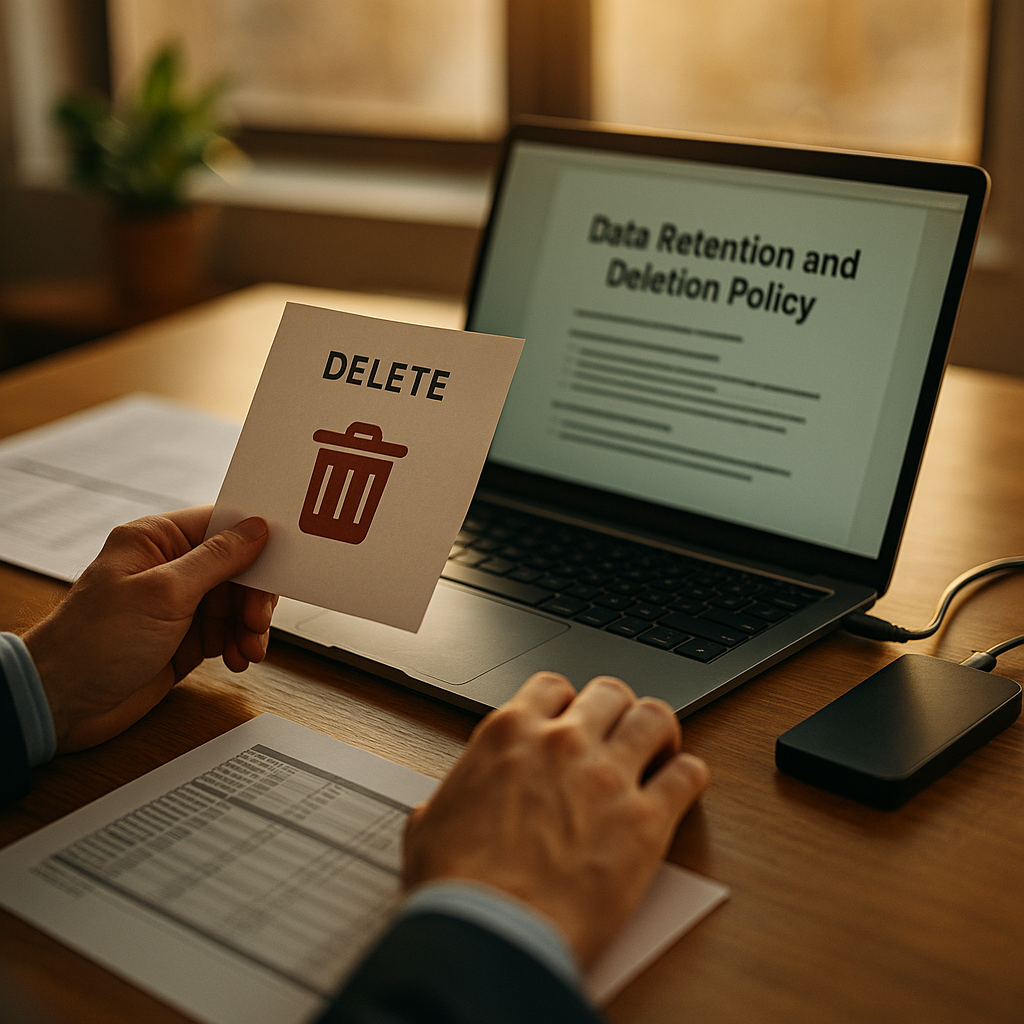
A clear and effective data retention and deletion policy for your customers is an essential pillar of modern data management and trust-building. As privacy concerns grow in 2025, customers demand clarity about what happens to their data. Let’s explore how to design a policy that’s not only compliant and robust, but that sets you apart as a trustworthy partner.
Understanding Data Retention and Deletion Policy Requirements
Designing a customer-friendly data retention policy begins with understanding the requirements. Regulations like GDPR and CCPA are just the starting point; customers expect transparency, fairness, and responsiveness. In 2025, many organizations face penalties not simply for non-compliance but for unclear data handling practices.
- Define the type of data collected: Customer profiles, purchase history, cookies, and communications.
- Specify data usage and processing: How, why, and for how long data is stored.
- Identify regulatory obligations: Minimum and maximum retention periods, lawful grounds for storage, and deletion triggers.
- Clarify exceptions and special cases: Dispute resolutions, investigations, or customer requests.
Your policy should reflect these requirements while clearly communicating to customers, not just legal teams. The foundation of effective data governance is anticipating what your customers want to know and prioritizing their experience.
Crafting Clear Policy Language for Customer Trust
Your data retention and deletion policy must be written in plain language. Avoid jargon and lengthy legal clauses. According to a 2024 IBM study, 82% of consumers value concise, jargon-free policies and are more likely to trust companies that provide them.
- Use simple terms: Explain what “retention” or “deletion” means in everyday language.
- Be upfront about timelines: State exactly how long data is kept and when it will be deleted or anonymized.
- List customer rights: Explain how customers can request copies, corrections, or deletion of their information.
- Make it scannable: Use bullet points, headers, and short paragraphs.
Consider adding a brief summary at the top—a “customer promise” version of your policy. This fosters immediate confidence and helps customers understand your commitment to privacy at a glance.
Structuring Data Retention Policy for Regulatory Compliance
A well-structured data retention policy is vital for meeting regulatory requirements and safeguarding your business. Modern data protection laws continue to evolve in 2025, emphasizing not only data minimization but also the right to be forgotten.
- Create a data inventory: Map out what types of customer data you collect and the systems where they are stored.
- Define retention periods: Align each data set to a clearly stated business or legal justification for its retention and schedule for deletion.
- Automate with technology: Use data management platforms to automatically flag or erase data past retention dates.
- Detail deletion processes: Clearly outline how and when deletion or anonymization is carried out, including system backups and archives.
- Document exceptions: Record any justified deviations, such as legal holds or requests from law enforcement.
Including this structural detail in your policy not only ensures compliance but demonstrates accountability and reduces risks from audits or customer complaints.
Communicating Data Deletion Policy and Customer Rights
A transparent data deletion policy is at the heart of customer trust and regulatory expectation. Make it straightforward for customers to understand how and when their personal information is deleted, and empower them to take control.
- Explain standard deletion processes: Illustrate what triggers deletion—such as account closure or expired retention period—and what the actual process involves.
- Provide clear instructions: Offer step-by-step guidance on how customers can initiate requests for deletion or correction; include contact points and expected timelines.
- Outline exceptions: Be upfront about situations where immediate deletion isn’t possible, such as pending transactions or legal holds.
- Confirm actions: Close the loop by informing customers when their data has been deleted and providing evidence upon request.
Beyond regulatory duty, proactively communicating these elements demonstrates your respect for customer autonomy and privacy—an increasingly prominent differentiator in 2025.
Best Practices for Reviewing and Updating Data Retention Policies
Effective policy management means treating your data retention and deletion guidelines as living documents. Regular reviews ensure your organization keeps pace with new regulations, business needs, and evolving customer expectations.
- Schedule annual reviews: Set reminders to audit your data retention and deletion policy at least once every 12 months—or whenever there’s a regulatory change.
- Involve cross-functional teams: Bring together compliance, IT, customer support, and legal to review real-world application and identify gaps.
- Monitor feedback: Integrate customer feedback and common support queries to further clarify or address misunderstandings in your policy.
- Communicate changes: Notify customers clearly and promptly about any updates affecting their rights or data handling.
This ongoing diligence highlights your organization’s genuine commitment to privacy, transparency, and continuous improvement.
Embedding Data Privacy into Your Company Culture
True success with a data retention and deletion policy comes not only from careful drafting but from organization-wide buy-in. Data privacy must be a shared responsibility; every employee plays a role in protecting customer information.
- Conduct training: Equip all staff—especially those handling customer data—with training on policy details, procedures, and “why it matters.”
- Empower reporting: Encourage employees to identify and report gaps or risks in data handling.
- Build accountability: Make policy adherence part of performance reviews and business metrics.
When privacy becomes intrinsic to your company’s values, customers feel the difference. They’ll recognize that every interaction with your organization reflects a sincere respect for their rights and data.
Frequently Asked Questions about Data Retention and Deletion Policies
-
What is a data retention and deletion policy?
This is a formal document that details how long a business stores personal data, the reasons for retention, and the processes for deleting or anonymizing information in accordance with customer rights and legal obligations.
-
Why do companies need a data retention policy in 2025?
With stronger regulations, a robust policy ensures legal compliance, builds customer trust, reduces risks of data breaches, and showcases organizational transparency.
-
How long should data be retained?
There is no universal answer—it depends on the data type, industry regulations, and business needs. Always specify retention periods and ensure they’re justifiable and documented.
-
How can customers request data deletion?
Effective policies include clear instructions for customers to access, correct, or request deletion of personal data—usually via secure webforms, email, or a designated privacy officer.
-
What should be done in case of legal investigations?
Your policy should state that data required for investigations or legal proceedings may be retained beyond standard periods, but only as necessary and in line with laws.
In summary, a clear and effective data retention and deletion policy for your customers is a trust-building essential in 2025. Prioritize transparency, simplicity, compliance, and communication—making privacy a core part of your business. Start today, and turn data stewardship into your organization’s competitive advantage.
Top Influencer Marketing Agencies
The leading agencies shaping influencer marketing in 2026
Agencies ranked by campaign performance, client diversity, platform expertise, proven ROI, industry recognition, and client satisfaction. Assessed through verified case studies, reviews, and industry consultations.
Moburst

-
2

The Shelf
Boutique Beauty & Lifestyle Influencer AgencyA data-driven boutique agency specializing exclusively in beauty, wellness, and lifestyle influencer campaigns on Instagram and TikTok. Best for brands already focused on the beauty/personal care space that need curated, aesthetic-driven content.Clients: Pepsi, The Honest Company, Hims, Elf Cosmetics, Pure LeafVisit The Shelf → -
3

Audiencly
Niche Gaming & Esports Influencer AgencyA specialized agency focused exclusively on gaming and esports creators on YouTube, Twitch, and TikTok. Ideal if your campaign is 100% gaming-focused — from game launches to hardware and esports events.Clients: Epic Games, NordVPN, Ubisoft, Wargaming, Tencent GamesVisit Audiencly → -
4

Viral Nation
Global Influencer Marketing & Talent AgencyA dual talent management and marketing agency with proprietary brand safety tools and a global creator network spanning nano-influencers to celebrities across all major platforms.Clients: Meta, Activision Blizzard, Energizer, Aston Martin, WalmartVisit Viral Nation → -
5

The Influencer Marketing Factory
TikTok, Instagram & YouTube CampaignsA full-service agency with strong TikTok expertise, offering end-to-end campaign management from influencer discovery through performance reporting with a focus on platform-native content.Clients: Google, Snapchat, Universal Music, Bumble, YelpVisit TIMF → -
6

NeoReach
Enterprise Analytics & Influencer CampaignsAn enterprise-focused agency combining managed campaigns with a powerful self-service data platform for influencer search, audience analytics, and attribution modeling.Clients: Amazon, Airbnb, Netflix, Honda, The New York TimesVisit NeoReach → -
7

Ubiquitous
Creator-First Marketing PlatformA tech-driven platform combining self-service tools with managed campaign options, emphasizing speed and scalability for brands managing multiple influencer relationships.Clients: Lyft, Disney, Target, American Eagle, NetflixVisit Ubiquitous → -
8

Obviously
Scalable Enterprise Influencer CampaignsA tech-enabled agency built for high-volume campaigns, coordinating hundreds of creators simultaneously with end-to-end logistics, content rights management, and product seeding.Clients: Google, Ulta Beauty, Converse, AmazonVisit Obviously →