


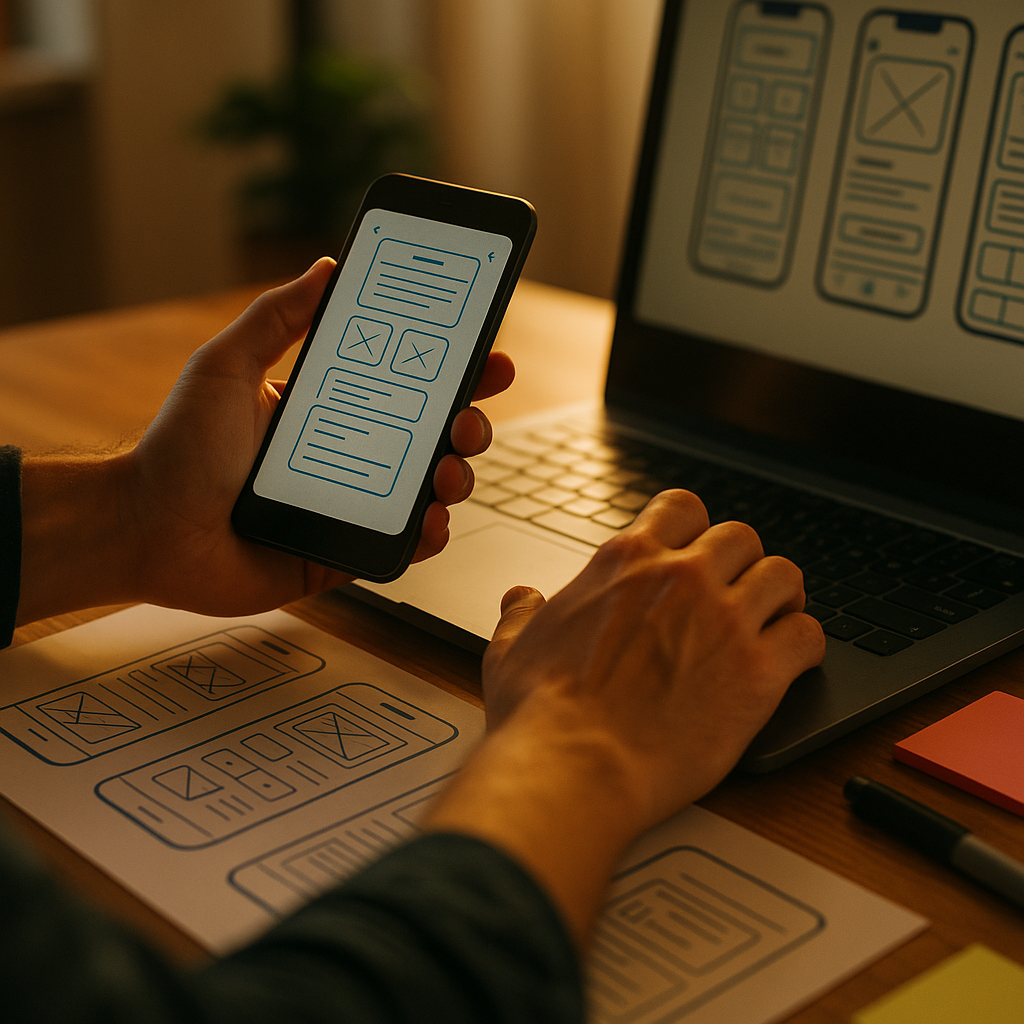
UX and UI design and prototyping tools have become essential assets for marketing and product teams striving to develop successful digital solutions in 2025. Choosing the right toolkit impacts collaboration, speed, and ultimately, user satisfaction. Let’s explore how the latest platforms empower teams to design, test, and launch digital experiences with confidence.
Understanding UX and UI Design for Marketing and Product Teams
UX (User Experience) design focuses on optimizing the overall interaction a user has with a product or service. UI (User Interface) design ensures the visual and interactive elements are appealing and intuitive. For marketing and product teams, aligning UX and UI design goals bridges the gap between customer needs and business objectives. In 2025, cohesive UX/UI design strategies accelerate time-to-market, reinforce brand messaging, and drive conversion rates.
Leading experts from the Nielsen Norman Group emphasize that at least 80% of digital project failures stem from misaligned or insufficient UX and UI efforts. Investing in robust design workflows, supported by state-of-the-art prototyping tools, directly impacts user engagement, retention, and brand loyalty.
The Role of Prototyping Tools in Product Development
Prototyping tools transform static design concepts into interactive, testable models, enabling teams to validate ideas before development. For both marketing and product teams, these tools streamline collaboration, reduce miscommunication, and minimize costly changes during later project stages. In fact, a 2025 UX Alliance survey shows that organizations using advanced prototyping tools cut development cycles by up to 30%.
- Marketing teams leverage prototypes to test campaign concepts, landing pages, and messaging, gathering actionable feedback early.
- Product teams use prototyping to validate workflows, gather stakeholder input, and ensure requirements are met before development begins.
The iterative process, powered by prototyping tools, means enhanced agility, improved stakeholder buy-in, and a shared vision among cross-functional teams.
Top UX and UI Design Tools for Teams in 2025
Today’s market offers a sophisticated suite of UX and UI design and prototyping tools shaped by collaboration, plug-in ecosystems, and AI-assisted features. Here are some of the most effective options for marketing and product teams in 2025:
- Figma: Still a dominant force, Figma’s real-time cloud collaboration, advanced prototyping, and integrated design systems make it a favorite among distributed teams. Figma’s new AI-powered asset generation accelerates ideation.
- Adobe XD: Praised for seamless integration with other Adobe Creative Cloud applications and new voice prototyping features, XD empowers designers to create complex interactions with ease.
- Sketch: A trusted choice for Mac users, Sketch’s open plug-in ecosystem and vector editing capabilities are ideal for UI-focused teams.
- InVision: Known for its robust prototyping and developer handoff features, InVision supports scalable enterprise workflows and integrates with project management tools.
- Axure RP: Popular for complex logic and data-driven prototyping, Axure remains key for projects requiring detailed user flows and interactions.
- UXPin: With new accessibility auditing and real data capabilities, UXPin allows teams to design and test with fidelity to end-user experiences.
Evaluating tools based on specific needs—such as integration with other marketing platforms, handoff precision, or animation depth—ensures the right fit and maximum return on investment.
Best Practices for Collaborative Prototyping
Adhering to best practices in collaborative prototyping aligns teams behind a unified vision and reduces rework. Here’s what the leading organizations recommend in 2025:
- Start with user insights: Incorporate data from user interviews, analytics, and surveys before designing.
- Define clear roles: Assign ownership for each design and prototyping phase—this streamlines feedback loops and decision-making.
- Promote asynchronous reviews: Cloud-based tools enable team members in various time zones to comment and iterate without delays.
- Utilize component libraries: Shared design systems within Figma, Sketch, or Adobe XD ensure brand consistency across products and campaigns.
- Test early and often: Continuously prototype and gather feedback from both teammates and end-users to spot usability issues before launch.
- Document decisions: Maintain traceability with recorded reasoning for each iteration, speeding up onboarding and future audits.
Following these best practices not only enhances efficiency and transparency but also fosters a culture of creativity and trust within cross-functional teams.
Integrating UX/UI Tools with Marketing and Analytics Platforms
For marketing and product teams, true power emerges when UX and UI design and prototyping tools connect seamlessly with analytics, CRM, and content management systems. Modern toolsets in 2025 enable:
- Data-driven prototyping: Direct import of user analytics to prioritize design improvements and test real-world scenarios.
- Workflow automation: Integrations with project management tools like Asana or Jira ensure feedback and design updates flow directly into development sprints.
- Content sync: Automated synchronization with CMS platforms for live-copy testing cuts approval timelines for marketing assets.
- Personalization testing: Marketers can prototype personalized user journeys and link A/B testing data insights for rapid optimization.
These integrations eliminate silos between design, marketing, and engineering—a crucial advantage in today’s fast-paced digital economy. Teams that connect their tool ecosystems respond faster to market shifts and deliver cohesive customer experiences.
Measuring Success: UX/UI Prototyping KPIs and ROI
The value of investing in UX and UI design and prototyping tools is best demonstrated through clear metrics. According to the Interaction Design Foundation (2025), organizations that routinely track prototyping KPIs achieve higher retention and conversion rates. Core KPIs include:
- Time to prototype: How quickly teams can move from concept to interactive model.
- User feedback cycles: The number and quality of actionable insights gathered from usability testing.
- Cost per iteration: Reduction in waste due to early identification of design flaws.
- Design system adoption: Percentage of team assets created via shared libraries, reflecting consistency.
- Impact on business outcomes: Engagement, conversion, and customer satisfaction changes post-launch.
Measuring these KPIs enables teams to demonstrate ROI when adopting or upgrading UX/UI platforms—securing further buy-in from stakeholders and optimizing future projects.
Frequently Asked Questions (FAQs) about UX and UI Design and Prototyping Tools
-
What is the difference between UX and UI design?
UX design focuses on the overall user journey and satisfaction, while UI design emphasizes visual elements and interactivity. Together, they ensure digital products are useful, usable, and visually appealing.
-
Why are prototyping tools important for marketing teams?
Prototyping tools enable marketing teams to visualize and test digital campaigns, landing pages, and messaging before launch, saving time and resources while improving campaign effectiveness.
-
How do I choose the best design tool for my team?
Consider your team’s needs: collaboration features, platform compatibility, integration with other tools, and scalability. Conduct a trial with key use cases before committing to a platform.
-
Can these tools be integrated with analytics platforms?
Yes. Modern design and prototyping tools in 2025 offer robust integration options with analytics, CRM, CMS, and project management platforms, streamlining data-driven workflows.
-
Are these tools suitable for remote and hybrid teams?
Absolutely. Most leading platforms offer cloud-based collaboration, version control, and asynchronous feedback, supporting distributed and hybrid workflows efficiently.
In summary, leveraging the right UX and UI design and prototyping tools transforms how marketing and product teams deliver digital experiences in 2025. Adopting best practices, measuring KPIs, and integrating platforms ensures customer-centric, agile, and impactful solutions—putting your brand ahead of the curve.
Top Influencer Marketing Agencies
The leading agencies shaping influencer marketing in 2026
Agencies ranked by campaign performance, client diversity, platform expertise, proven ROI, industry recognition, and client satisfaction. Assessed through verified case studies, reviews, and industry consultations.
Moburst

-
2

The Shelf
Boutique Beauty & Lifestyle Influencer AgencyA data-driven boutique agency specializing exclusively in beauty, wellness, and lifestyle influencer campaigns on Instagram and TikTok. Best for brands already focused on the beauty/personal care space that need curated, aesthetic-driven content.Clients: Pepsi, The Honest Company, Hims, Elf Cosmetics, Pure LeafVisit The Shelf → -
3

Audiencly
Niche Gaming & Esports Influencer AgencyA specialized agency focused exclusively on gaming and esports creators on YouTube, Twitch, and TikTok. Ideal if your campaign is 100% gaming-focused — from game launches to hardware and esports events.Clients: Epic Games, NordVPN, Ubisoft, Wargaming, Tencent GamesVisit Audiencly → -
4

Viral Nation
Global Influencer Marketing & Talent AgencyA dual talent management and marketing agency with proprietary brand safety tools and a global creator network spanning nano-influencers to celebrities across all major platforms.Clients: Meta, Activision Blizzard, Energizer, Aston Martin, WalmartVisit Viral Nation → -
5

The Influencer Marketing Factory
TikTok, Instagram & YouTube CampaignsA full-service agency with strong TikTok expertise, offering end-to-end campaign management from influencer discovery through performance reporting with a focus on platform-native content.Clients: Google, Snapchat, Universal Music, Bumble, YelpVisit TIMF → -
6

NeoReach
Enterprise Analytics & Influencer CampaignsAn enterprise-focused agency combining managed campaigns with a powerful self-service data platform for influencer search, audience analytics, and attribution modeling.Clients: Amazon, Airbnb, Netflix, Honda, The New York TimesVisit NeoReach → -
7

Ubiquitous
Creator-First Marketing PlatformA tech-driven platform combining self-service tools with managed campaign options, emphasizing speed and scalability for brands managing multiple influencer relationships.Clients: Lyft, Disney, Target, American Eagle, NetflixVisit Ubiquitous → -
8

Obviously
Scalable Enterprise Influencer CampaignsA tech-enabled agency built for high-volume campaigns, coordinating hundreds of creators simultaneously with end-to-end logistics, content rights management, and product seeding.Clients: Google, Ulta Beauty, Converse, AmazonVisit Obviously →