


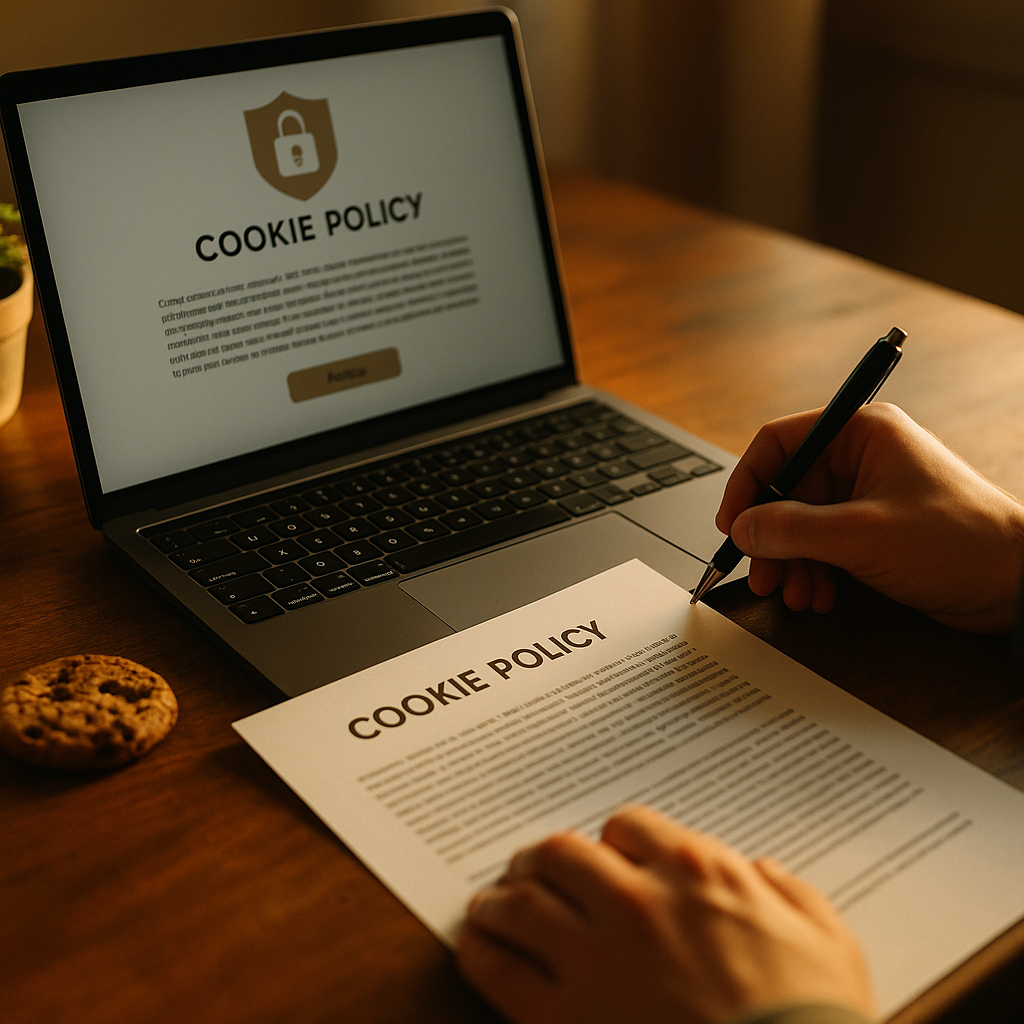
Creating a clear and comprehensive cookie policy for your website is crucial for building trust and complying with privacy laws. As data regulations become more rigorous in 2025, an effective cookie policy is now non-negotiable for business websites. Want to write a cookie policy that protects you and your users? Read on for actionable steps and expert guidance.
Why a Transparent Cookie Policy Matters in 2025
Having a transparent cookie policy is now a legal obligation in many jurisdictions, but it also sets the foundation for healthy customer relationships. According to a 2024 Statista report, 81% of users are more likely to trust brands with transparent data practices. Regulatory frameworks like the GDPR, CCPA, and newer regional laws impose hefty penalties for non-compliance. Ignoring these requirements could result in loss of credibility and expensive legal consequences.
Beyond legal compliance, clear communication about data collection practices reassures visitors that their privacy is a top priority. This honesty increases user confidence, encourages engagement, and mitigates the risk of user complaints or investigations.
Key Elements Every Website Cookie Policy Should Include
To create a comprehensive cookie policy, you must cover certain core elements. This ensures you not only comply with data privacy regulations but also provide visitors with relevant information in a user-friendly manner. A detailed policy usually includes:
- Definition of cookies: Briefly explain what cookies are and why your website uses them.
- Types of cookies used: Categorize cookies, such as strictly necessary, performance, functionality, and targeting/advertising.
- Purpose of each cookie: Describe in plain language what each type of cookie does and why it is needed.
- How users can control cookies: Instruct users on how they can accept, decline, or delete cookies via browser settings or your consent banner.
- Third-party cookies: Reveal whether third-party cookies (like those from analytics, advertising, or social media partners) are present.
- Duration of cookies: State how long each cookie will stay on the user’s device.
- Contact details: Offer an accessible way for users to get in touch with your team about privacy questions.
Clearly presenting these elements demonstrates that your business values privacy and data transparency.
Best Practices for Writing a User-Friendly Cookie Policy
Even the most accurate cookie policy falls short if users can’t understand or use it. The primary goal is to be both thorough and accessible. Here’s how to achieve this:
- Use plain language: Avoid legal and technical jargon. Translate complex concepts into straightforward explanations to ensure accessibility for all users.
- Keep it concise: Eliminate fluff and repetition. Break up long paragraphs with bullet points or tables for easier reading.
- Organize content logically: Use clear headings, subheadings, and structured sections so visitors can quickly find the information they need.
- Update regularly: As cookie use or laws change, review and refresh your policy. Display the “last updated” date to highlight your commitment to transparency.
- Link related policies: Direct users to your full privacy policy or terms of service for additional details.
Prioritize the user experience, just as you do with your website’s other core pages. This not only supports compliance but also reduces confusion and friction for your audience.
Legal Compliance: Navigating GDPR, CCPA, and Global Laws
Regulations like the General Data Protection Regulation (GDPR) and California Consumer Privacy Act (CCPA) have introduced strict guidelines for cookie policy content and implementation. In 2025, similar regulations have been adopted in APAC and Latin America, further increasing the global reach of privacy laws. To ensure your cookie policy is compliant, consider the following:
- Prior consent: Implement a consent mechanism, such as a cookie banner, before dropping non-essential cookies.
- Right to withdraw consent: Allow users to change or withdraw their consent easily at any time, and detail this process in your policy.
- Comprehensive listing: Specify the types, providers, and purposes of each cookie, as well as their retention periods.
- International transfers: Inform users if their data may be transferred outside their jurisdiction and the safeguards in place.
It’s wise to work with privacy professionals or use reputable third-party services to remain updated with changing requirements and enforce best practices.
Building Trust Through Your Cookie Consent Banner and User Controls
Your cookie policy should be more than just a static page; it’s part of an interactive ecosystem. The most visible part of your transparency is the cookie consent banner. To boost trust and compliance:
- Ensure your banner appears to all new visitors and clearly requests their consent.
- Offer granular cookie preferences—don’t force users to accept all or nothing.
- Provide simple, accessible ways for users to revisit or update their choices at any time. Many modern consent management platforms automate these processes.
- Link directly to your full cookie policy from the banner and relevant website footers.
The goal is to empower users with meaningful choices, promoting a culture of transparency and respect for their data.
Step-by-Step Guide: Drafting and Publishing Your Cookie Policy
Ready to get started? Here’s a practical guide based on EEAT (Experience, Expertise, Authoritativeness, Trustworthiness) principles:
- Audit your website: Use tools such as Cookiebot, OneTrust, or open-source scanners to list all cookies in use, including those loaded via third-party plugins.
- Classify cookies: Sort cookies by type and function; ensure you understand what data they collect and why.
- Write your draft: Fill in the key elements outlined above. Review privacy laws relevant to your audience’s location for mandatory disclosures.
- Consult privacy experts: If in doubt, consult professionals to review your draft for both completeness and legality.
- Design for clarity: Format the policy to promote readability—including headings, bullet points, and plain language.
- Integrate with your banner: Ensure your policy is easily accessible from your consent banner and footer. Users should be able to update their preferences in one click.
- Review and update: Schedule regular reviews, especially if you add new features or third-party integrations.
Document your process for accountability and to show your commitment to protecting user privacy.
FAQs About Writing a Clear and Comprehensive Cookie Policy
-
Is a cookie policy legally required?
Yes, most privacy laws in 2025—including GDPR, CCPA, and new regional regulations—require websites to display a comprehensive cookie policy if cookies are in use.
-
Does my small business or blog need a cookie policy?
Absolutely. Any website collecting user data through cookies, regardless of size, should have a clear cookie policy to comply with global regulations and instill user trust.
-
Can I use a cookie policy template?
Templates offer a good starting point, but always personalize your policy to accurately reflect the cookies and technologies used on your website. Outdated or generic policies can expose you to compliance risks.
-
How often should I update my cookie policy?
Update your policy whenever you add new cookies, change vendors, or if privacy laws are updated. A yearly review is recommended to ensure ongoing accuracy and compliance.
-
What happens if I don’t have a cookie policy?
Failure to display a valid cookie policy can result in warnings, fines, or lawsuits under privacy law. Non-compliance may also damage your brand’s reputation and erode visitor trust.
A clear and comprehensive cookie policy not only ticks the legal boxes but also builds long-term trust with your users. By prioritizing readability, transparency, and regular updates, your website demonstrates leadership and responsibility in the complex digital privacy landscape of 2025.
Top Influencer Marketing Agencies
The leading agencies shaping influencer marketing in 2026
Agencies ranked by campaign performance, client diversity, platform expertise, proven ROI, industry recognition, and client satisfaction. Assessed through verified case studies, reviews, and industry consultations.
Moburst

-
2

The Shelf
Boutique Beauty & Lifestyle Influencer AgencyA data-driven boutique agency specializing exclusively in beauty, wellness, and lifestyle influencer campaigns on Instagram and TikTok. Best for brands already focused on the beauty/personal care space that need curated, aesthetic-driven content.Clients: Pepsi, The Honest Company, Hims, Elf Cosmetics, Pure LeafVisit The Shelf → -
3

Audiencly
Niche Gaming & Esports Influencer AgencyA specialized agency focused exclusively on gaming and esports creators on YouTube, Twitch, and TikTok. Ideal if your campaign is 100% gaming-focused — from game launches to hardware and esports events.Clients: Epic Games, NordVPN, Ubisoft, Wargaming, Tencent GamesVisit Audiencly → -
4

Viral Nation
Global Influencer Marketing & Talent AgencyA dual talent management and marketing agency with proprietary brand safety tools and a global creator network spanning nano-influencers to celebrities across all major platforms.Clients: Meta, Activision Blizzard, Energizer, Aston Martin, WalmartVisit Viral Nation → -
5

The Influencer Marketing Factory
TikTok, Instagram & YouTube CampaignsA full-service agency with strong TikTok expertise, offering end-to-end campaign management from influencer discovery through performance reporting with a focus on platform-native content.Clients: Google, Snapchat, Universal Music, Bumble, YelpVisit TIMF → -
6

NeoReach
Enterprise Analytics & Influencer CampaignsAn enterprise-focused agency combining managed campaigns with a powerful self-service data platform for influencer search, audience analytics, and attribution modeling.Clients: Amazon, Airbnb, Netflix, Honda, The New York TimesVisit NeoReach → -
7

Ubiquitous
Creator-First Marketing PlatformA tech-driven platform combining self-service tools with managed campaign options, emphasizing speed and scalability for brands managing multiple influencer relationships.Clients: Lyft, Disney, Target, American Eagle, NetflixVisit Ubiquitous → -
8

Obviously
Scalable Enterprise Influencer CampaignsA tech-enabled agency built for high-volume campaigns, coordinating hundreds of creators simultaneously with end-to-end logistics, content rights management, and product seeding.Clients: Google, Ulta Beauty, Converse, AmazonVisit Obviously →