


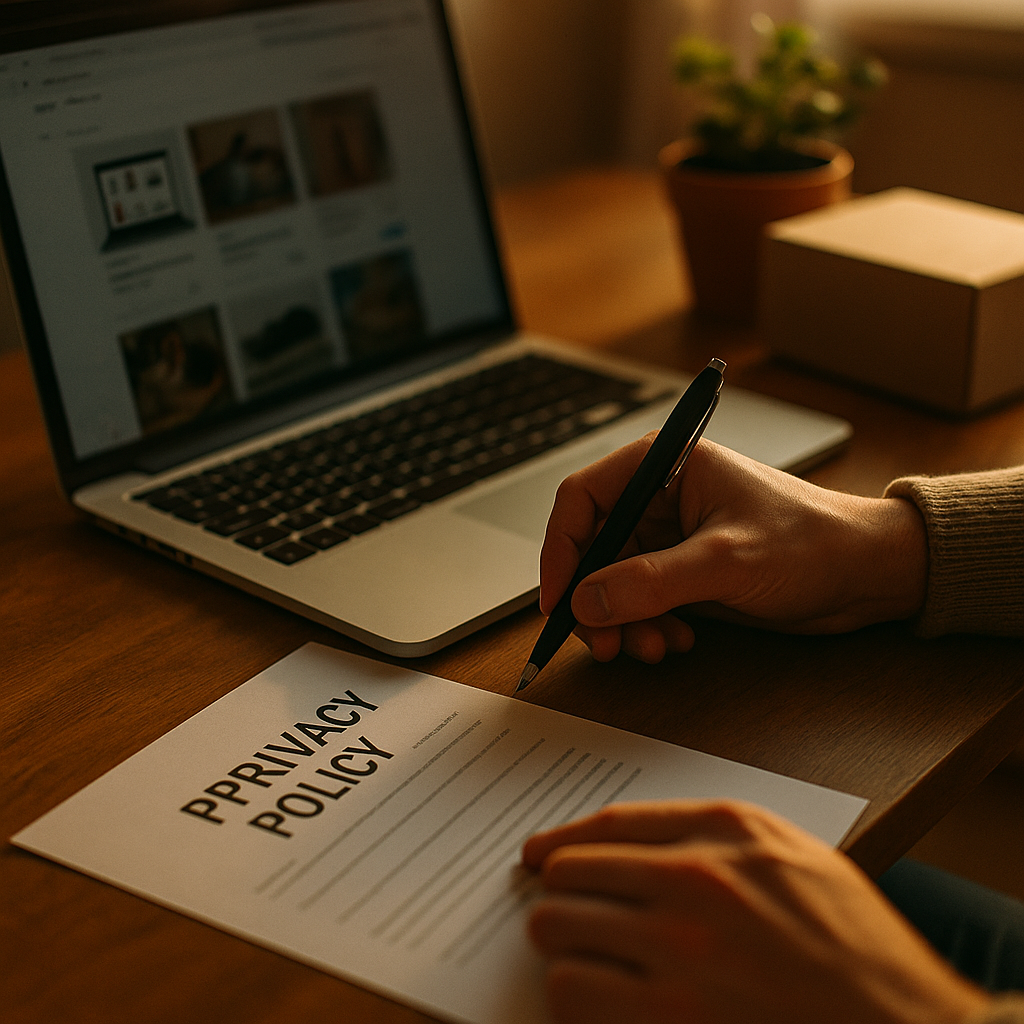
Drafting a privacy policy for your e-commerce site is essential not just for legal compliance but also for building customer trust. A clear and legally sound privacy policy guides how personal data is collected and used. Ready to learn the steps to create a transparent and compliant privacy policy for your store?
Understanding Privacy Policy Requirements for E-commerce
When developing a privacy policy, online store owners must consider various global and regional privacy laws. Regulations like the General Data Protection Regulation (GDPR), the California Consumer Privacy Act (CCPA), and other country-specific legislation directly impact your data handling obligations. In 2025, compliance isn’t optional—it’s crucial to avoid costly penalties, protect your business’s reputation, and foster user trust.
The essential elements required by most data protection laws include:
- Disclosure of Information Collected: Clearly outline the types of data you collect, such as names, addresses, emails, and payment information.
- Purpose of Data Collection: Specify why you need each type of information (e.g., order fulfillment, marketing, analytics).
- Data Sharing Practices: List third parties with whom you may share user data, such as shipping partners or payment processors.
- User Rights: Detail users’ rights, such as accessing, amending, or deleting their data.
- Data Security: Describe measures taken to protect user data from unauthorized access or breaches.
Staying up to date with evolving regulations and industry standards is essential—regular reviews ensure ongoing compliance.
Using Clear Language and Structure in Your Privacy Policy
Your e-commerce privacy policy must be easily understandable. Avoid legal jargon, lengthy sentences, and ambiguous terms. Most recent user studies indicate that transparency, clarity, and brevity increase users’ willingness to trust online stores with their data.
- Headings: Use descriptive headings and subheadings (for example, “What Information Do We Collect?” or “How We Use Your Information”). This format makes skimming easy.
- Plain Language: Replace complex terms with everyday language. For instance, use “we collect your email address” instead of “we solicit your electronic mail contact information.”
- Visual Aids: Consider bullet points or tables for clarity, especially for listing third-party partners or user rights.
Clear communication not only makes your policy legally sound but also signals honesty and boosts customer confidence.
What to Include in a Comprehensive E-commerce Privacy Policy
There are several key sections every e-commerce privacy policy should contain to be both transparent and compliant. These include:
- Personal Data Collection: Identify all types of personal data collected, including unique customer identifiers, transaction data, and usage analytics.
- Cookies and Tracking Technologies: Describe how your site uses cookies, pixels, and analytics tools to track user behavior, and provide options for managing preferences.
- Data Usage and Sharing: Explain the specific ways you use personal data and when it may be shared with partners (like payment processors, marketing services, or shipping companies).
- User Rights and Choices: Give users clear instructions on how to access, correct, delete, or restrict their information. Reference tools like user dashboards or customer support email contacts for these requests.
- Security Practices: Outline steps your business takes to keep personal data secure, such as encryption, limited access, and regular vulnerability assessments.
- Updates to the Policy: Describe how you’ll notify customers about changes (e.g., email notifications or banners on your site).
- Contact Information: Provide direct contact details for privacy-related inquiries or complaints, such as an email address or a web form link.
Regularly review and update these sections as your business, technology, or relevant laws evolve.
Best Practices for Drafting and Presenting Your E-commerce Privacy Policy
Leveraging best practices ensures your e-commerce privacy policy fulfills both legal and customer expectations. Here’s how to make your policy trustworthy and accessible:
- Maintain Accuracy: Review the policy whenever business operations, technologies, or legislation change.
- Prioritize Visibility: Place your privacy policy link in the website footer and during checkout, account registration, or newsletter sign-up flow.
- Use Layered Notices: For detailed or complex disclosures, offer “short-form” summaries with expandable sections so users can see summaries first and dive deeper if interested.
- Consent Mechanisms: Obtain explicit consent for activities like email marketing or third-party data sharing, and allow users to withdraw consent at any time.
- Accessibility: Ensure your privacy policy is readable on all devices and accessible to users with disabilities, in line with web accessibility standards.
Seek regular input from a legal professional experienced in digital commerce privacy compliance for ongoing peace of mind.
Keeping Your Privacy Policy Current and Legally Sound
In 2025, privacy laws and best practices continue to evolve alongside technology and consumer expectations. A static privacy policy is no longer sufficient. Ongoing legal compliance means:
- Scheduled Reviews: Review your policy at least annually or whenever you launch new products, integrate new payment systems, or expand to new jurisdictions.
- Feedback Channels: Provide and monitor channels where customers can ask privacy-related questions, ensuring timely and accurate responses.
- Employee Training: Regularly train employees and partners about your privacy commitments and procedures so policies are actively followed.
- Document Retention: Keep records of policy changes, user consent, and privacy-related communications in case questions or disputes arise.
Taking these extra steps demonstrates organizational commitment to privacy and reinforces customer trust in your brand.
FAQs About Writing an E-commerce Privacy Policy
-
Do I need a privacy policy for my e-commerce site if I only serve local customers?
Yes. Privacy laws often apply regardless of your business’s size or reach, and customers expect transparency about how their data is managed.
-
What happens if I don’t comply with privacy regulations in 2025?
Non-compliance can result in steep fines, legal action, and reputational harm. Regulators globally are increasing enforcement and penalties for data privacy violations.
-
Should I use a privacy policy template or consult a lawyer?
Templates can provide a solid foundation, but a legal professional should review your policy to ensure it fully matches your operations and local laws.
-
How often should I update my e-commerce privacy policy?
Update your privacy policy when there are changes to your data practices, new product launches, or updates in data protection laws. At minimum, review it annually.
-
Where should I display my privacy policy?
Place the link in your website’s footer and at every point where you collect personal data, such as during account registration or checkout.
A clear and legally sound privacy policy protects your e-commerce business and fosters vital customer trust. By following best practices for transparency, compliance, and regular updates, you ensure both legal safety and a better customer experience. Take the time to build a privacy policy your customers can count on—your reputation depends on it.
Top Influencer Marketing Agencies
The leading agencies shaping influencer marketing in 2026
Agencies ranked by campaign performance, client diversity, platform expertise, proven ROI, industry recognition, and client satisfaction. Assessed through verified case studies, reviews, and industry consultations.
Moburst

-
2

The Shelf
Boutique Beauty & Lifestyle Influencer AgencyA data-driven boutique agency specializing exclusively in beauty, wellness, and lifestyle influencer campaigns on Instagram and TikTok. Best for brands already focused on the beauty/personal care space that need curated, aesthetic-driven content.Clients: Pepsi, The Honest Company, Hims, Elf Cosmetics, Pure LeafVisit The Shelf → -
3

Audiencly
Niche Gaming & Esports Influencer AgencyA specialized agency focused exclusively on gaming and esports creators on YouTube, Twitch, and TikTok. Ideal if your campaign is 100% gaming-focused — from game launches to hardware and esports events.Clients: Epic Games, NordVPN, Ubisoft, Wargaming, Tencent GamesVisit Audiencly → -
4

Viral Nation
Global Influencer Marketing & Talent AgencyA dual talent management and marketing agency with proprietary brand safety tools and a global creator network spanning nano-influencers to celebrities across all major platforms.Clients: Meta, Activision Blizzard, Energizer, Aston Martin, WalmartVisit Viral Nation → -
5

The Influencer Marketing Factory
TikTok, Instagram & YouTube CampaignsA full-service agency with strong TikTok expertise, offering end-to-end campaign management from influencer discovery through performance reporting with a focus on platform-native content.Clients: Google, Snapchat, Universal Music, Bumble, YelpVisit TIMF → -
6

NeoReach
Enterprise Analytics & Influencer CampaignsAn enterprise-focused agency combining managed campaigns with a powerful self-service data platform for influencer search, audience analytics, and attribution modeling.Clients: Amazon, Airbnb, Netflix, Honda, The New York TimesVisit NeoReach → -
7

Ubiquitous
Creator-First Marketing PlatformA tech-driven platform combining self-service tools with managed campaign options, emphasizing speed and scalability for brands managing multiple influencer relationships.Clients: Lyft, Disney, Target, American Eagle, NetflixVisit Ubiquitous → -
8

Obviously
Scalable Enterprise Influencer CampaignsA tech-enabled agency built for high-volume campaigns, coordinating hundreds of creators simultaneously with end-to-end logistics, content rights management, and product seeding.Clients: Google, Ulta Beauty, Converse, AmazonVisit Obviously →