


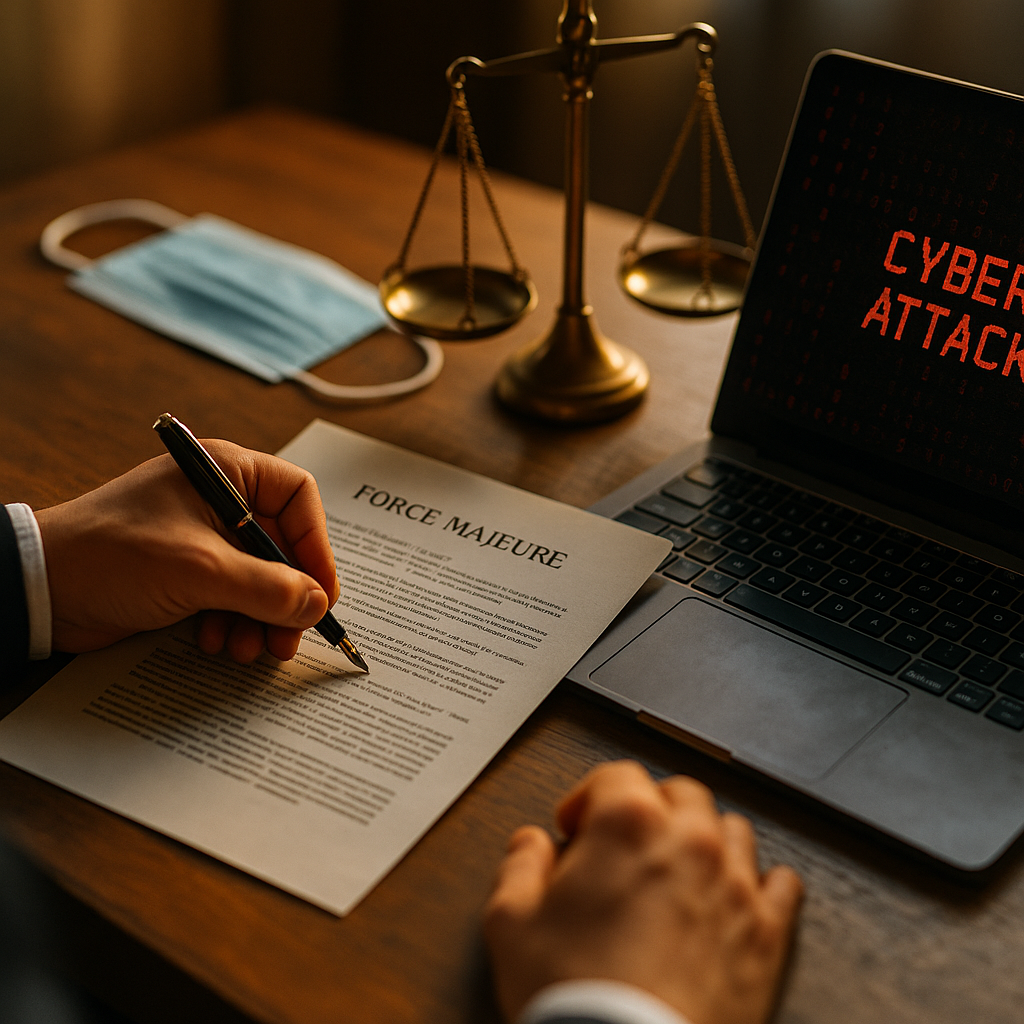
Learning how to negotiate a force majeure clause that includes pandemics and cyberattacks is more crucial than ever in today’s business contracts. Unforeseen global events and digital threats are disrupting operations worldwide. Properly crafting these clauses protects your interests and ensures clarity. Discover key strategies and pitfalls to avoid when negotiating your next contract’s most important safeguard.
Understanding Force Majeure Clauses in Modern Contracts
Force majeure clauses are contractual provisions that relieve parties from obligations when unforeseen events make performance impossible or impracticable. Traditionally, these clauses covered events like natural disasters and wars. However, the COVID-19 pandemic and the spike in cyberattacks have redefined business risks, making it critical to update these clauses for new realities.
Modern force majeure clauses must anticipate complex disruptions. The inclusion of pandemics and cyberattacks reflects recent threats that can halt supply chains, trigger regulatory shutdowns, or cause crippling digital outages. According to a 2024 Gartner survey, more than 62% of companies updated force majeure language after pandemic and cybersecurity incidents. Failing to adapt can leave your business exposed and undermine contracts when crises strike.
Identifying Relevant Events: Including Pandemics and Cyberattacks
Precisely identifying the types of events covered is essential in force majeure negotiations. Many traditional clauses use broad terms like “acts of God” or “events beyond reasonable control,” which may not specifically address pandemics or technology-driven crises. To avoid disputes, define covered events explicitly and comprehensively.
- Pandemics: Specify “pandemics, epidemics, infectious disease outbreaks, and government-imposed quarantines.” Also, include new variants or public health emergencies, ensuring language remains relevant for evolving threats.
- Cyberattacks: Clearly cover “cyberattacks, ransomware, data breaches, system infiltrations, and disruptions to essential digital infrastructure.” This recognizes both intentional and accidental digital incidents.
Consider including illustrative lists and “catch-all” phrases—like “including, but not limited to, the following”—to encompass unforeseen future risks. Collaboration with IT security and legal teams can help ensure technical accuracy.
Drafting Effective Notice and Mitigation Requirements
Even with detailed event definitions, effective force majeure clauses depend on clear notice and mitigation requirements. Courts scrutinize whether parties promptly notified counterparts of force majeure events and took steps to mitigate their impact.
- Notice: Specify the exact timeframe and method for giving notice after an event occurs—such as within 3 business days via email or written letter. Clear requirements help prevent disputes and delays.
- Mitigation: Require the claiming party to make “commercially reasonable efforts” to lessen the disruption. For pandemics, this might involve remote work arrangements or alternate suppliers; for cyberattacks, deploying cybersecurity protocols or backups.
- Documentation: Mandate keeping thorough records, such as incident reports or correspondence with authorities, to substantiate the force majeure event.
Negotiating notice and mitigation obligations ensures both parties remain accountable, reducing the risk of opportunistic declarations of force majeure or wrongful rejections.
Allocating Risks and Setting Clear Consequences
A balanced approach to risk allocation is vital for long-term contract stability. Force majeure clauses should clarify not just what events qualify, but also the direct consequences for both parties. When drafting or revising these provisions, discuss and agree upon:
- Suspension or Extension: Does a qualifying event suspend performance, extend deadlines, or both?
- Termination Rights: Under what circumstances can either party terminate the contract after a prolonged force majeure event?
- Payment Obligations: Are ongoing payments, such as retainers or deposits, refundable?
- Partial Performance: Is partial delivery acceptable, or is complete performance required for contracts like SaaS services or complex supply chains?
Anticipate scenarios unique to pandemics and cyberattacks—such as evolving government mandates or ongoing digital system vulnerabilities. Clearly documented consequences reduce ambiguity, safeguarding business relationships and finances throughout the contract cycle.
Negotiation Strategies and Common Pitfalls
Effective negotiation goes beyond legal drafting; it also requires understanding the other party’s concerns and industry-specific risks. Parties should approach the process collaboratively, seeing contracts as risk-sharing tools rather than instruments of leverage.
- Assess Both Sides’ Risk Profiles: A healthcare supplier and a retailer, for example, face different pandemic exposure levels. Discuss mutual risks to set realistic terms.
- Stay Current with Case Law and Regulation: Force majeure jurisprudence continues to evolve with each new crisis. A 2024 law firm survey showed that 43% of contracts disputed pandemic exemptions owing to outdated definitions or vague wording.
- Avoid All-or-Nothing Clauses: Absolute language, like “no liability whatsoever,” may undermine enforceability or invite renegotiation pressure. Balance protection with flexibility.
- Negotiate Carve-Outs: Some obligations—such as confidentiality or data privacy—should remain enforceable even during force majeure events, especially with cyber threats.
- Engage Cross-Functional Teams: Inputs from legal, compliance, technology, and operations ensure the clause fits your business model and regulatory requirements.
Remember, your negotiation strategy directly affects enforceability and reputation. Transparent, up-to-date clauses promote trust and resilience as business landscapes shift.
Practical Examples and Templates for 2025 Contracts
Examining sample language can help crystallize best practices. Here’s a template for how to negotiate a force majeure clause that includes pandemics and cyberattacks in 2025 contracts:
- “Neither party shall be liable for any failure or delay in performance to the extent caused by an event beyond reasonable control, including but not limited to natural disasters, pandemics or epidemics (including COVID-19 or variants), government public health orders, cyberattacks, ransomware, or widespread electronic system failures.”
- “The affected party shall notify the other within three (3) business days of becoming aware of the event, provide reasonable documentation, and exercise commercially reasonable efforts to mitigate the effects.”
- “Should an event persist for more than thirty (30) days, either party may terminate this Agreement upon written notice without penalty.”
Adapt templates to suit your risks, industry, and regulatory environment. Consult recent legal advice to ensure enforceability in your jurisdiction as judicial approaches continue to adapt post-pandemic and in light of evolving cyber threats.
Conclusion
By proactively negotiating a force majeure clause that includes pandemics and cyberattacks, you protect your business from uncertainty while building trust in critical relationships. Don’t wait for disruption—revise your contracts now and be confident that your organization can weather whatever the future brings.
FAQs: Negotiating Force Majeure Clauses for Pandemics and Cyberattacks
-
Are pandemics and cyberattacks typically covered by standard force majeure clauses?
Historically, most force majeure clauses did not specifically cover pandemics or cyberattacks. To ensure protection, these events should be explicitly included using current, precise language tailored to modern risks.
-
What proof is needed to invoke a force majeure clause for a cyberattack?
Maintain documentation such as incident response reports, communications with cybersecurity experts, and evidence of mitigation efforts. Providing timely notice and supporting evidence strengthens your position if the clause is challenged.
-
Can a party terminate a contract after invoking force majeure?
Yes, but only if the clause specifically allows for termination after a certain time period or continued disruption. Clearly negotiated terms about suspension, extension, and termination rights avoid ambiguity.
-
How can I ensure my force majeure clause remains enforceable in 2025?
Regularly review and update language to reflect current legal standards, include specific references to pandemics and cyber threats, set clear notice and mitigation procedures, and seek legal review commensurate with your industry’s risks.
-
Should obligations like data security always be excluded from force majeure?
Often, yes. Carve out essential obligations such as data security and confidentiality, especially when negotiating with sensitive or regulated data, so that these standards remain no matter the event’s impact.
Top Influencer Marketing Agencies
The leading agencies shaping influencer marketing in 2026
Agencies ranked by campaign performance, client diversity, platform expertise, proven ROI, industry recognition, and client satisfaction. Assessed through verified case studies, reviews, and industry consultations.
Moburst

-
2

The Shelf
Boutique Beauty & Lifestyle Influencer AgencyA data-driven boutique agency specializing exclusively in beauty, wellness, and lifestyle influencer campaigns on Instagram and TikTok. Best for brands already focused on the beauty/personal care space that need curated, aesthetic-driven content.Clients: Pepsi, The Honest Company, Hims, Elf Cosmetics, Pure LeafVisit The Shelf → -
3

Audiencly
Niche Gaming & Esports Influencer AgencyA specialized agency focused exclusively on gaming and esports creators on YouTube, Twitch, and TikTok. Ideal if your campaign is 100% gaming-focused — from game launches to hardware and esports events.Clients: Epic Games, NordVPN, Ubisoft, Wargaming, Tencent GamesVisit Audiencly → -
4

Viral Nation
Global Influencer Marketing & Talent AgencyA dual talent management and marketing agency with proprietary brand safety tools and a global creator network spanning nano-influencers to celebrities across all major platforms.Clients: Meta, Activision Blizzard, Energizer, Aston Martin, WalmartVisit Viral Nation → -
5

The Influencer Marketing Factory
TikTok, Instagram & YouTube CampaignsA full-service agency with strong TikTok expertise, offering end-to-end campaign management from influencer discovery through performance reporting with a focus on platform-native content.Clients: Google, Snapchat, Universal Music, Bumble, YelpVisit TIMF → -
6

NeoReach
Enterprise Analytics & Influencer CampaignsAn enterprise-focused agency combining managed campaigns with a powerful self-service data platform for influencer search, audience analytics, and attribution modeling.Clients: Amazon, Airbnb, Netflix, Honda, The New York TimesVisit NeoReach → -
7

Ubiquitous
Creator-First Marketing PlatformA tech-driven platform combining self-service tools with managed campaign options, emphasizing speed and scalability for brands managing multiple influencer relationships.Clients: Lyft, Disney, Target, American Eagle, NetflixVisit Ubiquitous → -
8

Obviously
Scalable Enterprise Influencer CampaignsA tech-enabled agency built for high-volume campaigns, coordinating hundreds of creators simultaneously with end-to-end logistics, content rights management, and product seeding.Clients: Google, Ulta Beauty, Converse, AmazonVisit Obviously →