


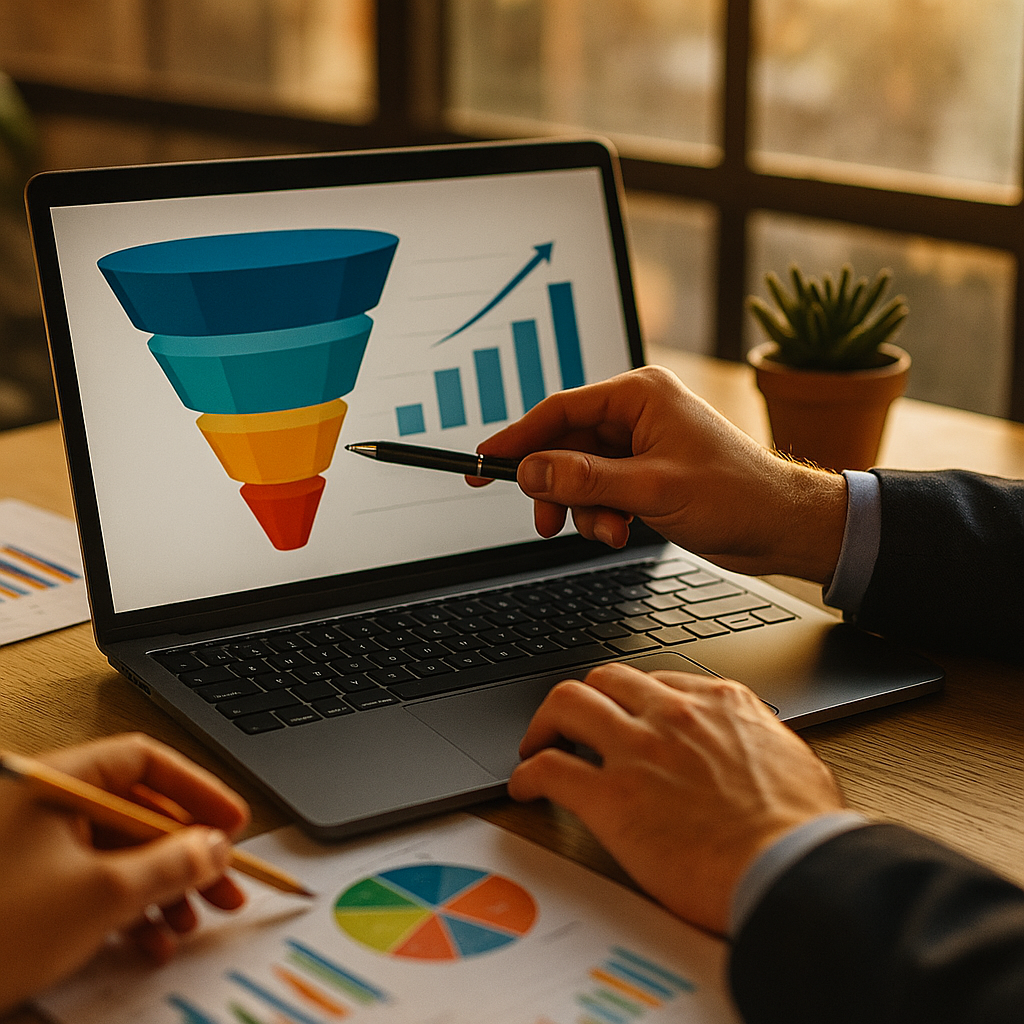
Building a marketing funnel that converts visitors into customers is crucial for sustainable business growth in 2025. A well-crafted funnel guides prospects seamlessly from awareness to action, maximizing your marketing ROI. But what are the steps to achieve high conversion rates? Let’s break down the latest strategies to create a marketing funnel that turns clicks into loyal customers.
Understanding the Customer Journey in Digital Marketing
Before constructing a converting marketing funnel, it’s essential to understand the customer journey in digital marketing. Every successful funnel aligns with the way modern buyers think and behave. Typically, the journey has several stages:
- Awareness: Prospects become aware of your brand or product.
- Interest: They seek more information and compare solutions.
- Consideration: Prospects evaluate your offerings against competitors.
- Decision: They commit to a purchase.
- Retention: Post-purchase support and engagement turn buyers into repeat customers.
Mapping your marketing activities to these stages enables targeted messaging and resource allocation. In recent research from HubSpot, businesses mapping content to the funnel increased conversions by over 40%.
Creating Compelling Awareness Content for Lead Generation
At the top of the funnel, attracting targeted traffic is key. Use compelling awareness content for lead generation that educates and entertains, establishing your brand as an industry authority. High-converting top-funnel content in 2025 includes:
- Value-driven blog posts optimized for SEO
- Informative videos and short-form social media clips
- Interactive quizzes, calculators, or assessments
- Free downloadable guides, checklists, or templates
Pair your content with clear calls to action—such as newsletter signups or exclusive webinars—to capture leads efficiently. Always optimize landing pages for speed, clarity, and mobile usability. According to Think with Google, mobile-optimized landing pages decrease bounce rates by up to 35%.
Nurturing Prospects: Using Email Marketing and Automation
After capturing leads, nurturing prospects through email marketing and automation is vital for warming them up to your offer. Personalized email sequences drive engagement, answer objections, and provide relevant content at every interaction. Key best practices include:
- Segment contacts based on interests and funnel stage
- Send timely, actionable follow-up emails for each segment
- Provide value through case studies, testimonials, and exclusive offers
- Use automation tools to trigger the right emails based on user behavior
Marketers using advanced segmentation and automation in their nurturing campaigns have seen up to 50% higher conversion rates (Source: Litmus).
Optimizing the Conversion Stage for Higher Customer Acquisition
The most crucial moment in your marketing funnel is the conversion stage—where prospects become paying customers. To maximize customer acquisition, your funnel must reduce friction and instill trust. Employ the following strategies:
- Streamline your checkout process: Remove unnecessary steps, offer multiple payment options, and ensure high security.
- Add trust signals: Certifications, customer reviews, and guarantees increase confidence.
- Utilize retargeting ads: Bring back prospects who left without converting.
- Offer time-limited incentives: Exclusive discounts and bonuses motivate action.
According to Shopify’s 2025 report, over 68% of abandoned carts can be recovered with effective remarketing and simplified checkout flows.
Building Loyalty: Retention Marketing and Customer Experience
Converting a visitor is only the beginning. Building loyalty through retention marketing and enhancing the customer experience leads to repeat business and organic referrals. Strategies include:
- Onboarding emails to help new customers succeed
- Loyalty programs and personalized offers
- Active engagement on social channels and support platforms
- Soliciting and acting on customer feedback to improve products/services
Gartner reports that increasing customer retention rates by 5% can boost profits by up to 25%. Satisfied customers are your best marketers and can amplify your funnel’s results.
Analyzing and Improving Your Funnel with Data-Driven Insights
No marketing funnel is perfect from the start. Continuous improvement, guided by data-driven analysis, ensures higher conversion rates over time. Monitor key metrics at each funnel stage, such as:
- Landing page conversion rates
- Email open and click-through rates
- Cart abandonment rates
- Customer lifetime value
Utilize A/B testing and analytics platforms like Google Analytics 4 or HubSpot to analyze user behavior. Optimize underperforming areas promptly. In 2025, data transparency and compliance with privacy regulations enhance customer trust and improve your competitive edge.
FAQs: Building a Marketing Funnel That Converts
-
What is a marketing funnel?
A marketing funnel is a series of steps designed to guide prospects from awareness of your brand to becoming paying customers and advocates, streamlining the buyer’s journey for better conversions.
-
How long does it take to build a converting marketing funnel?
Depending on your resources, a robust marketing funnel can be developed and optimized within several weeks to a few months. Testing and refinement are ongoing processes to maintain high performance.
-
What is the most common mistake in funnel building?
The most common mistake is neglecting the nurturing and retention stages—focusing only on acquisition instead of building lasting relationships and encouraging repeat business.
-
Do I need marketing automation software to build a successful funnel?
While not mandatory, marketing automation software significantly boosts efficiency and personalization. It enables seamless communication, targeted messaging, and scalable nurturing for higher conversions.
-
How can I measure my funnel’s success?
Success is measured through KPIs such as conversion rates, customer acquisition costs, retention rates, and customer lifetime value. Consistent analysis and testing are essential for improvement.
In summary, building a marketing funnel that converts visitors into customers hinges on understanding the customer journey, creating targeted content, nurturing leads, optimizing the conversion process, and fostering long-term loyalty. Apply these steps and continuously analyze performance to maximize your success in 2025 and beyond.
Top Influencer Marketing Agencies
The leading agencies shaping influencer marketing in 2026
Agencies ranked by campaign performance, client diversity, platform expertise, proven ROI, industry recognition, and client satisfaction. Assessed through verified case studies, reviews, and industry consultations.
Moburst

-
2

The Shelf
Boutique Beauty & Lifestyle Influencer AgencyA data-driven boutique agency specializing exclusively in beauty, wellness, and lifestyle influencer campaigns on Instagram and TikTok. Best for brands already focused on the beauty/personal care space that need curated, aesthetic-driven content.Clients: Pepsi, The Honest Company, Hims, Elf Cosmetics, Pure LeafVisit The Shelf → -
3

Audiencly
Niche Gaming & Esports Influencer AgencyA specialized agency focused exclusively on gaming and esports creators on YouTube, Twitch, and TikTok. Ideal if your campaign is 100% gaming-focused — from game launches to hardware and esports events.Clients: Epic Games, NordVPN, Ubisoft, Wargaming, Tencent GamesVisit Audiencly → -
4

Viral Nation
Global Influencer Marketing & Talent AgencyA dual talent management and marketing agency with proprietary brand safety tools and a global creator network spanning nano-influencers to celebrities across all major platforms.Clients: Meta, Activision Blizzard, Energizer, Aston Martin, WalmartVisit Viral Nation → -
5

The Influencer Marketing Factory
TikTok, Instagram & YouTube CampaignsA full-service agency with strong TikTok expertise, offering end-to-end campaign management from influencer discovery through performance reporting with a focus on platform-native content.Clients: Google, Snapchat, Universal Music, Bumble, YelpVisit TIMF → -
6

NeoReach
Enterprise Analytics & Influencer CampaignsAn enterprise-focused agency combining managed campaigns with a powerful self-service data platform for influencer search, audience analytics, and attribution modeling.Clients: Amazon, Airbnb, Netflix, Honda, The New York TimesVisit NeoReach → -
7

Ubiquitous
Creator-First Marketing PlatformA tech-driven platform combining self-service tools with managed campaign options, emphasizing speed and scalability for brands managing multiple influencer relationships.Clients: Lyft, Disney, Target, American Eagle, NetflixVisit Ubiquitous → -
8

Obviously
Scalable Enterprise Influencer CampaignsA tech-enabled agency built for high-volume campaigns, coordinating hundreds of creators simultaneously with end-to-end logistics, content rights management, and product seeding.Clients: Google, Ulta Beauty, Converse, AmazonVisit Obviously →