


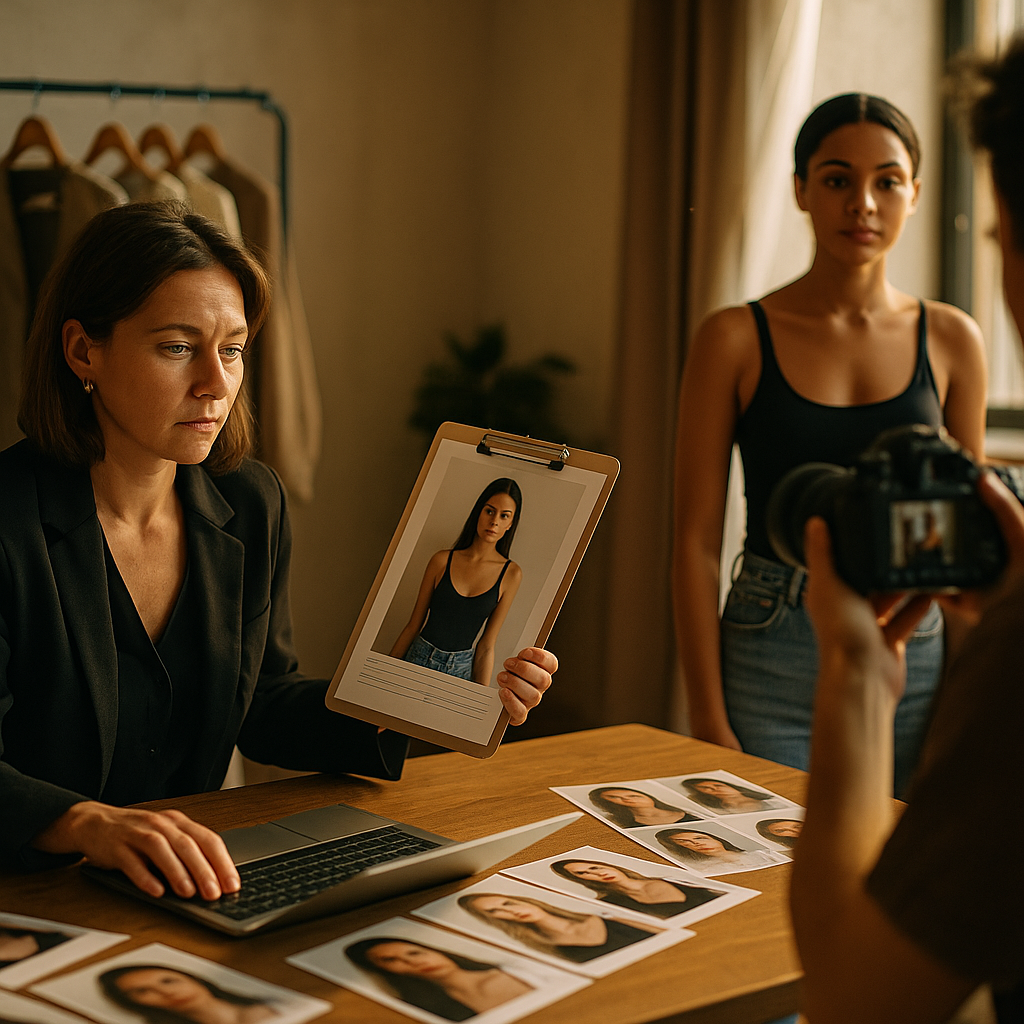
Why Fashion Brands Need a Creator Vetting Process Built Like a Casting Call
A single misaligned creator post cost a European luxury house an estimated €3.2 million in brand equity repair during late 2024, according to internal figures shared at a Condé Nast commerce summit. The creator had strong metrics. Great reach. Solid engagement. But their off-platform behavior — a string of deleted tweets and a competing fast-fashion haul video — detonated trust with a core affluent audience in under 72 hours. The creator vetting process that cleared them? An AI shortlist and a five-minute scroll of their grid. That’s it.
This is the gap luxury and fashion brands keep falling into: they’ve adopted algorithmic discovery tools but haven’t built the governance model around them. Speed without structure is reckless in high-trust categories.
The Casting Era: What It Actually Means
Hollywood doesn’t hand a lead role to whoever has the biggest Instagram following. They audition. They do chemistry reads. They run background research. The “Casting Era” of creator marketing applies the same logic: a multi-stage talent governance model where algorithmic discovery is the first filter, not the last.
Think of it as a funnel with deliberate friction at each stage — friction that protects equity rather than slowing growth.
The model has three philosophical pillars:
- Speed belongs at the top. AI and platform tools should surface candidates fast. Let machines do what machines do well.
- Human judgment belongs in the middle. Cultural fit, tonal alignment, and risk assessment require context that no algorithm reliably captures yet.
- Contractual precision belongs at the bottom. Morality clauses, exclusivity windows, and content approval rights formalize the relationship.
Brands already using AI as a first research layer for discovery are halfway there. The problem is most stop after that first layer.
Stage One: Algorithmic Discovery — Wide Net, Tight Parameters
Platforms like CreatorIQ, Traackr, and Modash can analyze millions of creator profiles in minutes, filtering by audience demographics, engagement velocity, content category, and brand affinity scores. This is valuable. Use it.
But set the parameters aggressively. For luxury, that means:
- Audience income and location filters (not just age and gender)
- Brand mention history — have they promoted competitors or discount retailers in the last 12 months?
- Engagement-to-follower ratios that flag purchased audiences
- Content frequency thresholds — overposting dilutes perceived exclusivity
Algorithmic discovery should eliminate 80-90% of candidates before a human ever looks at a profile. If your team is manually reviewing hundreds of creators per campaign, your filters aren’t tight enough.
The goal here isn’t to find the perfect creator. It’s to build a shortlist of 20–40 candidates who don’t have obvious disqualifiers. Speed is the asset at this stage. Protect it by resisting the urge to add manual review too early.
For brands managing large programs, understanding tiered governance at scale is essential context here — the vetting rigor should match the tier.
Stage Two: The Cultural Fit Deep Dive
This is where most fashion and luxury programs fail. They skip it entirely, or they delegate it to a junior coordinator who checks the last nine Instagram posts and calls it done.
Cultural fit assessment for high-trust categories requires a structured rubric — not vibes. Here’s a framework that several luxury brand consultancies now use in modified forms:
Content Archaeology (30–60 minutes per creator):
- Review 6–12 months of content across all platforms, not just the primary one
- Flag tonal inconsistencies — does the creator’s voice shift dramatically between sponsored and organic posts?
- Assess aesthetic coherence with brand visual identity
- Check cross-platform behavior: TikTok comments, Twitter/X replies, Reddit history, podcast appearances
Values Alignment Mapping:
- Has the creator publicly endorsed positions that conflict with brand values?
- Do they engage with communities that could create association risk?
- How do they handle criticism or controversy in public? Grace under fire matters.
Commercial History Review:
- How many brands have they worked with in the past six months? Oversaturation kills credibility in luxury.
- Did previous brand partners renew? Non-renewal is a signal.
- Have they ever publicly disparaged a former brand partner?
Yes, this takes time. A senior brand strategist might spend 45 minutes per candidate. For a shortlist of 25, that’s roughly 19 hours of work. That sounds expensive until you compare it to the cost of a brand safety incident in a category where trust is the entire product.
This stage also intersects with the broader shift toward specificity over scale — choosing fewer, better-fit creators rather than maximizing reach.
Stage Three: The Chemistry Read
Borrowed directly from entertainment casting. Before committing to a full campaign, smart luxury brands now run a “chemistry read” — a low-stakes, paid content test.
This typically looks like:
- A single Instagram Story or short-form video brief with creative latitude
- Compensation at standard rates (never ask for free test content — it poisons the relationship)
- Evaluation against pre-defined criteria: brand voice adherence, production quality, audience response, and the intangible “does this feel right?” factor
The chemistry read serves a dual purpose. It tests creative alignment, and it tests professionalism. Did the creator hit the deadline? Did they follow the brief while adding their own perspective? Did they communicate proactively about challenges?
Roughly 30–40% of creators who pass the cultural fit stage don’t survive the chemistry read. That’s a feature, not a bug.
Stage Four: Contractual Architecture and Ongoing Monitoring
Once a creator clears all three prior stages, the contract needs to do more than define deliverables and payment terms. In high-trust categories, it becomes a brand protection instrument.
Key contractual elements luxury brands should codify:
- Morality and conduct clauses with specific, actionable triggers — not vague “behavior detrimental to brand” language that’s unenforceable
- Category exclusivity windows — 90 days minimum for luxury, with competitive brand definitions explicitly listed
- Content approval workflows with defined turnaround times so creators aren’t left waiting
- Real-time monitoring provisions — the brand retains the right to conduct ongoing social monitoring, with termination rights tied to material findings
The FTC’s endorsement guidelines also require transparent disclosure in every market where the content appears. Build this into the brief template, not just the contract fine print.
A vetting process without ongoing monitoring is a snapshot, not a strategy. Creator behavior changes. Audiences shift. Quarterly re-evaluation should be non-negotiable for any creator in your top tier.
For brands exploring retainer-based models, the retainer approach naturally supports continuous governance because the relationship is persistent, not transactional.
Operationalizing the Model: Who Owns What?
The biggest implementation failure isn’t process design — it’s ownership ambiguity. Here’s a clean RACI breakdown for the Casting Era model:
- Stage One (Algorithmic Discovery): Owned by the creator marketing team or agency, using standardized tool configurations. Reviewed monthly by brand strategy.
- Stage Two (Cultural Fit): Co-owned by brand strategy and communications/PR. PR involvement catches reputational risks that pure marketers miss.
- Stage Three (Chemistry Read): Owned by the creative director or senior content lead. They evaluate brand expression, not just metrics.
- Stage Four (Contracts and Monitoring): Legal and brand safety jointly own. Marketing coordinates but doesn’t decide termination triggers.
Tools like Brandwatch and Sprinklr can automate ongoing creator monitoring, flagging sentiment shifts and controversial content before it escalates. The human decision layer sits on top.
For brands also navigating budget allocation across AI platforms and creator programs, aligning governance with your CMO budget framework ensures you’re investing in vetting infrastructure proportionally.
The Cost of Getting This Wrong — and Right
Launchmetrics data from fashion weeks shows that creators in the top decile of Media Impact Value™ command 12–18x the partnership fees of median creators. A vetting failure at that tier isn’t a rounding error. It’s a material financial event.
Conversely, brands that run structured multi-stage vetting report 40–60% lower creator churn rates and measurably stronger content performance over 12-month partnerships. The upfront cost pays for itself within two campaign cycles.
The Casting Era model isn’t about slowing down. It’s about placing the friction exactly where it creates value — and removing it everywhere else.
Your next step: Audit your current creator selection process against these four stages. Identify which stage is missing or underdeveloped, assign clear ownership, and pilot the full framework on your next luxury or premium campaign before scaling it across categories.
FAQs
What is a creator vetting process for luxury brands?
A creator vetting process for luxury brands is a multi-stage governance framework that combines algorithmic discovery tools with manual cultural fit assessments, commercial history reviews, creative chemistry tests, and contractual protections. It’s designed to ensure every creator partner aligns with brand values, aesthetic standards, and audience expectations before any public-facing content goes live — reducing reputational risk in high-trust categories where brand equity is the primary asset.
How long does a multi-stage creator vetting process take?
Depending on the size of your initial shortlist, expect the full process to take two to four weeks per campaign cycle. Algorithmic discovery takes hours, cultural fit assessments run one to three days for a shortlist of 20–40 candidates, chemistry reads require a one-to-two-week content turnaround, and contract negotiation adds another week. Brands running retainer programs can compress this timeline significantly after the first cycle because existing creators are already vetted.
Can AI replace manual cultural fit assessment in creator selection?
Not reliably — at least not yet. AI tools excel at surface-level filtering: audience demographics, engagement metrics, brand mention history, and content frequency. However, nuanced judgments about tonal alignment, values congruence, cross-platform behavior patterns, and how a creator handles controversy still require human evaluation. The best approach uses AI to eliminate obvious mismatches quickly, then layers human judgment for the qualitative assessments that protect brand equity.
What contractual protections should luxury brands include in creator agreements?
Essential provisions include morality clauses with specific behavioral triggers, category exclusivity windows of at least 90 days, content approval workflows with defined turnaround times, ongoing social monitoring rights, and clear termination conditions tied to material findings. Brands should also ensure FTC-compliant disclosure requirements are embedded in the brief template, not just the contract, so creators are reminded at the point of content creation.
How do you measure the ROI of a structured creator vetting process?
Track creator churn rate, brand safety incident frequency, content performance consistency over multi-campaign partnerships, and cost-per-quality-engagement rather than raw reach. Brands running structured multi-stage vetting commonly report 40–60% lower creator churn and stronger long-term content performance. Compare these gains against the labor cost of the vetting process itself — most luxury brands find the framework pays for itself within two campaign cycles through avoided risk and improved partnership longevity.
Top Influencer Marketing Agencies
The leading agencies shaping influencer marketing in 2026
Agencies ranked by campaign performance, client diversity, platform expertise, proven ROI, industry recognition, and client satisfaction. Assessed through verified case studies, reviews, and industry consultations.
Moburst

-
2

The Shelf
Boutique Beauty & Lifestyle Influencer AgencyA data-driven boutique agency specializing exclusively in beauty, wellness, and lifestyle influencer campaigns on Instagram and TikTok. Best for brands already focused on the beauty/personal care space that need curated, aesthetic-driven content.Clients: Pepsi, The Honest Company, Hims, Elf Cosmetics, Pure LeafVisit The Shelf → -
3

Audiencly
Niche Gaming & Esports Influencer AgencyA specialized agency focused exclusively on gaming and esports creators on YouTube, Twitch, and TikTok. Ideal if your campaign is 100% gaming-focused — from game launches to hardware and esports events.Clients: Epic Games, NordVPN, Ubisoft, Wargaming, Tencent GamesVisit Audiencly → -
4

Viral Nation
Global Influencer Marketing & Talent AgencyA dual talent management and marketing agency with proprietary brand safety tools and a global creator network spanning nano-influencers to celebrities across all major platforms.Clients: Meta, Activision Blizzard, Energizer, Aston Martin, WalmartVisit Viral Nation → -
5

The Influencer Marketing Factory
TikTok, Instagram & YouTube CampaignsA full-service agency with strong TikTok expertise, offering end-to-end campaign management from influencer discovery through performance reporting with a focus on platform-native content.Clients: Google, Snapchat, Universal Music, Bumble, YelpVisit TIMF → -
6

NeoReach
Enterprise Analytics & Influencer CampaignsAn enterprise-focused agency combining managed campaigns with a powerful self-service data platform for influencer search, audience analytics, and attribution modeling.Clients: Amazon, Airbnb, Netflix, Honda, The New York TimesVisit NeoReach → -
7

Ubiquitous
Creator-First Marketing PlatformA tech-driven platform combining self-service tools with managed campaign options, emphasizing speed and scalability for brands managing multiple influencer relationships.Clients: Lyft, Disney, Target, American Eagle, NetflixVisit Ubiquitous → -
8

Obviously
Scalable Enterprise Influencer CampaignsA tech-enabled agency built for high-volume campaigns, coordinating hundreds of creators simultaneously with end-to-end logistics, content rights management, and product seeding.Clients: Google, Ulta Beauty, Converse, AmazonVisit Obviously →